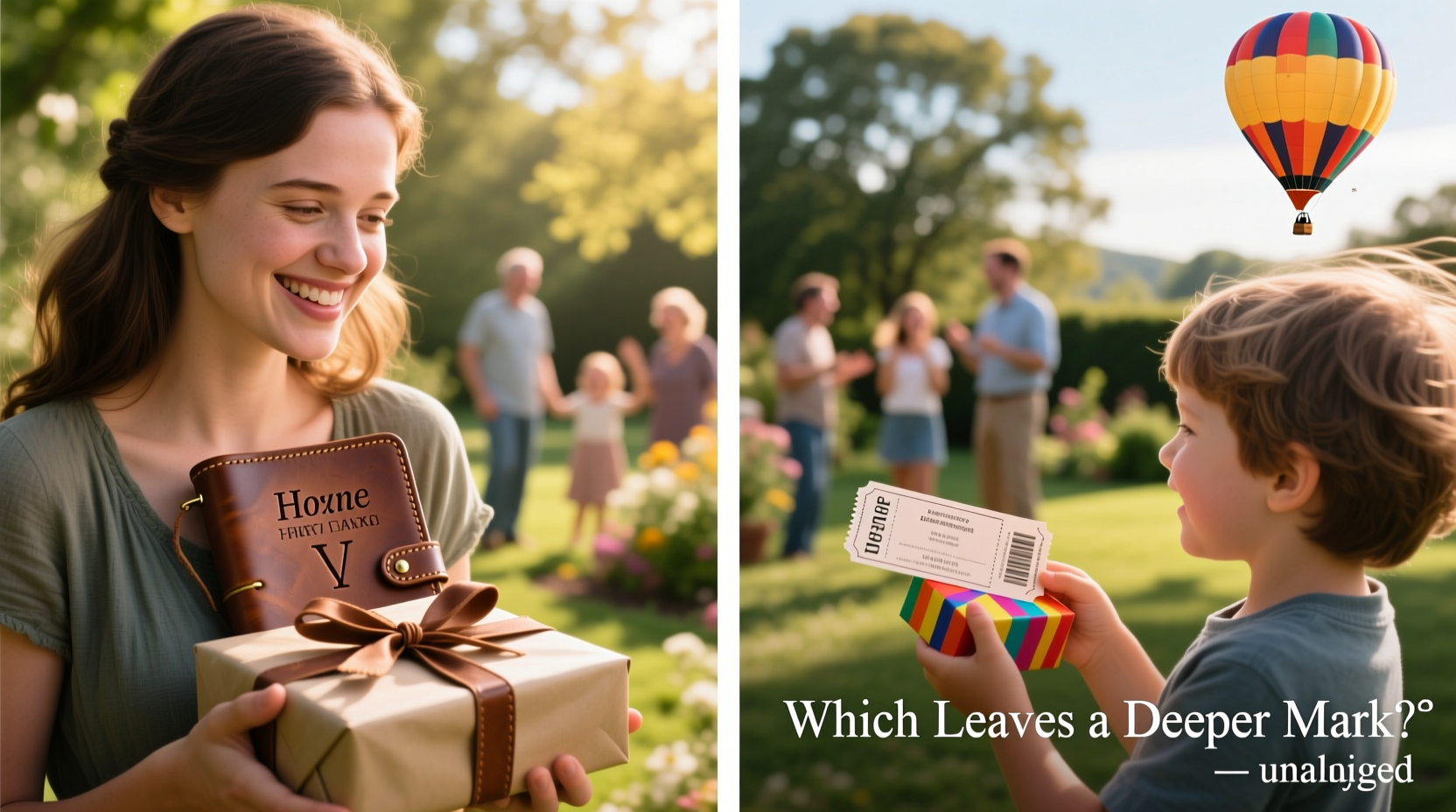
In an age where material abundance is common, many people are rethinking what it means to give—and receive—a meaningful gift. The traditional model of handing over a wrapped box filled with a tangible object still dominates holidays and celebrations, but a growing trend favors experiences: concert tickets, cooking classes, travel excursions, or even shared adventures. This shift raises a compelling question: do experiential gifts create more lasting memories than physical presents? Research in psychology, behavioral economics, and consumer behavior increasingly suggests that they do—but the answer isn’t absolute. The emotional resonance, longevity of memory, and personal significance vary widely based on context, recipient, and execution.
The Psychology Behind Memory and Emotional Impact
Human memory is not a recording device; it’s a reconstructive process shaped by emotion, repetition, and meaning. When we experience something deeply engaging—whether joyful, surprising, or emotionally charged—our brain encodes it more vividly. This phenomenon, known as the \"peak-end rule,\" explains why people remember the most intense moments (peaks) and how an experience ended, rather than its duration or average quality.
Experiential gifts often align well with this principle. A surprise weekend getaway, a hot air balloon ride, or attending a live performance can generate powerful emotional peaks. These moments are rich with sensory input—sights, sounds, smells, and social interaction—which strengthens memory formation. In contrast, physical gifts, while initially exciting, tend to follow a predictable arc: anticipation, unboxing, use, and eventual habituation. Psychologists call this \"hedonic adaptation\"—the tendency to quickly return to a baseline level of happiness after acquiring something new.
“We don’t remember days, we remember moments.” — Cesare Pavese, Italian novelist and critic
This insight underscores why experiences, especially those involving novelty and emotional engagement, are more likely to become embedded in our autobiographical memory. A study published in the Journal of Consumer Psychology found that people consistently rate experiential purchases as providing greater long-term happiness than material ones, even when comparing high-value items like electronics or luxury goods.
Comparing Longevity: Objects Fade, Stories Endure
A physical gift may last for years, but its emotional impact rarely does. Consider a sweater received during the holidays. It may be worn a few times, stored away, or eventually donated. Its presence diminishes over time, and with it, the memory of the giver. An experience, however, becomes a story. It’s recounted at dinners, shared in conversations, and revisited mentally during quiet reflection. Even if the experience had minor hiccups—a rainy day on a hike, a delayed flight—the narrative often softens these details, focusing instead on connection, discovery, or joy.
Moreover, experiences are less prone to comparison. A new watch can be compared to someone else’s more expensive model, triggering feelings of inadequacy. But no two experiences are identical. Your ski trip in the Rockies isn’t measured against someone else’s beach vacation—it’s uniquely yours. This immunity to social comparison enhances satisfaction and reduces post-purchase regret.
Tip: Choose experiences that align with the recipient’s passions—music lovers appreciate concerts, foodies enjoy tasting tours, and adventurers thrive on outdoor challenges.When Physical Gifts Still Matter
While the tide of research favors experiences, dismissing physical gifts entirely overlooks their enduring value in certain contexts. Tangible items serve symbolic, practical, and emotional roles that experiences cannot always fulfill.
For instance, heirloom jewelry, custom artwork, or a first-edition book carry historical and sentimental weight that transcends function. These objects become anchors of identity and continuity across generations. A handmade quilt from a grandparent or a signed novel from a favorite author connects the recipient to a person, a moment, or a belief system in a way that even the most thrilling skydive might not.
Additionally, physical gifts offer utility. A high-quality coffee maker, ergonomic office chair, or reliable winter coat improves daily life in measurable ways. Experiences are fleeting; tools and essentials integrate into routine. For some recipients, especially those who value comfort or functionality, a thoughtful physical gift can feel more considerate than an outing they might not have chosen themselves.
| Aspect | Experiential Gifts | Physical Presents |
|---|---|---|
| Emotional Impact | High (peaks of joy, surprise) | Moderate (initial excitement fades) |
| Memory Longevity | Strong (story-forming, retold) | Variable (depends on use/sentiment) |
| Social Sharing | Natural (photos, stories) | Limited (unless highly unique) |
| Practical Value | Low to moderate | High (if functional) |
| Hedonic Adaptation | Slower (memory evolves positively) | Faster (object becomes routine) |
A Real-Life Example: The Anniversary That Wasn’t About Things
Take the case of Maya and James, a couple celebrating their tenth anniversary. In previous years, they exchanged watches, gadgets, and clothing—items that were appreciated but soon blended into the background of daily life. For their milestone year, they decided to skip material gifts entirely. Instead, they booked a week-long sailing trip in Greece, complete with island hopping, local cuisine, and sunset swims.
Years later, they still refer to “the sailing trip” as one of the defining moments of their relationship. They recount the night their boat lost power offshore, the kindness of a local fisherman who towed them in, and the spontaneous dance party on a secluded beach. The experience wasn’t perfect—but it was memorable. No watch could compete with the depth of connection forged during those seven days.
What made the difference wasn’t just the activity, but the shared vulnerability, unplanned moments, and absence of distractions. They weren’t consumers during that trip; they were participants in a living story. That narrative continues to strengthen their bond, proving that some memories aren’t just recalled—they’re lived again through retelling.
How to Choose the Right Gift: A Practical Guide
Deciding between an experiential gift and a physical present shouldn’t be arbitrary. It requires understanding the recipient’s personality, values, and lifestyle. Below is a step-by-step framework to guide your decision:
- Assess Their Personality Type: Are they adventurous and social, or private and home-oriented? Extroverts often thrive on shared experiences, while introverts may prefer a thoughtful book or cozy blanket.
- Consider Their Current Life Stage: A college student might cherish concert tickets, while a new parent may value a massage voucher or a smart baby monitor.
- Evaluate Shared vs. Solo Use: Will the experience involve you, or is it for them alone? Shared experiences often deepen relationships, while solo ones promote self-care.
- Think Long-Term Meaning: Will this gift be forgotten in six months, or will it mark a milestone? A photography workshop might spark a new hobby; a designer wallet may simply replace an old one.
- Budget Wisely: Experiences don’t have to be expensive. A picnic in a scenic park, a homemade dinner with wine pairings, or a guided nature walk can be profoundly meaningful without high cost.
“People don’t buy products, they buy experiences attached to products.” — Philip Kotler, marketing expert
This quote reminds us that even physical gifts gain value when infused with experiential elements. Giving a cookbook along with a reservation at a cooking class transforms a static object into a gateway for engagement. The key is intentionality—designing the gift as a catalyst for connection, growth, or joy.
Checklist: Choosing Between Experience and Object
- ✅ Does the recipient express excitement about travel, learning, or events?
- ✅ Will the experience involve meaningful time together?
- ✅ Is the physical item something they’ve mentioned wanting or needing?
- ✅ Can the physical gift be personalized (engraving, custom design)?
- ✅ Will the experience accommodate their schedule and comfort level?
- ✅ Can the experience be documented (photos, journaling) to extend its memory life?
- ✅ Does the gift reflect deep knowledge of the recipient’s interests?
Frequently Asked Questions
Can experiential gifts backfire?
Yes—if poorly chosen. Forcing an introvert into a crowded escape room or gifting skydiving to someone with a fear of heights can cause stress, not joy. Always consider personality and preferences. When in doubt, offer a choice: “I’d love to take you to a concert—any artist you’ve been wanting to see?”
Are physical gifts ever more memorable than experiences?
They can be, especially when tied to significant milestones. A wedding ring, a baby’s first blanket, or a graduation medal carry irreplaceable symbolism. The object becomes a vessel for memory, not just a possession. The key is emotional association, not material value.
What if I can’t afford a big experience?
Meaningful experiences don’t require large budgets. A sunrise hike, a homemade film night with themed snacks, or a handwritten letter read aloud can create lasting memories. Thoughtfulness matters more than price. As psychologist Sonja Lyubomirsky notes, “Happiness is not about getting what you want, but wanting what you have—and savoring it.”
Conclusion: Memories Are Built, Not Bought
The debate between experiential gifts and physical presents isn’t about declaring a winner—it’s about understanding what truly endures. Objects occupy space; experiences occupy memory. While a beautifully crafted watch tells time, a shared adventure can alter how someone remembers a chapter of their life.
That said, the most powerful gifts—whether tangible or experiential—are those rooted in empathy, attention, and love. A carefully chosen book inscribed with a personal note can be as transformative as a surprise concert. What matters is the intention behind the gesture, the thought invested, and the emotional resonance it creates.
As you plan your next gift, ask not what you’re giving, but what you hope the recipient will feel—and remember—years from now. Will they recall the item on a shelf, or the laughter during a spontaneous road trip? Will the gift be used and forgotten, or told and retold?
🚀 Challenge yourself this season: give one gift that creates a story. Plan an outing, craft a surprise, or design a moment worth remembering. Then watch how it lives on—not in a drawer, but in conversation, in smiles, in memory.