
Giving gifts is more than a gesture of kindness—it can be a powerful financial tool when done strategically. With the right approach, you can transfer wealth, reduce future estate taxes, and support loved ones without triggering tax consequences. The IRS allows individuals to give up to $18,000 per recipient annually (as of 2024) completely tax-free under the annual gift tax exclusion. For couples, that doubles to $36,000 per recipient. Understanding how to leverage this limit—along with complementary strategies—can transform casual gifting into a smart, long-term financial plan.
Understanding the Annual Gift Tax Exclusion
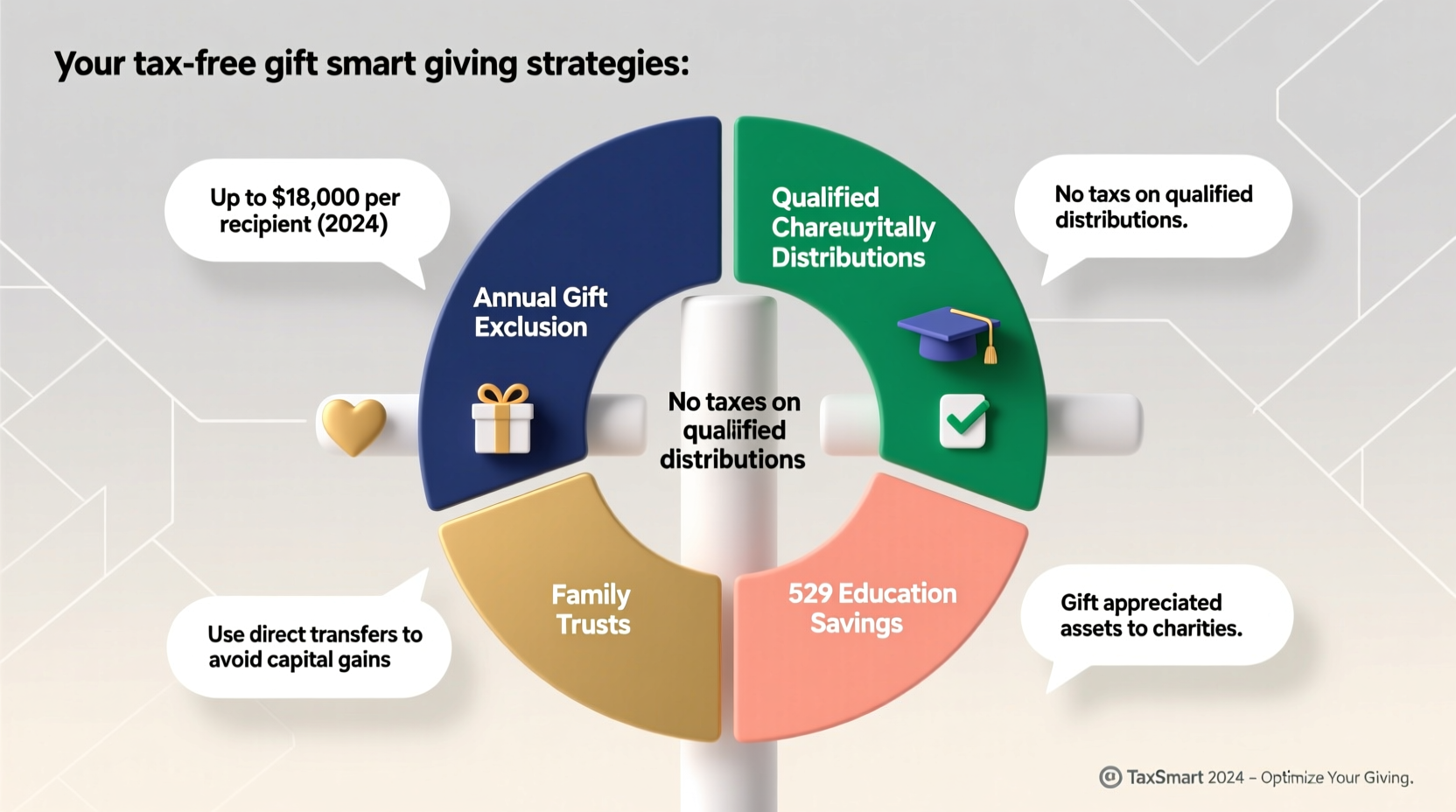
The foundation of tax-free gifting lies in the IRS annual exclusion rule. Each year, an individual can give up to $18,000 to any number of people without reporting the gift or using any portion of their lifetime gift and estate tax exemption. This means you could give $18,000 to your child, another $18,000 to your sibling, and $18,000 to a friend—all in the same year—with no tax implications.
If you're married, you and your spouse can each make separate gifts, effectively doubling the amount to $36,000 per recipient. This is known as \"gift splitting,\" and it must be reported on Form 709 if both spouses contribute to a single gift over the individual limit.
Tip: Use January to plan your annual gifting strategy—this ensures you don’t miss the opportunity to use the full exclusion before year-end.Smart Gifting Strategies for Maximum Impact
Taking advantage of the annual exclusion is just the beginning. Thoughtful planning can amplify benefits while preserving your own financial stability.
1. Front-Load Multi-Year Gifts
You can pre-pay up to five years of gifts in a single year for certain types of accounts, such as 529 college savings plans. For example, one person can contribute $90,000 ($18,000 x 5) in one year to a child’s 529 plan without filing a gift tax return. Married couples can contribute up to $180,000. Just remember: if you use this option, you cannot make additional annual exclusion gifts to that same person during the next five years unless you elect to spread the gift differently.
2. Fund Education and Medical Expenses Directly
Paying tuition or medical bills directly to institutions is exempt from gift tax—there's no limit. Whether it's college tuition or a surgical procedure, these payments don't count toward your annual exclusion or lifetime exemption. This makes them ideal for larger transfers without triggering tax scrutiny.
3. Leverage Trusts for Controlled Gifting
A revocable or irrevocable trust can serve as a vehicle for structured gifting. For instance, an irrevocable life insurance trust (ILIT) can receive annual gifts to pay premiums, removing the policy from your taxable estate. Similarly, a 2503(c) minor’s trust allows tax-free contributions for minors, with assets transferring to them at age 21.
“Gifting isn’t just about generosity—it’s a strategic way to shrink your taxable estate before it’s too late.” — Laura Simmons, Estate Planning Attorney
Do’s and Don’ts of Tax-Free Gifting
| Do | Don’t |
|---|---|
| Use the full annual exclusion every year | Assume all cash gifts are automatically tax-free (reporting may still be needed) |
| Document gifts, especially large ones | Forget to adjust for inflation—the exclusion increases periodically |
| Coordinate with your spouse for gift splitting | Give appreciated assets without considering capital gains implications |
| Pay medical or educational expenses directly | Make gifts out of desperation or under pressure |
Step-by-Step Guide to Implementing a Gifting Plan
- Inventory Recipients: List family members or others you wish to support—children, grandchildren, nieces, nephews, or friends.
- Calculate Total Potential Gifting: Multiply $18,000 by the number of recipients. If married, consider joint gifting potential.
- Select Gifting Methods: Decide whether to transfer cash, fund 529 plans, pay bills directly, or set up trusts.
- Schedule Transfers: Set calendar reminders for December to ensure timely disbursement before year-end.
- Maintain Records: Keep bank statements, checks, or written acknowledgments as proof of gift.
- Review Annually: Reassess your financial situation and update your gifting strategy accordingly.
Real-Life Example: The Johnson Family Strategy
The Johnsons, a retired couple in Virginia, wanted to help their three children and four grandchildren without affecting their retirement security. They realized they could gift $36,000 per year per recipient using gift splitting. That totaled $252,000 in tax-free transfers annually ($36,000 x 7).
They allocated:
- $10,000 per grandchild to 529 plans, front-loaded over five years (total $50,000 each).
- $20,000 per child in direct cash gifts to help with mortgage payments.
- $6,000 per grandchild paid directly to summer camp providers.
Frequently Asked Questions
Do I need to file a tax return for gifts under $18,000?
No. As long as the gift is within the annual exclusion limit and not made to a non-citizen spouse, no filing is required. However, if you're splitting gifts with your spouse, you must file Form 709 to formalize the election—even if no tax is due.
Can I give more than $18,000 to someone without paying taxes?
Yes, but amounts exceeding the annual exclusion will count against your lifetime gift and estate tax exemption, currently $13.61 million per individual (2024). You won’t owe taxes immediately, but it reduces the amount you can pass tax-free at death.
What happens if I accidentally exceed the annual limit?
You’ll need to file Form 709 to report the excess. The overage will reduce your remaining lifetime exemption. No tax is due unless you’ve already used up your entire exemption.
Actionable Checklist for Smart Gifting
- ✅ Confirm the current year’s annual gift tax exclusion amount
- ✅ Identify all intended recipients
- ✅ Calculate total gifting capacity (individual and joint, if applicable)
- ✅ Choose delivery method: cash, 529 plan, direct payment, trust, etc.
- ✅ Schedule transfers before December 31
- ✅ Document each gift with records or receipts
- ✅ Consult a tax advisor or estate attorney for complex structures
Conclusion: Turn Generosity Into a Strategic Advantage
Gifting is often seen as purely emotional, but when guided by knowledge, it becomes one of the most effective tools for wealth transfer and tax efficiency. By consistently using the annual exclusion, leveraging direct payments for education and healthcare, and structuring gifts through trusts or 529 plans, you can significantly reduce your taxable estate while enriching the lives of those you care about.
The key is consistency—not waiting until the last minute or trying to catch up after major life events. Start small if needed, but start now. Every year you utilize the exclusion is an opportunity you can’t reclaim. Make smart gifting part of your financial rhythm, and watch your legacy grow—quietly, wisely, and tax-free.
🚀 Ready to take action? Review your 2024 gifting plan this week. Identify who you’d like to support, calculate how much you can give, and schedule your transfers. Share this article with a family member to start a meaningful conversation about generational wealth.