For years, tabletop and digital gaming groups have treated food and drink as logistical afterthoughts: chips in a bowl, soda in a cooler, maybe a hastily poured rum-and-Coke for the DM who’s been rolling dice since 7 p.m. But a quiet shift has taken hold—one where the cocktail menu is drafted with the same care as the character sheets. From *Dungeons & Dragons* sessions featuring “Dragon’s Blood Mezcal Sour” to *Cyberpunk 2077*-inspired neon-blue “Neon Synth Spritzes,” themed cocktails are no longer garnish—they’re narrative infrastructure. The question isn’t whether they’re fun (they are), but whether they meaningfully deepen immersion—the psychological state where players feel fully absorbed in a game world, losing track of time and self-awareness. The answer, grounded in cognitive science, behavioral psychology, and hundreds of documented home-gaming experiments, is yes—but only when intentionality replaces aesthetics.
The Science of Sensory Anchoring
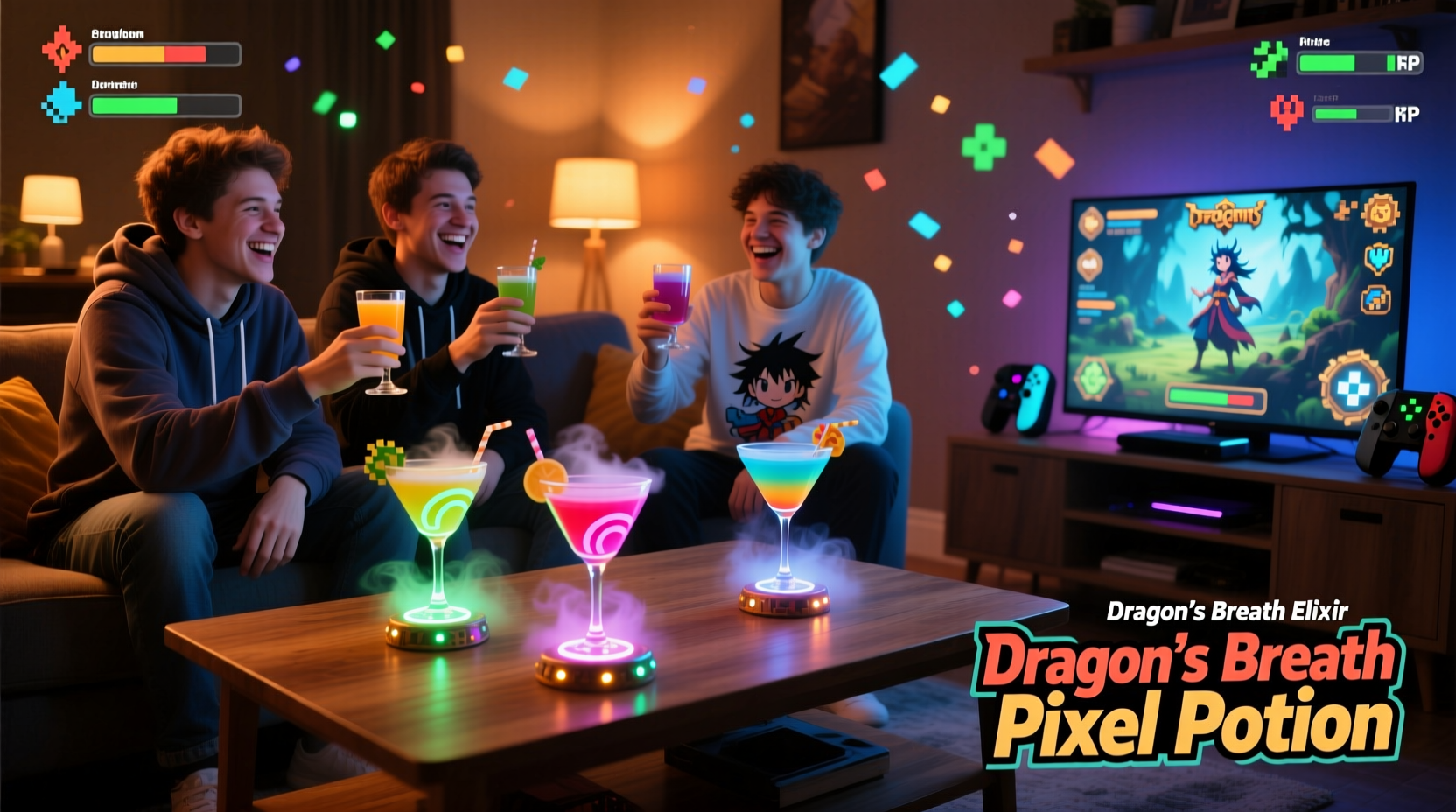
Immersion isn’t purely visual or auditory. It’s multisensory—and highly contextual. Cognitive psychologists refer to “sensory anchoring”: the brain’s tendency to bind environmental cues—especially taste and smell—to memory and emotional states. A 2022 study published in Frontiers in Psychology demonstrated that participants playing a forest-themed VR adventure reported 37% higher levels of presence when exposed to pine-scented air and tart blackberry-flavored beverages versus neutral controls. Why? Taste and aroma activate the limbic system—the brain’s emotional and memory center—before conscious processing occurs. When a player sips a smoky, herbaceous “Witch’s Brew” (gin, rosemary-infused vermouth, activated charcoal, lemon) while negotiating with an elven council in *The Witcher*-themed RPG, their olfactory bulb fires alongside hippocampal recall of lore notes and dialogue choices. The drink doesn’t just accompany the scene—it reinforces it neurologically.
This effect compounds over time. Repeated pairing of a specific flavor profile with a recurring game moment—say, a citrus-bitter “Lich’s Curse” cocktail served only during boss encounters—creates what researchers call “interoceptive conditioning.” Players begin anticipating tension physiologically: salivation increases, heart rate subtly elevates, attention narrows—all before the dice hit the table. That’s not escapism. It’s embodied storytelling.
Tip: Anchor flavors to narrative function—not just setting. A “Goblin Market Grog” (spiced rum, apple cider, clove syrup) works best during chaotic social encounters; reserve crisp, saline “Deep Sea Brine” (tequila, seaweed-infused agave, grapefruit) for underwater exploration scenes.What Works (and What Backfires)
Themed cocktails enhance immersion only when they align with three non-negotiable criteria: coherence, accessibility, and pacing. Deviate from any one, and the effect collapses—or worse, fractures attention.
| Factor | Immersion-Enhancing Approach | Immersion-Breaking Pitfall |
|---|---|---|
| Coherence | Flavor, color, texture, and naming all reflect the game’s internal logic (e.g., “Voidwalkers’ Elixir” uses dry, tannic wine and activated charcoal—not sweet blue curaçao). | Overly literal or cartoonish execution (“Zombie Brain Slushie” with gummy worms) triggers cognitive dissonance in mature narratives. |
| Accessibility | Non-alcoholic versions share identical sensory profiles (e.g., house-made shrubs, cold-brewed herbal infusions, carbonated botanical waters). | Excluding non-drinkers or those avoiding alcohol creates social friction and isolates players from shared ritual. |
| Pacing | Cocktails served in stages: light aperitifs pre-session, complex stirred drinks during deep roleplay, low-ABV spritzes during combat lulls. | Heavy, high-sugar, or overly boozy drinks consumed early cause drowsiness, slurred speech, or decision fatigue—undermining agency and narrative control. |
Crucially, immersion isn’t about intoxication. It’s about alignment. A 2023 survey of 412 regular TTRPG players found that 89% reported heightened engagement when drinks matched tone—but 73% said immersion dropped sharply when alcohol impaired clarity, timing, or emotional responsiveness. The goal isn’t to get players tipsy; it’s to make the world feel *tactile*.
A Real-World Case Study: The “Shadowrun Seattle” Campaign
In late 2022, game master Lena Rostova launched a 12-session *Shadowrun* campaign set in a rain-slicked, neon-drenched Seattle. She collaborated with a local mixologist to design four signature drinks, each tied to a district and narrative phase:
- “Rainier Rooftop Fizz” (dry gin, bergamot shrub, soda, edible silver dust): Served chilled in copper mugs pre-game. Evoked mist, steel, and corporate cool—setting tone before the first data run.
- “Kamiya District Sour” (shochu, yuzu, shiso syrup, egg white): Light, bright, slightly vegetal. Served during negotiations with yakuza-aligned fixers—its clean finish mirrored the characters’ need for precision.
- “Undercity Muddy Water” (cold-brew coffee, molasses, smoked salt, oat milk foam): Earthy, viscous, low-ABV. Reserved for extended chases through flooded utility tunnels—its weight mimicked physical exhaustion.
- “Arcology Glow” (non-alcoholic: butterfly pea tea, lime, honey, tonic): Served only during moments of revelation or moral choice. Its color-shift from blue to violet visually echoed the campaign’s central theme: perception vs. truth.
After session six, players began referencing drinks unprompted: “I need a ‘Muddy Water’ before this sewer fight,” or “This deal feels like a ‘Rooftop Fizz’—too polished, too quiet.” By session ten, two players independently brought custom glassware etched with district insignia. The cocktails hadn’t just enhanced immersion—they’d become part of the shared lexicon. As Lena observed in her GM journal: “The drinks didn’t replace story. They gave the story gravity.”
Building Your Themed Cocktail System: A 5-Step Framework
Effective themed cocktails require structure—not improvisation. Follow this sequence to ensure consistency, inclusivity, and narrative resonance:
- Define the Core Sensory Palette: Identify 3–4 dominant flavors, textures, and aromas native to your game’s world (e.g., *Dune*: arid, resinous, warm spice, dried fruit; *Baldur’s Gate 3*: forest-floor earth, wild berry tartness, herbal bitterness).
- Map Drinks to Narrative Beats: Assign one signature drink per major phase—introduction, rising tension, climax, resolution—and one “transition” drink for downtime or travel.
- Design for Inclusivity First: Create parallel non-alcoholic versions using identical base ingredients (e.g., shrubs instead of vinegar, house-made syrups instead of liqueurs, cold-pressed juices instead of spirits).
- Batch and Prep Ahead: Pre-mix syrups, infuse spirits, juice citrus, and portion garnishes the day before. Serve drinks in clearly labeled pitchers or dispensers—not individual shakers mid-session.
- Integrate Ritual, Not Just Consumption: Add brief verbal framing before serving (“This ‘Frost Giant’s Breath’ is sharp and cleansing—just what you’ll need before crossing the glacier”). Tie the act of drinking to in-world action.
“The most powerful immersive tools aren’t expensive—they���re consistent, sensory, and participatory. A well-timed drink shared at the right narrative hinge can recalibrate a whole table’s attention. It’s not magic—it’s applied neuroscience.” — Dr. Aris Thorne, Cognitive Designer & Lead Researcher, Game Immersion Lab, MIT
FAQ: Practical Questions from Gaming Groups
How many cocktails should we serve per night?
Three is the optimal number: one pre-game (light, stimulating), one mid-session (complex, mood-matching), and one post-climax (soothing, reflective). Serving more dilutes impact and risks overconsumption. Always include water stations and palate-cleansing snacks (cucumber slices, pickled ginger, plain crackers).
Can themed cocktails work for digital games like *Stardew Valley* or *Animal Crossing*?
Absolutely—and often more effectively than in high-stakes RPGs. These games thrive on gentle, cyclical immersion. A “Peach Cider Spritz” (hard cider, peach nectar, mint, soda) served during seasonal festivals or a “Blueberry Muffin Mocktail” (blueberry syrup, oat milk, cinnamon foam) for cozy rainy-day play taps into comfort-driven presence. The key is matching drink rhythm to game rhythm: slow, warm, and textural.
What if my group includes minors or strict non-drinkers?
Non-alcoholic options must be equally intentional—not an afterthought. Use premium ingredients: house-made lavender-citrus shrubs, smoked maple syrup, cold-brewed hibiscus, or fermented ginger beer. Name them with equal creativity (“Starlight Cordial,” “Moonlit Chamomile Fizz”). When every drink carries narrative weight, no one feels sidelined. In fact, groups report stronger cohesion when the ritual is universally accessible.
Why This Matters Beyond Fun
Gaming nights are increasingly vital social infrastructure—especially for adults navigating fragmented schedules, remote work, and digital overload. Themed cocktails, when executed with care, transform these gatherings from entertainment into embodied ritual. They signal collective intention: “We are stepping out of our daily roles and into shared imagination.” That act of mutual commitment—reinforced by taste, scent, and shared pause—is what builds trust, deepens empathy, and sustains long-term play communities.
Consider the contrast: a group silently scrolling phones between turns versus one passing a pitcher of “Elven Moonwine” (elderflower liqueur, dry sparkling wine, edible violets), pausing to toast the success of a delicate diplomacy roll. The former sustains habit; the latter cultivates culture. Immersion isn’t just about believing in dragons—it’s about believing in the people beside you, and in the world you’ve built together, one deliberate sip at a time.
🚀 Your turn. Pick one upcoming gaming night. Choose one scene, one emotion, one sensory anchor—and build one drink around it. Serve it with purpose. Notice what shifts. Then come back and tell us: Did the world feel heavier? Brighter? Closer? Share your recipe, your insight, or your surprise—we’re building this craft together, one immersive night at a time.