When it comes to choosing a magical gift for a child who loves fantasy, creativity, and immersive play, two standout options often rise to the top: the LEGO Monster Book and Harry Potter-themed board games. Both promise adventure, imagination, and hours of engagement—but they deliver those experiences in very different ways. One blends tactile building with storytelling, while the other dives into spell-casting, strategy, and cooperative play within a beloved universe. So, which makes the more magical gift?
The answer isn’t as simple as “one is better.” It depends on the child’s personality, interests, and how they engage with play. A deep comparison reveals strengths in both products—not just in fun, but in developmental benefits, replayability, and long-term value.
Understanding the Magic: What Each Gift Offers
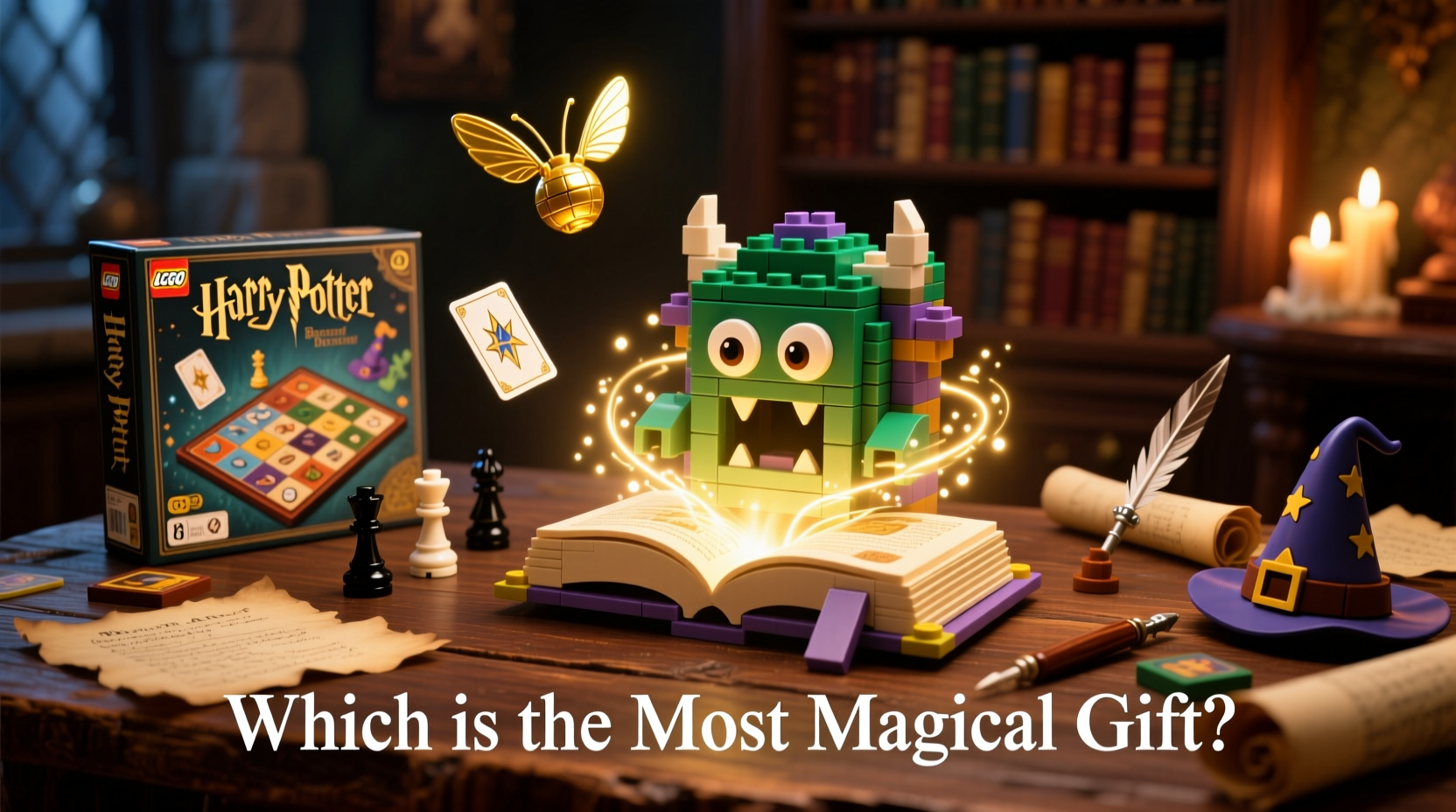
The LEGO Monster Book is part of LEGO’s Creative Initiatives series—a hybrid between a construction kit and an interactive storybook. It includes bricks, minifigures, and a narrative-driven guide that encourages children to build creatures, solve challenges, and progress through a whimsical monster-filled world. The experience is open-ended, emphasizing creativity, fine motor skills, and imaginative storytelling.
In contrast, Harry Potter board games—such as *Harry Potter: Hogwarts Battle*, *Wizard’s Chess*, or *The Hogwarts Express Game*—are structured adventures rooted in J.K. Rowling’s wizarding world. These games emphasize strategy, teamwork, character progression, and rule-based gameplay. They reward memory, decision-making, and social interaction, often requiring two or more players.
Both are magical in their own right, but the nature of that magic differs. The LEGO set offers a quiet, introspective kind of wonder—the magic of creation. Board games provide communal excitement—the thrill of casting spells, overcoming villains, and winning as a team.
Developmental Benefits: Building Minds Through Play
To evaluate which gift is more valuable, consider what each promotes in cognitive and emotional development.
| Skill | LEGO Monster Book | Harry Potter Board Games |
|---|---|---|
| Creativity & Imagination | High — Open-ended building inspires unique designs and stories. | Moderate — Limited by game mechanics, though role-playing enhances immersion. |
| Problem-Solving | Medium — Challenges are puzzle-like but not competitive. | High — Strategic planning, resource management, and adaptive thinking required. |
| Social Skills | Low to Medium — Can be shared, but primarily solo-focused. | High — Encourages turn-taking, communication, and cooperation. |
| Fine Motor Development | High — Precise brick assembly strengthens hand-eye coordination. | Low — Minimal physical manipulation beyond cards or pieces. |
| Emotional Resilience | Medium — Frustration possible during complex builds; satisfaction upon completion. | High — Learning to handle losing, managing setbacks in gameplay. |
This breakdown shows that neither option is universally superior. For a child who thrives on independence and creative expression, the LEGO Monster Book nurtures self-directed learning. For one who enjoys social dynamics and structured challenges, a Harry Potter board game may be far more enriching.
Tip: Observe how your child plays. Do they prefer inventing stories alone, or do they light up when playing cooperatively? Match the gift to their natural inclinations.Replay Value and Longevity
A truly magical gift lasts beyond the first unboxing. Replayability determines whether a toy remains on the shelf or becomes a cherished favorite.
The LEGO Monster Book can be rebuilt, reimagined, and integrated into larger LEGO worlds. Its modular design allows for endless variations. Once the initial story is completed, children often repurpose the bricks into new creations, extending its life indefinitely. This aligns with LEGO’s core philosophy: \"build, rebuild, imagine.\"
Harry Potter board games vary in longevity. Cooperative games like *Hogwarts Battle* feature progressive difficulty and unlockable content, offering dozens of hours across multiple sessions. However, once mastered, some children may lose interest unless they enjoy replaying for mastery. Competitive games like *Quidditch* might have shorter shelf lives if outcomes feel repetitive.
“Games that grow with the player—offering increasing complexity—are more likely to remain engaging past the novelty phase.” — Dr. Lena Patel, Child Development Researcher at Cambridge Play Lab
Case Study: Emma, Age 9
Emma received the LEGO Monster Book for her birthday. At first, she followed the included story, constructing the suggested monsters and placing them in scenes from the book. Over the next month, she began modifying the creatures, giving them new powers and writing her own comic strips. Her parents noticed improved focus and pride in her work.
Later that year, she was gifted *Harry Potter: Hogwarts Battle*. Initially hesitant about rules-heavy play, she warmed up after playing with cousins during holidays. Now, family game nights revolve around defeating dark creatures together. She’s developed patience and learned to strategize under pressure.
Her parents realized: both gifts were magical, but in different seasons and settings. The LEGO kit nurtured her inner storyteller; the board game strengthened her social confidence.
Choosing the Right Gift: A Practical Checklist
Before deciding, ask these questions to ensure the gift resonates:
- Is the child more introverted or extroverted in play?
- Do they enjoy following instructions or making up their own rules?
- How much time do they spend in group activities versus solo projects?
- Do they already own many building sets or board games?
- Will this gift encourage new skills, or reinforce existing ones?
- Is there space at home for storage and ongoing play?
- Are siblings or friends regularly involved in playtime?
Step-by-Step Guide: How to Decide Based on Personality Type
- Observe their play patterns. Do they build forts out of blankets and blocks, or act out scenes with action figures?
- Note their favorite media. Are they drawn to books and drawing (suggesting LEGO), or movies and trivia (leaning toward board games)?
- Assess social preferences. Do they seek playdates or prefer quiet corners with puzzles?
- Consider age and dexterity. Younger children may struggle with small LEGO pieces; older kids might find simple board games too easy.
- Evaluate existing toys. Avoid redundancy. If they have five board games, a building kit could offer fresh engagement.
- Think about shared experiences. Will adults or siblings join in? Board games thrive with company; LEGO can be enjoyed solo or collaboratively.
- Make the choice. Match the toy to the child, not the trend.
Expert Insight: Why \"Magic\" Isn't Just About Theme
According to educational psychologist Dr. Miriam Tran, the real magic in children’s toys lies not in branding or aesthetics, but in engagement depth.
“The most magical toys aren’t the loudest or flashiest—they’re the ones that make a child lose track of time. Whether it’s designing a monster lair brick by brick or casting a Patronus charm to save a friend in a game, that state of flow is where real growth happens.” — Dr. Miriam Tran, Author of *The Playful Mind*
This reframes the decision: instead of asking which brand is more popular, ask which experience will captivate the child most deeply.
Frequently Asked Questions
Can the LEGO Monster Book be used without the storybook?
Yes. While the book provides narrative structure, the set functions perfectly as a standalone creative kit. Many children discard the guide after initial use and invent their own worlds.
Are Harry Potter board games suitable for younger children?
Some are. Games like *Harry Potter: Sorting Hat Game* are designed for ages 4+, while *Hogwarts Battle* is recommended for ages 11+ due to complexity. Always check age guidelines and consider co-playing with younger kids.
Which gift offers better value for money?
Long-term, the LEGO Monster Book typically offers higher value because the bricks can be reused endlessly. Board games have fixed play boundaries, though high-quality ones can last years with frequent use.
Conclusion: The Most Magical Gift Is the One That Fits
In the duel between the LEGO Monster Book and Harry Potter board games, there is no single winner. The true measure of magic is not in the packaging or IP recognition, but in how well the gift aligns with the child’s mind and heart.
If the child lights up when creating something new, finds joy in solitary invention, and expresses themselves through hands-on projects, the LEGO Monster Book will spark a deeper kind of wonder. If they crave connection, love being part of a team, and dream of walking the halls of Hogwarts alongside friends, a Harry Potter board game will cast a lasting spell.
Rather than defaulting to popularity, take a moment to reflect on who the child is—and who they’re becoming. The most magical gift isn’t the one with the most glitter; it’s the one that meets them exactly where they are, and invites them to grow.
💬 What was the most magical gift you ever received as a child? Share your story in the comments—your memory might inspire another parent’s perfect choice.