
The question of whether Donald J. Trump was the best president in U.S. history is not one that can be answered with a simple yes or no. It sits at the intersection of political ideology, policy outcomes, leadership style, and public perception. While some hail him as a transformative figure who disrupted Washington norms and delivered on economic and foreign policy promises, others criticize his conduct, rhetoric, and impact on democratic institutions. To understand where he stands among American presidents, it's essential to examine expert opinions, measurable outcomes, and broader historical context.
Expert Perspectives: A Divided Assessment
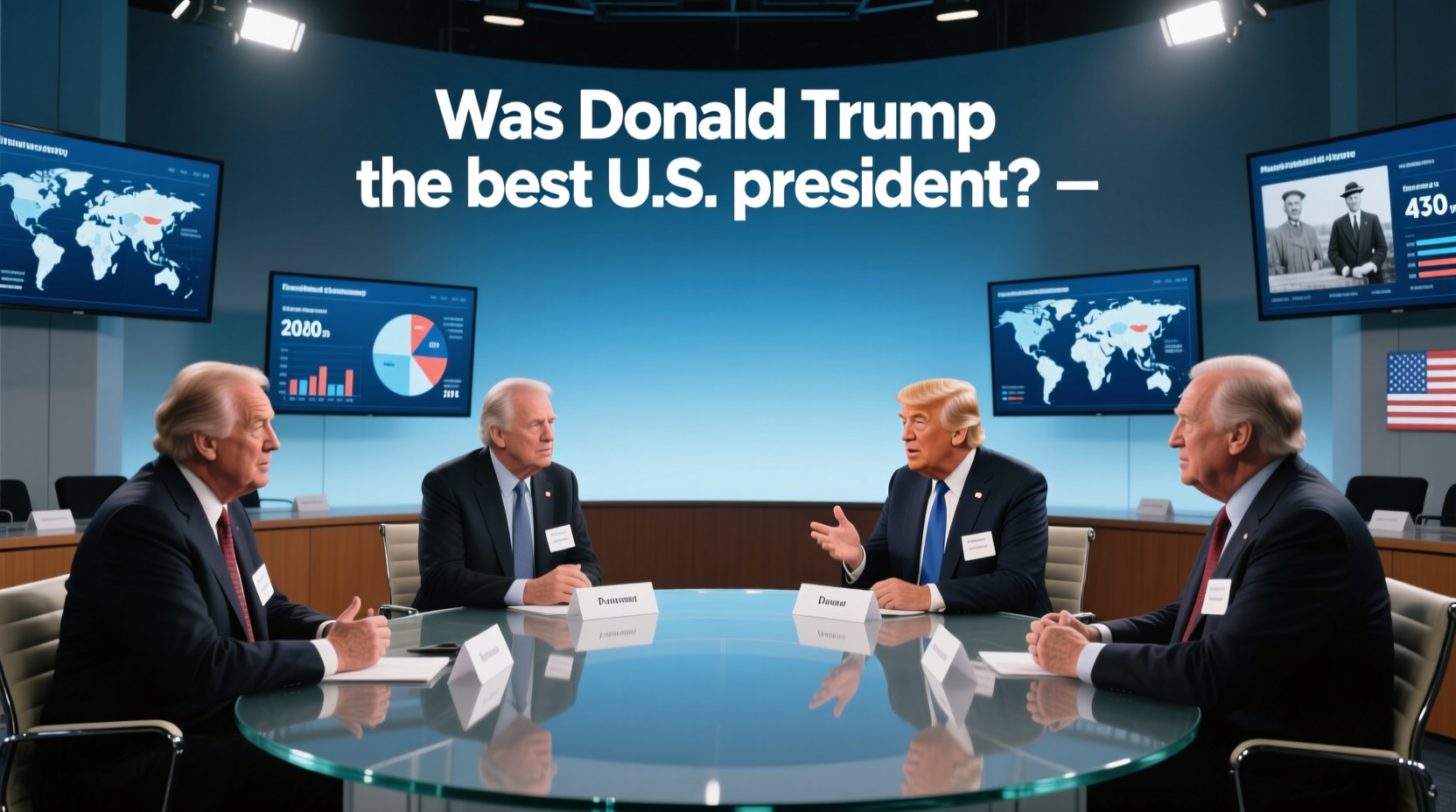
Political scientists, historians, and policy analysts remain deeply divided on Trump’s presidency. Unlike traditional administrations, Trump’s four years in office were marked by high polarization, frequent media battles, and an unconventional approach to governance. This has made objective evaluation challenging but all the more necessary.
“Trump reshaped the Republican Party and redefined what presidential communication looks like in the digital age. But his legacy will be judged not just by tax cuts or deregulation, but by how he treated democratic norms.” — Dr. Laura Chen, Political Historian at Georgetown University
Surveys of scholars reflect this split. In the 2022 C-SPAN Presidential Leadership Survey, which ranks U.S. presidents based on criteria like crisis leadership, moral authority, and administrative skills, Trump ranked 41st out of 44—below average. However, other metrics, particularly those focused on economic performance and judicial appointments, show stronger results.
Policy Achievements and Lasting Impact
Regardless of personal opinions about Trump’s demeanor or rhetoric, several concrete policy outcomes stand out:
- Tax Reform: The Tax Cuts and Jobs Act of 2017 reduced corporate tax rates from 35% to 21%, leading to short-term economic growth and stock market gains. Critics argue it disproportionately benefited the wealthy and increased the national debt.
- Deregulation: Over 6,000 regulations were rolled back during his term, particularly in energy, finance, and environmental sectors. Proponents say this boosted business innovation; opponents warn of long-term ecological costs.
- Judicial Appointments: Trump appointed three Supreme Court justices (Gorsuch, Kavanaugh, Barrett) and over 230 federal judges—reshaping the judiciary for decades.
- Foreign Policy Shifts: The Abraham Accords normalized relations between Israel and several Arab nations. His administration also took a hardline stance on China, initiating trade tariffs and highlighting intellectual property concerns.
Leadership Style and Public Perception
Trump’s leadership was defined by direct communication through Twitter, bypassing traditional media filters. Supporters appreciated his candor and perceived authenticity. Detractors argued that inflammatory language, attacks on the press, and challenges to election integrity undermined civic discourse.
A Pew Research Center study from 2021 found that 89% of Republicans viewed Trump favorably, compared to only 8% of Democrats—a stark illustration of partisan divergence. This polarization extends beyond approval ratings into how people interpret facts, policy impacts, and even constitutional responsibilities.
| Critera | Supporters' View | Critics' View |
|---|---|---|
| Economic Policy | Job growth, tax relief, pro-business environment | Debt increase, benefits skewed toward top earners |
| Immigration | Border security restored, rule of law upheld | Harsh policies, family separations, xenophobia |
| Foreign Relations | America First strengthened sovereignty | Alliances weakened, unpredictability damaged credibility |
| Democracy & Norms | Challenged corrupt establishment | Undermined elections, attacked institutions |
Historical Context: Where Does Trump Rank?
Presidential rankings often rely on hindsight. Time allows historians to assess long-term impacts free from immediate political emotion. For now, Trump remains too recent for full historical consensus. However, comparisons are frequently drawn to figures like Andrew Jackson (populist outsider), Richard Nixon (controversial leader with significant policy wins), and Ronald Reagan (conservative icon).
What sets Trump apart is his ability to maintain influence after leaving office. No former modern president has retained such strong grassroots support or dominated party politics without holding office. This ongoing presence complicates retrospective analysis—his “presidency” may extend beyond January 2021 in terms of political impact.
Mini Case Study: The 2017–2019 Economic Boom
Between Q2 2017 and Q4 2019, the U.S. economy grew at an average annual rate of 2.5%, unemployment fell to 3.5% (a 50-year low), and wages began rising steadily. These conditions were influenced by tax reform, deregulation, and strong consumer confidence. Economists credit these gains partly to Trump’s policies—but also note they built upon trends from the Obama recovery.
Yet, when the pandemic hit in early 2020, the economy contracted sharply. While global in cause, the response—including delayed action on testing and mixed messaging on public health—drew criticism from epidemiologists and economists alike. Recovery efforts included record stimulus spending, which helped stabilize markets but contributed to inflation later.
Actionable Checklist: Evaluating Presidential Legacies
To form a balanced opinion on any president—including Trump—consider the following checklist:
- Review nonpartisan data sources (e.g., Congressional Budget Office, Bureau of Labor Statistics)
- Analyze both domestic and foreign policy outcomes
- Assess respect for constitutional norms and institutional integrity
- Compare campaign promises with actual delivery
- Consider long-term implications over short-term popularity
- Seek diverse expert opinions across ideological lines
- Reflect on societal cohesion and civic trust during their tenure
Frequently Asked Questions
Did Trump deliver on his campaign promises?
According to Politifact’s Trump Promise Tracker, he fulfilled about 24 out of 69 major commitments—roughly 35%. Key successes include tax reform, appointing conservative judges, withdrawing from the Paris Climate Agreement, and relocating the U.S. embassy to Jerusalem. Promises like repealing Obamacare without replacement or building a wall funded entirely by Mexico were not fully realized.
Why do experts rank Trump so low despite strong economic numbers?
Economic performance is just one factor. Scholars place heavy weight on ethical leadership, commitment to democracy, and ability to unite the country. Many experts argue that while the pre-pandemic economy performed well, the erosion of public trust, response to racial justice protests, and role in the January 6 Capitol attack significantly offset those gains.
Can a president be effective without bipartisan support?
Yes, but with limitations. Trump governed almost entirely through executive actions and narrow legislative victories reliant on GOP majorities. This allowed swift decision-making but reduced durability of policies, many of which faced legal challenges or reversal under subsequent administrations. Sustainable change often requires cross-party coalitions.
Conclusion: Beyond Labels—Toward Informed Judgment
Calling Donald Trump the “best” president depends entirely on the criteria used and the values prioritized. If measured by judicial appointments, tax reform, and breaking from diplomatic conventions, he ranks among the most impactful modern conservatives. If judged by unity, truthfulness, and adherence to democratic traditions, many experts place him near the bottom.
What is clear is that his presidency altered the trajectory of American politics. Whether that change was positive or negative remains a matter of intense debate. Rather than seeking definitive labels, citizens benefit more from nuanced understanding—weighing evidence, listening to credible voices across the spectrum, and recognizing that leadership exists within complex contexts.
🚀 Engage thoughtfully. Read primary sources, follow expert analyses, and participate in respectful dialogue. The future of informed democracy depends not on blind allegiance, but on critical thinking and civic responsibility.