
In a world where time feels increasingly scarce, many people find themselves staying up late not because they have to—but because they finally feel in control. This phenomenon, known as \"revenge bedtime procrastination,\" occurs when individuals delay sleep to reclaim personal time lost during the day. While it may offer temporary relief, this habit undermines both mental health and daily performance. Understanding the psychological roots of this behavior is the first step toward breaking free from its grip.
Revenge bedtime procrastination isn’t just about poor time management; it’s a response to emotional exhaustion, lack of autonomy, and chronic stress. The desire to unwind after a long day often leads to scrolling through social media, binge-watching shows, or endlessly browsing the internet—activities that provide instant gratification but erode sleep quality. Over time, this pattern creates a self-defeating loop: fatigue increases stress, which reduces productivity, prompting more evening procrastination to regain a sense of freedom.
The Psychology Behind Revenge Bedtime Procrastination
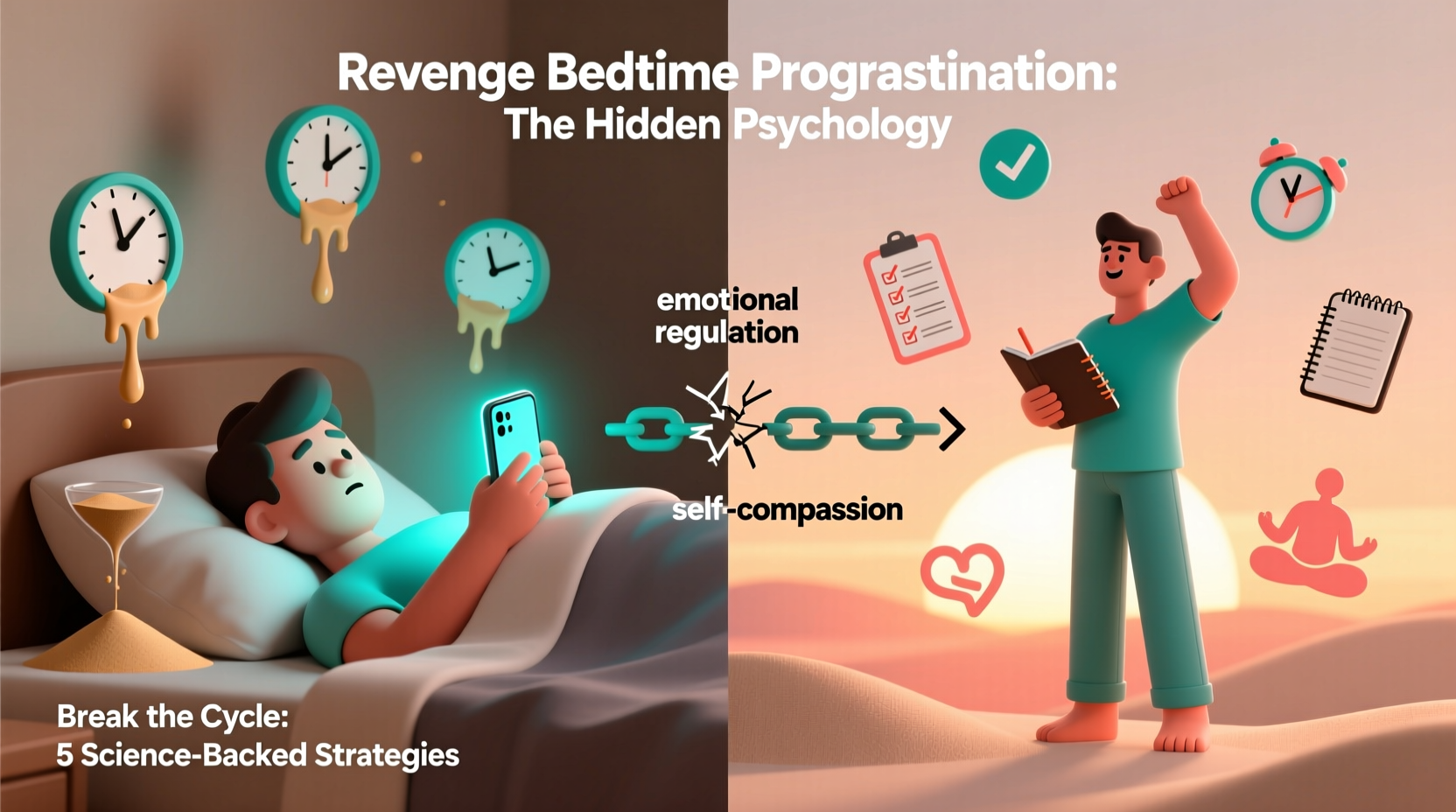
First identified in research by Floor Kroese and her team, bedtime procrastination refers to going to bed later than intended without external justification. The \"revenge\" aspect was popularized by Chinese social media users describing how office workers sacrificed sleep to reclaim leisure time after feeling overworked and deprived of autonomy during the day.
Psychologically, this behavior stems from several interconnected factors:
- Ego depletion: After making decisions all day—from what to wear to how to respond in meetings—your willpower reserves are low by nightfall, making it harder to stick to healthy routines.
- Low perceived autonomy: When people feel their days are dictated by others (employers, family demands, rigid schedules), they seek control at night, even if it harms them.
- Emotional regulation: Late-night activities serve as a coping mechanism for stress, anxiety, or unmet emotional needs.
- Dopamine dependency: Digital stimulation provides quick rewards that override the brain’s natural wind-down signals.
“We often see revenge bedtime procrastination in high-achievers who sacrifice personal time during the day. They don’t realize they’re trading short-term pleasure for long-term cognitive decline.” — Dr. Elena Ramirez, Clinical Psychologist and Sleep Specialist
This isn't laziness—it's a silent protest against an unbalanced life. Recognizing it as such shifts the conversation from blame to solutions rooted in empathy and structure.
Why Willpower Alone Isn't Enough
Telling yourself “just go to bed earlier” rarely works because willpower is a limited resource. By the evening, decision fatigue has already weakened your ability to act against impulses. Moreover, if your daytime lacks meaningful downtime or personal fulfillment, your subconscious resists surrendering the few hours you perceive as yours.
Instead of relying on discipline, effective change requires environmental design, behavioral insight, and emotional awareness. Lasting improvement comes not from forcing sleep, but from redesigning your relationship with time and rest.
Tip: Track your pre-sleep activities for three nights. Note what you're doing, why you're doing it, and how you feel. Patterns will reveal emotional triggers behind delays.Step-by-Step Guide to Break the Cycle
Changing deep-seated habits takes consistency and compassion. Follow this six-step process to gradually dismantle revenge bedtime procrastination:
- Conduct a Time Autonomy Audit
Review your typical weekday. Identify blocks where you felt controlled or rushed. Were there moments you postponed personal enjoyment? This audit helps pinpoint why nighttime feels like the only “me time.” - Create Micro-Moments of Freedom During the Day
Introduce small acts of autonomy: take a 10-minute walk, listen to music while commuting, or schedule five minutes of journaling. These mini-rewards reduce the pressure to compensate at night. - Design a Wind-Down Routine (Not Just a Bedtime)
Your brain needs transition time. Start 60–90 minutes before target sleep with low-stimulation activities: reading physical books, light stretching, or gratitude journaling. Avoid screens and decision-making. - Use Implementation Intentions
Replace vague goals like “go to bed early” with specific plans: “When the clock hits 10:30 PM, I will turn off my laptop and begin my wind-down routine.” Specific triggers increase follow-through. - Optimize Your Environment
Remove temptation. Charge your phone outside the bedroom. Use apps that limit screen time after 9 PM. Dim lights and lower room temperature to signal sleep readiness. - Reflect Weekly, Not Nightly
Don’t judge each night as success or failure. At week’s end, ask: Did I feel more in control today? Was my evening calmer? Progress is measured in trends, not single events.
Do’s and Don’ts: Managing Evening Habits
| Do | Don’t |
|---|---|
| Schedule one enjoyable activity earlier in the day | Save all leisure for late-night hours |
| Use blue-light filters after 8 PM | Binge-watch episodes past midnight regularly |
| Practice mindfulness or breathing exercises before bed | Engage in emotionally charged conversations or work emails |
| Keep a notepad by your bed to capture racing thoughts | Scroll endlessly to distract from unresolved feelings |
| Gradually shift bedtime earlier by 15-minute increments | Try to fix your sleep schedule overnight |
Real Example: From Chronic Delay to Consistent Rest
Sophie, a 32-year-old project manager, consistently stayed up until 1:00 AM despite waking at 6:30 AM for work. She described her evenings as “the only time I can breathe.” Her days were packed with back-to-back meetings, parenting duties, and household tasks. Initially, she blamed herself for lacking discipline.
After tracking her time for a week, Sophie realized she hadn’t taken a single uninterrupted 20-minute break during daylight hours. With coaching, she began scheduling short midday walks and listening to podcasts during lunch—small moments of ownership. She also started winding down at 9:45 PM with herbal tea and a novel instead of her phone.
Within four weeks, Sophie was falling asleep by 11:00 PM without effort. More importantly, she reported feeling less resentful toward her schedule and more present during the day. The need for “revenge” faded because she no longer felt deprived.
Actionable Tips to Reclaim Control Without Sacrificing Sleep
Tip: If you must use your phone at night, set it to grayscale mode after 9 PM. Removing color reduces visual appeal and makes mindless scrolling less enticing. Tip: Replace digital binges with tactile relaxation—knitting, coloring, or playing a musical instrument. These activities engage the mind without overstimulating it. Tip: Use a bedtime alarm—not just a wake-up alarm. Train yourself to respond to “it’s time to start winding down” as seriously as “time to get up.”Checklist: Building a Sustainable Evening Routine
Use this checklist nightly for one week to reinforce new habits:
- ✅ Disengage from work-related tasks at least 90 minutes before bed
- ✅ Turn off notifications or enable “Do Not Disturb” mode by 9 PM
- ✅ Complete any urgent chores before starting wind-down phase
- ✅ Engage in a non-screen relaxing activity (reading, drawing, meditation)
- ✅ Practice a 4-7-8 breathing technique: inhale for 4 seconds, hold for 7, exhale for 8
- ✅ Reflect on one positive moment from the day (write it down or say it aloud)
- ✅ Lights out by target time—even if you’re not sleepy yet
Consistency builds neural pathways. After seven days, this sequence becomes automatic, reducing reliance on motivation.
Frequently Asked Questions
Is revenge bedtime procrastination the same as insomnia?
No. Insomnia involves difficulty falling or staying asleep despite wanting to rest. Revenge bedtime procrastination is a voluntary delay of sleep driven by psychological needs, not physiological ones. However, prolonged procrastination can lead to chronic sleep restriction, mimicking insomnia symptoms.
Can this habit affect mental health?
Yes. Chronic sleep loss exacerbates anxiety, depression, and emotional reactivity. The temporary relief gained from late-night freedom is outweighed by next-day irritability, reduced focus, and heightened stress—fueling a destructive cycle.
What if my job requires late-night work?
If your profession genuinely demands evening hours, structure your time deliberately. Set clear boundaries: define start and end times, take breaks, and protect post-work wind-down periods. The key is intentionality, not endless availability.
Conclusion: Reclaim Your Nights Without Losing Yourself
Stopping revenge bedtime procrastination isn’t about stricter rules or guilt over screen time. It’s about restoring balance—ensuring you have moments of joy, autonomy, and stillness throughout the day so you don’t feel compelled to steal time from sleep. Healing this habit starts with recognizing it as a symptom, not a flaw.
Small changes compound: a five-minute pause here, a redesigned evening ritual there. Over time, these shifts restore energy, clarity, and emotional resilience. You don’t need more hours—you need more meaning within the hours you already have.
💬 Ready to break the cycle? Start tonight by scheduling one small act of self-care before 8 PM. Share your commitment in the comments—accountability begins with a single step.