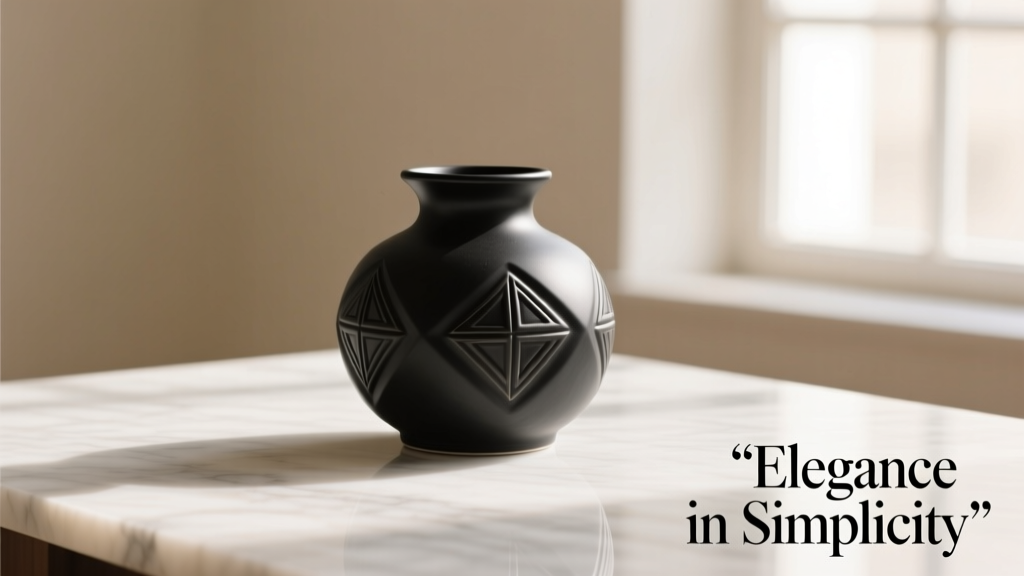
Feng Shui is not about decorative superstition—it’s an ancient environmental science rooted in observation, intention, and energetic responsiveness. When applied thoughtfully, it supports well-being, focus, and harmony by aligning physical space with human experience. Yet many people begin with a crystal from a gift shop or a bamboo plant ordered online, only to wonder why their “wealth corner” feels stagnant or why their bedroom still disrupts sleep. The truth is: no single Feng Shui essential works universally. Effectiveness depends on three interlocking factors—the space’s architectural energy (its qi flow), your personal BaZi (birth chart) elemental profile, and the specific life area you wish to support. Choosing wisely means moving beyond aesthetics and symbolism to intentional resonance.
Understand Your Space’s Energy Map First
Before selecting any object, assess your space using the Bagua—the eight-sector energy map overlaid onto floor plans. Each sector corresponds to a life area: Wealth (Southeast), Fame (South), Relationships (Southwest), Family (East), Health (Center), Children & Creativity (West), Knowledge (Northeast), and Career (North). Accurate placement begins with orientation: use a compass app (not your phone’s default “directions” function) to identify true North. Then, align the Bagua so its Career sector matches your home’s actual north wall—not the front door, as common misconceptions suggest.
Next, evaluate structural imbalances. A missing corner (e.g., an L-shaped apartment where the Southwest sector is truncated) weakens Relationships energy. A bathroom located in the Wealth sector disperses abundance. A cluttered hallway blocks Career qi. These conditions determine *what kind* of essential is needed—and what must be avoided. For example, placing a water feature in a bathroom (already water-dominant) amplifies draining energy rather than balancing it.
Tip: Never place a mirror directly opposite your bed—even if it’s “for reflection.” In Feng Shui, mirrors in bedrooms activate restless yang energy, disrupting restorative yin and potentially inviting subconscious unease.Select by Purpose, Not Popularity
Crystals, wind chimes, and fountains dominate retail Feng Shui—but each serves distinct energetic functions. Choosing based on trend leads to mismatched results. Instead, match the essential to your verified need:
- Crystals: Used for grounding, amplification, or purification—not decoration. Black tourmaline stabilizes chaotic spaces (e.g., near electronics or busy intersections); citrine energizes stagnant Wealth sectors; rose quartz softens sharp corners in Relationships zones.
- Plants: Symbolize Wood element growth, but only thrive—and thus support qi—when placed where light and airflow permit. A struggling fiddle-leaf fig in low-light Northeast (Knowledge) does more harm than good by introducing decay energy.
- Mirrors: Expand space and redirect qi, but require precise angles. A mirror reflecting a beautiful garden invites nourishing energy; one reflecting a cluttered laundry room magnifies disorganization.
- Water features: Represent flow and abundance, yet demand maintenance. Stagnant water in a tabletop fountain creates sha qi (harmful energy)—more damaging than no water at all.
- Color: Functions as elemental medicine. Red (Fire) boosts Fame but overwhelms a small South-facing kitchen; soft green (Wood) supports Health in the Center, but muddy olive can dampen vitality if overused.
Authentic selection prioritizes function over form. A ceramic bowl of river stones may serve better than a $200 crystal cluster if it sits stably in a grounded, uncluttered Wealth area and resonates with your tactile sense of calm.
Match Essentials to Your Personal Element Profile
Your BaZi (Four Pillars of Destiny) birth chart reveals your dominant elemental balance—Wood, Fire, Earth, Metal, or Water—and highlights which elements support or deplete you. This is critical: what strengthens one person may destabilize another. For instance, someone with excess Fire (evidenced by impatience, inflammation, or overheating) should avoid red accents and candles in the South (Fame), even if the Bagua suggests it. Instead, they benefit from cooling Water elements (blue/black) or grounding Earth tones (beige, terracotta) to restore equilibrium.
A simple self-assessment helps approximate your elemental needs:
- Recall recurring physical or emotional patterns: Do you feel drained after social events? (Possible Metal deficiency.) Do deadlines trigger panic rather than focus? (Likely Wood imbalance.)
- Observe seasonal reactions: Do spring mornings energize you? (Strong Wood.) Does winter leave you lethargic? (Weak Water or Earth.)
- Review your living space: Are metal-framed furniture and white walls predominant? (Excess Metal.) Is your home dominated by wood floors and green textiles? (Potential Wood overload.)
Once identified, choose essentials that nourish your deficient element or moderate your excess. Someone with weak Earth benefits from ceramic objects, square shapes, and yellow/earth-toned accents in the Center (Health) and Southwest (Relationships) sectors. Someone with excessive Water avoids large mirrors or aquariums in the North (Career), opting instead for warm lighting and earthen textures to anchor flow.
“Feng Shui isn’t about forcing energy—it’s about listening. A crystal that feels cold and distant when held is likely misaligned with your current constitution. Trust somatic feedback as much as symbolic meaning.” — Dr. Lin Mei, Architectural Feng Shui Consultant & Qigong Instructor, Beijing Institute of Traditional Environmental Science
Practical Selection Checklist
Use this actionable checklist before purchasing or placing any Feng Shui essential:
- ✅ Oriented correctly: Verified true North/South/East/West with compass—not assumed from floor plan or door position.
- ✅ Structurally appropriate: No bathroom, stove, or sharp corner directly within the target sector.
- ✅ Physically functional: Water features circulate cleanly; plants are healthy and appropriately sized; mirrors reflect something uplifting.
- ✅ Personally resonant: You feel calm, focused, or uplifted when near it—not distracted, anxious, or indifferent.
- ✅ Elementally balanced: Complements your BaZi profile (e.g., avoids amplifying your excess element).
- ✅ Maintainable long-term: You have time, tools, and willingness to clean, prune, refill, or reposition it quarterly.
Real-World Application: The Home Office Transformation
Sarah, a freelance graphic designer in Portland, struggled with inconsistent client referrals and afternoon fatigue despite working 10 hours daily. Her home office occupied the Northwest corner of her apartment—the Bagua’s Helpful People & Travel sector (associated with Metal element and networking energy). Yet her space featured a large west-facing window (excess Metal), stainless-steel desk (more Metal), and white walls (Metal’s color)—creating elemental overload. She’d placed a citrine cluster there hoping to “attract wealth,” but citrine is Fire element, which exhausts Metal. The result: mental burnout and missed opportunities.
After assessing her BaZi chart (revealing strong Metal but deficient Water), her consultant recommended removing the citrine and replacing it with a small, quiet tabletop fountain—Water nourishes Metal, supporting clarity and connection. They added a single deep-blue ceramic vase (Water color) and replaced harsh overhead lighting with warm, dimmable lamps (to soften Metal’s sharpness). Within six weeks, Sarah reported clearer thinking during calls, two new long-term contracts, and sustained energy through afternoon sessions. The change wasn’t mystical—it was elemental recalibration.
Essential Comparison: What Works Where—and Why
Not all essentials suit every sector or goal. This table clarifies optimal uses, limitations, and common misapplications:
| Essential | Best For | Avoid In | Key Maintenance Requirement |
|---|---|---|---|
| Black Tourmaline | Entryways, home offices, spaces near Wi-Fi routers or smart meters (grounding scattered electromagnetic energy) | Bedrooms (overly grounding; may inhibit dream recall or restful transition) | Monthly cleansing under cool running water; never salt-water soak (damages crystal lattice) |
| Lucky Bamboo (Dracaena sanderiana) | East (Family), Southeast (Wealth)—especially where natural light is indirect and consistent | North (Career) unless paired with black stones; Southwest (Relationships) if stalks are bent or yellowing (symbolizes instability) | Change water weekly; trim roots if brown; replace entire plant if leaves yellow beyond lower third |
| Convex Mirror | Small entries with narrow hallways (expands space), outside windows facing T-intersections (deflects rushing qi) | Directly across from beds, altars, or dining tables (disrupts intimacy and nourishment) | Dust monthly; reposition annually to match seasonal qi shifts (e.g., angle slightly upward in winter) |
| Wind Chime (Six-Metal Rod) | Northwest (Helpful People), West (Children/Creativity)—activates Metal energy for clarity and mentorship | South (Fame) or Southeast (Wealth)—Metal controls Wood (Wealth’s element) and extinguishes Fire (Fame’s element) | Hang where breeze is gentle; avoid clanging constantly—intended for subtle, intermittent sound |
| Salt Lamp | Center (Health), Southwest (Relationships)—soft warm light supports Earth element stability | North (Career) or East (Family)—warm light disrupts Water and Wood’s cooler, expansive qualities | Wipe weekly with dry cloth; keep away from humidity (salt absorbs moisture and weeps) |
FAQ
Do I need a professional consultation—or can I do this myself?
You can apply foundational principles independently using a compass and the Bagua map—but accuracy improves significantly with training. Common errors include misidentifying true North, overlooking structural voids, or misreading elemental interactions. If you’re addressing chronic health issues, financial stagnation, or relationship strain, a certified practitioner (look for credentials from the International Feng Shui Guild or BTB Feng Shui Society) provides nuanced analysis of your BaZi and space history. Self-guided work excels for maintenance, seasonal adjustments, and minor enhancements.
Can I use artificial plants or crystals?
Yes—but with caveats. High-quality silk plants that mimic natural growth patterns (e.g., layered ferns, asymmetrical branches) support Wood energy effectively. Avoid stiff, symmetrical plastic replicas—they introduce rigid, unnatural qi. For crystals, lab-grown stones like amethyst or clear quartz hold identical vibrational properties to natural ones and are ethically preferable. What matters most is intentional placement and respectful care—not geological origin.
How soon will I notice changes?
Subtle shifts often appear within 2–4 weeks: improved sleep quality, fewer misunderstandings in conversations, or renewed motivation on stalled projects. Structural improvements (e.g., resolving a missing Southwest corner with a strategic mirror and earth-toned rug) may take 3–6 months to fully integrate. Patience reflects Feng Shui’s core principle: energy moves like water—steadily, responsively, and inevitably when given clear channels.
Conclusion
Feng Shui essentials are tools—not talismans. Their power emerges not from passive placement, but from conscious alignment: between your space’s architecture and your body’s rhythms, between symbolic meaning and tangible maintenance, between collective tradition and your singular life path. The “best” essential isn’t the rarest crystal or the most expensive fountain—it’s the one that breathes quietly beside your desk without demanding attention, the plant whose leaves unfurl steadily in your morning light, the mirror that reflects your calm face back to you after a long day. Start small. Observe deeply. Adjust patiently. Let your intuition refine what your compass confirms. Your space already holds intelligence. Your role isn’t to command it—but to listen, respond, and honor its quiet wisdom.
💬 Your space tells a story—what has it been saying lately? Share one intentional change you’ll make this week in the comments. Real experiences help others move beyond theory into grounded, living harmony.