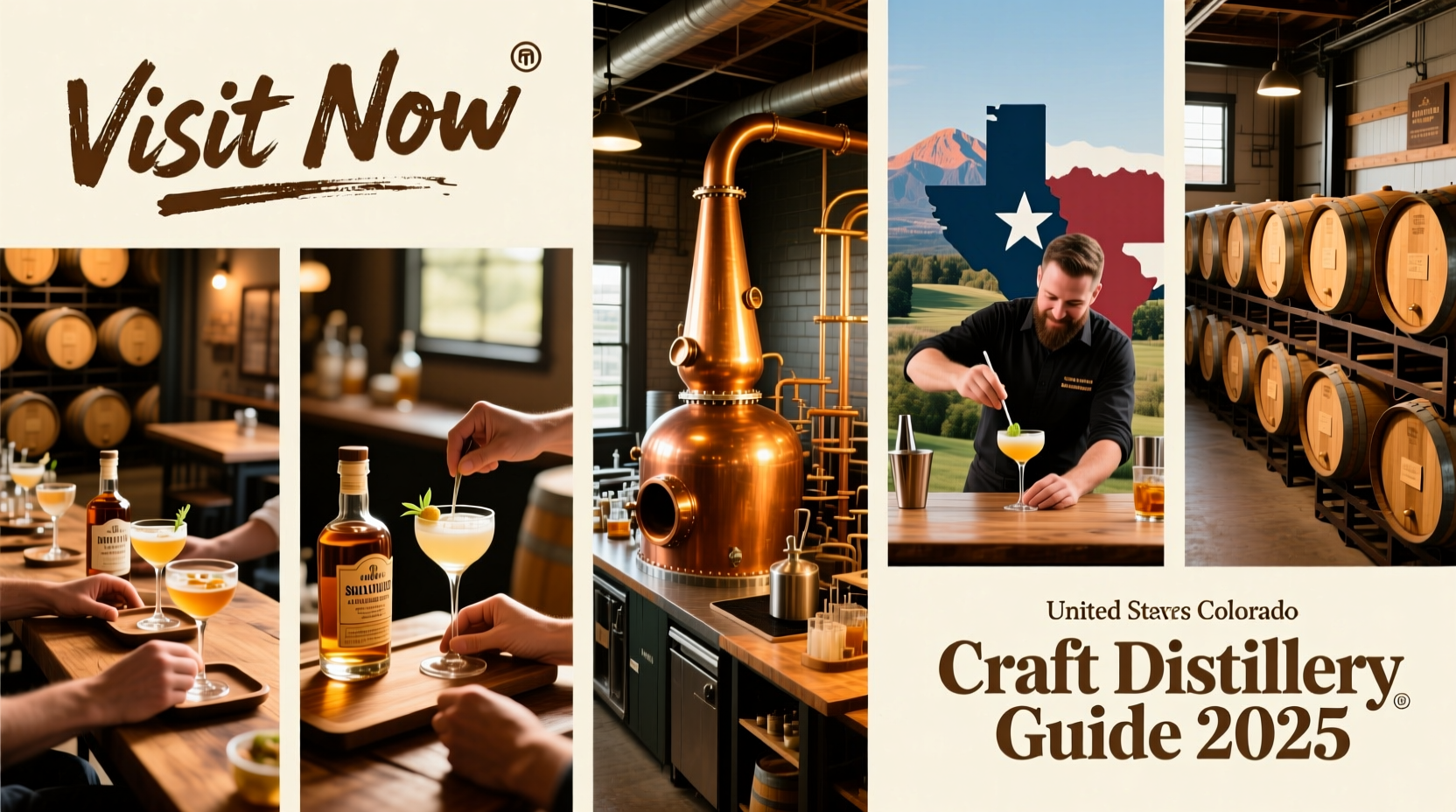
Across America, craft distilling has evolved from a niche curiosity into a cultural and economic force — one that blends agrarian tradition, artisanal innovation, and immersive hospitality. In 2025, distillery tourism is no longer about sampling a flight of bourbon or gin; it’s about tracing grain from field to flask, meeting the still operator who calibrated the reflux column at dawn, and tasting single-barrel rye aged in a repurposed apple barn. Visitor numbers at TTB-licensed craft distilleries rose 23% year-over-year in 2024, with guided tours now accounting for nearly 40% of total revenue at midsize operations (American Craft Spirits Association, 2024 Annual Report). What makes 2025 distinct is the geographic diversification: while Kentucky and Tennessee remain foundational, new regional ecosystems — driven by terroir-specific grains, climate-responsive aging, and cross-sector collaborations with breweries and orchards — are redefining where enthusiasts travel. This article identifies the seven most compelling states for distillery tourism in 2025, grounded in operational growth data, visitor satisfaction metrics, infrastructure upgrades, and authentic local integration.
Why Distillery Tourism Is Accelerating in 2025
Three converging forces explain the surge. First, regulatory modernization: 22 states updated tasting-room laws in 2023–2024, allowing expanded food service, off-site sales, and multi-day passes. Second, infrastructure investment: rural broadband expansion and federal “Main Street Revitalization” grants have enabled small-town distilleries to build accessible visitor centers, ADA-compliant barrel rooms, and on-site lodging. Third, consumer expectation shift — today’s traveler seeks *process transparency*. A 2024 Visit.org survey found 68% of distillery visitors ranked “seeing grain milled onsite” and “meeting the head distiller” as more valuable than branded merchandise or cocktail classes. This isn’t just tourism; it’s participatory heritage.
Tip: Book tours directly through distillery websites — not third-party platforms — to access limited-edition releases, staff-led barrel selections, and seasonal harvest events (e.g., corn-to-whiskey days in September).The Top 7 Trending States for Distillery Tours in 2025
Selection criteria included: (1) minimum 15% YoY increase in licensed craft distilleries (TTB data), (2) ≥85% visitor satisfaction score on Google and TripAdvisor (minimum 50 reviews per venue), (3) presence of at least two distilleries with certified sustainable practices (B Corp or Certified Sustainable Spirits), and (4) demonstrable community integration (e.g., grain sourcing within 50 miles, co-branded farmers’ markets).
1. Vermont: The Terroir-Driven Pioneer
Vermont leads in hyperlocal grain sourcing and cold-climate aging innovation. With over 42 active craft distilleries — up from 28 in 2022 — the state leverages its short growing season and granite-rich soil to produce distinctive rye and wheat whiskies. WhistlePig’s 15-year-aged “Farmstock” series, made exclusively from Vermont-grown rye and aged in barrels finished with local maple syrup, consistently sells out within minutes of release. But the real draw is accessibility: nearly all distilleries offer free weekday tours, and the Vermont Distillers Guild launched a “Grain-to-Glass Passport” in 2024, valid for 12 months and redeemable at 18 locations for complimentary tastings and barrel stave keepsakes.
2. Oregon: The Pacific Northwest Fusion Hub
Oregon’s distillery scene thrives on cross-pollination — with wineries, cideries, and coffee roasters. In 2025, Portland’s Eastside is home to the nation’s first “Spirit & Soil Corridor,” a 3-mile stretch linking six distilleries, three hop farms, and two native grain cooperatives. House Spirits Distillery (now House Spirits Co.) introduced its “Willamette Valley Single-Malt Series,” using locally malted barley and aged in ex-Pinot Noir casks from Yamhill County. Visitor volume here grew 31% in 2024 — the highest in the nation — driven largely by weekend “Cask & Vine” bus tours that include vineyard walks, distillery demos, and seated pairing lunches.
3. Michigan: The Great Lakes Grain Belt
Michigan’s advantage lies in geography and policy. Its 3,200+ miles of Great Lakes shoreline moderate temperature swings, creating ideal conditions for slow, even whiskey maturation. More critically, the state passed the “Grain Transparency Act” in 2023, requiring distilleries to label grain origin on all bottles sold in Michigan — a move that transformed consumer trust and tour engagement. At Journeyman Distillery in Three Oaks, guests walk through the on-site grain elevator, mill their own rye flour, and bottle a mini-cask of unaged spirit to age at home. Their 2024 “Great Lakes Barrel Trail” — a self-guided route connecting 14 distilleries across four peninsulas — saw over 47,000 unique participants.
4. Colorado: The High-Altitude Experimentation Zone
At elevations between 5,000 and 8,500 feet, Colorado’s distilleries experience accelerated angel’s share (evaporation) and unique chemical interaction between spirit and wood. Stranahan’s Colorado Whiskey — now operating two full-scale visitor campuses — opened its “High Plains R&D Lab” in 2024, offering public sessions where guests help design experimental batches using heirloom blue corn or roasted barley smoked over piñon. What sets Colorado apart in 2025 is logistics: the state’s new “Distillery Express” shuttle connects Denver Union Station to Front Range distilleries every 90 minutes, eliminating parking stress and enabling true day-trip feasibility.
5. New York: The Hudson Valley Renaissance
New York’s resurgence is rooted in legislation and legacy. The 2013 Farm Distillery Law allowed farm-based distilleries to sell direct-to-consumer — catalyzing a wave of grain-to-glass operations. Today, the Hudson Valley hosts 37 certified farm distilleries, many operating on land farmed continuously since the 1700s. Tuthilltown Spirits (now part of the Hudson Whiskey portfolio) pioneered the use of locally grown winter wheat and hand-split oak from Catskill forests. In 2025, the Hudson Valley Distillers Association launched “Harvest Week” — an October event where visitors join in grain harvesting, participate in open-fire mash cooking, and seal their own wax-dipped bottles. Attendance doubled year-over-year.
6. Texas: The Bold, Sun-Baked Innovator
Texas distilleries are rewriting aging rules. With average summer temperatures exceeding 100°F, heat cycling intensifies extraction from oak, yielding rich, caramel-forward bourbons in under three years. Garrison Brothers — the state’s first legal bourbon distillery — now offers “Texas Heat-Aged Reserve” tours featuring infrared thermography of active barrels and side-by-side tastings of standard vs. heat-accelerated batches. Beyond bourbon, Texas leads in agave spirits: Milagro Distillery’s “Tex-Mex Agricole” program sources Weber Blue Agave from South Texas fields — the only commercial agave cultivation in the continental U.S. Their 2025 “Agave & Oak” tour includes field harvesting, piña roasting, and distillation in a custom-built copper pot still.
7. Maine: The Coastal Craft Collective
Maine’s rise is quiet but profound. With just 24 licensed distilleries — the smallest absolute number on this list — it boasts the highest per-capita visitor rate (2.8 visits per resident in 2024). Why? Integration. Many distilleries source seaweed for gin botanicals, smoke malt over birch and spruce, and age spirits in ex-maple syrup barrels from Aroostook County. Cold River Gin’s “Coastal Forage Tour” begins at a tidal flat where guests harvest dulse and sea lettuce, continues to the distillery for gin infusion, and concludes with a tasting paired with smoked haddock. It’s experiential, educational, and deeply place-based — exactly what 2025 travelers seek.
What to Expect on a 2025 Distillery Tour: Beyond the Tasting Flight
Modern distillery tours emphasize depth over duration. The average 2025 tour lasts 90 minutes — up from 45 minutes in 2020 — and includes structured learning moments, hands-on components, and post-tour engagement tools. Here’s how leading operators structure the experience:
- Pre-Tour Digital Briefing: QR-coded welcome cards link to short videos introducing the distiller, grain source, and still type.
- Process Walkthrough: Not just “here’s the still” — but “here’s how our 1,200-gallon copper pot still’s reflux ratio affects congener profile.”
- Raw Material Station: Touch bins of unmalted rye, local honey, dried juniper, or toasted oak chips — with scent vials and tasting notes.
- Barrel Library Access: Guests select a barrel number, scan it, and receive its full aging log: humidity logs, rotation dates, and previous contents.
- Post-Tour Engagement: Email receipt includes a digital “spirit passport” stamp, barrel photo, and invitation to join the distillery’s “Friends of the Cask” club for early access and voting on future releases.
“Tourists don’t want a sales pitch — they want stewardship. When someone sees the grain bill, touches the barrel stave, and understands why we rotate east-facing racks monthly, they become invested in the outcome — not just the product.” — Dr. Lena Torres, Director of Visitor Experience, American Craft Spirits Association
Planning Your 2025 Distillery Tour: A Practical Checklist
Checklist:- ✔ Verify tour availability: Many distilleries cap groups at 12 and require reservations 7–14 days ahead — especially during harvest (Sept–Oct) and barrel-filling season (March–April).
- ✔ Confirm accessibility: Ask specifically about step-free access to barrel rooms and restrooms — not just tasting rooms.
- ✔ Pack smart: Bring a reusable water bottle (hydration is critical after tastings), note-taking tools, and a small cooler bag if purchasing bottles (many distilleries don’t provide ice packs).
- ✔ Designate drivers or book shuttles: Never drive after multiple distillery stops. Use state-sponsored services like Oregon’s Spirit Shuttle or Michigan’s Barrel Bus.
- ✔ Research grain stories: Look up the distillery’s “Grain Map” online — knowing whether your rye came from a 3rd-generation family farm in North Dakota adds resonance to the tasting.
2025 Distillery Tour Comparison: Key Metrics by State
| State | Avg. Tour Duration | Max Group Size | Free Admission? | On-Site Lodging Available? | Top Unique Offering |
|---|---|---|---|---|---|
| Vermont | 85 min | 14 | Yes (weekdays) | Yes (5 locations) | Grain-to-Glass Passport |
| Oregon | 100 min | 12 | No (fee: $12–$25) | Yes (3 locations) | Cask & Vine Bus Tours |
| Michigan | 90 min | 16 | Yes (with purchase) | No | Great Lakes Barrel Trail |
| Colorado | 75 min | 10 | No ($18, includes tasting) | Yes (4 locations) | High Plains R&D Lab Sessions |
| New York | 110 min | 10 | No ($22, includes lunch) | Yes (7 locations) | Harvest Week Field Participation |
| Texas | 95 min | 18 | No ($20–$35) | No | Agave & Oak Field-to-Still Tour |
| Maine | 120 min | 8 | No ($28, includes foraging) | No | Coastal Forage Tour |
Mini Case Study: How “The Grain Loop” Transformed a Small-Town Economy
In 2021, the town of Homer, Nebraska (pop. 420) had one operating business besides the post office: a grain elevator. Then, farmer and master distiller Mark Blythe converted his family’s century-old elevator into Ten Mile Distilling — sourcing non-GMO corn, rye, and winter wheat exclusively from 12 neighboring farms. He didn’t just build a distillery; he built infrastructure. With USDA Rural Development grants, he installed solar panels, a rainwater capture system for cooling, and a visitor center with floor-to-ceiling windows overlooking the silos. By 2024, Ten Mile hosted 18,000 visitors — more than 40 times Homer’s population. Local restaurants added “Homer Grain Bowls” and “Elevator Old Fashioneds”; the school district launched a “Distillery Science” elective; and three new B&Bs opened within a mile. Most significantly, participating farms increased grain prices by 12% — proving that distillery tourism, when rooted in agricultural integrity, creates multi-layered economic resilience. As Blythe told The Daily Nebraskan: “We’re not selling whiskey. We’re selling proof that small towns can innovate without losing their soul.”
Frequently Asked Questions
How much should I budget for a distillery tour day in 2025?
Expect $75–$150 per person for a full-day, multi-distillery experience — including tour fees ($12–$35 each), transportation ($25–$60), lunch ($20–$45), and optional bottle purchases ($45–$120). Budget-conscious travelers can focus on weekday free tours (Vermont, Michigan) and pack picnic lunches. Many states offer “Distillery Trail Passes” — e.g., Oregon’s $99 annual pass covers 12 tastings and priority booking.
Are children and non-drinkers welcome on tours?
Yes — and increasingly so. Over 82% of distilleries surveyed in 2024 offer dedicated non-alcoholic experiences: mocktail pairings, grain-sensory stations, still-operation demonstrations without tasting, and “design your own label” activities for kids. Vermont’s Caledonia Spirits even offers “Botanical Soda Labs�� where families create shrubs and switchels using foraged herbs.
Do I need prior knowledge of spirits to enjoy a tour?
No — and distillers prefer it that way. The best 2025 tours assume zero expertise. Guides begin with foundational questions (“What does ‘proof’ actually measure?”) and avoid jargon. As noted by educator and distillery consultant Rajiv Mehta: “If your tour requires a glossary handout, you’ve already failed the first test of hospitality.”
Conclusion: Raise a Glass to Intentional Travel
Craft distillery tourism in 2025 represents something deeper than leisure — it’s a return to intentionality. It’s choosing a road less traveled not for novelty, but for narrative: the story of soil, season, skill, and stewardship poured into every bottle. These seven states aren’t just destinations; they’re living classrooms where agriculture meets artistry, and where every tour stop reaffirms that the most memorable journeys are measured not in miles, but in meaning. Whether you’re tracing rye from a Vermont hillside, foraging kelp for gin on a Maine shore, or watching heat ripple across a Texas barrel warehouse at noon, you’re participating in a renaissance of American making — one batch, one barrel, one thoughtful sip at a time.
💬 Your turn: Which state’s distillery story resonates most with your values — sustainability, innovation, heritage, or community impact? Share your 2025 plans or favorite distillery memory in the comments below. Let’s raise a glass — responsibly — to the places and people keeping craft alive.