Pizza is a staple in households across the country. Whether it's Friday night tradition or a quick dinner after a long day, one thing remains constant: the leftover cardboard box. But once the last slice is gone, a common question arises—what should you do with the box? Can you toss it in the recycling bin? The answer isn’t as simple as yes or no. While pizza boxes are made from recyclable corrugated cardboard, food contamination can render them unrecyclable in many municipal programs. Understanding the nuances of recycling pizza boxes ensures your efforts actually contribute to sustainability rather than hinder it.
Recycling systems rely on clean, dry fiber. When grease, cheese, or food scraps infiltrate cardboard, they compromise the paper fibers during the pulping process. This leads to lower-quality recycled material or, worse, entire batches being rejected at sorting facilities. However, that doesn't mean all hope is lost for your greasy pizza container. With proper preparation and knowledge of local guidelines, much of the box can still be recycled—or repurposed responsibly.
Why Pizza Boxes Are Tricky to Recycle
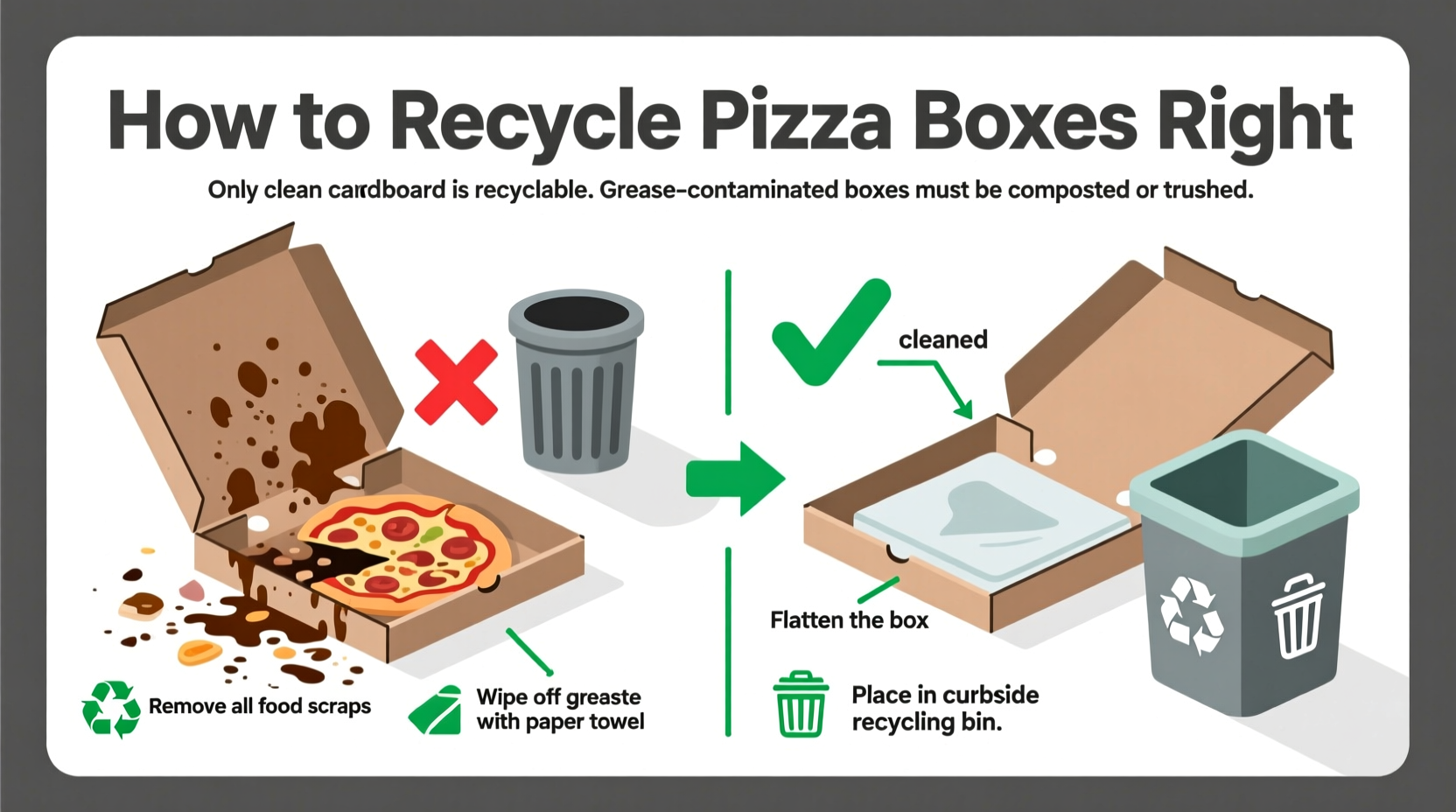
At first glance, a used pizza box looks like any other piece of cardboard: brown, fibrous, and lightweight. But appearances can be deceiving. The real issue lies in contamination. Most pizza boxes come into direct contact with hot, oily food. Grease seeps into the fibers, altering their structure and making them unsuitable for standard recycling processes.
During recycling, cardboard is mixed with water and agitated to break down into pulp. Oil and grease don’t mix with water—they spread and coat the fibers, preventing proper reconstitution. This results in clumps and impurities that reduce the quality of the final product. In severe cases, contaminated loads force entire batches to be discarded, wasting energy, time, and resources.
“Even small amounts of grease can disrupt the recycling stream. It’s not just about the box—it’s about protecting the integrity of the whole system.” — Sarah Thompson, Materials Recovery Facility (MRF) Operations Manager
Additionally, food scraps left inside the box—crumbs, sauce stains, pepperoni bits—further complicate sorting. Automated systems struggle to identify and remove organic matter, increasing labor costs and processing errors. As a result, many municipalities have strict rules about accepting soiled paper products.
How to Prepare Pizza Boxes for Curbside Pickup
The key to successful pizza box recycling lies in separation. Not every part of the box needs to go to waste. By evaluating each section individually, you can maximize what gets recycled while minimizing contamination.
- Empty the Box Completely: Remove all food remnants, napkins, plastic inserts, and cheese-stained wax paper. These items belong in the trash or compost, not recycling.
- Inspect for Grease and Moisture: Hold the box up to light. If you see translucent spots where oil has soaked through, those areas are likely too contaminated.
- Separate Clean from Soiled Sections: Tear off the top flaps and any side panels that show minimal staining. If the lid is free of grease and food residue, it can usually be recycled.
- Remove Heavily Stained Bottoms: The base of the box, especially under where the pizza sat, often absorbs the most grease. This portion typically cannot be recycled and should be composted or trashed.
- Flatten Remaining Cardboard: Once separated, flatten the clean sections to save space in your bin and improve sorting efficiency.
- Check Local Guidelines: Some cities accept lightly stained cardboard; others do not. Confirm your municipality’s policy before placing anything in the bin.
Do’s and Don’ts of Pizza Box Recycling
| Do | Don’t |
|---|---|
| Do separate clean top flaps from greasy bottoms | Don’t throw the entire box into recycling if the bottom is soaked |
| Do flatten uncontaminated cardboard | Don’t include cheese, crusts, or sauce packets in the bin |
| Do compost heavily soiled parts if you have access to organics collection | Don’t assume “biodegradable” means recyclable |
| Do check local rules—some MRFs handle light grease better than others | Don’t bag cardboard scraps in plastic—this contaminates the load |
| Do use reusable pizza bags or containers when ordering frequently | Don’t wash greasy cardboard—water damage also ruins recyclability |
When to Compost Instead of Recycle
If your pizza box is too greasy or covered in cheese, recycling may not be an option—but composting might be. In backyard compost systems or municipal organics programs, soiled cardboard can break down naturally alongside food waste. Unlike recycling, composting benefits from organic matter.
Corrugated cardboard is considered a \"brown\" material in composting, meaning it adds carbon-rich bulk that balances nitrogen-heavy food scraps. Shredded or torn into small pieces, even greasy pizza boxes can decompose effectively, provided they’re free of plastic coatings or metallic inks (most standard boxes are safe).
Municipal compost programs in cities like San Francisco, Seattle, and Boulder accept soiled paper products, including pizza boxes. Check whether your area offers curbside compost pickup. If so, place contaminated portions in the green bin. For home composters, bury greasy sections in the center of the pile where heat accelerates decomposition and deters pests.
“In our community compost program, we welcome pizza boxes—even with grease. They’re a valuable carbon source.” — Marcus Lin, Urban Composting Coordinator, Portland, OR
Real-World Example: A Family Learns the Right Way
The Rivera family in suburban Chicago had been tossing entire pizza boxes into their blue bin for years. They believed they were doing their part for the environment. But during a city-led recycling audit, a representative knocked on their door and reviewed their bin contents. To their surprise, several items—including their beloved pizza boxes—were flagged as contaminants.
The auditor explained that while the lids could be recycled, the bottoms were too saturated with grease. Over six months, this habit had contributed to multiple rejected loads at the regional MRF. Shocked but motivated, the Riveras changed their routine. They began cutting boxes apart, recycling only the clean tops, and adding the greasy bases to their new kitchen compost pail.
Within three months, their household waste decreased by nearly 20%. Their recycling became more effective, and they even started using the compost in their garden. What began as a minor correction turned into a broader shift toward sustainable habits.
Tip: Label your bins clearly—use stickers or paint to mark “Recycling,” “Compost,” and “Trash” so everyone in the household knows where each part goes.Step-by-Step Guide to Recycling Your Pizza Box
Follow this practical sequence every time you finish a pizza:
- Step 1: Clear the Contents
Remove all leftover food, plastic rings, and paper inserts. Dispose of food in compost or trash. - Step 2: Evaluate the Lid
Check the top flap and sides. If they’re dry and free of grease, set them aside for recycling. - Step 3: Assess the Base
Look at the bottom panel. If it’s darkened or feels slick from oil, it’s too contaminated for recycling. - Step 4: Separate the Pieces
Tear along the seams to isolate clean from soiled sections. Use scissors if needed. - Step 5: Flatten and Store
Fold the clean cardboard flat and store it until collection day. Keep it dry and away from moisture. - Step 6: Dispose of Soiled Parts
Place greasy sections in compost if available. Otherwise, discard in the trash. - Step 7: Double-Check Local Rules
Visit your waste management provider’s website or call customer service to confirm current policies.
Frequently Asked Questions
Can I recycle a pizza box with a little grease?
It depends on your local program. Some facilities accept lightly stained cardboard, especially if the grease hasn’t penetrated through. As a rule of thumb, if you can see light through the spot, it’s likely too contaminated. When in doubt, err on the side of caution and exclude it from recycling.
What if my city doesn’t offer composting?
If organics collection isn’t available, the greasy parts of the box must go in the trash. Consider starting a small indoor compost bin using a lidded container, or advocate for municipal compost services through local government channels.
Are frozen pizza boxes different?
Frozen pizza boxes are typically cleaner since they haven’t held hot, oily food. As long as they’re dry and free of food debris, they can almost always be recycled with regular cardboard. Always flatten them first to save space.
Maximizing Sustainability Beyond the Box
While proper disposal is crucial, reducing reliance on single-use packaging altogether is the ultimate goal. Consider these long-term strategies:
- Choose Pizzerias with Eco Policies: Support restaurants that use recyclable or compostable packaging and avoid plastic liners.
- Bring Your Own Container: Some local pizzerias allow takeout in reusable containers—call ahead to ask.
- Opt for Pickup Over Delivery: Delivery often involves extra packaging layers. Picking up reduces waste and fuel emissions.
- Advocate for Change: Encourage your favorite pizza chain to adopt sustainable packaging solutions through feedback forms or social media.
Every decision—from how you dispose of a box to where you order your next pie—adds up. Small actions, multiplied across communities, create meaningful environmental impact.
Final Thoughts: Recycle Smarter, Not Harder
Yes, you can recycle pizza boxes—but only the clean parts. The rest requires thoughtful disposal through composting or trash. Recycling isn’t just about putting items in the right bin; it’s about ensuring those materials remain useful. Contamination undermines the entire system, turning well-intentioned efforts into setbacks.
By learning how to evaluate, separate, and prepare your pizza boxes, you become a more informed and effective participant in the circular economy. You protect recycling infrastructure, support sustainable manufacturing, and reduce landfill burden—all from something as simple as a cardboard square.
💬 Ready to make a difference? Start tonight: when the pizza’s done, pause before you toss the box. Cut, sort, and recycle what you can. Share this guide with your household, your neighbors, or your office kitchen. Together, we can turn greasy leftovers into clean progress.