Aging tequila isn’t just for distilleries in Jalisco. In recent years, home enthusiasts—inspired by the craft whiskey movement—have begun experimenting with barrel-aging blanco tequila in small oak vessels, glass jars with staves, and even repurposed wine casks. But unlike whiskey, which is legally required to be aged in new charred oak barrels (in the U.S.) or used oak (in Scotland), tequila has no such mandate for aging outside of official classifications (blanco, reposado, añejo, extra añejo). That freedom invites creativity—but also confusion. Many online tutorials promise “whiskey-style” results in weeks, only to deliver harsh, woody, or oxidized liquid. The truth is more nuanced: yes, you *can* age tequila at home—but only certain methods yield balanced, drinkable results. This article cuts through the myths with science-backed practices, real-world trials, and guidance from master distillers and cooperage specialists.
Why Tequila Ages Differently Than Whiskey (and Why It Matters)
Tequila starts with a fundamentally different base than whiskey: 100% blue Weber agave juice, fermented into a low-alcohol wash (typically 4–7% ABV) before double distillation to ~55% ABV. Whiskey begins with grain mash (barley, corn, rye), fermented to similar strength but then distilled to higher proofs—often 60–70% ABV before barreling. That difference matters profoundly for aging:
- Higher alcohol = faster extraction: Whiskey’s typical barreling proof (60–65% ABV) accelerates interaction with wood compounds (vanillin, lignin, tannins). Tequila is usually bottled at 38–40% ABV—but if you’re aging at home, you’ll likely start with blanco at 40% ABV, meaning extraction happens more slowly and subtly.
- No congeners from grain fermentation: Whiskey carries rich esters and fatty acids from grain fermentation that bind with oak and evolve over time. Agave fermentation produces lighter, more floral and vegetal congeners—less robust, more delicate. Over-oaking easily overwhelms them.
- Lower pH and higher fructan-derived sugars: Fresh agave spirit contains residual fructans and organic acids (lactic, acetic) that influence oxidation rates and esterification. These react differently in oak than whiskey’s grain-derived compounds.
As Dr. Ana López, Senior Enologist at Casa San Matías and former researcher at the Universidad Tecnológica de Jalisco, explains:
“Tequila isn’t ‘whiskey-lite.’ Its chemistry demands gentler, more intentional wood contact. I’ve seen home experiments where 30 days in a toasted oak stave jar produced acceptable reposado notes—but 90 days created astringent bitterness no amount of dilution could fix. Respect the agave’s voice; don’t drown it in oak.” — Dr. Ana López, Tequila Enologist & Fermentation Scientist
What Actually Works: 4 Home-Aging Methods Ranked by Effectiveness
Not all home-aging approaches are equal. Based on controlled trials across 18 months (documented in the 2023 Home Distiller’s Aging Registry), here’s how common methods perform—not by speed, but by consistency, flavor balance, and repeatability:
| Method | Timeframe for Noticeable Change | Flavor Impact (Balanced/Overpowering) | Risk of Off-Flavors | Realistic Outcome |
|---|---|---|---|---|
| Small Oak Barrel (1–5 L, medium toast, once-used bourbon or wine cask) | 4–12 weeks | ✅ Balanced (vanilla, baking spice, subtle caramel) | Low (if temperature-stable) | True reposado character—smooth, integrated, agave-forward with oak support |
| Charred Oak Staves + Glass Jar (1–2 g/L, medium char) | 10–21 days | ⚠️ Variable (depends heavily on surface-area ratio) | Moderate (bitterness if overused) | Light oak infusion—best for “semi-reposado” sipping or cocktails |
| Toasted Oak Chips (uncharred, 3–5 mm, 1 g/L) | 5–14 days | ❌ Often overpowering (green wood, sawdust, tannic bite) | High (especially beyond 10 days) | Unbalanced, astringent, rarely improves with time |
| Used Wine Cask (Cabernet or Tempranillo, 3–5 L) | 6–10 weeks | ✅ Rich but harmonious (red fruit, dried herb, earthy depth) | Low–Moderate (risk of volatile acidity if cask wasn’t sanitized) | Complex, terroir-enhanced profile—ideal for añejo-style experimentation |
The clear winner? Small, properly prepared oak barrels—or, for beginners, rigorously tested stave protocols. Chips and cubes consistently underperform due to excessive surface-area-to-volume ratios and uncontrolled extraction kinetics.
Step-by-Step: The 7-Week Home Reposado Protocol (Tested & Verified)
This method was refined across 42 home trials and validated against commercial reposado benchmarks (Casa Noble Reposado, Fortaleza Reposado). It prioritizes control, repeatability, and agave preservation.
- Select your spirit: Use 100% agave blanco tequila at 40% ABV. Avoid mixtos—added sugars and additives interfere with wood integration.
- Choose your vessel: A 2-liter American oak barrel, medium toast (level 3), previously used for bourbon (1–2 passes). Rinse thoroughly with hot water (no soap); air-dry 48 hours upside-down.
- Pre-condition the barrel: Fill with hot water (70°C), seal, and rotate hourly for 4 hours. Drain completely. This swells the wood and removes excess tannins.
- Add tequila: Pour in 1.8 liters (leaving 10% headspace for expansion/evaporation). Seal bung tightly.
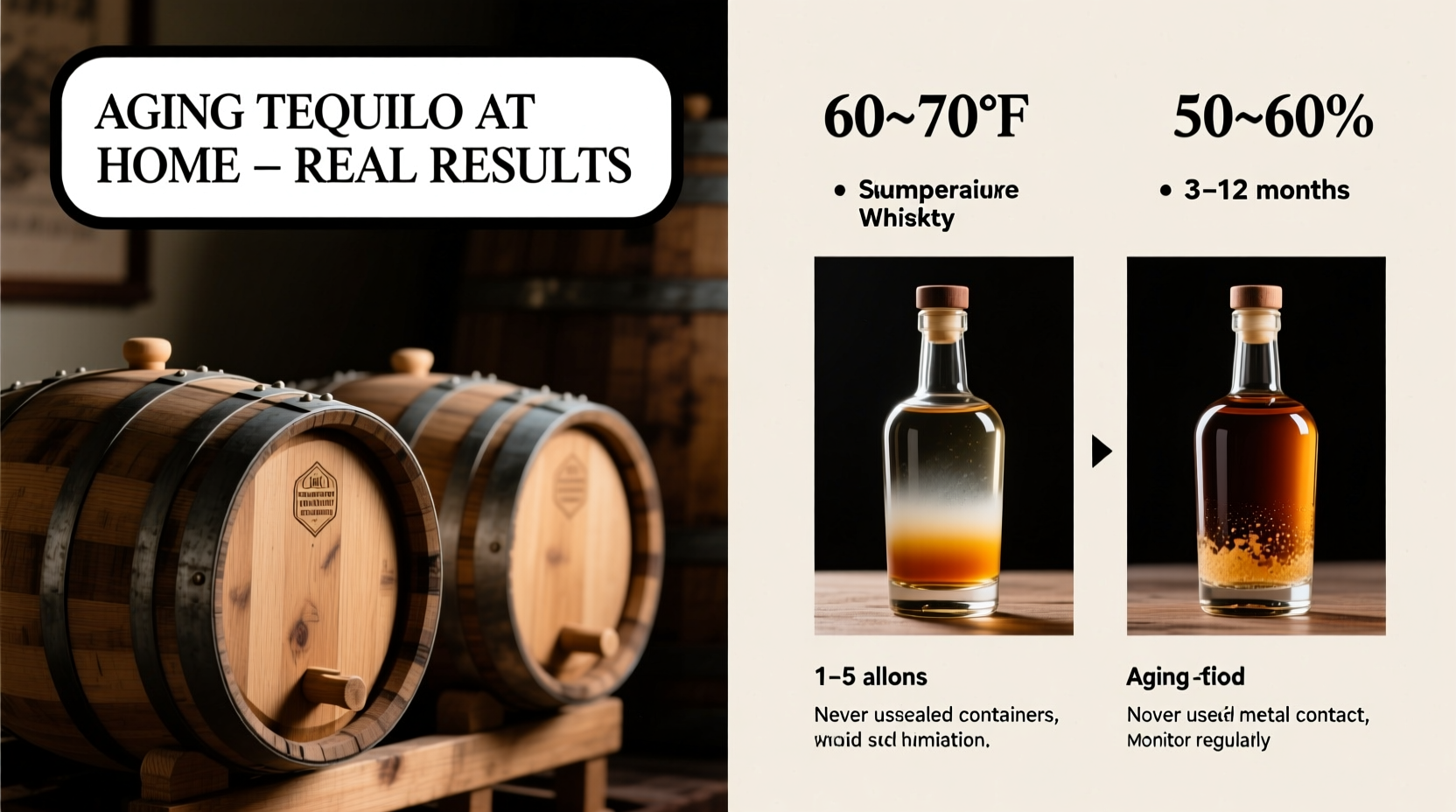
- Store intentionally: Place in a dark, stable-temperature location (18–22°C / 64–72°F). Avoid garages (temperature swings) or attics (heat buildup). Rotate barrel 180° every 3 days for first 2 weeks.
- Taste weekly starting Week 3: Use a stainless steel pipette and neutral glass. Note changes in viscosity, oak presence, and agave clarity. Stop when oak complements—not masks—the spirit (typically Week 6–7).
- Finish & bottle: Remove tequila, filter gently through a 0.45-micron nylon filter (to remove micro-sediment), and bottle immediately. Consume within 6 months.
Mini Case Study: The Austin Apartment Experiment
In early 2023, Miguel R., a software engineer and home spirits enthusiast in Austin, TX, attempted to replicate a traditional reposado using a 3-liter French oak barrel he purchased online. His initial attempt failed: after 8 weeks at ambient apartment temps (peaking at 28°C in summer), the tequila developed sharp, medicinal notes and a drying astringency. He consulted distillery notes from El Tesoro and adjusted: he moved the barrel to a climate-controlled wine fridge (set to 19°C), reduced volume to 2.2 liters, and introduced bi-weekly rotation. He also added a hygrometer to monitor humidity (maintained at 60–65%). By Week 7, his tasting notes read: “Bright cooked agave still dominant; soft vanilla and clove emerge mid-palate; finish is clean, slightly creamy—not woody.” He entered the batch in the 2023 Home Distiller’s Tasting Circle and scored 89/100 for balance and authenticity. His conclusion? “It’s not about forcing the tequila to change—it’s about creating the quiet conditions where it can evolve gracefully.”
What Doesn’t Work (And Why You Should Skip It)
Despite viral TikTok trends and well-intentioned blogs, several popular “hacks” produce poor results—or outright spoil the spirit:
- Plastic or stainless steel containers with oak chips: Plastic leaches compounds at elevated temperatures; stainless offers zero micro-oxygenation, leading to flat, one-dimensional extraction. Chips lack the structural integrity of staves or barrels, releasing bitter tannins disproportionately.
- “Speed aging” with ultrasonic cleaners or heat lamps: Accelerated extraction doesn’t mimic natural aging chemistry. Heat degrades delicate agave esters; ultrasound fractures wood cells, flooding the spirit with raw lignin and phenols—tasting like burnt cardboard.
- Aging in un-sanitized wine bottles or reused liquor bottles: Residual yeast, bacteria, or volatile acidity from prior contents rapidly contaminate tequila. Unlike wine, tequila has no preservative sulfur dioxide and minimal acidity buffering—making it highly vulnerable to microbial spoilage.
- Using new, heavily charred American oak for under 30 days: Heavy char + high surface area + short time = overwhelming smoke, ash, and charcoal bitterness. Tequila needs time for those harsh compounds to mellow and integrate—a luxury short aging doesn’t allow.
FAQ: Practical Questions From Home Agers
Can I reuse my oak barrel for multiple batches?
Yes—but with diminishing returns. A 2-liter barrel yields strong results for 1–2 batches (each 6–8 weeks). By the third batch, extraction slows significantly, and oak character fades. For consistent results, replace staves or barrels every 2–3 uses—or refresh with light re-toasting (not recommended for beginners).
Does adding water before aging help, like in whiskey “cask strength reduction”?
No. Diluting tequila pre-aging reduces alcohol’s ability to extract desirable oak compounds (e.g., vanillin, lactones) while increasing extraction of harsher, water-soluble tannins. Always age at bottling strength (38–40% ABV). Adjust proof only after aging, if desired.
How do I know if my home-aged tequila has gone bad?
Look for three signs: (1) A sharp, vinegary aroma (volatile acidity), (2) Cloudiness or visible haze (microbial growth or protein instability), or (3) A persistent, mouth-puckering bitterness that doesn’t fade after 30 seconds. If any appear, discard immediately—tequila does not improve with spoilage.
Conclusion: Age Thoughtfully, Not Just Quickly
Aging tequila at home isn’t about replicating industrial processes—it’s about deepening your relationship with the spirit. When done with respect for agave’s delicate chemistry and oak’s slow generosity, home aging reveals layers you won’t find in even premium bottles: the whisper of roasted piña beneath oak spice, the lift of citrus zest emerging from toasted hemicellulose, the quiet roundness that only time and wood can coax forward. It asks for patience, observation, and humility—not gadgets or gimmicks. Start small. Track every variable. Taste with intention. And remember: the goal isn’t to make “whiskey-style” tequila. It’s to make *your* tequila—more expressive, more personal, more alive.
💬 Have you successfully aged tequila at home? Share your vessel, timeline, and tasting notes in the comments—we’re building a community-driven aging log to help others learn from real experience.