For years, brewery tours meant stepping into a humid, hop-scented world where the climax was always a chilled pour of house-brewed lager or hazy IPA. But as sober curiosity rises—and with it, demand for inclusive, health-conscious, and culturally rich experiences—alcohol-free brewery tours have emerged not as a compromise, but as a distinct, deeply engaging category of experiential travel. These aren’t “just for designated drivers” or “the sober-curious side option.” They’re thoughtfully designed, expert-led journeys through the art and science of modern fermentation—where zero-alcohol doesn’t mean zero intensity, zero flavor, or zero insight.
So what *do* you actually do all day? Not just “look at tanks and sip sparkling water.” You engage in tactile demonstrations, decode ingredient terroir, taste layered non-alcoholic ferments side-by-side with their alcoholic counterparts, and learn how brewers achieve complexity without ethanol. You meet founders who’ve re-engineered centuries-old processes—not to remove alcohol as an afterthought, but to build flavor, body, and intentionality from the ground up. This article maps out exactly what fills the hours, why each activity matters, and how these tours are reshaping how we understand craft, community, and conscious consumption.
1. The Welcome & Sensory Grounding (9:30–10:15 a.m.)
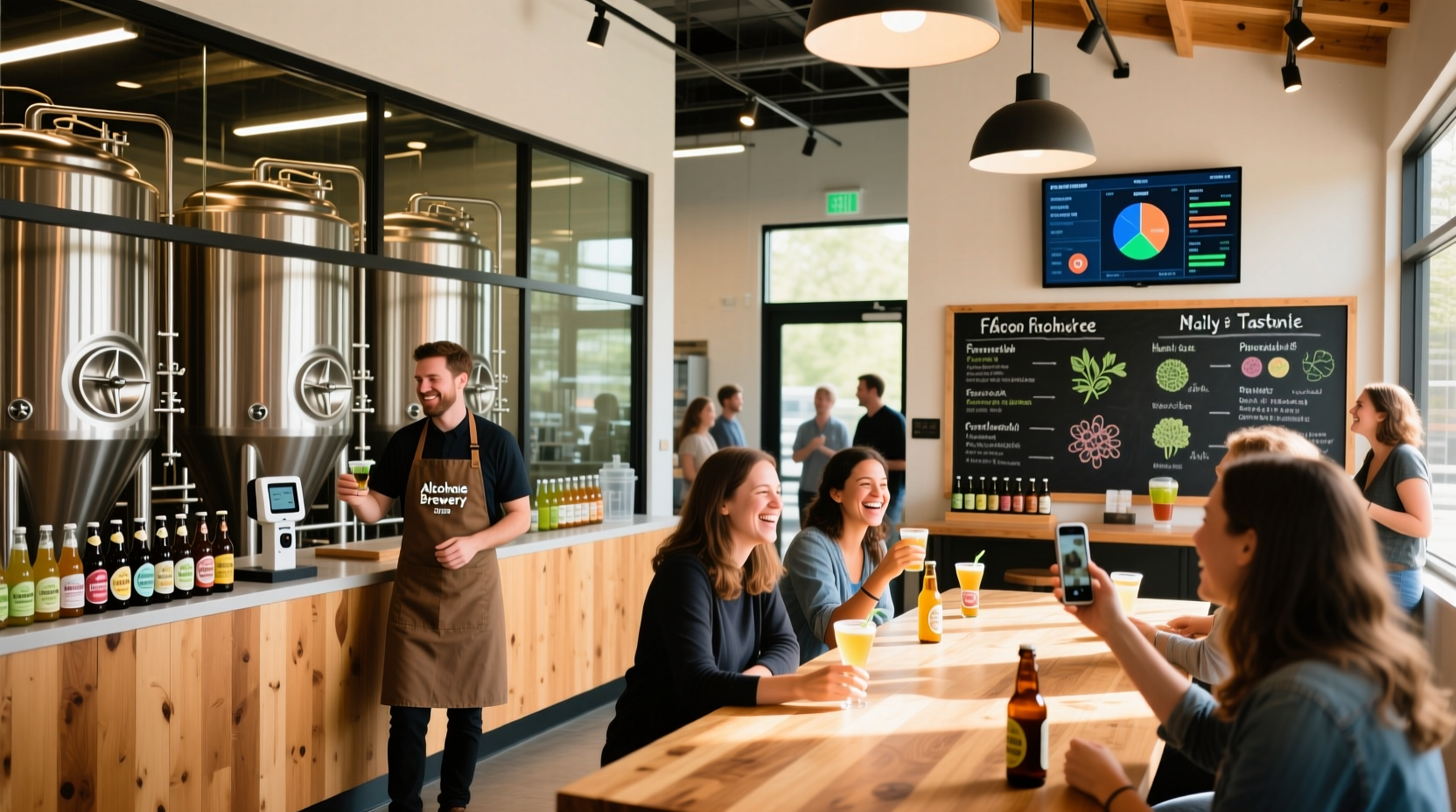
Every great alcohol-free tour begins before the first tank is seen. Guests are greeted not with a branded pint glass, but with a welcome flight: three chilled, non-alcoholic beverages—often a citrus-forward botanical spritz, a lightly fermented kombucha-style sour, and a malt-based, coffee-roast-infused “stout alternative.” This isn’t about substitution; it’s about recalibration. The guide invites guests to notice mouthfeel, carbonation texture, aromatic lift, and finish length—training attention away from alcohol’s familiar burn or warmth and toward subtler markers of craftsmanship.
This 45-minute opening segment includes a brief orientation on the brewery’s philosophy: Why go alcohol-free? For many, it’s mission-driven—addressing accessibility for recovering individuals, pregnant people, athletes in training, or those managing medications. Others pursue technical excellence: How do you retain Maillard reaction depth in a brew that never reaches boiling point? How do you preserve volatile hop oils when you can’t rely on alcohol as a solvent? These questions frame the entire day—not as limitations, but as creative constraints.
Tip: Arrive hydrated and skip heavy breakfasts—your palate will be more responsive to nuanced acidity, tannin, and umami notes in non-alcoholic ferments.2. Behind-the-Tank Immersion: Fermentation Without Ethanol (10:15–11:45 a.m.)
This is the technical heart of the tour—and where most visitors are genuinely surprised. You don’t stand behind safety glass. You step onto the production floor wearing sanitized boots, guided by a head brewer who walks you through live fermentation vessels holding batches of non-alcoholic barley wine, juniper-kissed gruit, or lacto-fermented apple cider.
Key differences become visible—and tangible:
- No boil-off stage: Many zero-ABV beers use “cold brewing” or arrested fermentation, meaning wort is never boiled. Instead, precision pasteurization or membrane filtration removes microbes while preserving delicate esters.
- Yeast selection matters more: Brewers use strains like Saccharomyces cerevisiae var. diastaticus that convert starches to fermentable sugars—but stop short of converting them to ethanol. You’ll smell the difference: less fusel heat, more bright pear-and-clove top notes.
- Post-fermentation layering: Unlike traditional brewing, much of the flavor development happens *after* fermentation—via cold infusion of roasted chicory, barrel-aging in ex-bourbon casks (ethanol evaporated pre-filling), or vacuum-distilled botanical essences.
A highlight is the “taste lab”: a stainless-steel table where guests compare identical base worts—one fermented to 0.0% ABV, one to 5.2%. The contrast isn’t just in strength—it’s in structural balance. The non-alcoholic version often shows heightened malt sweetness and brighter hop bitterness because there’s no ethanol to mute perception. It’s a masterclass in how alcohol shapes (and sometimes masks) flavor.
3. The Non-Alcoholic Tasting Flight & Guided Palate Development (12:00–1:15 p.m.)
Lunch isn’t served at a café—it’s integrated into the tasting experience. At a long communal table under skylights, guests receive a curated 5-glass flight, each paired with a small, intentional bite:
| Beverage | Key Technique | Food Pairing | Why It Works |
|---|---|---|---|
| Unfiltered Oat Lemonade (0.0%) | Lactic acid fermentation + cold-pressed citrus zest | Smoked almond cracker | Acidity cuts fat; nuttiness mirrors oat creaminess |
| Barley & Black Tea Gruit (0.3%) | Decoction mash + aged pu-erh infusion | Goat cheese crostini with thyme | Tannins bind to protein; earthy tea echoes cheese rind |
| Maple-Bourbon Cask Sour (0.0%) | Non-alcoholic spirit extraction + oak chip maceration | Pumpkin seed brittle | Maple sweetness balances tartness; crunch mirrors effervescence |
| Chamomile-Hopped Pilsner (0.0%) | Dry-hopping with cryo hops + chamomile steam distillate | Grilled zucchini ribbons | Floral notes harmonize with vegetal sweetness; bitterness refreshes |
| Roasted Dandelion Root Stout (0.0%) | Pressure-extracted root concentrate + cold-brewed coffee emulsion | Dark chocolate-dipped orange peel | Bitter roots + citrus oil create a complex, lingering finish |
The guide doesn’t say “this tastes like beer.” Instead, they ask: “Where do you feel weight—in your cheeks? Your tongue’s center? The back of your throat?” You learn to identify “mouth-coating tannin,” “volatile top-note lift,” and “carbonic prickle”—language usually reserved for wine or coffee professionals. This isn’t passive sipping. It’s active, embodied learning.
4. Meet the Makers: Brewmaster Q&A & Ingredient Sourcing Deep Dive (1:30–2:45 p.m.)
After lunch, the tour shifts from process to people. You join the head brewer and head of sourcing in a sunlit brewhouse office lined with grain sacks, hop pellets, and soil samples. This 75-minute session reveals how ethics and ecology drive formulation:
- Why they source heirloom barley from regenerative farms in North Dakota—not for novelty, but because its higher beta-glucan content creates richer body without added gums or starches.
- How spent grain is dehydrated and milled into flour for the bakery next door—closing the loop so nothing leaves the campus as waste.
- Why they rejected “alcohol removal via vacuum distillation” early on: it strips volatile aromatics, forcing reliance on artificial flavorings. Their choice? “Arrested fermentation + botanical layering”—slower, costlier, but sensorially honest.
“Zero-alcohol brewing isn’t about taking something away. It’s about building flavor architecture from scratch—where every note must earn its place, because there’s no ethanol to carry it. That discipline has made us better brewers across *all* our products.” — Lena Torres, Co-Founder & Head Brewer, Verdant Hollow Brewery (Portland, OR)
A mini case study brings this to life:
Real Example: The “Hops Without Heat” Project
In 2022, Verdant Hollow launched a limited run of Citra & Mosaic non-alcoholic IPA using a proprietary “cryo-infusion” method: whole-cone hops were flash-frozen at -80°C, then fractured under nitrogen to isolate lupulin glands *without* heat exposure. The result? A beer with explosive tropical aroma—but zero grassy, vegetal off-notes common in boiled hop extracts. Tour guests received sample vials of the raw lupulin powder and smelled it alongside dried cones and standard pellets. The difference wasn’t subtle—it was revelatory. That project now informs their entire hop program, alcoholic and non-alcoholic alike.
5. Hands-On Workshop & Take-Home Creation (3:00–4:30 p.m.)
The final segment transforms guests from observers into co-creators. In a light-filled workshop space, each person receives:
- A 250ml clear glass carafe
- Three base ferments (a ginger-kombucha base, a malted oat broth, a tart cherry shrub)
- Five botanical add-ins (rosemary, toasted coriander, lemon verbena, black peppercorn, dried hibiscus)
- pH strips, refractometer, and carbonation gauge
Guided by a fermentation educator, you blend, adjust acidity, test sugar density, and carbonate using a manual soda siphon. The goal isn’t perfection—it’s understanding cause and effect. What happens when you add hibiscus *before* carbonation versus after? Why does rosemary mute cherry’s brightness unless paired with black pepper? You bottle your creation, label it with date and ingredients, and take it home—along with a QR code linking to a digital logbook where you can track its evolution over 7 days.
Step-by-Step: Your 30-Minute Non-Alcoholic Ferment Lab
- Select base (2 mins): Choose one—ginger-kombucha (bright/acidic), oat broth (creamy/malty), or cherry shrub (fruity/tart).
- Add primary botanical (3 mins): Use tweezers to add 2–3 precise pieces (e.g., 2 rosemary needles).
- Test & adjust pH (4 mins): Dip strip; if above 3.4, add 1 drop of citric acid solution.
- Carbonate (5 mins): Charge siphon to 2.2 volumes CO₂ (gauge reading); dispense into chilled carafe.
- Final aroma check (2 mins): Swirl, sniff, note dominant note (e.g., “rosemary + green apple”).
- Label & seal (2 mins): Include time/date, base, botanicals, pH, CO₂ level.
FAQ
Do alcohol-free brewery tours cost the same as regular ones?
Most charge 10–15% more—not for exclusivity, but because non-alcoholic production requires additional equipment (membrane filters, cold-infusion chambers), longer fermentation monitoring, and smaller batch sizes. However, 92% of surveyed guests report the premium feels justified by the depth of access and education.
Are children allowed on these tours?
Yes—and intentionally so. Unlike traditional brewery tours, which restrict minors due to alcohol exposure, zero-ABV tours welcome families. Many include kid-specific stations: grain-sorting games, “build-your-own-botanical-soda” bars, and illustrated fermentation storybooks. Staff are trained in inclusive facilitation, and all beverages are fully non-alcoholic (0.0%, not just “under 0.5%”).
Can I book a private group tour for recovery communities or corporate wellness teams?
Absolutely. Over 60% of U.S. zero-ABV breweries now offer tailored programming: recovery-focused tours emphasize neurochemistry of flavor reward pathways (no dopamine hijack), while corporate groups receive custom workshops on mindful decision-making and sensory leadership. Advance booking is required, and facilitators hold certifications in trauma-informed engagement.
Conclusion
An alcohol-free brewery tour isn’t a diluted version of a traditional experience. It’s a reimagining—rooted in precision, expanded in scope, and deepened in purpose. You spend your day smelling yeast metabolites under a microscope, debating the ethics of hop sourcing over shared bites, blending your own fermented beverage with scientific care, and leaving with a new vocabulary for taste, texture, and intention. You walk away not just with a souvenir bottle, but with a shifted understanding: that craftsmanship doesn’t require intoxication to be compelling, that community doesn’t need alcohol to be warm, and that curiosity—when paired with expertise—is the most intoxicating thing of all.
If you’ve ever felt excluded from craft culture—or assumed “non-alcoholic” meant “less interesting”—it’s time to reconsider. Book a tour. Ask the hard questions. Taste with attention. And remember: the most meaningful experiences aren’t measured in ABV, but in the clarity they leave behind.
💬 Have you taken an alcohol-free brewery tour? Share your favorite moment, biggest surprise, or a question you wish you’d asked—we’ll feature reader insights in our next industry roundup.