For those with oily skin, the battle against midday shine is real. A carefully applied foundation can quickly turn into a greasy mess by noon if not properly set. The right finishing powder can make all the difference—locking in makeup, absorbing excess oil, and ensuring a matte finish that lasts. But when it comes to choosing between pressed and loose powder, which one truly performs better for oily skin? This isn't just about texture or convenience; it's about formulation, application method, and long-term performance under real-world conditions.
The answer isn’t always straightforward. While both powders serve the same basic purpose—setting makeup and reducing shine—they differ significantly in composition, density, portability, and oil-absorbing capacity. Understanding these differences allows you to make an informed choice based on your skin type, lifestyle, and desired finish.
Understanding Oily Skin and Makeup Longevity
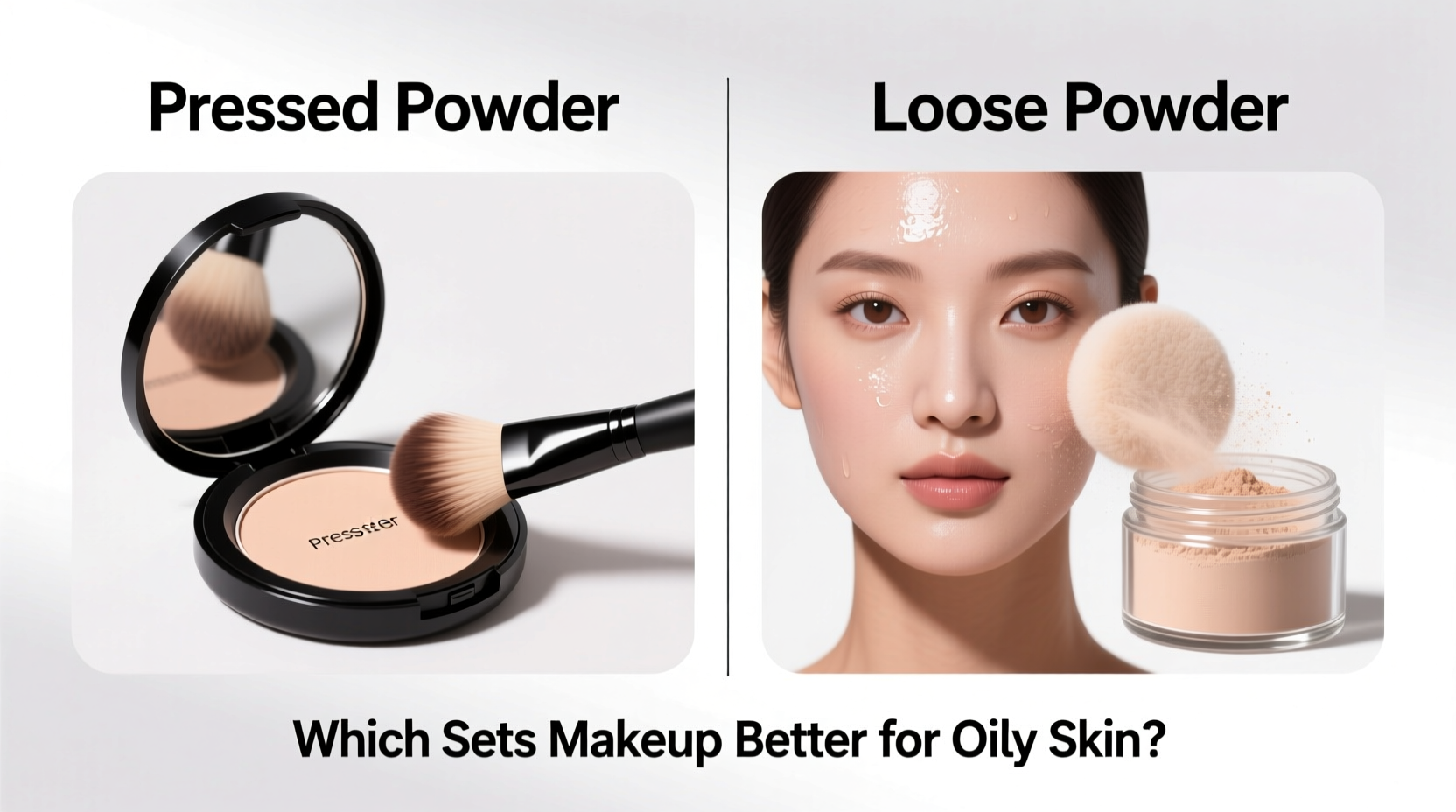
Oily skin results from overactive sebaceous glands producing excess sebum. This natural oil helps protect the skin but can break down makeup, especially liquid or cream formulas. Without proper setting, foundation begins to slide, crease, and oxidize, leading to uneven coverage and a shiny appearance.
Setting powders work by creating a protective barrier between the skin and makeup. They absorb surface oils, reduce reflectivity, and help bind foundation to the skin. However, not all powders are created equal. The physical form—loose or pressed—affects how much product is delivered, how evenly it’s distributed, and how effectively it controls oil throughout the day.
Loose powders are typically milled finer and contain fewer binders, making them lighter and more translucent. Pressed powders, on the other hand, use binding agents to hold the powder together in a compact, which can slightly alter texture and coverage.
Tip: Always apply setting powder after foundation and concealer, focusing on T-zone areas (forehead, nose, chin) where oil production is highest.Loose Powder: Lightweight Control with Maximum Absorption
Loose powder has long been favored by makeup artists and skincare professionals for its superior oil-absorbing properties. Because it lacks binders and fillers, loose powder consists of finely milled particles that sit lightly on the skin without clogging pores. Its high silica or talc content enables it to absorb sebum efficiently, providing a soft-focus, matte finish.
One of the biggest advantages of loose powder is its versatility. It can be used for full-face setting or targeted baking—applying a heavier layer under the eyes or on oily zones and allowing it to sit before dusting off. This technique locks in concealer and prevents creasing, while also creating a longer-lasting base.
However, loose powder requires careful application. Using too much or applying it incorrectly can lead to a cakey appearance. A large, fluffy powder brush or velour puff is recommended for even distribution. Additionally, carrying loose powder during the day for touch-ups can be inconvenient due to spill risks.
“Loose powders offer the most effective oil control because they’re formulated with minimal additives. For oily skin types, this means less interference and maximum absorption.” — Dr. Lena Park, Cosmetic Chemist and Skincare Formulator
Pressed Powder: Convenience Meets Moderate Control
Pressed powder trades some performance for practicality. Compact and travel-friendly, it’s ideal for on-the-go touch-ups. Most formulations include binders like wax or silicone to compress the powder, which can slightly reduce its ability to absorb oil compared to loose versions.
That said, many modern pressed powders are engineered specifically for oily skin. Brands now incorporate oil-controlling ingredients such as clay, rice powder, or polymers that help manage shine without adding heaviness. Some even include light-diffusing particles to blur pores while maintaining a natural finish.
Application is simpler: a compact mirror, sponge, or brush makes reapplication easy. However, repeated pressing of the puff into the powder can deposit too much product, especially if not blended well. Over time, this buildup can emphasize fine lines or look dull under artificial lighting.
Pressed powders also vary widely in translucency. Some are tinted, which can be beneficial for touch-ups over foundation, but may not match all skin tones perfectly. Others are truly translucent, offering a universal option for setting without altering color.
Comparative Breakdown: Loose vs Pressed for Oily Skin
| Feature | Loose Powder | Pressed Powder |
|---|---|---|
| Oil Absorption | High – minimal binders allow maximum sebum absorption | Moderate – binders reduce absorption capacity slightly |
| Finish | Matte to satin, often more natural-looking | Can appear flatter or drier if over-applied |
| Portability | Low – bulky, prone to spills | High – compact and travel-safe |
| Application Method | Brush or puff; ideal for baking techniques | Sponge or brush; best for quick touch-ups |
| Longevity | Excellent – provides extended oil control | Good – effective but may require more frequent reapplication |
| Skin Feel | Lightweight, breathable | Slightly denser due to compression |
Real-World Performance: A Mini Case Study
Consider Sarah, a 32-year-old marketing executive with combination-oily skin living in a humid climate. She wears full-coverage foundation daily and struggles with shine appearing by 11 a.m., particularly around her nose and forehead.
For six weeks, she tested two routines:
- Weeks 1–3: Used only a high-performance loose powder (translucent, silica-based) applied with a damp velour puff using the baking method.
- Weeks 4–6: Switched to a popular pressed powder marketed for oily skin, applied with a brush after foundation.
Results showed a clear difference. With loose powder, her makeup stayed intact until at least 3 p.m. without touch-ups. Shine was minimal, and her under-eye concealer didn’t crease. In contrast, the pressed powder controlled oil for about 90 minutes longer than no powder at all—but by early afternoon, noticeable shine returned, requiring blotting and reapplication.
She concluded that while the pressed powder was convenient for midday fixes, the loose version provided superior initial setting and longevity. Her solution? Use loose powder at home in the morning, then carry a pressed version for touch-ups.
Step-by-Step Guide: How to Set Makeup for Oily Skin
Follow this professional routine to maximize the benefits of either powder type:
- Start with clean, moisturized skin. Use an oil-free moisturizer and wait 5 minutes before applying makeup to prevent pilling.
- Apply primer designed for oily skin. Look for mattifying formulas containing salicylic acid or dimethicone to create a smooth, oil-resistant base.
- Use liquid or cream foundation. Apply with a damp sponge or brush, blending thoroughly. Avoid over-application on oily zones.
- Conceal first, then set selectively. Apply concealer under eyes and on blemishes. If baking, use a generous amount of loose powder on targeted areas.
- Wait 3–5 minutes before blending. This allows the powder to absorb oils and set the product underneath.
- Dust off excess gently. Use a large fluffy brush to sweep away any remaining powder without disturbing the base.
- Optional: Lightly press with a dry puff. For added staying power, lightly press the T-zone with a clean sponge.
- Carry a pressed powder for touch-ups. Blot excess oil first with a tissue or blotting paper, then apply a thin layer of pressed powder to refresh the finish.
Expert Tips for Maximizing Oil Control
- Blot before reapplying. Reapplying powder over fresh oil creates buildup. Always blot first with a tissue or blotting paper.
- Choose the right tools. Synthetic brushes or velour puffs work best with powders—they don’t absorb product and distribute evenly.
- Avoid talc-heavy formulas if acne-prone. While talc absorbs oil, it can sometimes contribute to congestion in sensitive or acne-prone individuals. Opt for cornstarch, rice powder, or silica-based alternatives.
- Clean your tools weekly. Dirty brushes trap oil and bacteria, which can transfer back onto your face and break down makeup faster.
- Store powders in cool, dry places. Heat and humidity can degrade formulations and encourage bacterial growth, especially in compacts.
Checklist: Choosing the Right Powder for Oily Skin
Before purchasing, ask yourself:
- ✅ Is the formula specifically designed for oily or combination skin?
- ✅ Does it contain oil-absorbing ingredients like silica, clay, rice powder, or niacinamide?
- ✅ Is it non-comedogenic and free from irritants?
- ✅ Is the finish matte or natural—not ashy or drying?
- ✅ Can it be used for baking, or is it too sheer?
- ✅ Is it portable enough for touch-ups during the day?
Frequently Asked Questions
Can I use both loose and pressed powder?
Yes—and many people do. Use loose powder during your morning routine to set makeup thoroughly, then carry a pressed version for quick touch-ups. Just remember to blot excess oil first to prevent buildup.
Does loose powder cause more fallout than pressed?
It can, especially if applied with a heavy hand. To minimize mess, tap excess powder off the brush before applying, or use a shield (like a business card) under the eye area. Some brands now offer loose powders in shaker jars with built-in sponges for cleaner application.
Is translucent powder better for oily skin?
Translucent powders are generally ideal because they don’t alter your foundation shade and work across skin tones. However, if you have redness or discoloration, a tinted pressed powder might provide better correction during touch-ups.
Final Verdict: Which Sets Makeup Better?
When it comes to pure performance—oil absorption, longevity, and makeup stability—**loose powder is the clear winner for oily skin**. Its lightweight, additive-free formulation allows for deeper oil control and a more natural finish. Baking with loose powder creates a durable base that resists breakdown for hours, even in humid conditions.
Pressed powder, however, wins in convenience and reusability. It’s perfect for touch-ups and on-the-go maintenance. While it may not match the initial setting power of loose powder, a high-quality pressed formula can still extend wear and refresh your look midday.
The smart approach? Combine both. Use loose powder at home to lock in your base, then carry a pressed compact for maintenance. This dual-method strategy leverages the strengths of each while minimizing their weaknesses.
Conclusion: Take Control of Your Shine
Oily skin doesn’t have to mean compromised makeup. With the right tools and techniques, you can achieve a fresh, matte finish that lasts from morning meetings to evening plans. While pressed powder offers undeniable convenience, loose powder delivers unmatched performance in setting and oil control—making it the superior choice for those prioritizing longevity and flawless wear.
Your skin deserves a routine that works with it, not against it. Experiment with different formulas, tools, and methods to find what suits your lifestyle. Whether you go all-in on loose powder or adopt a hybrid system, the key is consistency and smart product selection.
💬 Have a favorite powder for oily skin? Share your go-to product and routine in the comments—we’d love to hear what works for you!








