
Confusing onion powder with onion salt is one of the most common seasoning missteps in home kitchens. Though both originate from dehydrated onions and share a savory, aromatic base, they serve distinct roles in cooking. Using one in place of the other without adjustment can result in under-seasoned dishes or unexpectedly salty results. Understanding their composition, flavor impact, and culinary applications ensures precision in seasoning—whether you're roasting vegetables, seasoning meats, or crafting a dry rub. This guide breaks down the essential differences, offering practical insights for everyday cooking and professional-level control over flavor.
Definition & Overview
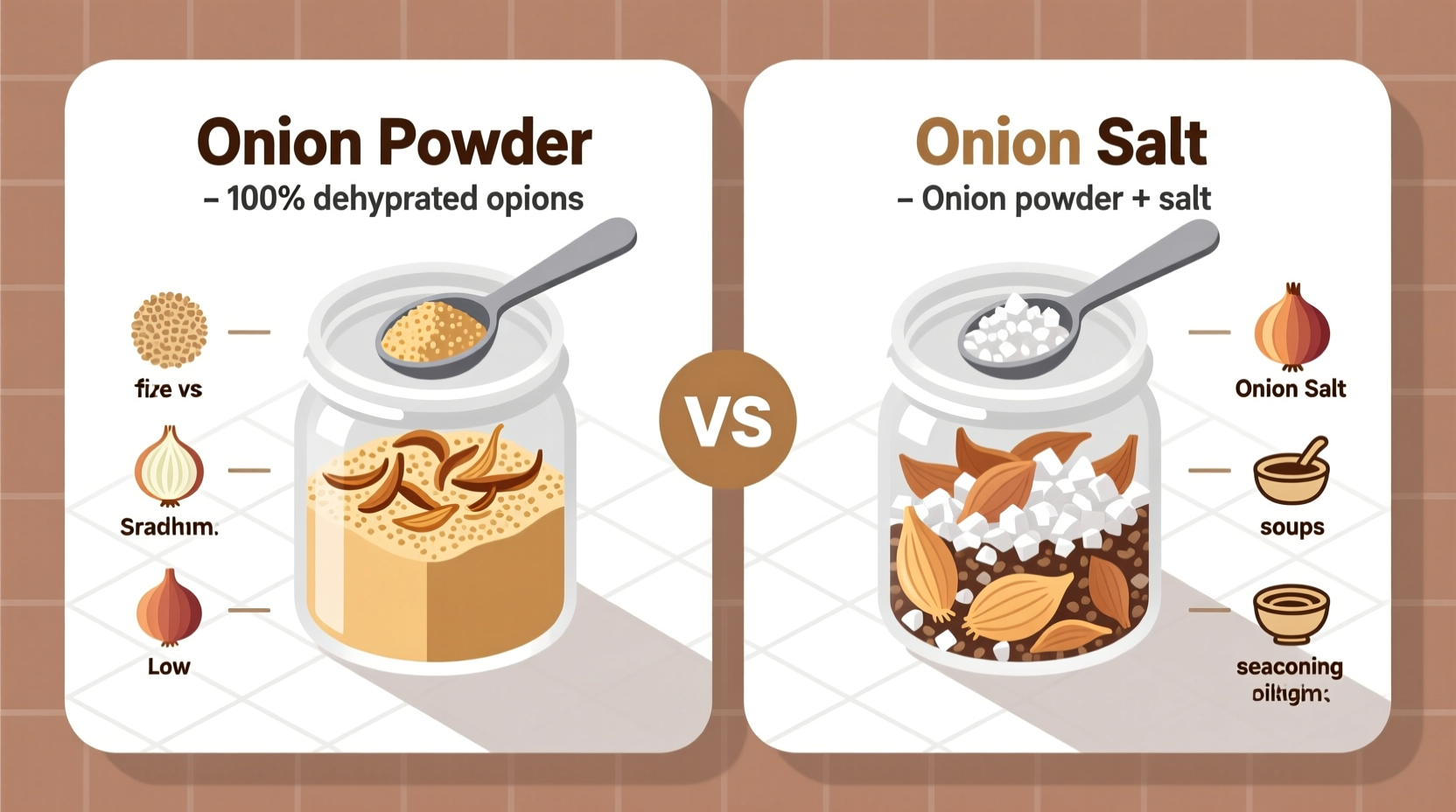
Onion powder is made by dehydrating fresh onions and grinding them into a fine, tan-colored powder. It captures the sweet, pungent essence of raw and cooked onions in concentrated form. Because it contains no additives, it delivers pure onion flavor without altering the salt balance of a dish.
Onion salt, by contrast, is a seasoned salt blend consisting primarily of onion powder and table salt, often in a 1:1 ratio, though proportions vary by brand. Some versions include anti-caking agents or small amounts of sugar or spices. Its primary function is dual: to impart onion flavor and to season with salt simultaneously.
The distinction may seem minor, but in practice, it affects how recipes are balanced. Onion powder is a flavoring agent; onion salt is a seasoning compound. Recognizing this difference allows cooks to layer flavors intentionally rather than inadvertently oversalting a dish.
Key Characteristics
| Characteristic | Onion Powder | Onion Salt |
|---|---|---|
| Composition | 100% dried, ground onion | ~50% onion powder, ~50% salt (approximate) |
| Flavor Profile | Savory, slightly sweet, mildly pungent | Onion-forward with pronounced saltiness |
| Aroma | Bright, earthy, reminiscent of sautéed onions | Similar, but aroma is muted slightly by salt |
| Color | Tan to light amber | White to pale beige (due to salt content) |
| Texture | Fine, soft powder | Slightly coarser due to salt crystals |
| Culinary Function | Flavor enhancer | Seasoning and flavoring agent |
| Shelf Life | 2–3 years (stored properly) | Indefinite (salt preserves; flavor fades after 2–3 years) |
| Sodium Content | Negligible (naturally low sodium) | High (~2,300 mg sodium per teaspoon) |
Practical Usage: How to Use Each Ingredient
When to Use Onion Powder
Onion powder excels in recipes where you want the flavor of onions without added salt. It integrates seamlessly into spice blends, dry rubs, marinades, soups, stews, sauces, and baked goods like savory muffins or cheese breads. Because it dissolves easily, it’s ideal for applications where texture matters—such as in smooth dips, dressings, or coatings for fried foods.
It's also valuable when cooking with fresh onions isn't practical—such as in meal-prepped spice mixes, camping meals, or quick weeknight stir-fries where time is limited. A ¼ teaspoon of onion powder approximates the flavor of about ½ tablespoon of finely minced raw onion.
Pro Tip: Add onion powder early in the cooking process to allow its flavor to bloom in oil or liquid. For maximum depth, toast it briefly in warm oil before adding liquids—this enhances its natural sweetness and reduces any raw edge.
When to Use Onion Salt
Onion salt works best when you need both seasoning and onion flavor in one step. It’s commonly used as a finishing touch on grilled meats, roasted potatoes, popcorn, or scrambled eggs. It’s also a staple in commercial snack seasoning—think flavored crackers, instant noodles, or potato chips.
In home cooking, onion salt shines in applications where salt is already part of the formula, and you want efficiency. For example, seasoning burger patties, sprinkling on avocado toast, or enhancing canned soups. However, caution is required: because it contains salt, using it in place of onion powder can disrupt a recipe’s sodium balance.
If a recipe calls for both salt and onion powder, you *can* substitute onion salt—but reduce additional salt accordingly. As a rule of thumb: 1 teaspoon of onion salt = ½ teaspoon onion powder + ½ teaspoon table salt.
Variants & Types
Types of Onion Powder
- Yellow Onion Powder: The most common type, offering a balanced sweet-pungent profile. Ideal for general use in savory dishes.
- Sweet Onion Powder: Made from Vidalia or Walla Walla onions. Milder and sweeter, suitable for delicate dishes or where a softer onion note is desired.
- Red Onion Powder: Slightly more acidic and vibrant in color. Used in colorful spice blends or where visual appeal matters (e.g., garnishes).
- Dehydrated vs. Freeze-Dried: Most commercial onion powder is dehydrated. Freeze-dried versions retain more volatile compounds and offer a fresher taste but are less common and more expensive.
Types of Onion Salt
- Standard Onion Salt: Equal parts onion powder and iodized or non-iodized salt. May include anti-caking agents like calcium silicate.
- Sea Salt-Based Onion Salt: Uses sea salt instead of table salt for a cleaner mineral profile and coarser texture.
- Garlic-Infused Onion Salt: A hybrid blend containing garlic powder, onion powder, and salt. Common in pre-mixed seasoning blends.
- Low-Sodium Onion Salt: Formulated with reduced salt content and sometimes potassium chloride. Flavor may be altered due to potassium’s metallic aftertaste.
- Organic or Spiced Variants: May include turmeric, paprika, or herbs. Always check labels for additional ingredients.
DIY Option: Make your own onion salt at home by blending 1 part onion powder with 1 part kosher salt (by volume). This gives full control over quality, avoids additives, and allows customization—try using smoked salt or flaky sea salt for a gourmet twist.
Comparison with Similar Ingredients
Onion powder and onion salt are often confused not only with each other but also with other allium-based seasonings. Here’s how they compare:
| Ingredient | Primary Composition | Key Difference from Onion Powder/Salt |
|---|---|---|
| Garlic Powder | Dried, ground garlic | Stronger, sharper flavor; not interchangeable without adjusting ratios. No salt unless labeled \"garlic salt.\" |
| Garlic Salt | Garlic powder + salt | Same functional relationship to garlic powder as onion salt is to onion powder—but different flavor profile. Never substitute directly for onion salt unless flavor shift is intended. |
| Granulated Onion | Coarsely ground dehydrated onion | Larger granules dissolve slower; better for rubs and pickling. Less concentrated than fine powder. |
| Onion Flakes | Dehydrated sliced onions | Rehydrate during cooking; provide texture. Not suitable as direct substitutes in dry blends. |
| MSG (Monosodium Glutamate) | Sodium glutamate | Enhances umami but has no onion flavor. Often combined with onion powder in processed foods for depth. |
\"The mistake I see most often is treating onion salt as a flavor-only ingredient. It’s a seasoning tool—one that includes salt. If you’re not adjusting your total salt load, you’re compromising the dish’s balance.\" — Chef Elena Ruiz, Culinary Instructor, National Institute of Gastronomy
Practical Tips & FAQs
Can I substitute onion powder for onion salt?
Yes, but only if you compensate for the missing salt. Replace 1 teaspoon of onion salt with ½ teaspoon onion powder plus ½ teaspoon salt. Be mindful of the salt type—kosher vs. table salt requires volume adjustments.
Can I use onion salt instead of onion powder?
You can, but only if you reduce or eliminate other salt in the recipe. Blind substitution will likely make the dish too salty. Best reserved for informal cooking or taste-as-you-go situations.
Is onion powder healthier than onion salt?
From a sodium standpoint, yes. Onion powder adds flavor without significant sodium, making it preferable for low-sodium diets. Onion salt should be used judiciously by those monitoring salt intake.
How much fresh onion equals one teaspoon of onion powder?
Approximately 1 tablespoon of finely chopped fresh onion equals ½ teaspoon of onion powder. Therefore, 1 teaspoon of onion powder ≈ 2 tablespoons fresh onion. Note: fresh onions add moisture and require cooking time to mellow; powdered form offers convenience and concentration.
Does onion powder go bad?
It doesn’t spoil but loses potency over time. Properly stored in an airtight container away from heat and light, onion powder retains good flavor for 2–3 years. After that, it becomes dull and dusty—still safe, but less effective.
What are the best dishes for onion powder?
- Homemade taco seasoning
- Meatloaf and meatball mixtures
- Gravy and sauce bases
- Marinades for chicken or tofu
- Vegetable roasting blends
- Homemade ranch or French onion dip
What are the best dishes for onion salt?
- Seasoning for grilled steak or burgers
- Popcorn or roasted nuts
- Scrambled eggs or omelets
- Avocado toast or deviled eggs
- Instant rice or boxed mashed potatoes
- Homemade croutons
Storage Recommendations
Store both onion powder and onion salt in airtight glass or plastic containers in a cool, dark pantry. Avoid storing near the stove or dishwasher, where heat and humidity degrade quality. Label containers with purchase dates. Do not store in the refrigerator—condensation leads to clumping and mold risk.
Substitution Chart for Emergency Use
Quick Reference Substitutions:
- No onion powder? Use 1 tbsp minced fresh onion per ½ tsp powder (cook first to remove excess moisture).
- No onion salt? Mix ½ tsp onion powder + ½ tsp salt (adjust for salt type).
- Need lower sodium? Use onion powder and a salt substitute like potassium-free herb salt.
- Want umami boost? Combine onion powder with a pinch of MSG or nutritional yeast.
Summary & Key Takeaways
Onion powder and onion salt are not interchangeable without adjustment. Their fundamental difference lies in composition: onion powder is pure flavor; onion salt is a seasoned blend combining flavor and salt. Misusing them can lead to imbalanced dishes—either bland or overly salty.
Use onion powder when you need onion flavor without altering sodium levels. It’s indispensable in spice blends, sauces, and recipes where salt is controlled separately. Use onion salt when convenience and dual seasoning are priorities—especially in finishing applications or simple preparations.
Understanding these distinctions empowers precise, intentional seasoning. By reading labels, making informed substitutions, and storing properly, home cooks can elevate everyday meals with confidence. When in doubt, remember: onion powder adds taste, onion salt adds taste and salt.
Next time you reach for a shaker, pause and check the label. Are you adding flavor—or seasoning? That small awareness can transform your cooking from inconsistent to restaurant-quality.









