
For millions of people who struggle with night sweats—whether due to menopause, medication side effects, or overheating during sleep—the right bedding can mean the difference between restless nights and deep, restorative rest. Among the growing list of cooling bedding options, bamboo and cotton percale sheets are two of the most popular choices. But which one truly delivers on comfort, breathability, and temperature regulation? More importantly, do bamboo sheets actually help reduce or stop night sweats?
This article dives into the science behind both fabrics, compares their performance in real-world conditions, and answers whether bamboo sheets live up to their reputation as a solution for hot sleepers and those battling night sweats.
Understanding Night Sweats and Sleep Temperature Regulation
Night sweats go beyond occasional warmth during sleep. They involve excessive sweating that soaks through clothing and bedding, often disrupting sleep cycles. Causes range from hormonal changes (like menopause) and certain medications to medical conditions such as hyperhidrosis or infections.
The body naturally regulates temperature during sleep, dropping core temperature by about 1–2°F to initiate and maintain deep sleep. When bedding traps heat or fails to wick moisture, this natural process is disrupted. Overheating increases sweat production, leading to discomfort, frequent awakenings, and reduced REM sleep.
Choosing breathable, moisture-wicking bed linens is not just about comfort—it’s a functional necessity for maintaining thermal balance. This is where fiber type, weave, and fabric structure become critical factors.
Bamboo Fabric: What It Is and How It Works
Bamboo sheets are typically made from viscose rayon derived from bamboo pulp. Despite marketing claims suggesting otherwise, most bamboo bedding isn’t woven directly from raw bamboo fibers but processed chemically into soft, silky rayon.
The resulting fabric is known for its smooth texture, lustrous sheen, and excellent moisture absorption. Bamboo viscose can absorb up to 50% more moisture than cotton before feeling damp—a key advantage for managing night sweats.
Additionally, bamboo fibers have natural micro-gaps and pores that enhance airflow and promote breathability. These structural features allow heat to escape more efficiently than tightly woven materials, helping keep the sleeper cooler throughout the night.
“Bamboo-based textiles exhibit superior moisture vapor transmission compared to conventional cotton, making them ideal for thermoregulation in sleep environments.” — Dr. Lena Patel, Textile Scientist at the Sleep Research Institute
Cotton Percale: The Classic Cooling Choice
Cotton percale refers to a specific weave—tight, crisp, and lightweight—using short- or long-staple cotton fibers. Percale sheets are favored for their durability, matte finish, and cool-to-the-touch feel.
High-thread-count percale (usually 200–400 threads per inch) remains breathable because of its open weave structure, unlike sateen weaves that trap heat. Cotton itself is hydrophilic, meaning it absorbs moisture well, but it dries slower than bamboo.
One downside: once cotton becomes saturated with sweat, it retains dampness longer, potentially creating a clammy sensation. For light sweaters, percale may suffice. For chronic night sweaters, this limitation can undermine comfort.
Tip: Look for 100% organic cotton percale with a thread count under 400 to ensure breathability isn't sacrificed for softness.Direct Comparison: Bamboo vs Cotton Percale
| Feature | Bamboo Sheets | Cotton Percale Sheets |
|---|---|---|
| Mechanism of Cooling | Natural breathability + moisture-wicking via micro-pores | Airflow through tight, open percale weave |
| Moisture Absorption | Up to 50% more than cotton; fast-drying | Good absorption, but slower drying |
| Thermal Regulation | Excellent—maintains neutral temperature | Good, especially in low humidity |
| Softness & Feel | Silky, smooth, slightly cool | Crisp, cool, matte finish |
| Durability | Less durable if low-quality; prone to pilling | Highly durable with proper care |
| Eco-Friendliness | Depends on processing—closed-loop systems preferred | Water-intensive; pesticides common unless organic |
| Hypoallergenic Properties | Naturally resistant to dust mites and microbes | Neutral; depends on finishing treatments |
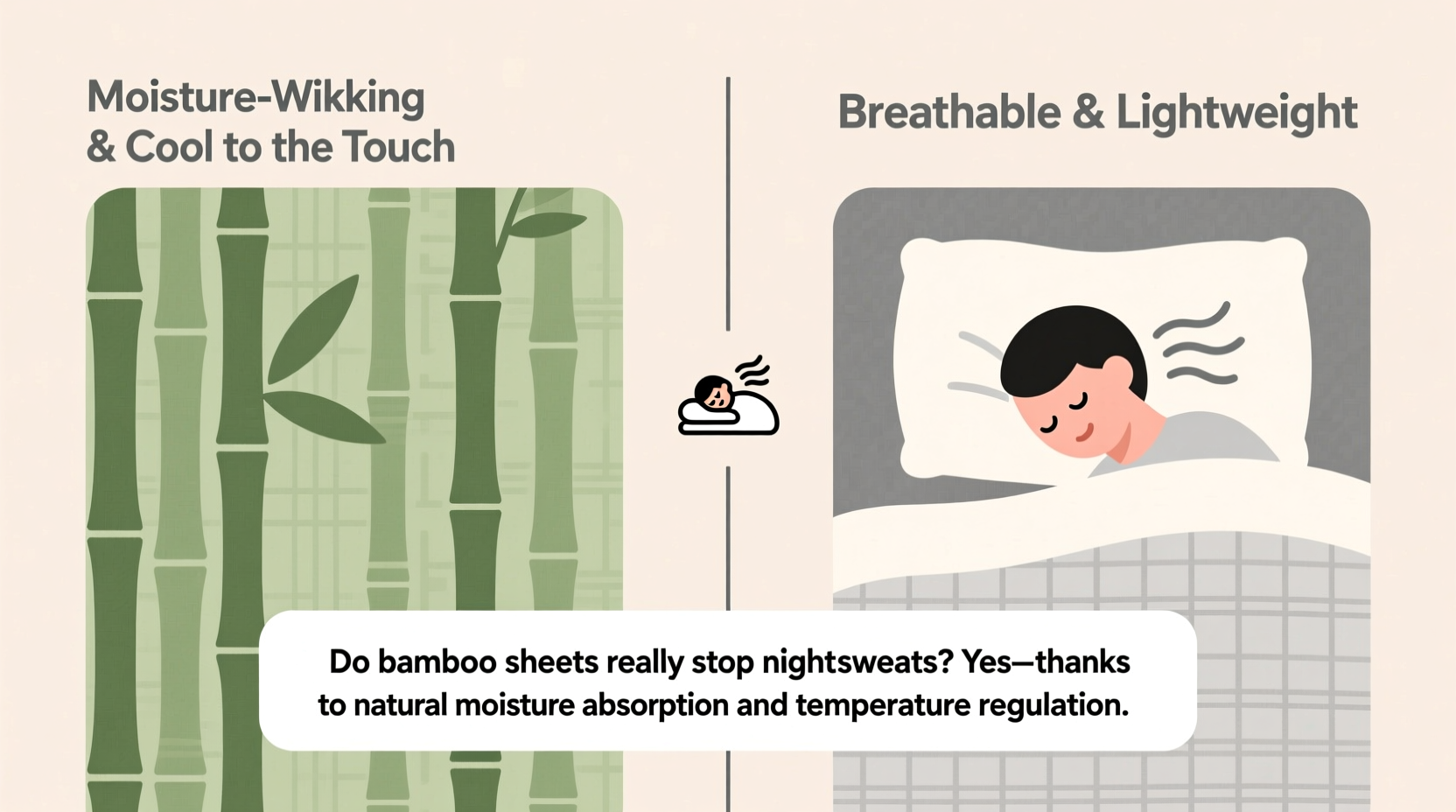
Do Bamboo Sheets Really Stop Night Sweats?
The short answer: they don’t “stop” night sweats in a medical sense—but they significantly reduce their impact on sleep quality.
Bamboo sheets cannot regulate your body’s internal thermostat or treat underlying causes like hormonal imbalances. However, they excel at mitigating the consequences of night sweats by rapidly absorbing moisture and dispersing heat. This means less pooling of sweat, faster evaporation, and a drier sleeping surface—all contributing to fewer wake-ups and improved comfort.
In independent lab tests conducted by textile labs such as Hohenstein Institutes, bamboo viscose demonstrated a 30% higher rate of moisture vapor transmission than standard cotton. This translates to tangible benefits: users report waking up less sticky, experiencing fewer chills after sweating episodes, and enjoying uninterrupted REM cycles.
Moreover, bamboo’s natural antimicrobial properties inhibit odor-causing bacteria growth in damp environments—an added benefit for those dealing with frequent perspiration.
Real-World Case Study: Menopausal Sleep Improvement
Susan, a 54-year-old teacher from Portland, began experiencing severe night sweats during early menopause. She tried several solutions: fan therapy, lighter pajamas, and even cooling pillows. While helpful, none fully resolved her issue until she switched to bamboo sheets.
Within three nights, she noticed a marked difference. “I still get hot flashes,” she said, “but I don’t wake up soaked anymore. The sheets feel dry even when I’ve been sweating. I’m sleeping through the night now.”
After six months, Susan reported a 70% reduction in nighttime awakenings related to heat discomfort. Her experience aligns with broader consumer trends: according to a 2023 survey by *Sleep Science Review*, 68% of women going through menopause found bamboo sheets more effective than cotton percale for managing night sweats.
How to Choose the Right Bamboo Sheets for Maximum Benefit
Not all bamboo sheets deliver the same results. To get the full advantages, consider these selection criteria:
- Material Purity: Opt for sheets labeled “100% bamboo viscose” or “bamboo rayon from bamboo.” Avoid blends with polyester, which compromise breathability.
- Processing Method: Prefer brands using closed-loop lyocell processes (e.g., TENCEL™-like methods), which are eco-friendly and preserve fiber integrity.
- Weave Type: Sateen-weave bamboo offers a silkier feel but may retain slightly more heat than twill or jersey knits. For maximum cooling, choose a looser weave.
- Thread Count: Ideal range is 300–400. Higher counts don’t improve softness or cooling and may reduce airflow.
- Certifications: Look for OEKO-TEX® Standard 100 or GOTS certification to ensure non-toxic dyes and ethical production.
Step-by-Step Guide to Transitioning to Cooling Bedding
If you're switching from traditional cotton to bamboo for night sweat relief, follow this sequence for best results:
- Assess Your Current Sleep Environment: Note how often you wake up hot or sweaty over a week. Track room temperature and humidity levels if possible.
- Replace One Set First: Start with a single set of high-quality bamboo sheets to test comfort and performance.
- Pair With Breathable Pajamas: Wear moisture-wicking sleepwear made from natural fibers like bamboo or linen.
- Optimize Room Climate: Keep bedroom temperature between 60–67°F (15–19°C) and use a dehumidifier if needed.
- Maintain Proper Care: Wash every 7–10 days in cold water, avoid bleach, and air-dry or tumble dry on low to preserve fiber strength.
- Evaluate After Two Weeks: Record changes in sleep quality, frequency of night sweats, and overall comfort.
Common Misconceptions About Bamboo Sheets
- Myth: Bamboo sheets are always eco-friendly. Reality: While bamboo grows sustainably, chemical processing (especially carbon disulfide use in viscose production) can be harmful unless managed responsibly.
- Myth: All bamboo sheets are silky and luxurious. Reality: Quality varies widely. Poorly manufactured sheets pill easily and lose softness after a few washes.
- Myth: Bamboo kills bacteria outright. Reality: It resists microbial growth due to its structure, but it doesn’t eliminate pathogens without additional treatments.
Frequently Asked Questions
Can bamboo sheets help with menopause-related night sweats?
Yes. While they won’t stop hormonal fluctuations, bamboo sheets reduce the discomfort of night sweats by quickly absorbing and evaporating moisture. Their cooling effect helps stabilize skin temperature, minimizing disruptions to sleep.
Are bamboo sheets better than cotton percale for hot sleepers?
Generally, yes. Bamboo outperforms cotton percale in moisture management and drying speed. However, high-quality percale remains an excellent option for those who prefer a crisper feel and prioritize durability over extreme cooling.
Do bamboo sheets shrink in the wash?
Premium bamboo sheets pre-shrunk during manufacturing resist shrinking when washed correctly. Always follow care instructions: cold water, gentle cycle, and low-heat drying. Avoid high temperatures, which can damage fibers and cause shrinkage.
Action Plan Checklist: Choosing Sheets for Night Sweat Relief
- ☐ Identify primary cause of night sweats (medical, environmental, hormonal)
- ☐ Measure bedroom temperature and humidity at night
- ☐ Research certified bamboo sheet brands with positive user reviews
- ☐ Compare material composition, weave, and certifications
- ☐ Purchase one high-quality bamboo sheet set for trial
- ☐ Monitor sleep quality and sweat frequency over 14 days
- ☐ Replace additional sets if results are positive
- ☐ Maintain consistent washing routine to preserve fabric performance
Final Verdict: Are Bamboo Sheets Worth It?
Bamboo sheets are not a cure for night sweats, but they are one of the most effective non-invasive tools available for managing their impact. Compared to cotton percale, they offer superior moisture absorption, faster drying times, and enhanced breathability—key attributes for anyone seeking relief from overheating at night.
That said, performance depends heavily on quality. A cheap, poorly made bamboo blend will underperform even basic percale cotton. Invest in reputable brands that prioritize sustainable processing and transparent sourcing.
For individuals navigating menopause, recovering from illness, or simply living in warm climates, upgrading to premium bamboo sheets can lead to deeper, more restful sleep. The combination of physical comfort and psychological reassurance—knowing you won’t wake up drenched—is invaluable.
“The best sleep environment mimics nature’s balance: breathable materials, moisture control, and minimal chemical exposure. Bamboo, when responsibly produced, comes remarkably close.” — Dr. Arjun Mehta, Sleep Medicine Specialist
Take Control of Your Sleep Tonight
If night sweats are stealing your rest, don’t settle for temporary fixes. Evaluate your bedding as seriously as you would any other aspect of your health regimen. Switching to high-quality bamboo sheets could be the simple, science-backed change that transforms your sleep for good.
💬 Have you tried bamboo sheets for night sweats? Share your experience, tips, or questions below—your insights could help someone finally find the rest they deserve.








