Distillers spend decades refining the science of barrel aging: temperature swings, wood chemistry, oxygen exchange, and time—all interacting in ways no countertop gadget can reproduce. Yet every year, hundreds of home enthusiasts purchase “aging kits,” charred oak chips, ultrasonic accelerators, or even whiskey stones soaked in bourbon—hoping to transform young, raw spirit into something rich, rounded, and complex in weeks. The desire is understandable: craft bourbon is expensive, allocations are scarce, and the romance of “making your own aged whiskey” is potent. But the reality is far less cinematic—and significantly more nuanced. What’s possible isn’t aging; it’s *flavor infusion*. And confusing the two isn’t just ineffective—it introduces real safety and quality risks. This article cuts through the marketing hype with distilling science, regulatory clarity, and practical alternatives grounded in how whiskey actually transforms.
Why True Barrel Aging Cannot Be Replicated at Home
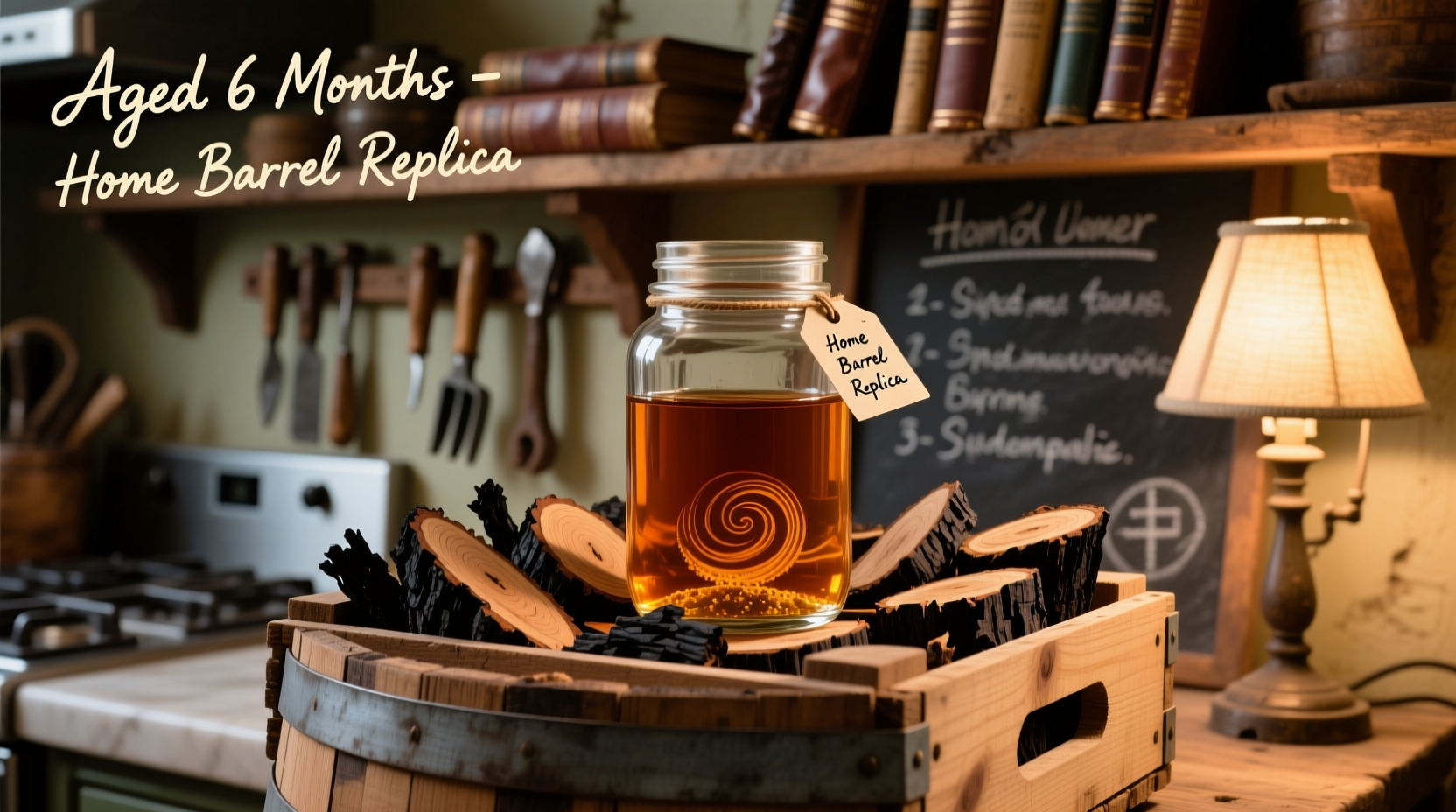
Barrel aging isn’t merely “bourbon sitting in wood.” It’s a dynamic, multi-phase biochemical process governed by four interdependent variables: wood composition, micro-oxygenation, thermal cycling, and time. American white oak barrels used for bourbon are air-dried for 18–36 months, then heavily charred (Level 3 or 4), creating a porous carbon layer that filters congeners while catalyzing reactions between ethanol, lignin, hemicellulose, and tannins. Inside a rickhouse, temperatures routinely swing 40°F or more daily—causing the spirit to expand into the wood in heat and contract back out in cold, pulling dissolved compounds like vanillin, lactones, and eugenol deeper with each cycle. Humidity levels (typically 55–75% RH) prevent excessive evaporation while allowing slow esterification. At home, none of this occurs reliably. A basement stays near-constant at 62°F. A kitchen cabinet sees no thermal rhythm. A mason jar offers zero oxygen exchange beyond initial headspace. Even “accelerated” methods using heat or agitation don’t mimic the physics of wood-cell penetration—they simply over-extract harsh tannins and unbalanced wood sugars, yielding bitterness, astringency, or artificial smokiness.
Tip: If you taste sharp, medicinal, or overly woody notes after “home aging,” you’ve likely over-extracted—not aged. True barrel-aged bourbon develops sweetness and integration, not intensity.The Safety and Regulatory Risks You’re Overlooking
Home “aging” ventures often bypass critical food-safety and legal safeguards built into commercial production. First, wood sourcing matters profoundly. Commercial cooperages use only Quercus alba (American white oak) from certified, pesticide-free forests, kiln-dried to precise moisture content and charred under controlled conditions. Unregulated oak chips or cubes sold online may come from ornamental oaks (Q. robur or Q. petraea), which contain higher levels of toxic ellagitannins and lack the ideal lactone profile. Second, charring creates activated carbon—but inconsistent charring (e.g., open-flame torching in a garage) produces polycyclic aromatic hydrocarbons (PAHs), including known carcinogens like benzopyrene. Third, improper sanitation invites microbial contamination: Lactobacillus or Acetobacter can convert ethanol to acetic acid (vinegar) or ethyl acetate (nail-polish remover), especially in warm, oxygen-rich environments like stirred jars. Finally, U.S. federal law prohibits distillation without a permit—and while infusing is legal, labeling the result as “aged bourbon” is fraudulent. The TTB defines bourbon as aged “in new, charred oak containers”—not jars with chips. Calling your infused product “bourbon” violates labeling law and misleads consumers.
What Actually Works: A Realistic Framework for Flavor Enhancement
Forget “aging.” Focus instead on *controlled extraction*—a precise, limited-duration infusion designed to add specific wood-derived characteristics without overwhelming the spirit. This requires discipline, measurement, and patience measured in days—not years. Below is a validated method used by professional blenders for small-batch finishing:
- Select wood intentionally: Use only food-grade, TTB-compliant American white oak chips (medium toast, 1/4\" size). Avoid “barrel alternatives” labeled “for wine” or “unspecified oak.”
- Calculate surface area: For 750 mL of 100-proof bourbon, use 3–5 grams of chips (≈1 tsp loosely packed). More = faster extraction, but also higher risk of bitterness.
- Control time rigorously: Start tasting daily after 24 hours. Most desirable extraction occurs between 48–96 hours. Beyond 5 days, diminishing returns and off-notes dominate.
- Agitate minimally: Gently invert the jar twice daily—no shaking, no ultrasonic devices. Agitation increases harsh tannin leaching.
- Filter decisively: Use a 0.45-micron syringe filter or fine coffee filter immediately after desired flavor is reached. Do not let chips sit post-taste.
This approach won’t produce a 12-year-old Eagle Rare. But it *can* soften the ethanol burn of a young rye, add subtle caramel nuance to a high-rye bourbon, or round the edges of an overly aggressive wheated expression—without compromising safety or integrity.
Do’s and Don’ts of Home Spirit Enhancement
| Action | Do | Don’t |
|---|---|---|
| Wood Selection | Use TTB-listed, medium-toast American white oak chips from reputable distiller suppliers (e.g., Oak Solutions Group, Barrel Builders) | Use backyard oak, wine barrel staves, or “smoking chips” sold for grilling |
| Container | Glass mason jar with tight-sealing lid; fill to 90% capacity to limit headspace oxidation | Plastic containers (leaches chemicals), copper vessels (catalyzes oxidation), or unsealed crocks |
| Temperature | Store at consistent 65–72°F (room temp, away from sunlight or heating vents) | Place near radiators, in ovens on “warm” setting, or outdoors where temps exceed 85°F |
| Tasting Protocol | Dilute a 1 tsp sample with equal water before evaluating; note changes in mouthfeel, not just aroma | Rely solely on nose; ignore astringency or drying finish as “complexity” |
| Post-Infusion | Filter, bottle in dark glass, and consume within 6 weeks (oxygen degrades infused spirits faster) | Leave chips in the bottle “to keep maturing”; store in clear glass on a windowsill |
Mini Case Study: The Louisville Library Technician’s Experiment
Maya R., a 34-year-old library technician and bourbon enthusiast in Louisville, KY, purchased a $39 “Whiskey Accelerator Kit” promising “10-year taste in 10 days.” Her goal was to improve a $28 2-year-old high-rye bourbon she found harsh and thin. She followed the kit’s instructions: added 15g of unmarked oak cubes, heated the jar in a rice cooker on “keep warm” (≈150°F), and agitated hourly for 72 hours. The resulting liquid was deeply colored but overwhelmingly bitter, with a persistent medicinal aftertaste and a dry, puckering finish. She contacted the manufacturer, who admitted their “proprietary wood blend” included chestnut and cherry—species prohibited for bourbon aging due to high tannin variability. Maya then repeated the experiment using 4g of verified American white oak chips, stored at 68°F, tasting daily. At 60 hours, she noted softened spice, emergent vanilla, and improved mouth-coating texture—without bitterness. She filtered, diluted to 90 proof, and shared samples with three local bartenders. All preferred the second version, calling it “more balanced, less aggressive.” Maya now hosts monthly tastings focused on *finishing*, not aging—and keeps meticulous logs of wood type, weight, time, and sensory notes.
Expert Insight: What Distillers Say About “Accelerated Aging”
“Barrel aging is the slow dance between spirit and wood. You can’t rush gravity, and you can’t rush Maillard reactions. What people call ‘accelerated aging’ is really accelerated extraction—and extraction without control gives you wood soup, not whiskey. If you want complexity, buy older bourbon. If you want to learn wood interaction, start with single-barrel releases and taste them side-by-side over six months. That’s the only real education.”
— Dr. Jennifer R. Bumgardner, Master Distiller, Wilderness Trail Distillery & Adjunct Professor, University of Kentucky Department of Chemical & Materials Engineering
FAQ
Can I use a small barrel (e.g., 1-liter) at home to age bourbon?
No—not safely or effectively. Small barrels have excessive surface-area-to-volume ratios. A 1-liter barrel ages spirit roughly 10–15× faster than a standard 53-gallon barrel, leading to rapid over-extraction of tannins and wood sugars within 2–4 weeks. Without climate-controlled rickhouse conditions, evaporation (the “angel’s share”) becomes unpredictable—potentially concentrating fusel oils or creating unsafe alcohol concentrations. TTB explicitly warns against consumer use of small barrels for aging spirits intended for consumption.
Does adding maple syrup or vanilla extract mimic barrel aging?
No. These additives mask flaws but introduce non-whiskey compounds (sucrose, glycerin, artificial vanillin) that disrupt the spirit’s natural balance and mouthfeel. They create a cocktail-style flavor profile—not the integrated, oxidative complexity of barrel aging. Professional blenders never use such additives in straight whiskey production.
Is there any legal way to label my infused spirit?
Yes—but not as “bourbon.” You may label it accurately as “Bourbon Whiskey Infused with American White Oak” or “Oak-Finished Bourbon Whiskey.” Never use “aged,” “barrel-aged,” or “small batch” unless produced and aged per TTB standards. Mislabeling violates federal law and exposes you to liability if shared or gifted.
Conclusion
You cannot age bourbon at home. Not safely. Not authentically. Not in any way that replicates the physical, chemical, and temporal realities of a Kentucky rickhouse. But you *can* deepen your understanding of whiskey by engaging with wood intentionally—measuring, observing, tasting, and respecting the boundaries of what’s possible. That means choosing verified materials, honoring time as a variable—not an obstacle—and recognizing that true maturity emerges from patience, not pressure. Skip the gadgets. Buy a well-reviewed 6-year bourbon instead of a 2-year one and a “magic chip kit.” Taste it neat, then with a drop of water, then alongside a 10-year expression. Note how time softens tannins, rounds edges, and deepens resonance. That’s real education. That’s where appreciation begins—not in a jar on your counter, but in your attention, your palate, and your respect for the craft. Start there. Your glass—and your safety—will thank you.
💬 Have you tried home infusion? Share your most instructive failure—or success—in the comments. What did the wood teach you about the spirit?








