Cauliflower has surged in popularity as a low-carb, nutrient-dense alternative to grains and starchy vegetables. From riced cauliflower to pizza crusts and mashed “potatoes,” it's become a staple in health-conscious kitchens. However, many people report experiencing gas, bloating, and abdominal discomfort after eating it—sometimes significantly. The question isn't whether cauliflower is healthy—it clearly is—but whether its benefits come at a gastrointestinal cost. The answer lies in its complex carbohydrate structure and how our digestive systems process certain plant compounds. Understanding the science behind these reactions empowers home cooks and eaters to enjoy cauliflower without digestive distress.
The short answer: yes, cauliflower can lead to gas and bloating, but not because it’s inherently problematic. Rather, it’s due to naturally occurring carbohydrates that humans lack the enzymes to fully break down. These undigested fibers reach the colon, where gut bacteria ferment them, producing gas as a byproduct. While this is a normal part of digestion, some individuals are more sensitive than others. The good news is that preparation methods, portion control, and dietary context can dramatically reduce or even prevent uncomfortable symptoms.
Definition & Overview
Cauliflower (Brassica oleracea var. botrytis) is a cruciferous vegetable belonging to the same species as broccoli, kale, Brussels sprouts, and cabbage. It’s characterized by a compact head—called a \"curd\"—composed of undeveloped flower buds, typically white, though purple, orange, and green varieties exist. Native to the eastern Mediterranean and cultivated for centuries, cauliflower is prized for its mild, slightly nutty flavor and versatile texture when cooked.
Nutritionally, cauliflower is a powerhouse. One cup (about 100 grams) of raw cauliflower contains just 25 calories, 2 grams of protein, 5 grams of carbohydrates (with 2 grams of fiber), and significant amounts of vitamin C, vitamin K, folate, and antioxidants like glucosinolates and sulforaphane. Its low-calorie, high-fiber profile makes it ideal for weight management and metabolic health. Yet, it’s precisely this high fiber and complex sugar content that contributes to digestive side effects in some people.
Key Characteristics
| Attribute | Description |
|---|---|
| Flavor Profile | Mild, subtly sweet, with earthy and faintly peppery notes; becomes nuttier when roasted. |
| Aroma | Neutral when raw; develops a warm, roasted scent when cooked. Overcooking produces a sulfurous smell due to sulfur-containing compounds. |
| Color & Form | Most common variety is creamy white with dense florets. Also available in vibrant purple, orange, and lime-green cultivars. |
| Fiber Content | High in insoluble and soluble fiber (~2g per 100g), contributing to satiety and gut health—but also gas production. |
| Complex Carbohydrates | Contains raffinose-family oligosaccharides (RFOs), which are indigestible sugars fermented by gut bacteria. |
| Shelf Life | Whole heads last 2–3 weeks refrigerated; cut florets last 4–7 days. Freezing extends usability up to 12 months. |
| Culinary Function | Used as a base for grain substitutes, mashed dishes, soups, stir-fries, roasts, and raw crudités. |
Why Cauliflower Causes Gas and Bloating
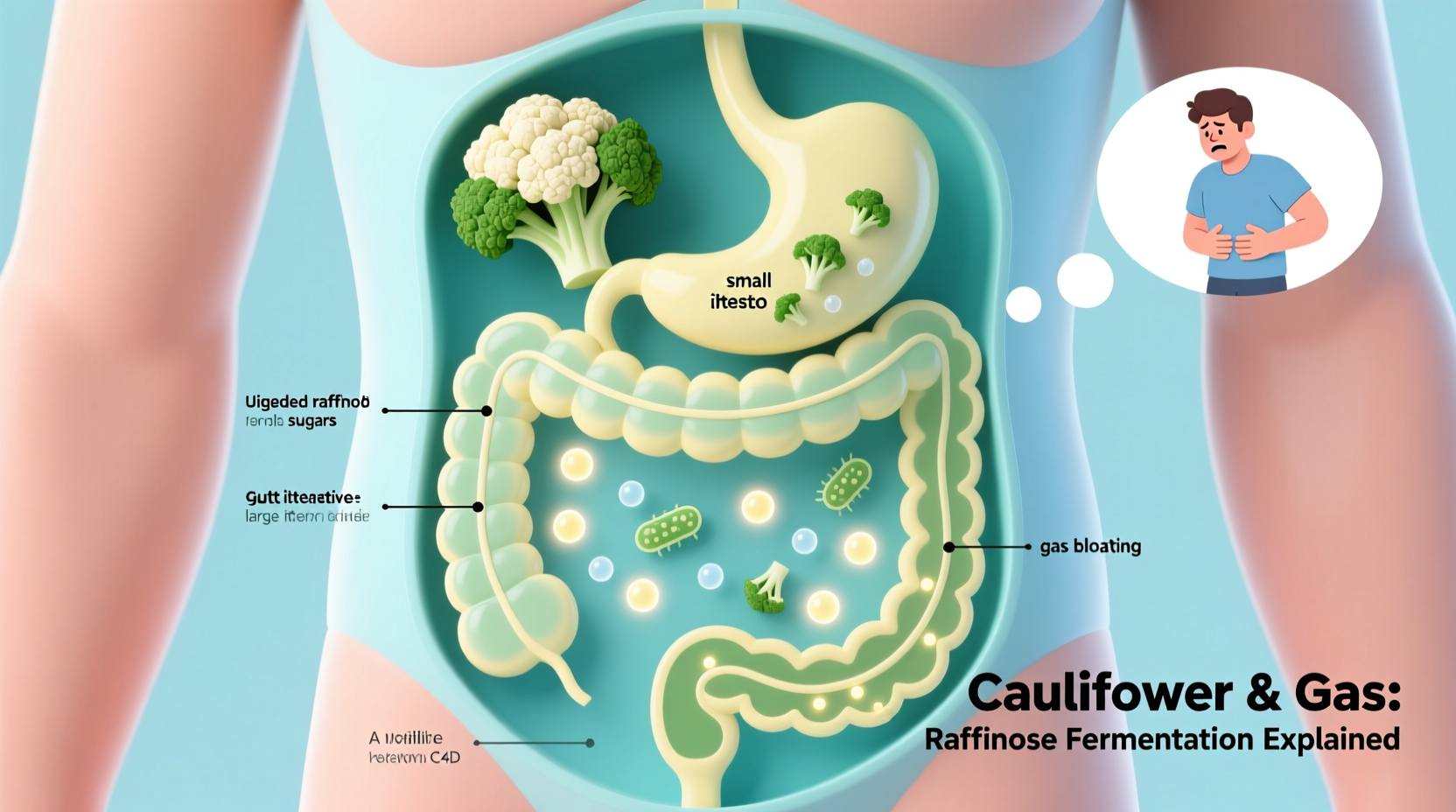
The primary reason cauliflower leads to gas lies in its content of raffinose, a type of oligosaccharide found in many legumes and cruciferous vegetables. Raffinose is a three-part sugar molecule composed of galactose, glucose, and fructose. Humans do not produce the enzyme alpha-galactosidase, which is required to break down raffinose in the small intestine. As a result, it passes intact into the large intestine, where resident bacteria ferment it for energy. This fermentation process releases gases such as hydrogen, methane, and carbon dioxide—leading to bloating, flatulence, and sometimes cramping.
In addition to raffinose, cauliflower contains other fermentable fibers, including cellulose and hemicellulose, which also resist human digestion. While these fibers support a healthy microbiome over time, sudden increases in intake—or consumption by individuals with sensitive guts—can trigger acute discomfort.
Another contributing factor is **sulfur**. Cauliflower is rich in sulfur-containing compounds called glucosinolates, which give cruciferous vegetables their distinctive aroma and contribute to detoxification pathways in the body. When broken down during digestion, these compounds can produce hydrogen sulfide—a gas responsible for foul-smelling flatulence. This doesn’t indicate poor health; rather, it reflects active microbial metabolism.
Tip: People with irritable bowel syndrome (IBS) or those following a low-FODMAP diet should approach cauliflower cautiously. Raffinose and related oligosaccharides are classified as FODMAPs (Fermentable Oligo-, Di-, Mono-saccharides And Polyols), known triggers for IBS symptoms. However, small portions of cauliflower may still be tolerable.
Practical Usage: How to Enjoy Cauliflower Without Discomfort
The goal isn’t to eliminate cauliflower but to manage how it’s prepared and consumed. Strategic culinary techniques can minimize gas production while preserving flavor and nutrition.
- Cook It Thoroughly: Raw cauliflower delivers the highest concentration of intact oligosaccharides and fiber. Cooking—especially steaming, boiling, or roasting—helps break down cell walls and partially degrade complex carbs, making them easier to digest. Roasting enhances flavor while reducing water content, concentrating nutrients without increasing gas risk.
- Start with Small Portions: Introduce cauliflower gradually into your diet. Begin with 1/2 cup servings and monitor your body’s response over 24 hours. This allows your gut microbiota to adapt slowly, potentially reducing long-term sensitivity.
- Pair with Digestive-Supportive Foods: Combine cauliflower with ingredients known to aid digestion:
- Ginger: Has anti-inflammatory and carminative properties that help move gas through the intestines.
- Fennel seeds: Traditionally used to relieve bloating; can be toasted and sprinkled over roasted cauliflower.
- Lemon juice: Acidic components may support gastric emptying and enzyme activity.
- Avoid Combining with Other High-FODMAP Foods: Eating cauliflower alongside beans, onions, garlic, or dairy (for lactose-intolerant individuals) multiplies fermentation load. Space out high-gas foods throughout the day instead of combining them in one meal.
- Rinse Frozen or Pre-Cut Varieties: Blanching before freezing partially breaks down fibers. Rinsing frozen riced cauliflower under hot water can further leach out some soluble sugars, reducing fermentability.
For example, try this simple digestion-friendly recipe: steam cauliflower florets until tender, then sauté with olive oil, crushed fennel seeds, grated ginger, and lemon zest. The combination supports digestive comfort while enhancing flavor complexity.
Variants & Types of Cauliflower
Different cauliflower varieties vary in sugar content, color, and texture, which can influence digestibility:
- White Cauliflower: The most common type. Highest in raffinose and thus most likely to cause gas if eaten in excess or raw.
- Purple Cauliflower: Contains anthocyanins (antioxidants also found in blueberries). Slightly sweeter and more tender; anecdotal evidence suggests easier digestion, though scientific data is limited.
- Orange Cauliflower: Rich in beta-carotene (vitamin A precursor). Softer texture may make it gentler on the stomach.
- Green Cauliflower (Romanesco): Technically a fractal-shaped variant of cauliflower. Has a nuttier taste and firmer texture. Similar carbohydrate profile to white cauliflower but often better tolerated due to denser structure and different fiber distribution.
- Riced, Freeze-Dried, or Powdered Forms: Processed versions may have altered fiber matrices. Some commercial riced cauliflower is blanched prior to packaging, which reduces gas-producing potential.
Pro Tip: If you're new to cruciferous vegetables or have a sensitive gut, start with orange or Romanesco cauliflower. Their unique structures may offer milder digestive effects compared to standard white varieties.
Comparison with Similar Ingredients
Cauliflower is often substituted for or confused with other vegetables, especially in low-carb diets. Understanding differences helps avoid unintended digestive consequences.
| Vegetable | Gas Potential | Key Differences | Better For… |
|---|---|---|---|
| Broccoli | High | Higher in raffinose and total fiber than cauliflower; stronger sulfur compounds. | Nutrient density; less so for sensitive digestion. |
| Cabbage | Very High (raw) | Extremely high in FODMAPs; fermentation used in sauerkraut reduces gas-causing sugars. | Fermented forms (e.g., sauerkraut); avoid large raw portions. |
| Zucchini | Low | Lower in oligosaccharides; primarily water and simple fibers. | Sensitive stomachs; quick-cooking dishes. |
| Turnips | Moderate | Contain some raffinose but less than cauliflower; higher in simple sugars. | Mashed alternatives; roasting applications. |
| Daikon Radish | Low-Moderate | Spicy bite; contains digestive enzymes; lower fermentable fiber. | Raw salads; enzymatic support for digestion. |
This comparison shows that while all cruciferous vegetables pose some risk, cauliflower sits in the mid-to-upper range for gas production—less than raw cabbage or broccoli, but more than non-cruciferous options like zucchini or carrots.
Practical Tips & FAQs
Does cooking eliminate gas-causing compounds in cauliflower?
Cooking doesn’t eliminate raffinose entirely, but it does weaken plant cell walls and begin breaking down complex carbohydrates. Boiling and steaming are particularly effective, reducing fermentable content by up to 30%. Roasting caramelizes natural sugars and concentrates flavor, which many find more digestible than boiling, despite less leaching.
Is riced cauliflower less gassy than whole florets?
It depends on processing. Commercially prepared riced cauliflower is often blanched before packaging, which initiates breakdown of oligosaccharides. Homemade riced cauliflower from raw heads retains full fiber and sugar content. To reduce gas potential, briefly steam or sauté homemade riced cauliflower before use.
Can probiotics help me tolerate cauliflower better?
Yes. A balanced gut microbiome adapts over time to increased fiber intake. Regular consumption of probiotic-rich foods (e.g., yogurt, kefir, kimchi, sauerkraut) may improve tolerance by promoting bacterial strains that process fibers more efficiently and produce less gas. However, introduce both fiber and probiotics gradually.
Are there supplements to prevent cauliflower-induced bloating?
Alpha-galactosidase supplements (such as Beano®) contain the enzyme humans lack to break down raffinose. Taking one before a meal containing cauliflower can significantly reduce gas formation. These are safe for most adults and work best when taken at the start of a meal.
How much cauliflower is too much?
There’s no universal threshold, but exceeding 2 cups of cooked cauliflower in one sitting increases the likelihood of bloating, especially in sensitive individuals. Moderation and pacing intake across meals are key. For reference, one medium head yields about 4–5 cups of florets.
Does freezing change cauliflower’s digestibility?
Freezing itself doesn’t reduce raffinose levels, but most frozen cauliflower is blanched first, which partially degrades oligosaccharides. Thawed frozen cauliflower is often easier to digest than raw fresh florets, though texture changes may affect culinary use.
Storage Tip: Store whole cauliflower stem-side up in the refrigerator to prevent moisture absorption. Avoid plastic wrap; use a perforated bag or paper towel to maintain airflow and extend freshness.
\"The gut thrives on diversity, but adaptation takes time. Introducing fibrous vegetables like cauliflower gradually trains your microbiome to handle them more efficiently—with less gas over time.\" — Dr. Elena Torres, Gastrointestinal Nutritionist
Summary & Key Takeaways
Cauliflower can indeed lead to gas and bloating, primarily due to its content of raffinose and other fermentable fibers that escape human digestion and feed colonic bacteria. This is a normal physiological process, not a sign of intolerance in most cases. However, individual sensitivity varies widely, especially among those with IBS or compromised digestive function.
The solution lies not in avoidance, but in intelligent preparation and mindful consumption. Key strategies include:
- Cooking cauliflower thoroughly via steaming, boiling, or roasting.
- Starting with small portions to allow gut adaptation.
- Avoiding combinations with other high-FODMAP foods.
- Using digestive aids like ginger, fennel, or enzyme supplements when needed.
- Choosing alternative varieties like orange or Romanesco for potentially gentler effects.
Cauliflower remains an exceptional vegetable for nutritional density, culinary versatility, and dietary flexibility. With informed handling, it can be enjoyed regularly—even daily—without gastrointestinal trade-offs. The goal is not perfection but balance: honoring both health benefits and digestive comfort in everyday eating.
Call to Action: Next time you prepare cauliflower, try roasting it with fennel seeds and a splash of lemon juice. Notice how your body responds. Keep a simple food journal to track portion sizes and symptoms—it’s the best way to personalize your diet for optimal digestion.