
Car key cases may seem like small accessories, but they play a crucial role in protecting one of your most frequently used items. Whether you're tossing your keys into a bag, pocket, or console, the material of your key case matters. Leather and fabric are two of the most common options on the market—each with distinct advantages and drawbacks. But when it comes to longevity, which truly stands the test of time?
The answer isn’t always straightforward. While leather is often associated with durability and premium quality, fabric pouches have evolved with advanced materials that resist wear and moisture. To determine which option lasts longer, we need to look beyond surface impressions and examine material composition, daily use patterns, environmental exposure, and long-term maintenance.
Durability: How Materials Respond to Daily Wear
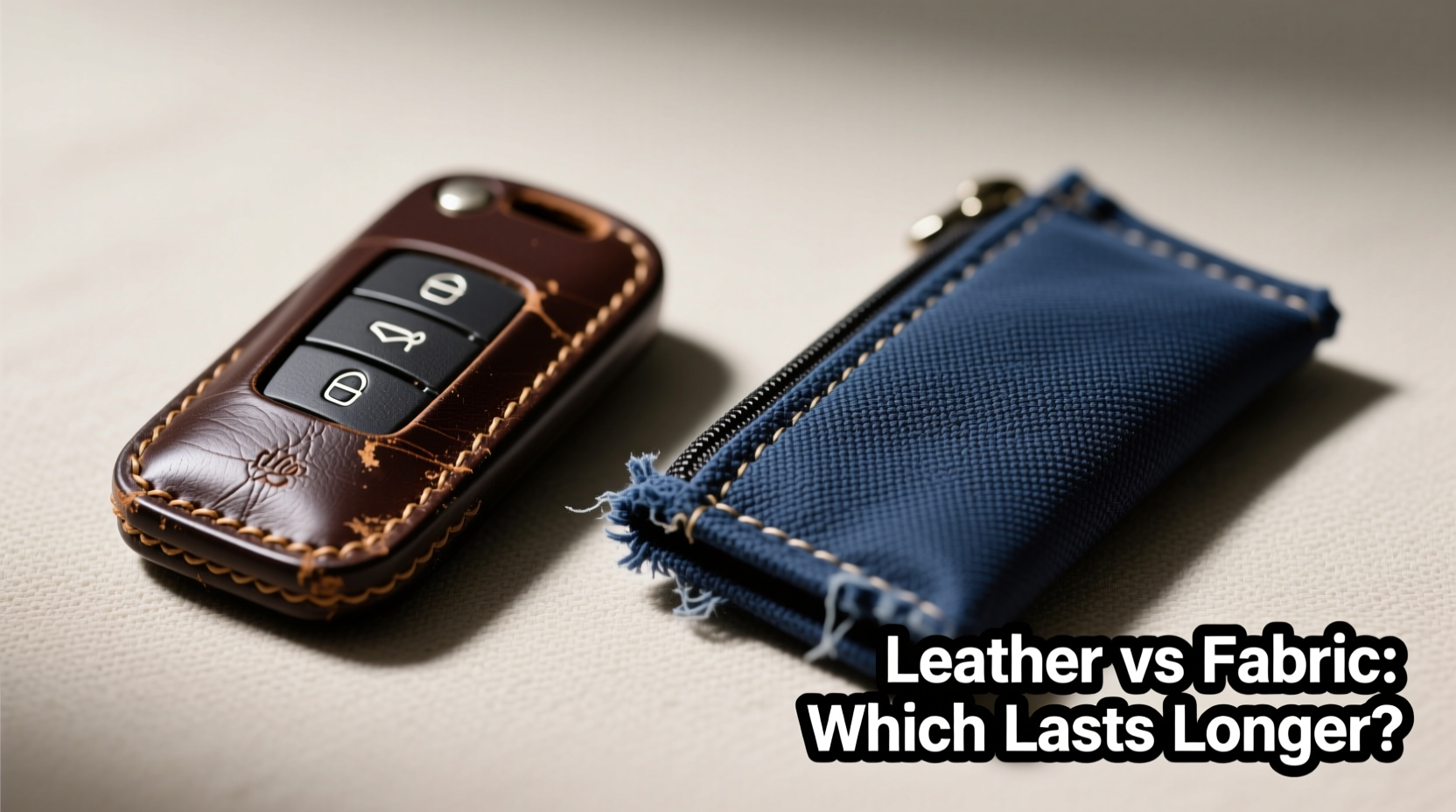
Every time you reach for your keys, the case absorbs impact, friction, and pressure. Over months and years, these micro-stresses accumulate. The way leather and fabric respond to them differs significantly.
Leather, especially full-grain or top-grain varieties, is naturally dense and resilient. It develops a patina over time, meaning it doesn’t just degrade—it ages gracefully. High-quality leather resists abrasion better than most fabrics and can handle drops, knocks, and even minor water exposure without structural failure.
In contrast, fabric pouches—typically made from nylon, polyester, or canvas—are lighter and more flexible. While modern synthetics are engineered for strength, repeated folding, stretching, and rubbing can lead to fraying, seam splitting, or fiber breakdown. Even water-resistant coatings tend to wear off after several months of regular use.
Tip: Avoid placing sharp objects like pocket knives or multitools in the same compartment as your key case—they accelerate fabric wear and can scratch leather finishes.Maintenance Requirements and Longevity Impact
Longevity isn’t just about initial material strength; it’s also influenced by how easy the product is to maintain. A high-durability item that’s neglected will fail faster than a lower-durability one that’s properly cared for.
Leather requires periodic conditioning (every 3–6 months) to prevent drying and cracking. Without this, even premium leather can become brittle and split, especially in dry climates or during winter months. However, with consistent care, a well-made leather key case can last a decade or more.
Fabric pouches, on the other hand, are easier to clean—many can be wiped down or even machine-washed. But their simplicity has a downside: dirt, oils, and sweat penetrate fabric fibers more easily than leather surfaces, leading to permanent staining and odor retention over time. Once the inner lining begins to degrade, the entire pouch often needs replacement.
“Leather’s lifespan is directly tied to maintenance. A neglected leather case won’t outlast a fabric one—but a well-cared-for piece can endure daily abuse for years.” — Daniel Reeves, Automotive Accessory Designer
Real-World Performance: A Mini Case Study
Consider two drivers: Sarah uses a full-grain leather key case she bought three years ago. She lives in a temperate climate and conditions the leather twice a year. Despite daily use, her case shows minimal wear—just a soft sheen and slight edge rounding, which she finds appealing.
James, meanwhile, prefers lightweight fabric pouches. He’s gone through four different ones in the same period—one tore at the seam after six months, another faded and stained beyond cleaning, and two others lost elasticity in the closure mechanism. While each was cheaper upfront, the cumulative cost and inconvenience add up.
Sarah’s investment in a $45 leather case has proven more economical and reliable. James spends an average of $15 per pouch, totaling $60 over three years—not including the annoyance of frequent replacements.
Comparison Table: Leather vs Fabric Key Cases
| Feature | Leather Key Case | Fabric Pouch |
|---|---|---|
| Lifespan (with care) | 5–10+ years | 6 months – 2 years |
| Resistance to Scratches | High (develops patina) | Low to moderate (shows scuffs) |
| Water Resistance | Moderate (can be damaged if soaked) | Varies (often coated, but coating wears) |
| Maintenance Needs | Conditioning every 3–6 months | Wipe clean; occasional washing |
| Premium Feel | High | Low to moderate |
| Eco-Friendliness | Natural material (if untreated) | Often synthetic, less biodegradable |
| Cost Over 5 Years | $40–$60 (one purchase) | $75–$100 (multiple replacements) |
Step-by-Step Guide to Maximizing Key Case Lifespan
Regardless of material, how you treat your key case determines how long it lasts. Follow this timeline to extend its life:
- Month 1: Inspect stitching, closures, and surface integrity. Break in leather gently—avoid overstuffing.
- Every 3 Months: Clean surface with appropriate products—leather cleaner or mild soap for fabric.
- Every 6 Months (Leather Only): Apply leather conditioner to prevent drying and cracking.
- Annually: Check for loose threads, weakened seams, or internal wear. Rotate out if signs of fatigue appear.
- As Needed: Store in a dry place away from direct sunlight or extreme temperatures—especially important in cars during summer.
Checklist: Choosing the Right Key Case for Longevity
- ✅ Prioritize full-grain or top-grain leather for maximum durability
- ✅ Look for double-stitched seams and reinforced edges
- ✅ Choose a size that fits your key fob snugly—no excessive movement
- ✅ Avoid overly thin or flimsy fabric pouches with weak zippers
- ✅ Consider weight—bulky cases may encourage you to leave them behind
- ✅ Factor in climate—leather performs better in dry environments; fabric may mildew in humid areas
Frequently Asked Questions
Can I leave my leather key case in the car?
It's not recommended. Extreme heat and UV exposure inside vehicles can dry out leather, causing cracks and fading. Fabric pouches fare no better—high temperatures weaken adhesives and degrade synthetic fibers. Always take your key case with you when possible.
Are vegan leather cases a good alternative?
Most vegan leathers (like PU or PVC) are less durable than genuine leather. They tend to peel or crack within 1–2 years, especially with frequent handling. If sustainability is a priority, look for bio-based leather alternatives or high-end recycled fabrics instead.
Do fabric pouches protect keys from scratches?
They offer basic protection, but looser weaves or worn linings allow keys to rub against each other. Over time, this can dull key finishes or damage smart fob casings. Leather cases with padded interiors provide superior cushioning and separation.
Final Verdict: Which Lasts Longer?
When all factors are considered—material resilience, maintenance demands, environmental resistance, and real-world usage—leather car key cases generally last significantly longer than fabric pouches. This assumes the leather is of decent quality and receives basic care. A well-maintained leather case not only survives daily abuse but often improves in appearance over time.
Fabric pouches win in terms of affordability and ease of cleaning, but their functional lifespan is shorter. For users who value consistency, reliability, and long-term value, leather is the smarter investment. It’s not just about lasting longer—it’s about aging with character.
🚀 Ready to upgrade your everyday carry? Invest in a quality leather key case today—your future self will thank you when it’s still going strong years from now. Share your favorite key case tips in the comments!








