Keychains are more than just functional—they’re personal accessories that reflect style, values, and even craftsmanship. As eco-conscious design gains popularity, wooden keychains have surged in appeal for their natural aesthetic and sustainable materials. But a common concern lingers: if you carry a wooden keychain in your pocket every day, will it warp? And how does it truly compare to the long-standing durability of metal? This article examines material behavior, environmental influences, and real-world wear patterns to help you make an informed choice.
How Wood Reacts to Pocket Conditions
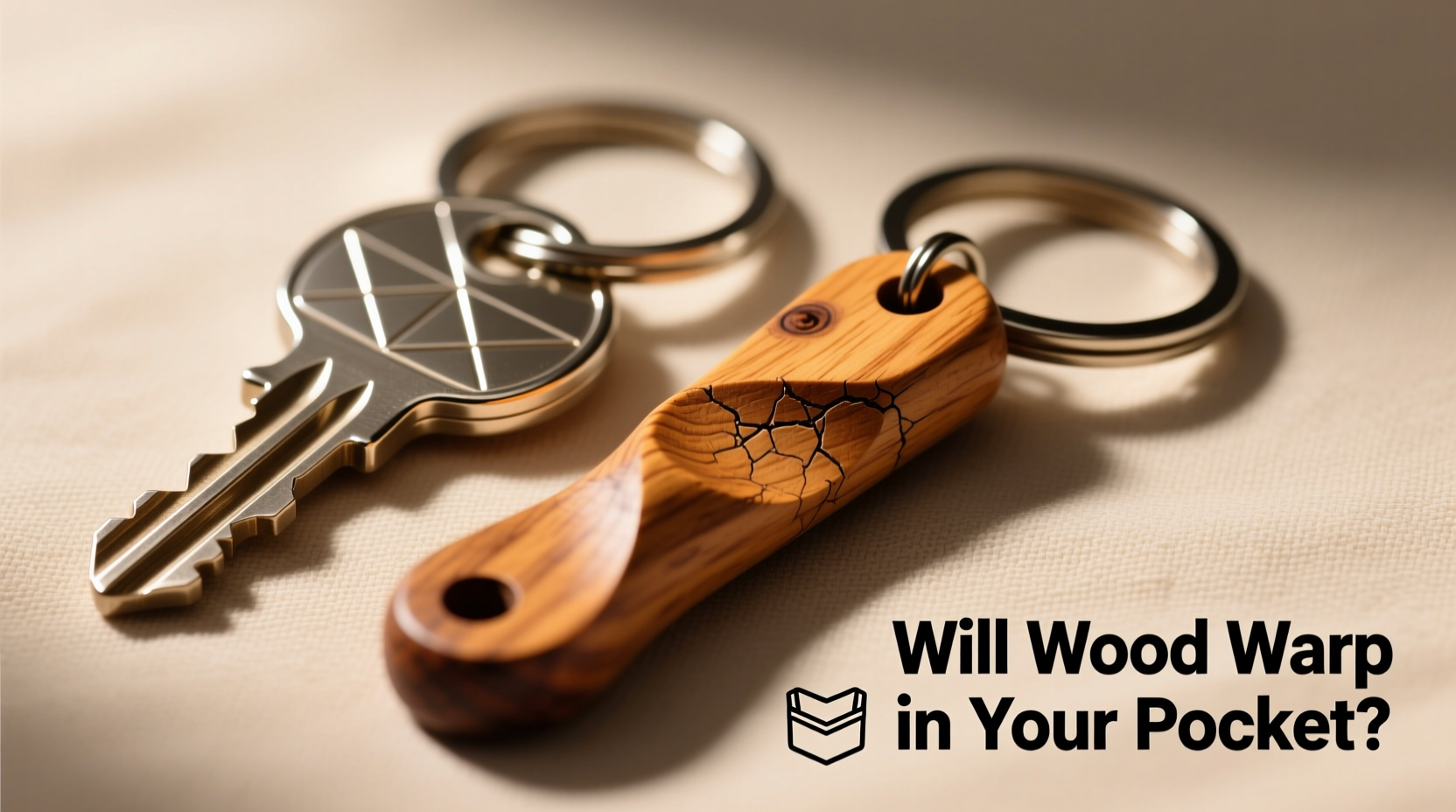
Wood is a hygroscopic material—it naturally absorbs and releases moisture from its surroundings. When carried in a pocket, especially over extended periods, a wooden keychain is exposed to body heat, perspiration, humidity, and occasional contact with rain or spills. These factors can influence dimensional stability.
Most high-quality wooden keychains are made from hardwoods like walnut, maple, or bamboo, which are less prone to warping than softwoods. They're typically sealed with oils (like tung or linseed) or coated with finishes such as polyurethane or lacquer. These treatments create a protective barrier, minimizing moisture absorption.
However, prolonged exposure to damp environments—such as leaving a keychain in a wet pocket after outdoor activity—can compromise the finish over time. Once moisture penetrates the grain, swelling may occur. Uneven drying then leads to warping or cracking, particularly in thinner or intricately shaped designs.
Tip: If your wooden keychain gets wet, dry it immediately with a soft cloth and let it air-dry at room temperature—never near direct heat.Metal Keychains: Durability and Drawbacks
Metal keychains—typically crafted from stainless steel, aluminum, brass, or titanium—are inherently resistant to warping, moisture, and temperature fluctuations. Their structural integrity remains unchanged whether carried in a dry jacket or a sweaty jeans pocket.
Beyond resilience, metals offer precision in engraving and a sleek, modern appearance. Stainless steel and titanium are hypoallergenic and corrosion-resistant, making them ideal for sensitive skin or humid climates. Aluminum offers lightweight convenience without sacrificing toughness.
Yet metal isn’t flawless. It conducts heat and cold, so in extreme weather, a metal keychain can become uncomfortably hot or cold against the skin. It’s also denser and heavier, adding noticeable weight to a pocket full of keys. Over time, cheaper alloys may tarnish or chip, especially if plated rather than solid.
“Metals don’t degrade from moisture, but poor plating or alloy composition can lead to pitting and discoloration—even on ‘rust-proof’ claims.” — Daniel Reeves, Materials Engineer
Comparative Analysis: Wood vs Metal Keychains
| Feature | Wooden Keychains | Metal Keychains |
|---|---|---|
| Warp Risk | Low to moderate (depends on finish and exposure) | None |
| Moisture Resistance | Good when sealed; degrades over time if wet frequently | Excellent (especially stainless steel, titanium) |
| Weight | Light to medium | Medium to heavy |
| Eco-Friendliness | High (biodegradable, renewable sourcing possible) | Variable (recyclable but energy-intensive production) |
| Aesthetic Longevity | Develops patina; may scratch or dull | Holds polish well; may scratch or tarnish |
| Pocket Comfort | Warm, smooth, non-conductive | Cold/hot to touch; can feel bulky |
Real-World Example: A Year With Both Materials
Jamie, a landscape photographer based in Portland, Oregon, tested both wooden and metal keychains over 12 months in a high-moisture environment. She carried a walnut keychain with a food-grade epoxy seal during spring and summer and switched to a brushed titanium model in fall and winter.
After eight months, the wooden piece showed minor surface dulling and a faint dark spot where sweat had pooled repeatedly. No warping occurred, but she noticed slight roughness along one edge where the finish wore thin. In contrast, the titanium keychain remained pristine but became uncomfortably cold during early morning shoots.
Her conclusion: “The wood felt better in my hand and didn’t clank against my phone. I just had to be mindful of drying it after hikes. The metal never failed, but it didn’t grow on me the way the wood did.”
Preventing Warping: A Step-by-Step Guide
To maximize the lifespan of a wooden keychain and prevent warping, follow this routine:
- Inspect Weekly: Check for cracks, dull spots, or uneven texture that may indicate finish degradation.
- Clean Gently: Wipe with a dry or slightly damp cloth. Avoid soaking or using chemical cleaners.
- Re-Oil Monthly: Apply a drop of food-safe mineral oil or beeswax conditioner. Buff with a soft cloth.
- Store Properly: When not in use, keep in a breathable pouch away from direct sunlight or heaters.
- Avoid Extreme Exposure: Remove before swimming, showering, or handling greasy substances.
Checklist: Choosing the Right Keychain for Your Lifestyle
- ✅ Do you live in a humid or rainy climate? → Prioritize sealed wood or corrosion-resistant metal.
- ✅ Do you value lightweight, quiet carry? → Wood has the advantage.
- ✅ Are you prone to losing items? → Metal is easier to spot and more likely to survive retrieval from mud or water.
- ✅ Do you appreciate evolving aesthetics? → Wood develops character; metal stays consistent.
- ✅ Is sustainability important? → FSC-certified wood or recycled metal options exist.
Frequently Asked Questions
Can any wood resist warping completely?
No natural wood is immune to warping under extreme or prolonged moisture exposure. However, dense hardwoods with proper sealing—such as teak, ebony, or stabilized balsa—offer superior resistance. Stabilized wood, treated with resin under vacuum pressure, is especially durable and often used in premium outdoor gear.
Do metal keychains damage other items in your pocket?
Yes, uncoated or rough-edged metal keychains can scratch phones, glasses, or fabric linings. Consider models with rounded edges or rubber bumpers. Wooden keychains are gentler in mixed-pocket environments.
How long do wooden keychains last compared to metal?
A well-maintained wooden keychain can last 5–10 years or more. Metal versions often last decades due to inertness, but cosmetic wear (scratches, dents) may prompt earlier replacement. Ultimately, longevity depends on usage intensity and care habits.
Final Thoughts: Function Meets Personal Preference
The question of whether wood will warp in your pocket doesn’t have a universal answer—it hinges on material quality, finish, and how you treat it. While metal wins in absolute durability and zero maintenance, wood offers warmth, uniqueness, and environmental appeal that many find worth the minor upkeep.
Modern manufacturing has narrowed the performance gap. High-end wooden keychains now rival metal in resilience, especially when treated with advanced sealants. For most users, occasional oiling and basic awareness of moisture are sufficient to prevent warping.
If you value tactile comfort, sustainability, and a distinctive look, a wooden keychain is a strong contender. If you prioritize \"set it and forget it\" reliability in all conditions, metal remains the gold standard.
🚀 Ready to choose your next keychain? Assess your daily routine, climate, and priorities—then pick the material that aligns with both function and feeling. Share your experience or favorite brand in the comments below.