In an era where personal expression meets digital convenience, accessories like keychains and phone charms have evolved beyond mere utility. Once defined by function—keys for access, charms for decoration—these small adornments now blur the line between identity, fashion, and technology. With smartphones replacing many physical objects, including wallets and keys, the role of both keychain decor and phone charms has shifted dramatically. But are they now essentially the same thing? Or do subtle distinctions still matter?
The answer isn’t straightforward. While both serve as customizable accents that reflect personality, mood, or fandom, their placement, purpose, and cultural context reveal important nuances. Understanding these helps clarify whether we're witnessing a convergence of form and function—or just a temporary overlap driven by trend cycles.
A Historical Perspective: From Utility to Expression
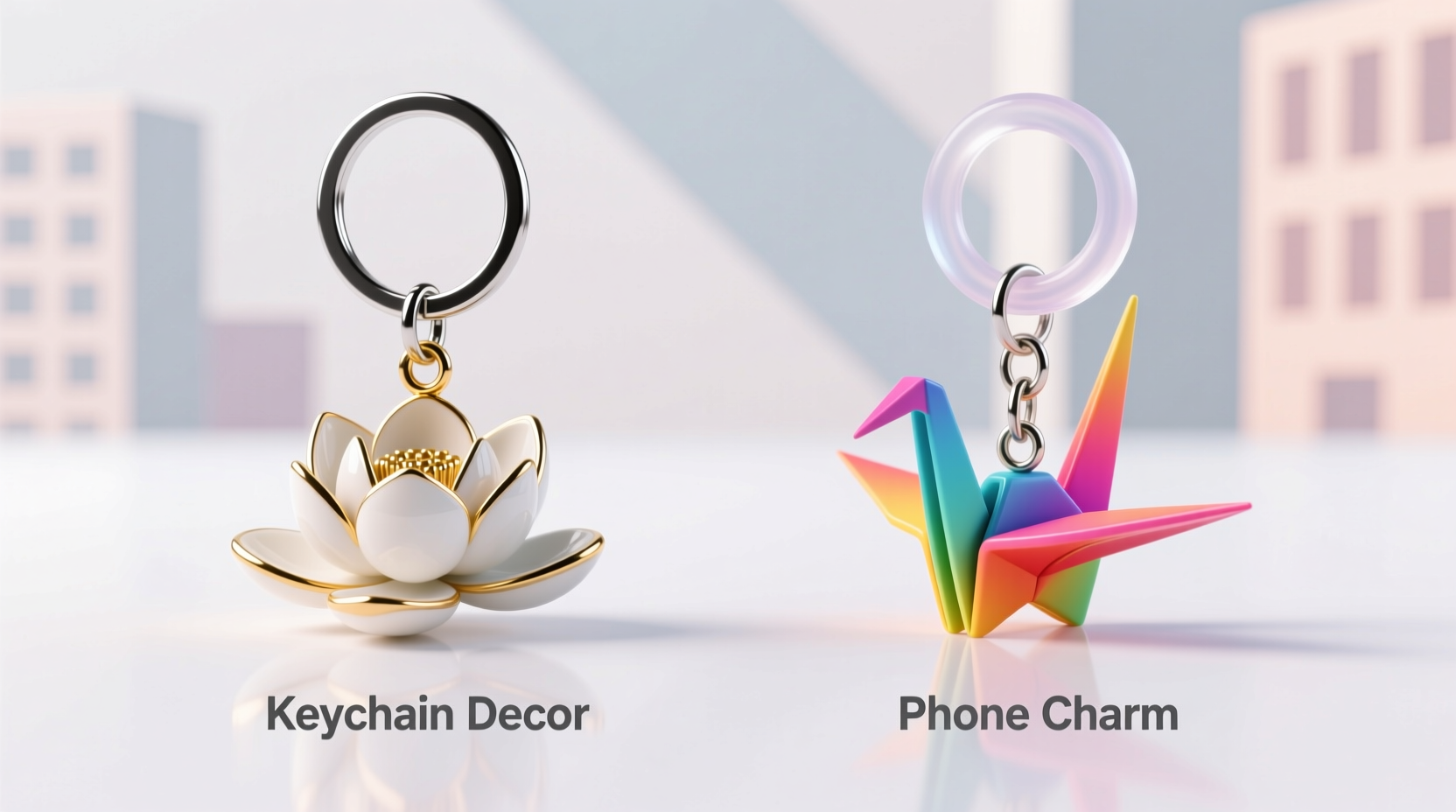
Originally, keychains were purely functional. They held keys together, preventing loss and enabling easy access. Over time, manufacturers began adding decorative elements—logos, mini figures, enamel badges—turning them into promotional items or souvenirs. By the 1990s, keychains had become collectibles, especially among anime fans in Japan, where character-themed designs flourished.
Phone charms emerged slightly later, gaining popularity in the early 2000s with the rise of flip phones. In countries like Japan and South Korea, users attached colorful tassels, beads, or kawaii (cute) figurines to their devices via lanyards or loops. These weren’t just decorative—they signaled social identity, often indicating age group, gender expression, or subculture affiliation.
Fast forward to today: most people use smartphones without external ports for charm attachments, and smart locks reduce reliance on physical keys. Yet, both keychains and phone charms remain popular. Why? Because they’ve transitioned from tools to tokens of self-expression.
Functional Differences in a Digital Age
Despite their shared aesthetic appeal, keychain decor and phone charms still differ in practical application:
- Attachment Method: Keychains typically clip onto key rings or bag zippers; phone charms usually dangle from phone cases, lanyards, or wrist straps.
- Primary Use Case: Keychains maintain a link to real-world access (car, home, office), while phone charms attach to our most personal digital device.
- Durability Needs: Phone charms endure more movement and friction due to constant handling, requiring sturdier materials or secure fasteners.
- Portability: Many modern “phone charms” double as wristlets or cardholders, merging fashion with function in ways traditional keychains rarely do.
Cultural Convergence: Kawaii, Minimalism, and Identity
The visual language of both accessories has converged thanks to globalized trends. Japanese kawaii culture, which celebrates cuteness through pastel colors, cartoon motifs, and plush textures, heavily influences both markets. Similarly, minimalist Scandinavian design has introduced sleek metal pendants and monochrome tassels suitable for either keys or phones.
Social media platforms like TikTok and Instagram amplify this blending. A single charm might be marketed as “perfect for your keys, AirPods case, or phone,” reflecting how brands now design for cross-compatibility. Hashtags like #charmhaul or #keychainaesthetic treat both categories interchangeably.
“Today’s accessory market rewards versatility. Consumers want one item that can personalize multiple belongings.” — Lena Park, Product Designer at UrbanTassel Co.
Comparison Table: Keychain Decor vs Phone Charm
| Feature | Keychain Decor | Phone Charm |
|---|---|---|
| Primary Function | Hold keys; prevent loss | Decorate phone; aid grip |
| Common Materials | Metal, rubber, enamel, fabric | Silicone, acrylic, resin, soft plastic |
| Typical Size | 1–3 inches | 2–5 inches (with dangling length) |
| Attachment Style | Split ring, lobster clasp | Lanyard loop, snap button, adhesive mount |
| Cultural Roots | Industrial utility + Western branding | Japanese kawaii + mobile tech culture |
| Modern Use Case | Fashion accent on bags, zippers | Style + anti-drop safety feature |
Real Example: The Rise of the Multi-Purpose Charm
Take Mina, a 24-year-old graphic designer in Los Angeles. She owns a vintage-style enamel cat charm with a built-in USB drive. Originally bought as a keychain, she now attaches it to her phone case using a silicone adapter ring. “It holds sentimental value—I got it at a convention—but I don’t carry keys anymore since my apartment uses a keypad,” she explains. “So I repurposed it. It’s cute, functional, and feels like me.”
Mina’s story reflects a broader shift: accessories are no longer bound by original intent. As long as a piece fits aesthetically and physically into daily routines, its classification becomes secondary.
Step-by-Step Guide: Choosing Between Keychain Decor and Phone Charm
When deciding what to buy or how to style your current pieces, follow this simple decision framework:
- Assess Your Daily Carry: Do you regularly use physical keys? If yes, prioritize keychain compatibility. If not, lean toward phone-centric designs.
- Evaluate Attachment Options: Look for charms with universal connectors (e.g., lobster clasps, O-rings) that allow flexible use across devices and bags.
- Consider Weight & Balance: Heavy charms may damage phone case joints or make keys cumbersome. Aim for lightweight materials under 20 grams for phones.
- Match Your Aesthetic: Choose themes consistent with your wardrobe or digital persona—whether that’s edgy, minimalist, or maximalist.
- Test for Practicality: Attach the charm and simulate real-world use. Does it interfere with pocket storage? Can it snag on fabric?
Checklist: Maximizing Versatility in Your Accessory Collection
- ✔️ Prioritize modular designs with interchangeable clips or rings
- ✔️ Invest in neutral base charms that can be customized seasonally
- ✔️ Avoid fragile components (e.g., glass beads) if used daily
- ✔️ Use clear silicone protectors for resin or painted surfaces
- ✔️ Rotate charms based on outfit, occasion, or mood
FAQ
Can I use a keychain as a phone charm?
Yes, provided it has a compatible connector and isn’t too heavy. Many people use keychains on phones via adapter rings or lanyards. Just ensure the attachment method won’t stress your phone’s case or port.
Do phone charms damage phones?
Generally, no—if used correctly. However, poorly secured charms can yank on case openings during falls, potentially causing cracks. Avoid attaching charms directly to thin plastic cases or devices without reinforced loops.
Why are some phone charms so expensive?
Premium pricing often reflects limited editions, licensed characters (e.g., Sanrio, Pokémon), handcrafted details, or imported materials. Like any fashion accessory, perceived value plays a major role.
Conclusion: Same Spirit, Different Roles
While keychain decor and phone charms share DNA—personalization, emotional resonance, aesthetic flair—they aren’t quite the same. One anchors us to physical spaces; the other travels with our digital selves. Yet in practice, their roles increasingly overlap. Modern consumers treat them as modular extensions of identity, moving them freely between bags, gadgets, and even jewelry.
The real takeaway is adaptability. Whether you call it a keychain or a phone charm, what matters is how it enhances your everyday experience—visually, emotionally, and functionally.
🚀 Ready to redefine your accessories? Mix, match, and repurpose your charms to suit your lifestyle. Share your favorite combo in the comments and inspire others to get creative!