As the holiday season approaches, homes across neighborhoods light up with festive displays. Strings of Christmas lights adorn trees, rooftops, and railings, creating warmth and cheer. But if you’ve ever touched a strand after it’s been on for a few hours and felt unexpected heat, you’re not alone—and it’s worth paying attention to. While some warmth is normal, excessive heat can signal serious electrical issues that increase fire risk. Understanding why Christmas lights get hot and how to respond safely is essential for protecting your home and family during the holidays.
Understanding Heat in Christmas Lights
Christmas lights generate heat primarily due to electrical resistance. When current flows through the wires and filaments (especially in incandescent bulbs), energy is converted into both light and heat. The more resistance in the circuit—such as older wiring, poor connections, or overloaded circuits—the more heat is produced. LED lights, by contrast, are far more energy-efficient and produce significantly less heat because they convert most energy into light rather than thermal output.
Incandescent mini-lights, still common in many households, operate at much higher temperatures. A single bulb can reach 150–220°F (65–104°C) after extended use. When dozens of these bulbs are strung together and enclosed in tight spaces—like inside a dry Christmas tree or behind drapes—the cumulative effect can create a dangerous hotspot.
“Any noticeable warmth from Christmas lights should be taken seriously. It's often the first sign of an overload or failing component.” — Jason Reed, Electrical Safety Inspector, NFPA
Common Causes of Overheating Lights
Several factors contribute to Christmas lights becoming excessively hot. Recognizing these causes helps identify risks before they lead to accidents.
- Aging or damaged wiring: Frayed insulation, cracked sockets, or corroded connectors increase resistance and reduce safe current flow.
- Overloading circuits: Connecting too many strands end-to-end beyond manufacturer limits causes excessive current draw.
- Poor ventilation: Wrapping lights tightly around objects or placing them near flammable materials traps heat.
- Using indoor lights outdoors: Indoor-rated strings lack weather-resistant insulation and may short or overheat when exposed to moisture.
- Daisy-chaining incompatible types: Mixing LED and incandescent strings on the same run creates uneven load distribution.
- Faulty transformers or power supplies: Especially with low-voltage systems, defective adapters can deliver inconsistent voltage, leading to overheating.
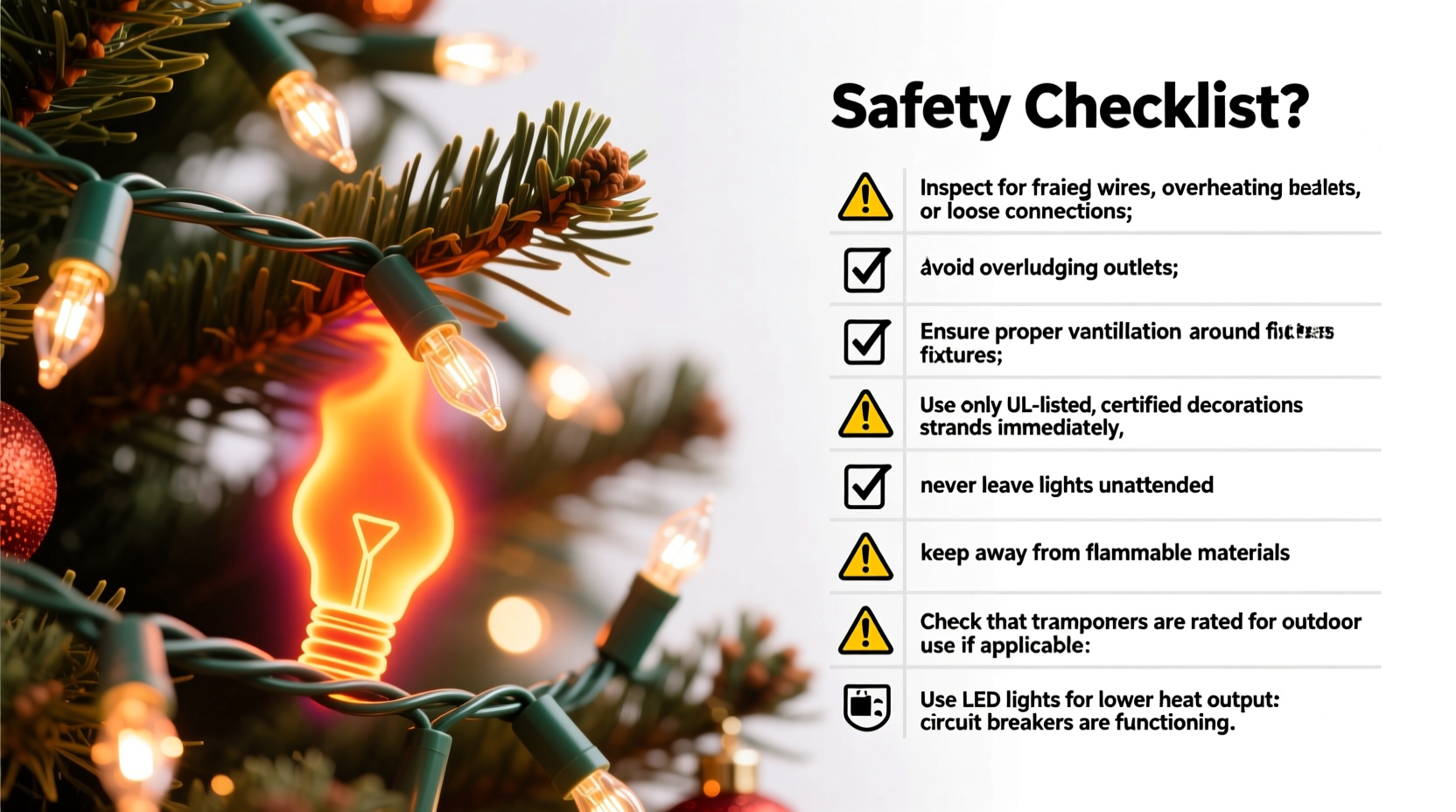
Safety Checklist: Preventing Fire Hazards from Hot Christmas Lights
Follow this comprehensive safety checklist before installing and using any holiday lighting. This proactive approach minimizes risks and ensures peace of mind throughout the season.
- Inspect every strand before use: Check for frayed wires, broken sockets, loose bulbs, or discoloration at plug ends.
- Verify certification labels: Only use lights certified by UL (Underwriters Laboratories), ETL, or CSA. These meet strict electrical safety standards.
- Check maximum connection limits: Follow manufacturer guidelines—typically no more than three incandescent strands daisy-chained together.
- Use timers or smart plugs: Automate shut-off periods to limit runtime and reduce heat buildup.
- Ensure proper placement: Keep lights away from curtains, paper decorations, bedding, and other combustibles.
- Separate indoor and outdoor usage: Use only outdoor-rated lights outside, and confirm they're plugged into GFCI-protected outlets.
- Test before full installation: Plug in each string for at least 30 minutes to monitor temperature rise.
- Avoid nail or staple fasteners: Piercing wires with sharp objects damages insulation and increases fire risk. Use plastic clips instead.
- Keep trees hydrated: Dry real trees become highly flammable; water daily to maintain moisture levels.
- Unplug when not in use: Especially overnight or during travel, always disconnect decorative lighting.
LED vs. Incandescent: A Heat Comparison
The choice between LED and incandescent lights has major implications for safety, energy use, and longevity. The table below compares key differences relevant to heat production and fire risk.
| Feature | Incandescent Lights | LED Lights |
|---|---|---|
| Operating Temperature | High (150–220°F) | Low (warm to touch, typically under 100°F) |
| Energy Efficiency | Low – ~90% lost as heat | High – ~80–90% converted to light |
| Lifespan | ~1,000–2,000 hours | ~25,000–50,000 hours |
| Fire Risk | Higher, especially near dry materials | Very low |
| Cost Over Time | Higher due to replacement and energy use | Lower long-term cost |
Switching to LED lights not only reduces heat but also cuts electricity bills by up to 80%. Given their durability and safety advantages, LEDs are increasingly the preferred option for residential and commercial displays alike.
Step-by-Step Guide: How to Test Your Christmas Lights for Safe Operation
Before decorating, conduct a thorough evaluation of your lights. This five-step process ensures they’re safe to install and operate.
- Visual Inspection: Lay out each strand on a flat surface. Look for cracked bulbs, exposed wires, bent prongs, or melted socket areas. Discard any damaged sets.
- Bulb Check: Ensure all bulbs are securely seated. Loose bulbs cause arcing and localized heating. Replace missing or flickering bulbs immediately.
- Plug-In Test: Connect the strand to a working outlet using a surge protector. Let it run for 30 minutes in a clear, non-flammable area.
- Touch Test: After 30 minutes, gently touch several points along the wire and near the plug. If the cord feels hot (not just warm), stop using it. Significant heat indicates internal problems.
- Smell and Sound Monitor: During testing, watch for burning odors, buzzing sounds, or visible sparks. Any of these signs means immediate disconnection and disposal.
Real Example: A Near-Miss Incident in a Suburban Home
In December 2022, a homeowner in Ohio noticed an unusual smell while watching TV late one evening. Investigating, she found that the garland lights wrapped around her living room mantel were emitting a faint smoke-like odor. Upon closer inspection, the power adapter was visibly discolored and hot to the touch. She unplugged the set immediately and called an electrician.
The technician discovered that the issue stemmed from connecting four outdated incandescent strands together—exceeding the recommended three-set limit. The transformer had been operating beyond capacity for weeks, slowly degrading until it began to fail. Had the lights remained on unattended, experts estimated there was a high probability of ignition, particularly given the proximity to wooden trim and fabric stockings.
After replacing all lighting with UL-listed LED versions and installing a programmable timer, the family continued their tradition safely. Their experience underscores how easily overlooked details—like daisy-chaining limits—can escalate into hazardous situations.
Expert Recommendations for Long-Term Lighting Safety
Electrical safety professionals emphasize prevention through awareness and maintenance. According to the National Fire Protection Association (NFPA), holiday decorations are involved in an estimated 7,000 home fires annually in the U.S., resulting in dozens of deaths and millions in property damage.
“Most decoration-related fires start because of simple oversights—using damaged lights, ignoring manufacturer instructions, or leaving them on unattended. These are preventable with basic diligence.” — Sarah Lin, Senior Engineer at NFPA Electrical Division
Experts recommend treating Christmas lights like any other electrical appliance: store them properly, inspect them regularly, and retire them when worn. They also advise homeowners to consider investing in smart lighting systems that include automatic shutoffs, remote control via smartphone, and built-in thermal protection.
Frequently Asked Questions
Is it normal for Christmas lights to be warm?
Yes, slight warmth—especially near the plug or transformer—is normal, particularly with incandescent models. However, if the cord or bulbs are too hot to touch comfortably, this indicates a problem such as overload, damage, or poor quality.
Can I repair a broken strand myself?
Minor fixes like replacing a fuse or adding a new end plug may be safe for experienced users. However, splicing wires or modifying sockets is strongly discouraged due to fire and shock risks. It’s safer and more cost-effective to replace faulty strands entirely.
How long should I keep my Christmas lights before replacing them?
Even if functioning, lights should be replaced every 5–7 years. Over time, insulation degrades, solder joints weaken, and connectors corrode. Regular annual inspections help determine when retirement is necessary.
Conclusion: Stay Festive, Stay Safe
The glow of Christmas lights brings joy, but it shouldn’t come at the cost of safety. Heat is a natural byproduct of electricity, but unchecked, it becomes a hazard. By understanding why lights get hot, choosing safer options like LEDs, and following a rigorous safety checklist, you protect not just your home—but your holiday memories.
Take action now: pull out your stored lights, inspect each strand, test for heat, and upgrade where needed. Make this season brighter, smarter, and safer for everyone around you.
🚀 Ready to upgrade your holiday display? Start today by replacing one old incandescent strand with an LED alternative—and share your safety tips with friends and family to spread awareness!








