
Craft distilling is no longer a novelty—it’s a maturing industry with hard-won lessons written in balance sheets, barrel logs, and tasting room receipts. Since the 2010s boom, over 2,700 U.S. craft distilleries have opened, yet nearly 18% closed within their first three years (American Craft Spirits Association, 2023). Profitability isn’t guaranteed—but it *is* increasingly predictable for those who align with emerging, data-informed trends. This isn’t about chasing hype or launching another “small-batch bourbon” without infrastructure. It’s about recognizing where value is actually being captured: in operational discipline, community-rooted branding, regulatory agility, and intentional product architecture. Profitability today belongs not to the loudest brand, but to the most strategically calibrated one.
1. The Profitability Reality Check: Beyond the Romance
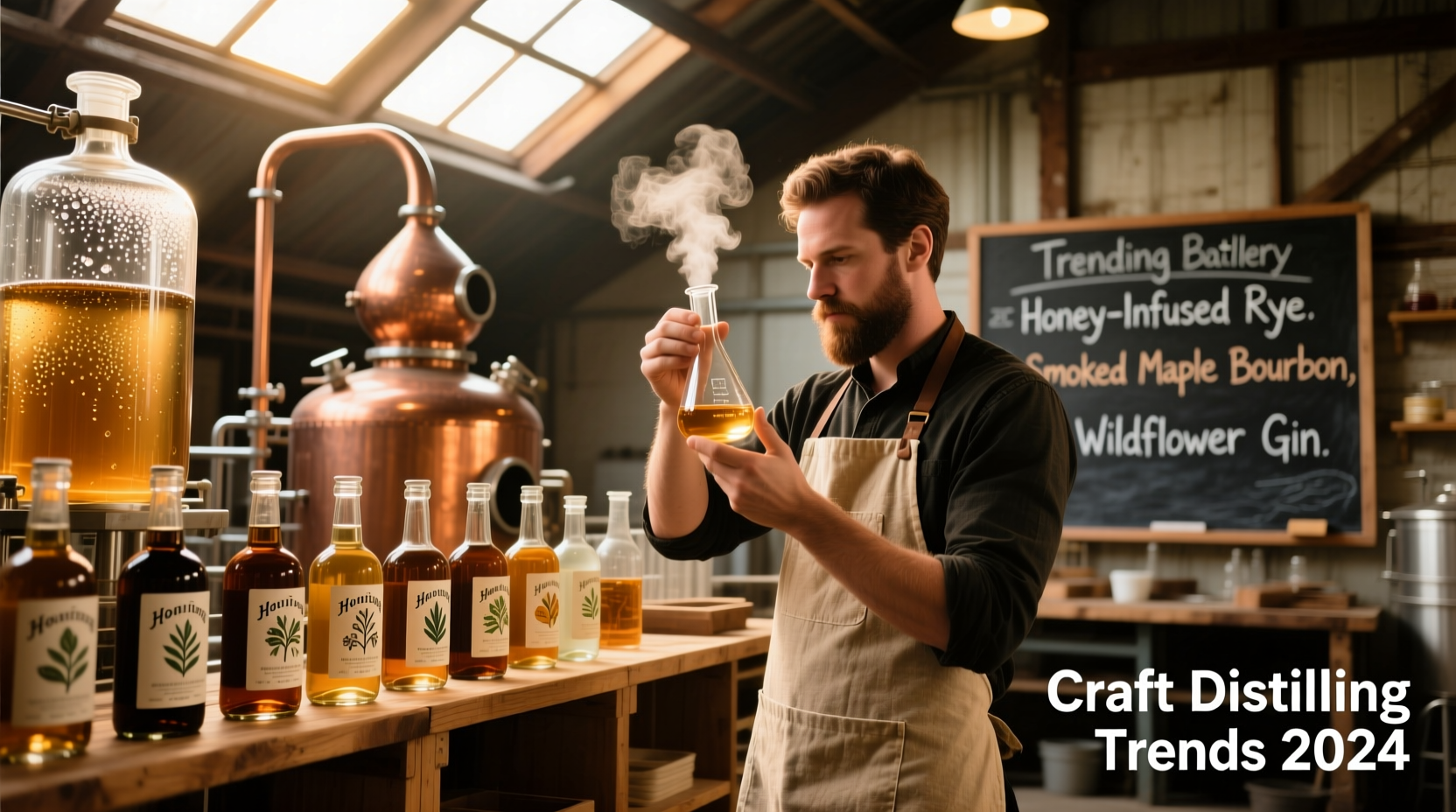
“Craft distilling” evokes copper stills, hand-labeled bottles, and rustic taprooms—but romance doesn’t pay rent. The average startup cost for a compliant, bonded, 200-gallon-per-batch distillery exceeds $350,000 before aging inventory. Liquor taxes, federal excise fees ($13.50 per proof gallon for spirits), TTB labeling approvals, state distribution mandates, and insurance premiums compound pressure on thin margins. Yet profitability *is* achievable—not as an outlier, but as an outcome of deliberate choices.
According to the Distilled Spirits Council’s 2024 Benchmarking Report, the top quartile of profitable small-batch distilleries share three non-negotiable traits: (1) direct-to-consumer (DTC) sales exceeding 45% of total revenue, (2) at least two aged products in active rotation (not just clear spirits), and (3) a documented, repeatable grain-to-bottle cost model that tracks yield loss, energy use, and labor per liter. Profitability isn’t hidden in the spirit—it’s engineered into the process.
Tip: Run a “cost-per-750ml” calculation quarterly—not just for your flagship spirit, but for every SKU. Include depreciation on equipment amortized over 7 years, water treatment, spent grain disposal, and even the cost of your time at $75/hour when bottling or labeling.2. Five Profit-Driving Trends Reshaping Small-Batch Success
Trend 1: Hyperlocal Sourcing as Margin Defense
Distilleries sourcing 100% of base grains, botanicals, or fruit within 100 miles aren’t just marketing “farm-to-glass”—they’re building resilience. Local sourcing slashes freight costs by up to 32%, shortens lead times, reduces spoilage risk, and qualifies for state agricultural grants. More critically, it creates pricing leverage: consumers consistently pay 12–18% more for verifiably local spirits, according to NielsenIQ’s 2023 Premium Beverage Study. When drought hits Midwest corn fields, a distillery tied to a single supplier faces volatility; one with three contracted Ohio wheat farms does not.
Trend 2: Hybrid Aging & Accelerated Maturation
Waiting four years for bourbon is financially untenable for many startups—unless you’re sitting on investor capital with no near-term ROI expectations. Profitable small-batch producers are adopting hybrid approaches: finishing unaged rye in ex-wine casks (2–6 months), using smaller 15-gallon barrels with controlled humidity cycling, or deploying ultrasonic aging technology (validated by UC Davis research showing comparable congener development in 6 weeks vs. 24 months in traditional oak). These methods don’t replace age statements—they create differentiated, high-margin expressions with faster cash conversion.
Trend 3: Tiered Product Architecture
The most profitable distilleries don’t rely on one hero spirit. They deploy a three-tier system: (1) A low-margin, high-volume “entry” spirit (e.g., clean vodka or gin) that funds operations and draws foot traffic; (2) A mid-tier, aged or infused expression (e.g., apple brandy finished in maple syrup barrels) with 65–75% gross margin; and (3) A limited, reserve-tier release (e.g., single-cask rye aged 4+ years, numbered and wax-dipped) commanding $85–$120/bottle with 82%+ gross margin. This structure stabilizes cash flow while funding innovation and prestige.
Trend 4: Regulatory Arbitrage Through Vertical Integration
Profit leaks heavily at distribution handoffs. In states like Kentucky, Tennessee, and New York, distilleries with on-site retail and tasting rooms can sell directly—bypassing the three-tier system entirely for up to 2,500 cases annually. But the real arbitrage lies in co-locating complementary licenses: adding a brewery license (for sour mashes or barrel-aged sours), a winery license (for fruit brandies or fortified cordials), or a food service license (for spirit-forward dining). Each license unlocks new revenue streams, shares overhead, and deepens customer lifetime value. One Vermont distillery increased average transaction value by 220% after launching a weekend “Spirit & Supper” series featuring house-made charcuterie and barrel-aged cocktails.
Trend 5: Data-Driven Blending & Batch Consistency
Small-batch doesn’t mean inconsistent. Top performers use handheld refractometers, pH meters, and gas chromatography (GC) rentals to profile each batch pre-barrel and post-aging. They map congener profiles—esters, aldehydes, fusel oils—not just ABV. Why? Because consistency builds trust, and trust commands price. A 2023 study by the Beverage Testing Institute found that repeat buyers of craft spirits were 3.7x more likely to pay premium pricing when they could reliably identify flavor notes across multiple bottles. Data isn’t antithetical to craft—it’s the foundation of scalable authenticity.
3. Real-World Example: How Copper Hollow Distilling Turned Margins Around
Copper Hollow Distilling launched in 2018 in rural Indiana with $420,000 in seed funding, producing only unaged corn whiskey and a botanical gin. By year three, revenue plateaued at $480,000, with net margins hovering at 4.2%. Facing potential closure, co-founders Sarah Lin and Marcus Bell conducted a forensic review. They discovered 68% of production time was spent on bottling and labeling—a manual process costing $2.17 per bottle in labor alone.
They pivoted on three fronts: First, they partnered with a local grain cooperative to source non-GMO white corn and heirloom rye, cutting raw material costs by 19% and qualifying for a $42,000 USDA Value-Added Producer Grant. Second, they invested in semi-automated bottling (a $78,000 used filler/capper) and shifted to a tiered lineup: “Hollow Cut” vodka (entry, $29.99), “Ridge Line Rye” aged 22 months in ex-port casks (mid-tier, $54.99), and “Founders Reserve” single-barrel rye (reserve, $98). Third, they added a food service license and launched “Cask & Hearth,” a Friday supper club pairing small plates with flight-based tastings.
Within 18 months, revenue grew to $1.2 million. Net margin climbed to 18.6%. Crucially, DTC sales now represent 57% of total revenue—and 72% of reserve-tier sales occur through pre-release email waitlists. Their lesson wasn’t about making “better” whiskey. It was about making *smarter* business decisions anchored in real-time cost data and consumer behavior.
4. What Works Now: A Practical Checklist for Profitability
- ✅ Audit your cost-per-750ml for every SKU—include labor, utilities, taxes, and equipment depreciation
- ✅ Secure at least one local agricultural partnership (grain, fruit, or botanical) before scaling production
- ✅ Launch at least one aged or finished expression within 18 months of opening—even if small-batch and limited
- ✅ Build a DTC engine: email list, compliant online store, and recurring membership (e.g., “Cask Club” with quarterly releases)
- ✅ File for all applicable vertical licenses (brewery, winery, food service) in your state—even if you don’t activate them immediately
- ✅ Implement batch tracking software that logs fermentation temps, cuts, barrel entry/exit dates, and sensory notes
- ✅ Attend one TTB or state ABC compliance workshop annually—regulatory missteps cost more than equipment upgrades
5. Do’s and Don’ts: Operational Discipline That Protects Margins
| Action | Do | Don’t |
|---|---|---|
| Pricing Strategy | Anchor prices to cost-per-liter + target margin, then validate with blind consumer testing | Match competitor pricing without understanding their cost structure or channel mix |
| Barrel Management | Use humidity-controlled racking and log evaporation rates monthly; re-rack barrels showing >8% annual loss | Store barrels in unconditioned attics or garages where temperature swings exceed 30°F daily |
| Regulatory Filings | Assign one team member to maintain a TTB/ABC compliance calendar with 60-day pre-filing reminders | Wait until the last week to submit COLA applications or state label approvals |
| Customer Data | Tag every DTC sale with source (email, social, event), SKU, and lifetime value cohort | Rely solely on third-party platforms (e.g., Shopify analytics) without exporting raw transaction data |
| Ingredient Sourcing | Negotiate multi-year fixed-price contracts with local growers—including clauses for crop failure or yield variance | Buy 100% of grains on spot market without hedging or buffer inventory |
“Profitability in craft distilling isn’t about volume—it’s about velocity, visibility, and verification. Velocity of cash conversion, visibility into true cost drivers, and verification of consistency across batches. Those who master this triad survive. Those who ignore it become case studies in why ‘craft’ and ‘profitable’ aren’t synonymous by default.” — Dr. Lena Cho, Director of the Beverage Business Institute at Cornell University
6. Frequently Asked Questions
How long does it realistically take for a small-batch distillery to become profitable?
Based on ACSA’s longitudinal data, the median path to sustained profitability (two consecutive quarters of >12% net margin) is 37 months. However, distilleries with strong DTC foundations, local sourcing, and at least one aged SKU reach profitability 40% faster—typically by month 22–26. Key inflection points are hitting $650K in annual revenue and achieving 50% DTC penetration.
Is contract distilling a viable path to profitability—or just a stopgap?
Contract distilling can be highly profitable *if structured correctly*: charging $18–$25 per liter (not per bottle), requiring clients to supply all ingredients and labels, and limiting runs to 3–5 batches per client annually to preserve capacity for your own brands. Used as a bridge to fund your own aging stock, it works. Used as a primary revenue stream without brand equity development, margins erode under client-driven revisions and scheduling chaos.
What’s the biggest hidden cost new distillers underestimate?
Spent grain disposal and wastewater treatment. A 200-gallon still run generates ~120 lbs of wet grain and ~300 gallons of high-BOD (biological oxygen demand) wastewater. Municipal sewer surcharges, composting fees, or on-site anaerobic digesters add $1.20–$3.80 per liter produced—costs rarely modeled in startup projections. Partnering with local farms for grain reuse and installing a basic grease trap/water separator early saves $18,000+ annually at scale.
Conclusion
Profitability in craft distilling isn’t a myth—but it’s not accidental either. It emerges from disciplined choices: choosing local over convenient, data over intuition, tiers over trophies, and compliance over shortcuts. The romantic image of the lone distiller stirring a copper pot endures, but the reality of today’s profitable small-batch producer is more likely a systems thinker—tracking evaporation rates, negotiating grain contracts, optimizing bottle line throughput, and building community loyalty one verified batch at a time. The barriers to entry remain high, but the path to sustainability is clearer than ever. If you’re launching, expanding, or reassessing your model, start not with the next spirit idea—but with your cost-per-liter spreadsheet, your nearest grain farmer’s phone number, and your state’s ABC licensing portal open in a browser tab.
💬 Your experience matters. Have you navigated a pricing pivot, cracked a local sourcing partnership, or turned around margins with a simple operational shift? Share your insight in the comments—real lessons from real stills help the entire community distill success, one batch at a time.








