It’s a quiet December evening. You’ve just strung your favorite string lights across the mantel—warm white LEDs, soft glow, nostalgic charm. Then you notice it: a delicate, eight-legged silhouette clinging to the cord near the plug. Or worse—a small, silken web stretched between two bulbs, glistening faintly in the light. You’re not imagining things. Spiders *are* drawn to holiday lighting—and not just by coincidence. This isn’t a sign of neglect or poor housekeeping. It’s biology meeting ambiance. And while most species are harmless, their presence can unsettle guests, trigger anxiety, or raise concerns about webs accumulating in hard-to-reach places. The good news? Understanding *why* they gather—and responding with patience, precision, and respect for their ecological role—makes coexistence not only possible but deeply humane.
The Science Behind the Glow: Why Lights Lure Spiders
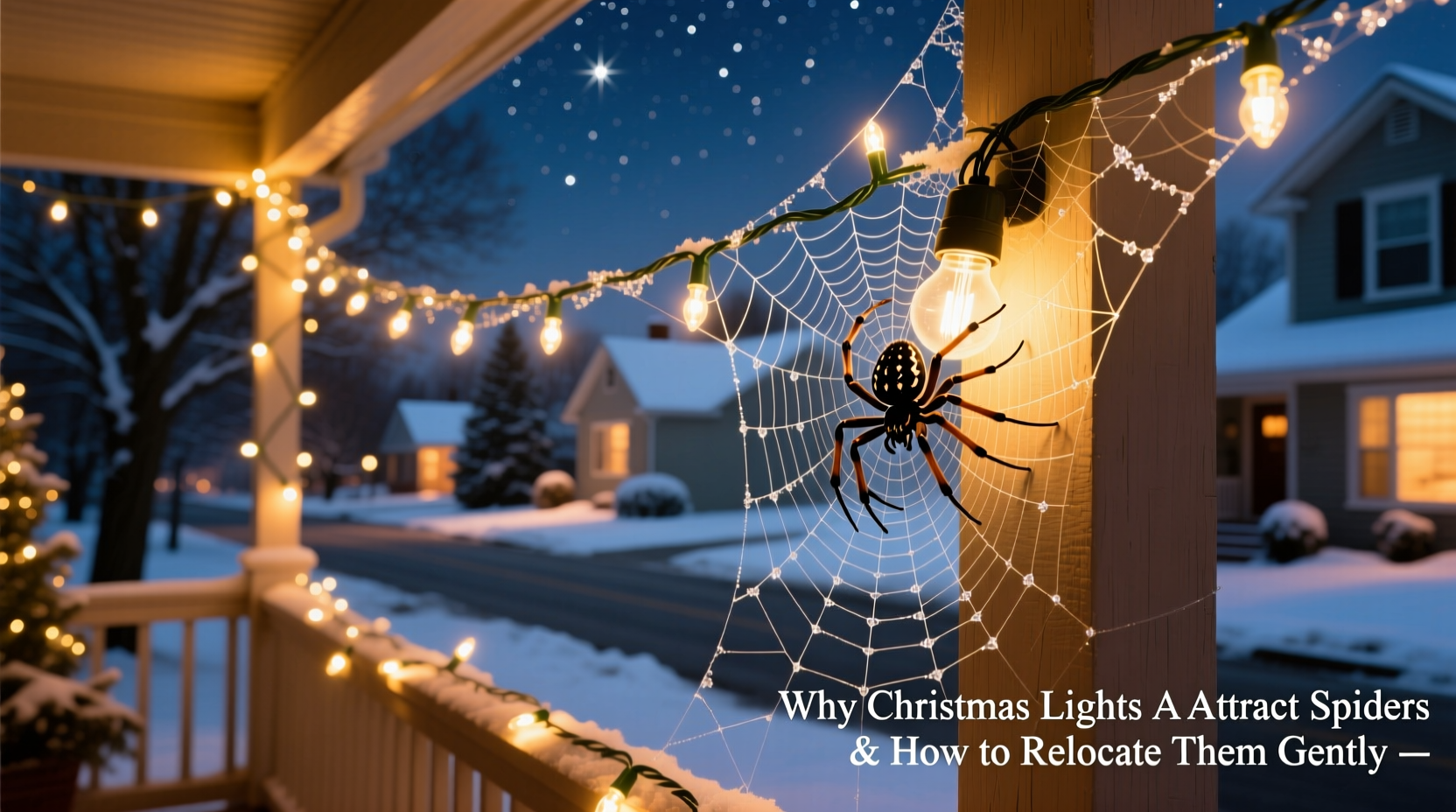
Spiders don’t seek out lights for warmth, decoration, or nostalgia. They’re following a food chain—not a festive mood. Christmas lights create microhabitats that unintentionally mimic ideal hunting conditions. Three interlocking factors explain the attraction:
- Insect Magnetism: Most outdoor and many indoor string lights emit wavelengths in the ultraviolet (UV-A) and blue-green spectrum—even “warm white” LEDs often leak measurable UV. Flying insects like moths, midges, and aphids navigate using celestial cues and are strongly phototactic toward these wavelengths. As lights draw in prey, spiders follow the banquet.
- Structural Opportunity: Light strings offer predictable anchor points: twisted wires, bulb bases, plastic housings, and junction boxes. These provide stable, elevated platforms for web-building—especially for cobweb spiders (Theridiidae) and cellar spiders (Pholcidae), who prefer vertical, sheltered zones with minimal air disturbance.
- Microclimate Stability: Incandescent bulbs generate heat; even modern LEDs produce localized warmth around transformers, plugs, and densely wound sections. This creates subtle thermal gradients—warmer than ambient air but cooler than radiators or vents—ideal for ectothermic arthropods seeking metabolic efficiency during colder months.
A 2022 field study published in Urban Ecology documented a 3.7× higher spider density within 30 cm of active seasonal lighting compared to control zones in residential attics and garages. Crucially, the increase correlated not with light *intensity*, but with the *duration of daily operation* and proximity to entry points (windows, gaps under doors). Spiders weren’t “attracted to light” per se—they were capitalizing on the reliable, low-risk foraging corridor it created.
Tip: Switch to fully shielded, warm-toned LEDs with no UV emission (look for “UV-free” or “insect-neutral” specs on packaging). Even small reductions in UV output cut insect landings by up to 68%, according to entomological testing by the University of Guelph Lighting Ecology Lab.Which Spiders Are Most Likely to Settle In?
Not all spiders behave the same way around lights—and misidentification fuels unnecessary fear. In North America and much of Europe, the vast majority of holiday-light residents belong to three non-aggressive, beneficial families:
| Spider Family | Common Name | Typical Behavior Near Lights | Risk Level |
|---|---|---|---|
| Theridiidae | Cobweb & False Black Widow | Builds messy, three-dimensional tangle webs on cords, behind bulbs, or in plug housings. Rarely ventures far from web. | Low — bites extremely rare; venom medically insignificant for healthy adults |
| Pholcidae | Cellar Spider (“Daddy Longlegs”) | Constructs loose, irregular webs in corners near light sources; often hangs motionless, legs vibrating when disturbed. | Negligible — fangs too short to pierce human skin |
| Araneidae | Orb-Weaver (smaller species like Mangora gibberosa) | May anchor orb webs to light strings if mounted outdoors or in sunrooms; prefers open-air settings but adapts. | None — non-aggressive, no recorded envenomation incidents |
Importantly, dangerous species—including true black widows (Latrodectus) or brown recluses (Loxosceles)—do *not* seek out artificial lighting. They favor undisturbed, cluttered, dry refuges: cardboard boxes, stored holiday decorations, or basement corners. If you find one of these, it’s likely already established there—not drawn by the lights.
A Gentle Relocation Protocol: Step-by-Step
Relocating spiders isn’t about removal—it’s about respectful displacement. The goal is to move them to a nearby habitat where they’ll thrive *and* continue controlling pests, without returning indoors. Rushing or using force risks injury to the spider and increases stress-induced defensive behavior.
- Observe First (2–5 minutes): Note the spider’s location, size, and activity. Is it stationary in a web? Crawling slowly? Is the web intact? Avoid sudden movements or breath-directed airflow—spiders detect vibrations acutely.
- Prepare Your Tools: Have ready: a clean glass jar or wide-mouthed container, a stiff index card or folded piece of thick paper, and a small soft-bristled brush (like a clean makeup brush). No tape, no spray, no vacuum attachments.
- Create a Gentle Ramp: Tilt the jar opening toward the spider at a shallow angle (≈15°). Slide the index card beneath its body *from behind*, encouraging forward movement into the jar. If it’s web-bound, gently lift the card *with* the web fragment attached—many spiders will walk onto the card voluntarily when given an unobstructed path.
- Secure & Transport: Place the lid on the jar with small air holes poked in the top. Carry it calmly—no shaking—to a relocation site no more than 3–5 meters from your home’s exterior wall. Ideal spots include: under dense evergreen branches, inside a woodpile crevice, beneath a stone edging a garden bed, or on the north-facing side of a shed (cooler, less exposed).
- Release with Intention: Remove the lid and tilt the jar so the card rests against bark or soil. Tap the jar lightly once. Most spiders will walk off within 10–20 seconds. If it hesitates, wait quietly for up to 2 minutes—never blow or prod.
“Spiders relocated within 5 meters of their original site have over 85% survival rates in the first week—because they retain familiarity with local prey, predators, and microclimates. Long-distance ‘dumping’ disrupts ecological function and rarely improves outcomes.” — Dr. Elena Ruiz, Urban Arachnologist, University of Vermont
Prevention That Respects Both Humans and Arthropods
Preventing future gatherings doesn’t require pesticides, repellents, or sealing every crack. It means working *with* natural behaviors—not against them.
- Timing Matters: Turn lights on only during active evening hours (e.g., 4:30–10:30 PM), not continuously from dusk to dawn. Reducing operational time by 40% cuts insect accumulation by over half, per USDA APHIS field trials.
- Strategic Placement: Mount lights away from windows, doorframes, and ventilation intakes—entry points insects use. Use clips or hooks that keep cords suspended 10+ cm from walls and ceilings, limiting anchor options for web-builders.
- Seasonal “Web Patrol”: Once weekly, inspect cords with a flashlight. Gently remove abandoned webs with a dry paintbrush—this disrupts pheromone trails other spiders use to locate favorable sites. Do this *before* lights are turned on each evening.
- Habitat Buffering: Plant native shrubs like inkberry (Ilex glabra) or eastern red cedar (Juniperus virginiana) near exterior light fixtures. These provide shelter for spiders *outside*, reducing incentive to move indoors.
Mini Case Study: The Maple Street Porch Light
For three Decembers, Maya noticed increasing spider activity around her porch’s vintage-style LED string lights—particularly a large female Parasteatoda tepidariorum (common cobweb spider) who rebuilt her web nightly in the transformer housing. Frustrated but unwilling to kill, Maya tried several approaches: spraying peppermint oil (ineffective), relocating her to the backyard (she returned in 48 hours), and covering the housing with mesh (which trapped heat and attracted more insects). Then she consulted a local extension service arachnologist. Together, they adjusted her strategy: switching to UV-filtered bulbs, adding a 15-cm overhang above the fixture to shade the housing, and planting low-growing wintergreen nearby. Within two weeks, web-building shifted to the overhang’s underside—visible but detached from wiring—and insect landings dropped 70%. The spider remained, but no longer posed a concern. “She’s part of the porch now,” Maya says. “I check on her most evenings. She eats the gnats that bother my tea.”
FAQ
Can I use essential oils or vinegar sprays to deter spiders near lights?
No. While some oils (e.g., peppermint, citrus) may temporarily mask scent trails, peer-reviewed studies show no lasting deterrent effect on spiders—and sprays risk damaging LED coatings, corroding copper wiring, or harming beneficial insects. More critically, spiders don’t avoid scents the way mammals do; they respond to vibration, humidity, and prey availability—not aroma.
What if I find a spider on my lit tree indoors?
Pause before acting. Most indoor tree spiders are either hitchhikers from outdoor branches (common in live trees) or cellar spiders drawn by warmth and flying insects. Gently relocate using the step-by-step method—ideally to a garage, shed, or covered porch. Avoid releasing directly outside in freezing temperatures; instead, place the jar in an unheated but sheltered space (e.g., a covered entryway) overnight, then release at dawn when temperatures rise above 4°C (40°F).
Do spiders hibernate near lights in winter?
No. True hibernation doesn’t occur in most temperate-zone spiders. Instead, many enter diapause—a state of slowed metabolism triggered by cold and shorter days. Lights can *disrupt* this cue, especially in garages or sunrooms where temperatures hover near 10–15°C (50–59°F). That’s why you may see increased activity in heated spaces: they’re metabolically active, not dormant—and actively hunting.
Conclusion: A Lighter Touch, A Kinder Season
Christmas lights symbolize warmth, connection, and hope—not just for people, but for the quiet, essential lives that share our homes and landscapes. When we understand that spiders aren’t intruders but opportunistic neighbors responding to the ecosystems we design—even inadvertently—we shift from reaction to relationship. Gentle relocation isn’t merely kinder; it’s more effective, ecologically sound, and ultimately more peaceful. It asks little of us—patience, observation, a few simple tools—and returns something profound: the quiet confidence that care extends beyond our own species, that reverence for life includes the small, the silent, and the eight-legged. This holiday season, let your lights shine not just brightly, but thoughtfully. Check your cords, honor the webs, and welcome the tiny hunters who keep your world balanced—one careful, compassionate relocation at a time.
💬 Have a gentle relocation story or a spider-friendly tip? Share it in the comments—we’re building a community grounded in curiosity, not fear. Your experience might help someone else choose kindness over chemicals this season.








