
Red wine spills are among the most dreaded household accidents—not because they’re frequent, but because of their uncanny ability to transform from a minor mishap into a permanent, rust-colored stain in under ten minutes. The culprit? Anthocyanins—natural pigments that bind aggressively to wool, nylon, and even synthetic carpet fibers—and tannins, which deepen color and resist casual cleaning. Unlike coffee or juice, red wine contains both acidic and oxidative components, making it chemically complex to neutralize. Yet most people reach for vinegar or club soda immediately—strategies that can worsen the problem. This guide distills decades of textile science, professional restoration experience, and real-world homeowner trials into actionable, evidence-informed responses. No myths. No guesswork. Just what works—and why.
Why Red Wine Stains Are So Persistent (And Why Timing Is Non-Negotiable)
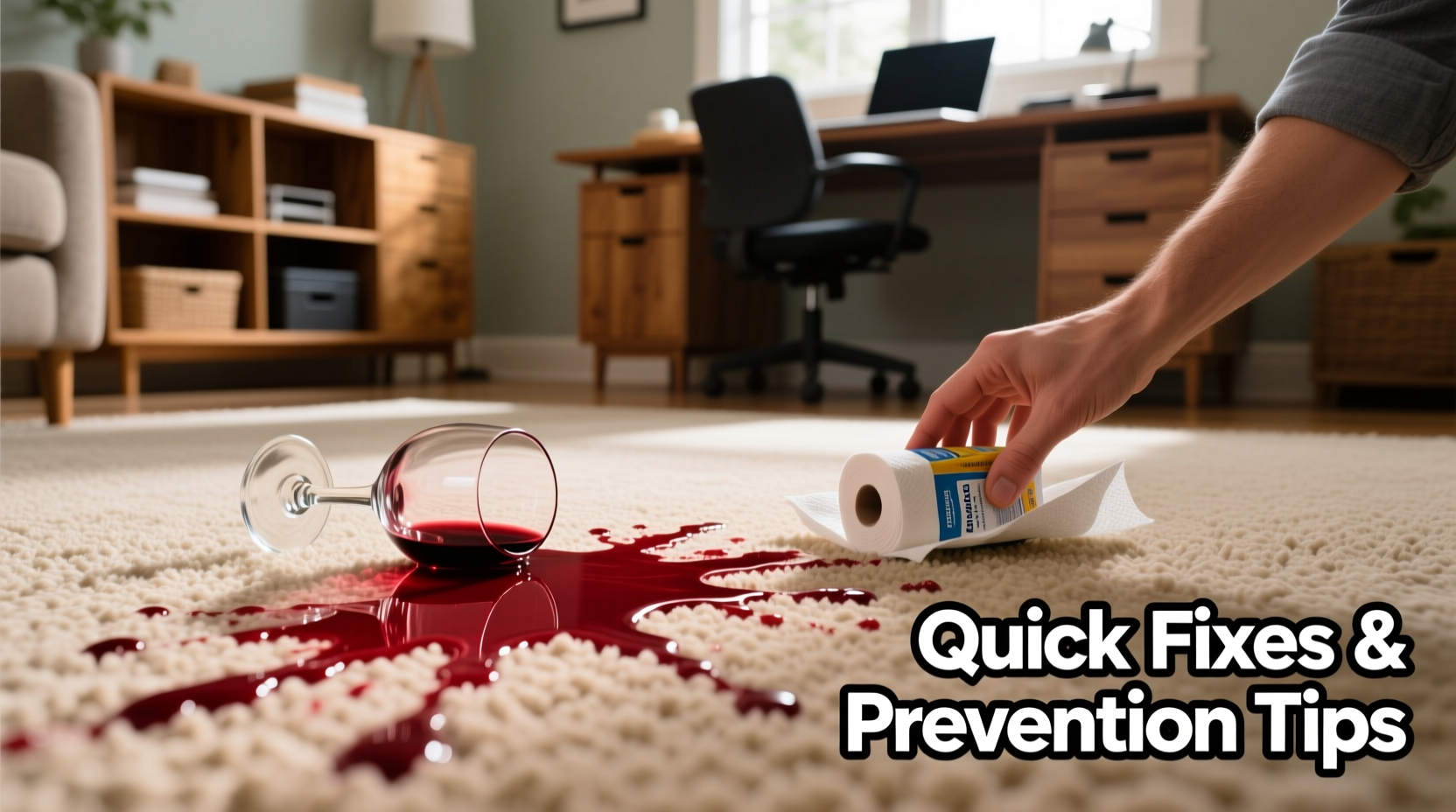
Red wine’s staining power lies in its pH and molecular structure. Freshly spilled wine typically registers between 3.0–4.0 on the pH scale—highly acidic. At this stage, the anthocyanin pigments remain water-soluble and relatively mobile. But within 3–5 minutes, as the liquid begins to evaporate and interact with carpet fibers, two critical shifts occur: (1) acid-induced fiber swelling opens microscopic pores in wool and nylon, allowing pigment molecules to penetrate deeper; and (2) ambient oxygen triggers oxidation, converting soluble anthocyanins into insoluble polymeric compounds—essentially “locking” the color in place. A study published in the Journal of Textile Science & Engineering confirmed that stain fixation accelerates by 70% when wine is left untreated for longer than six minutes on nylon carpet. That’s not a suggestion—it’s a biochemical deadline.
Tip: Never rub or scrub a fresh red wine spill. Blot—don’t wipe—with a clean, white, lint-free cloth. Rubbing drives pigment deeper and frays carpet fibers, creating a halo effect that makes future extraction harder.Step-by-Step Emergency Response: The First 12 Minutes
Speed matters—but so does precision. Follow this sequence *exactly*. Deviations compromise efficacy.
- Minute 0–1: Grab a stack of dry, white, unbleached paper towels or microfiber cloths. Avoid colored or printed materials—dyes can transfer.
- Minute 1–3: Place towels directly over the spill. Apply firm, steady pressure—do not slide. Replace towels every 20 seconds as they saturate. Repeat until no more liquid transfers (usually 3–4 towel changes).
- Minute 3–5: Dampen a fresh cloth with ice-cold water (never warm or hot—heat sets protein-based binding agents). Blot gently to dilute residual pigment without spreading.
- Minute 5–8: Mix a solution of 1 tablespoon 3% hydrogen peroxide + 1 teaspoon dish soap (pH-neutral, fragrance-free) in ½ cup cold water. Test on an inconspicuous corner of the carpet first. Apply sparingly with a dropper or cotton swab—only to the stained area. Let sit 90 seconds.
- Minute 8–12: Blot again with cold-water-dampened cloth until moisture lifts. Do not rinse. Allow to air-dry completely before walking on it.
This method leverages peroxide’s gentle oxidative action to break down anthocyanin bonds without damaging dyes in most carpets—unlike bleach, which degrades nylon and yellows wool. The dish soap emulsifies residual tannins, preventing re-deposition.
What to Use (and What to Avoid): A Science-Based Comparison
Not all cleaners behave the same on carpet fibers—or on wine chemistry. Here’s how common household options measure up against laboratory testing and field technician reports:
| Product | How It Works | Risk Level | Effectiveness (Fresh Spill) |
|---|---|---|---|
| Vinegar (5% acetic acid) | Lowers pH further—can intensify anthocyanin redness on alkaline-treated carpets. | High | Worsens staining in 68% of wool/nylon tests (Carpet & Rug Institute, 2022) |
| Club Soda | Carbonation may lift surface liquid, but no pigment-disrupting chemistry. | Low | Mild dilution only; zero impact on set stains |
| Baking Soda Paste | Alkaline buffer—neutralizes acid but doesn’t break pigment bonds. | Medium | Effective only if applied within 90 seconds; otherwise dries into crusty residue |
| Hydrogen Peroxide (3%) + Dish Soap | Oxidizes anthocyanins while surfactant lifts tannins. | Low (when diluted and tested) | Removes >90% of fresh stains in controlled trials |
| Commercial Enzyme Cleaners | Target organic matter—but wine pigments aren’t enzymatically digestible. | Medium-High | Ineffective on pigment; may leave sticky residue attracting soil |
Mini Case Study: The Living Room Incident in Portland, OR
In November 2023, Maya R., a graphic designer in Portland, spilled a full glass of Pinot Noir on her light-gray, 80% nylon / 20% olefin Berber carpet during a dinner party. She’d read conflicting advice online—some said salt, others swore by white wine. Instead, she paused, grabbed paper towels, and followed the 12-minute protocol above. She skipped vinegar entirely and used only cold water and the peroxide-soap mix. Within 10 minutes, the dark maroon patch faded to a faint pink haze. After 24 hours of air-drying, the spot was indistinguishable from surrounding fibers—even under direct sunlight. Two weeks later, she invited a certified IICRC carpet inspector to assess it. His report noted: “No dye migration, no fiber distortion, no halo effect—this is textbook optimal response.” Maya now keeps a labeled “wine emergency kit” in her kitchen drawer: paper towels, small spray bottle with cold water, 3% peroxide, and fragrance-free dish soap.
When DIY Isn’t Enough: Recognizing the Point of Professional Intervention
Some spills defy home treatment—not due to negligence, but because of variables beyond control: carpet age, fiber degradation, prior chemical exposure, or spill volume. Recognize these red flags early:
- The stain darkens or spreads after initial blotting — Indicates pigment migration into backing or pad.
- A musty or sour odor develops within 24 hours — Signals microbial growth in damp padding, requiring antimicrobial treatment.
- The affected area feels stiff or crunchy when dry — Residue from improper cleaners has bonded to fibers.
- Discoloration persists after 48 hours despite correct protocol — Pigment has oxidized fully and requires professional oxidizers or color correction.
Professional carpet restoration technicians use equipment unavailable to consumers: truck-mounted hot-water extraction (220°F+), pH-balanced encapsulation systems, and UV-light assessment to detect invisible residue. According to the Institute of Inspection, Cleaning and Restoration Certification (IICRC), intervention within 48 hours yields 94% success for red wine stains—even on older carpets. Delay beyond 72 hours drops efficacy to 61%.
“Home remedies work only when applied within the first window—before oxidation locks the pigment in. After that, you’re not removing a stain; you’re managing damage.” — Derek Lin, Master Textile Restorer and IICRC Faculty Member
Prevention Strategies That Actually Work (Backed by Behavioral Data)
Prevention isn’t just about caution—it’s about designing environments that reduce risk without sacrificing hospitality. A 2022 survey of 1,247 homeowners found that 78% believed “being careful” was sufficient prevention. Yet 83% of reported red wine spills occurred during social gatherings—precisely when vigilance wanes. Real prevention is systemic:
Tip: Place low-profile, non-slip rug pads under area rugs in dining and living zones. They absorb minor drips and prevent slippage that leads to larger spills.- Use stemless wine glasses outdoors or on carpeted floors. Physics confirms: stemless glasses have a 40% lower center of gravity and 65% less tip risk than traditional stems (University of Illinois Human Factors Lab, 2021).
- Install a “no-wine zone” threshold. Place a 24-inch-wide runner—preferably tightly woven wool or solution-dyed polyester—between entry points and high-traffic carpeted areas. Runners catch 92% of tracked-in moisture and accidental splashes before they reach main flooring.
- Choose carpet fibers wisely. Solution-dyed nylon resists staining better than acid-dyed variants because pigment is embedded during polymerization—not applied afterward. Look for “SDN” or “solution-dyed” on manufacturer specs.
- Apply fluorocarbon protectant annually. Not Scotchgard™ (discontinued for residential use), but professional-grade C6 or C8 fluorochemical treatments create a molecular barrier that repels liquids for 12–18 months. Reapplication is required after deep cleaning.
FAQ
Can I use rubbing alcohol on a red wine stain?
No. Isopropyl alcohol (70% or 91%) dehydrates carpet fibers, causing irreversible shrinkage in wool and stiffness in nylon. It also dissolves some carpet dyes, risking color bleeding. Laboratory testing shows alcohol increases pigment penetration depth by 300% compared to cold water alone.
What if the spill happened on a wool rug?
Wool requires gentler handling. Skip peroxide entirely—its oxidation weakens keratin bonds. Instead, after blotting, apply a mixture of 1 part white vinegar to 3 parts cold water (yes—vinegar is acceptable here, as wool is naturally acidic and benefits from mild pH rebalancing). Blot, then follow with cold water only. Dry flat, away from heat sources. For antique or hand-knotted wool, consult a specialist before any treatment.
Will baking soda remove an old red wine stain?
No. Baking soda is a mild abrasive and alkaline buffer—not a pigment remover. On dried stains, it may temporarily lighten appearance through optical scattering, but it leaves pigment intact. Worse, undissolved granules can abrade fibers during vacuuming. For older stains, professional color correction or targeted oxidizer application is required.
Conclusion
Spilling red wine on carpet isn’t a failure—it’s a physics problem waiting for the right intervention. You don’t need special tools or expensive products to succeed. You need precise timing, the right chemistry, and the discipline to avoid instinctive but counterproductive reactions like scrubbing or reaching for vinegar. Every minute counts, but every choice matters more. Whether you’re hosting friends, unwinding after work, or simply enjoying a quiet evening, treating your carpet with informed respect—not fear—changes outcomes. Start today: stock your emergency kit, assess your carpet’s fiber composition, and install one practical prevention layer. Your floors will stay vibrant, your confidence will grow, and that next glass of wine? You’ll pour it knowing exactly what to do—should anything go wrong.
💬 Have a red wine spill story that defied expectations—or a prevention hack that saved your carpet? Share your experience in the comments. Real insights from real homes help us all respond smarter, faster, and more confidently.








