The flicker of candlelight has long defined the essence of holiday warmth—intimate, nostalgic, and deeply comforting. As more homes transition from real candles to electric tree lights for safety and convenience, a critical question arises: which light color temperature comes closest to replicating that timeless glow? The answer lies not in brightness or bulb size, but in understanding the subtle science of light color—specifically, the difference between warm white and cool white.
Candlelight isn’t just about illumination; it’s about atmosphere. It casts soft shadows, enhances wood tones, and creates a gentle radiance that feels organic rather than artificial. Modern LED string lights offer impressive versatility, but choosing between warm white (typically 2700K–3000K) and cool white (5000K–6500K) can dramatically affect how your tree—and by extension, your entire room—feels during the holidays.
This article examines the technical and aesthetic distinctions between warm and cool white lighting, evaluates their ability to emulate candlelight, and provides actionable guidance for creating a truly authentic seasonal display.
Understanding Color Temperature and Its Emotional Impact
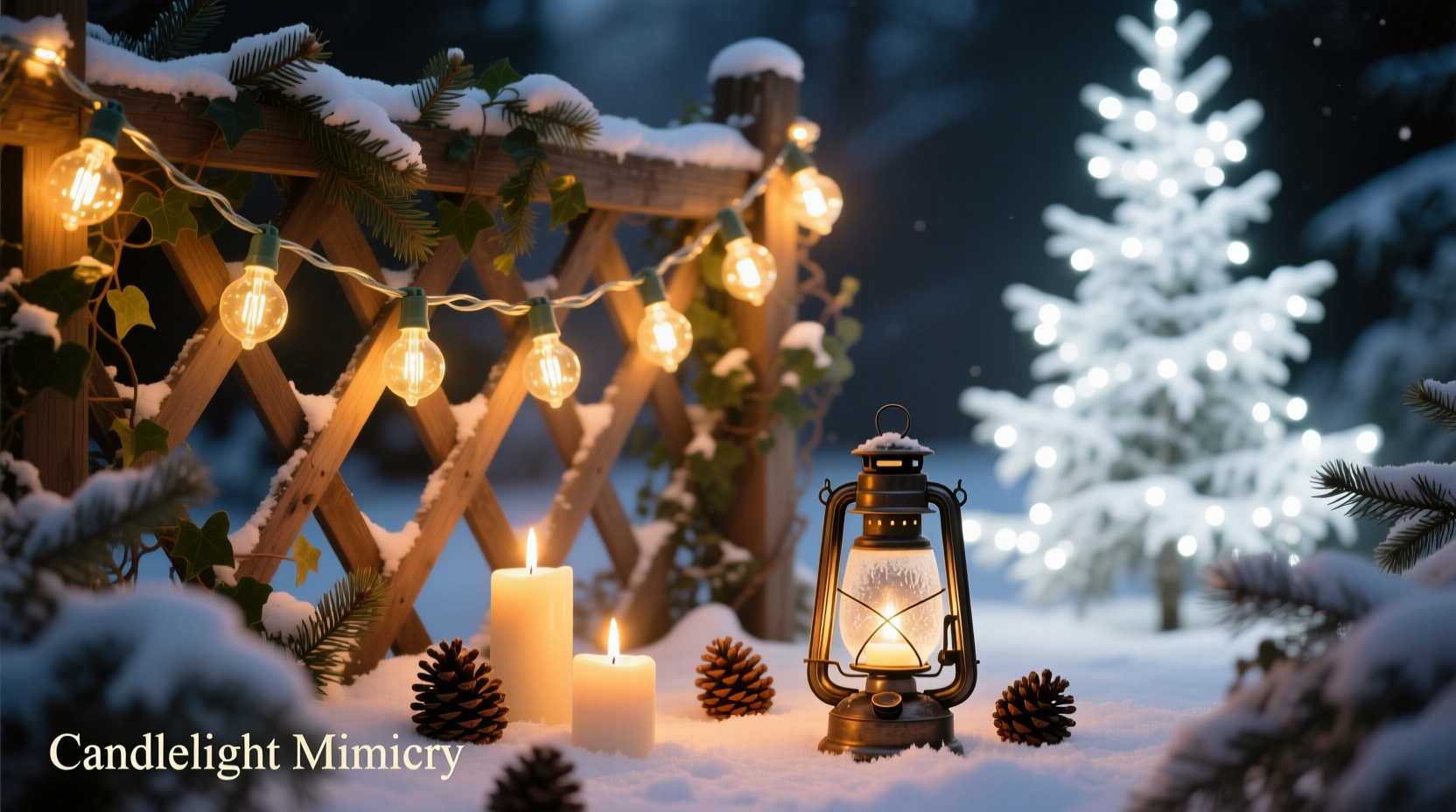
Color temperature is measured in Kelvin (K) and describes the hue of light emitted by a source. Lower Kelvin values indicate warmer, yellower light, while higher values produce cooler, bluer tones. This scale is essential when comparing artificial lighting to natural references like candlelight, sunlight, or moonlight.
A traditional beeswax candle burns at approximately 1800K to 1900K, producing a deep amber glow with strong red and yellow wavelengths. In contrast:
- Warm white LEDs typically range from 2700K to 3000K—closer to incandescent bulbs than to actual candlelight, but still within the \"warm\" spectrum.
- Cool white LEDs sit between 5000K and 6500K, resembling midday sunlight or an overcast sky. These emit a sharp, almost clinical light that lacks the emotional resonance of firelight.
The human brain associates warm light with safety, intimacy, and relaxation. Studies in environmental psychology show that warmer lighting reduces perceived stress and increases feelings of comfort in indoor spaces. Cool light, while excellent for task lighting or workspaces, can feel sterile or impersonal in living areas—especially during winter months when people seek coziness.
“Lighting sets the emotional tone of a space. Warm white lighting activates our instinctive response to firelight, triggering memories of gathering around hearths and sharing stories.” — Dr. Lena Torres, Environmental Psychologist and Lighting Researcher, University of Colorado
How Warm White Lights Mimic Candlelight: Strengths and Limitations
Among available electric options, warm white lights are the clear frontrunners in emulating candlelight. Their golden-yellow hue closely matches the visible spectrum of flame, especially when compared to the blue-heavy output of cool white LEDs. However, “close” doesn’t mean “identical.” There are key differences that affect realism.
First, true candlelight flickers. The flame dances due to air currents, creating dynamic changes in intensity and shadow. Most standard warm white LEDs provide a steady glow, lacking this kinetic quality. Some premium strings now include “flicker” or “twinkle” modes designed to simulate flame movement, significantly improving authenticity.
Second, candlelight is directional and low-intensity. A candle illuminates only what’s near it, creating pockets of light and deep shadows. Electric string lights, even warm white ones, often wrap entire trees uniformly, resulting in an evenly lit appearance that feels less organic. To counteract this, decorators can use fewer strands or cluster lights strategically on lower branches where they’re less visible directly but cast upward glows.
Tip: For a more realistic candlelit effect, combine warm white LED strings with a few battery-operated flickering flameless candles placed beneath the tree skirt.Why Cool White Falls Short in Recreating Candlelight Ambiance
Cool white lights, despite their popularity in modern décor and commercial displays, fail to capture the spirit of candlelight for several reasons:
- Color mismatch: At 5000K–6500K, cool white emits a bluish-white light that resembles fluorescent office lighting. This is far removed from the reddish-yellow spectrum of flames.
- Emotional disconnect: Cool light increases alertness and focus—qualities undesirable in a relaxing holiday setting. It can make rooms feel colder, both visually and emotionally.
- Material distortion: Cool white light alters the appearance of traditional holiday materials. Red ornaments may appear pinkish, gold finishes look pale, and evergreen foliage takes on a grayish tint.
In practical terms, cool white lights are better suited for minimalist, contemporary trees—those decorated in silver, white, or icy blue themes. They enhance metallic surfaces and create a crisp, high-contrast look. But for anyone aiming to recreate the charm of a 19th-century parlor or a vintage Christmas scene, cool white undermines the goal.
One notable exception is in photography and videography. Cool white lighting can reduce orange cast in camera sensors, making colors appear more “true to life” on screen. However, this benefit applies only to digital representation—not to in-person experience.
Comparison Table: Warm White vs Cool White for Candlelight Simulation
| Feature | Warm White (2700K–3000K) | Cool White (5000K–6500K) |
|---|---|---|
| Color Temperature | Yellow-amber, close to incandescent | Blue-white, similar to daylight |
| Candlelight Match | High – closest available match | Low – significant color deviation |
| Mood & Atmosphere | Cozy, inviting, nostalgic | Crisp, modern, clinical |
| Effect on Decor | Enhances reds, golds, wood tones | Washes out warm colors, dulls metals |
| Best Use Case | Traditional trees, family rooms, vintage themes | Modern décor, photo shoots, commercial displays |
Step-by-Step Guide to Achieving a Realistic Candlelight Effect
If your goal is to make your tree appear as if it’s lit by real candles—without the fire hazard—follow this practical sequence:
- Choose warm white LEDs rated at 2700K. Avoid any labeled “soft white” above 3000K. Look for packaging that mentions “vintage,” “amber,” or “candlelight” tones.
- Select bulbs with an enclosed or flame-tip shape. Traditional C7 or C9 bulbs with tapered ends mimic candle forms better than mini lights.
- Use flicker-mode strings sparingly. Place flickering sections near the top or outer branches to suggest movement without overwhelming the eye.
- Reduce overall light density. Instead of wrapping every branch, use one or two strands concentrated on lower levels. Let shadows play across the tree.
- Layer with reflective elements. Hang mirrored ornaments, tinsel, or glass baubles to bounce light gently, mimicking how candlelight reflects off polished surfaces.
- Dim the surrounding lights. Turn off ceiling fixtures and rely on floor lamps or wall sconces with warm bulbs to preserve the illusion.
- Add ambient context. Play soft instrumental music, use a pine-scented diffuser, or place a quilted tree skirt to deepen the vintage atmosphere.
Real Example: A Victorian-Inspired Tree Transformation
Sarah M., a historical home decorator in Providence, Rhode Island, specializes in period-accurate holiday displays for 1800s-era mansions. When restoring a Gilded Age parlor for a December open house, she faced a challenge: the homeowner wanted the tree to appear lit by candles, but city fire codes prohibited open flames.
Her solution was deliberate. She selected hand-blown glass ornaments in ruby and cobalt, used only warm white C7 bulbs at 2700K, and wired them with a subtle flicker circuit. Rather than wrapping the tree uniformly, she strung lights vertically along major limbs, leaving gaps to suggest uneven candle placement. She dimmed the room’s gas-style chandelier and added a faint projection of moving flame shadows on the ceiling.
Guests consistently remarked that they “could swear they smelled wax burning.” One visitor later wrote online: “It felt like stepping into a Dickens novel. The lights didn’t just illuminate—they told a story.”
Checklist: Choosing the Right Lights for Candlelight Authenticity
- ✅ Confirm color temperature is 2700K–3000K (not higher)
- ✅ Choose bulb shape that resembles a candle (e.g., flame tip or torpedo)
- ✅ Opt for incandescent-style filament LEDs if using clear bulbs
- ✅ Test flicker function in person—avoid strobe-like effects
- ✅ Check for high CRI (Color Rendering Index >90) for truer color reflection
- ✅ Avoid multi-color modes or iridescent coatings that distort warmth
- ✅ Buy from brands specializing in vintage or heritage décor (e.g., Wintergreen Lighting, Balsam Hill)
Frequently Asked Questions
Can LED lights really look like candlelight?
Yes—when carefully selected. Modern warm white LEDs at 2700K with flicker capabilities and proper bulb design can closely approximate the color and mood of candlelight. While not identical, the difference is often indistinguishable in a dimly lit room.
Are there warm white lights below 2700K?
A few specialty manufacturers produce “amber” or “vintage warm” LEDs at 2200K–2400K, which come even closer to real candlelight. These are less common and usually found in niche holiday lighting collections. They appear noticeably more orange-red than standard warm white.
Is it safe to mix warm and cool white lights on the same tree?
Technically yes, but aesthetically risky. Combining warm and cool whites creates visual dissonance—like mixing oil and water. If you want layered lighting, use different intensities of warm white instead (e.g., bright warm on lower branches, softer warm above).
Final Recommendation: Warm White Wins for Candlelight Fidelity
When the objective is to recreate the soulful glow of candlelight, warm white tree lights are the only viable choice. Cool white, despite its clarity and modern appeal, disrupts the sensory harmony needed for a nostalgic holiday experience. Warm white supports emotional connection, enhances traditional décor, and aligns with centuries of cultural association between flame and festivity.
Yet selection matters. Not all warm white lights are created equal. Prioritize color accuracy, bulb design, and dynamic lighting features like flicker. Combine your lights thoughtfully with decor, ambient room lighting, and sensory cues to build a fully immersive environment.
The most memorable holiday displays don’t just catch the eye—they touch memory. By choosing lighting that honors the legacy of candlelight, you invite warmth, history, and quiet wonder into your home.
🚀 Ready to transform your tree? Swap out cool white strands, invest in quality warm white LEDs, and light your holidays with the glow of tradition. Share your before-and-after setup in the comments—we’d love to see your candlelight-inspired design!








