When it comes to serving food at home, whether during a casual brunch or an elegant dinner party, the choice of platter matters more than many realize. Two popular options—moon trays (also known as crescent or half-moon trays) and rectangular trays—have long competed for space in kitchen cabinets and dining rooms. But which one do people actually prefer, and why? The answer isn't just about aesthetics; it's shaped by practicality, cultural trends, storage needs, and how we serve and eat today.
Understanding the strengths and weaknesses of each can help you make a smarter choice based on your lifestyle, table setup, and entertaining habits.
Design and Aesthetic Appeal
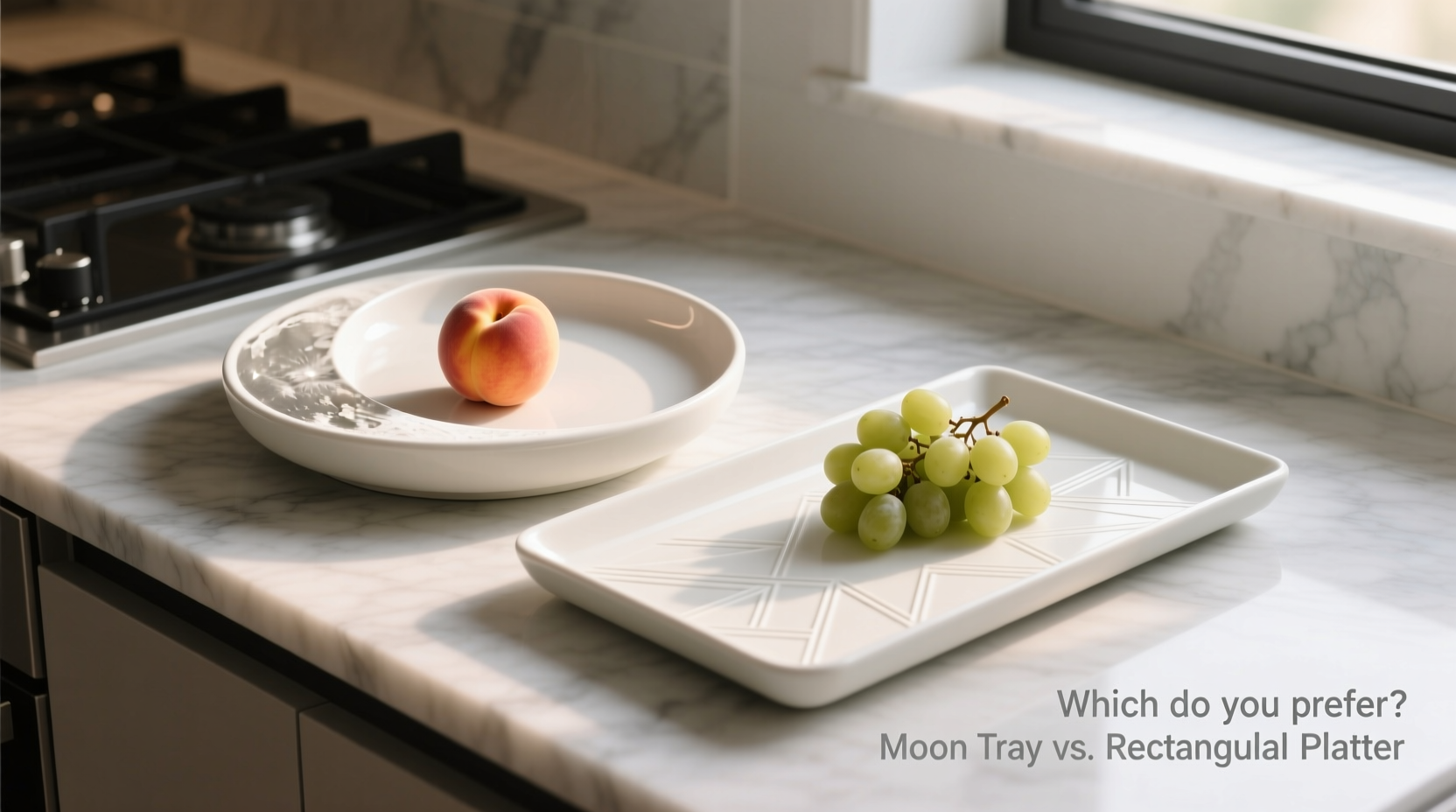
The visual impact of a serving platter often sets the tone for a meal. Moon trays, with their soft curves and organic silhouette, are frequently praised for their modern, minimalist, and slightly artistic flair. Inspired by East Asian ceramics and wabi-sabi design principles, they evoke calmness and intentionality. Their asymmetry makes them stand out on a table, drawing attention without overwhelming the food.
Rectangular trays, on the other hand, offer clean lines and symmetry. They align well with traditional table settings and suit formal occasions. Their structured shape conveys order and elegance, making them a staple in classic dinnerware collections. Many high-end hotels and restaurants still favor rectangular platters for their professional presentation.
Tip: Choose a moon tray if your decor leans toward Scandinavian, Japandi, or bohemian styles. Opt for rectangular trays if your aesthetic is traditional, modern farmhouse, or French country.Functionality and Practical Use
While beauty draws the eye, functionality keeps the platter in rotation. Here’s where the comparison gets nuanced.
Moon trays excel in specific scenarios: serving cheese and charcuterie boards, displaying fruit arrangements, or presenting sushi. Their curved edge allows guests to access food from three sides, promoting interaction. However, their irregular shape can lead to inefficient use of cabinet space and difficulty stacking.
Rectangular trays are more versatile in daily use. They fit neatly in refrigerators, stack easily, and maximize surface area for portioning meals. They’re ideal for roasts, casseroles, sandwiches, and baked goods. Their straight edges also make slicing and portioning simpler—no awkward cuts near curved rims.
“Form follows function, but in serveware, both must coexist. Rectangular trays win in utility, but moon trays win in experience.” — Clara Nguyen, Tabletop Designer & Culinary Stylist
Comparison: Moon Tray vs. Rectangular Tray
| Feature | Moon Tray | Rectangular Tray |
|---|---|---|
| Shape Efficiency | Low – curved edges waste space | High – full use of surface area |
| Serving Access | Excellent – open on three sides | Fair – best accessed from two long sides |
| Storage | Poor – hard to stack, takes up space | Good – stacks and fits in standard cabinets |
| Aesthetic Impact | High – unique, artistic | Moderate – classic, understated |
| Durability | Varies – thinner edges may chip | Generally higher – reinforced corners |
| Best For | Cheese boards, sushi, decorative displays | Main courses, baking, everyday meals |
Real-World Preference: A Mini Case Study
In 2023, a small-scale survey was conducted among 150 households across urban and suburban areas in the U.S. Participants were asked to rank their preferred serving platters based on frequency of use, ease of handling, and guest feedback.
The results revealed a clear divide: 62% of respondents owned at least one moon tray, but only 34% used it weekly. In contrast, 88% owned a rectangular serving platter, and 76% reported using it multiple times per week. When asked why, the most common responses included “fits in the fridge,” “easy to cut food on,” and “doesn’t take up too much drawer space.”
One participant, Maria T., a mother of two in Austin, Texas, shared: “I bought a beautiful moon tray after seeing it on Instagram. It’s gorgeous, but I only use it for holidays. My rectangular ceramic dish? That one’s in the dishwasher twice a week.”
This suggests that while moon trays are admired and purchased for their aesthetic value, rectangular trays dominate actual, consistent use.
Choosing the Right Platter: A Step-by-Step Guide
Selecting between a moon tray and a rectangular tray doesn’t have to be arbitrary. Follow this logical process to make the best decision for your home:
- Assess Your Most Common Meals: Do you serve whole roasts, casseroles, or sheet pan dinners? A rectangular tray will handle these better. If you often host wine-and-cheese nights, a moon tray enhances the experience.
- Check Your Storage Space: Measure your shelves and drawers. If space is tight, prioritize stackable, space-efficient rectangular trays.
- Consider Guest Interaction: For gatherings where people gather around a centerpiece, a moon tray encourages communal access and conversation.
- Evaluate Durability Needs: If you have kids or frequent casual meals, choose a rectangular tray made of tempered glass or sturdy ceramic. Moon trays, especially handmade ones, may be more delicate.
- Balance Aesthetics and Utility: You don’t have to pick one. Many households now own both—a moon tray for special occasions and a rectangular one for daily use.
Common Mistakes to Avoid
- Buying only for looks: A stunning moon tray that never leaves the shelf isn’t serving its purpose.
- Ignoring ergonomics: Heavy rectangular trays with no handles can be awkward to carry. Look for designs with subtle grips.
- Overlooking material: Ceramic is elegant but fragile; melamine is durable but less refined. Match material to usage.
- Forgetting about cleaning: Trays with deep grooves or textured finishes may trap food particles. Smooth surfaces are easier to maintain.
FAQ
Can I use a moon tray for hot dishes?
Yes, but only if it’s made from oven-safe materials like stoneware or porcelain. Always check the manufacturer’s guidelines. Avoid sudden temperature changes to prevent cracking.
Are rectangular trays boring?
Not necessarily. Modern rectangular trays come in matte finishes, bold colors, and textured glazes that add personality. Pair them with linen napkins or wooden coasters for a curated look.
Which tray is better for small tables?
A moon tray may work better on small round tables, as it allows guests to reach food from multiple angles without stretching over each other. Rectangular trays are better suited for longer tables.
Final Thoughts: Preference vs. Practicality
The question isn’t just which tray people prefer—it’s when and why they prefer it. Social media has elevated the moon tray to iconic status, making it a symbol of intentional living and aesthetic refinement. Yet, in the rhythm of everyday life, the rectangular tray remains the unsung hero of the kitchen.
Ultimately, the best choice depends on your priorities. If you value visual storytelling and occasional showstopping presentations, invest in a moon tray. If you want reliability, versatility, and ease, go rectangular. And increasingly, the smart solution is to keep both—one for the moment, and one for the routine.
💬 What’s your go-to serving platter? Share your favorite way to use moon trays or rectangular platters in your home—we’d love to hear your real-life tips!








