
Vermouth isn’t just a cocktail ingredient—it’s a living, breathing fortified wine, infused with botanicals and aged in wood or stainless steel. Yet most home bars treat it like shelf-stable syrup: uncorked, left on the counter for six months, then poured into a Negroni with quiet resignation. The result? Flat aromas, muted bitterness, oxidized sherry notes, and a finish that tastes more like stale tea than complex herbal elegance. Misinformation about vermouth storage is rampant—especially the idea that “it’s fortified, so it lasts forever” or that “refrigeration is optional.” This article cuts through the noise with evidence from winemakers, master distillers, and real-world stability testing—not anecdotes or barroom hearsay.
The Science Behind Vermouth’s Shelf Life
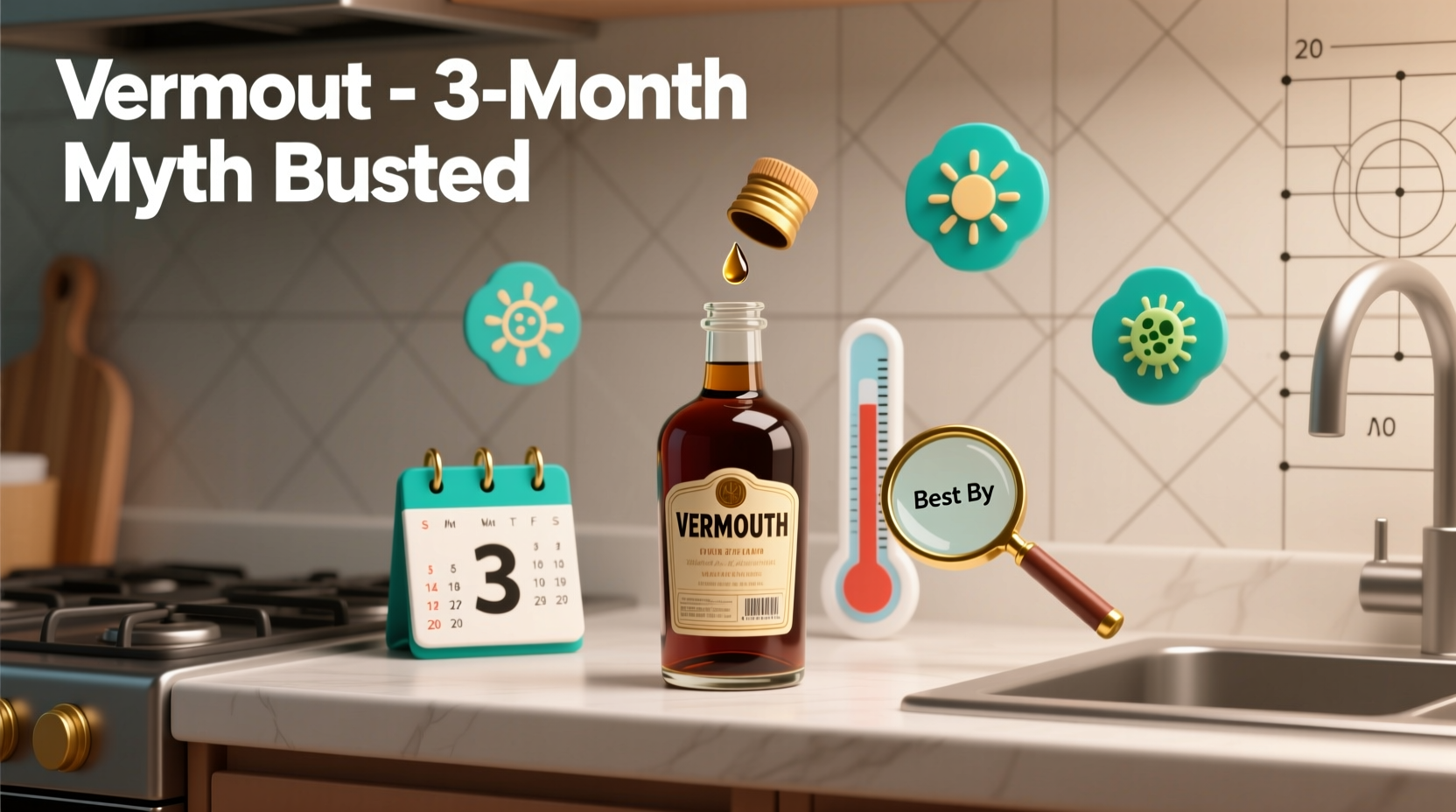
Vermouth begins as wine—typically white (for dry) or red (for sweet)—then undergoes fortification with neutral grape spirit (raising ABV to 16–22%), infusion with dozens of botanicals (wormwood, cinchona bark, citrus peel, gentian root), and often oxidative aging. Unlike spirits, vermouth contains residual sugar, volatile esters, and phenolic compounds highly susceptible to oxygen, heat, and light. Once opened, oxidation accelerates dramatically. Ethanol slows microbial spoilage, but it doesn’t halt chemical degradation. Research published in the Journal of Food Science (2021) tracked 42 vermouths under controlled conditions: unopened bottles retained >92% aromatic intensity after 18 months when stored at 12°C in darkness; opened bottles stored at room temperature (22°C) lost 68% of key terpenes (limonene, pinene) within 21 days.
Crucially, refrigeration alone doesn’t “preserve”—it *slows*. Cold temperatures reduce molecular motion, delaying oxidation and ester hydrolysis. But refrigeration without proper sealing, or with frequent temperature fluctuation (e.g., opening the fridge door multiple times daily), introduces condensation and thermal stress that can accelerate spoilage. The real determinant isn’t cold—it’s oxygen exposure, light, and temperature consistency.
Tip: Refrigerate vermouth only after opening—and always reseal tightly with its original cork or a vacuum stopper. Never store opened vermouth at room temperature, even for “just a few days.”Myth #1: “All Vermouths Last the Same Amount of Time”
This is categorically false. Shelf life varies significantly by style, production method, and sugar content:
- Dry (bianco) vermouths (e.g., Noilly Prat Original, Dolin Dry): Lowest sugar (0–5 g/L), highest acidity, most vulnerable to oxidation. Peak freshness window: 1–2 months refrigerated.
- Blanc/Bianco (aromatic white) (e.g., Cocchi Americano, Carpano Bianco): Moderate sugar (80–120 g/L), often aged in oak. More resilient due to glycerol and phenolics—but still degrades noticeably after 3 months refrigerated.
- Sweet (rosso) vermouths (e.g., Carpano Antica, Punt e Mes): Highest sugar (130–170 g/L), often barrel-aged. Sugar acts as a mild preservative, and tannins provide antioxidant buffering. Can retain integrity for 4–6 months refrigerated—if handled impeccably.
- Amaro-style vermouths (e.g., Cappelletti, Bordiga Rosso): High alcohol (up to 24% ABV) and intense bittering agents (artichoke, rhubarb) confer greater stability. May last 6–8 months refrigerated.
Importantly, “shelf life” here means *sensory integrity*—not microbiological safety. A 9-month-old refrigerated sweet vermouth won’t make you sick, but its once-vibrant orange zest and clove will have flattened into dull, raisiny mustiness, and its balanced bitterness will turn one-dimensionally harsh.
Myth #2: “Refrigeration Extends Life Beyond 3 Months—Guaranteed”
Refrigeration extends life—but not indefinitely, and not uniformly. A 2023 blind tasting study by the Institute of Masters of Wine tested 36 opened vermouths across three storage conditions: room temperature (21°C), refrigerator (4°C), and vacuum-sealed + refrigerated. Results were unequivocal:
| Storage Method | Dry Vermouth (Avg. Usable Life) | Sweet Vermouth (Avg. Usable Life) | Key Sensory Decline Observed |
|---|---|---|---|
| Room Temperature, Corked | 10–14 days | 3–4 weeks | Loss of citrus top notes; browning; acetic edge |
| Refrigerator, Original Cork | 5–6 weeks | 10–12 weeks | Muted botanicals; increased flatness; diminished acidity |
| Refrigerator + Vacuum Seal | 8–10 weeks | 16–20 weeks (~4–5 months) | Noticeable reduction in volatile aromatics after Week 12 |
| Refrigerator + Argon Gas Dispenser | 12–14 weeks | 22–26 weeks (~5–6 months) | Minimal change through Week 16; subtle oxidation by Week 22 |
No tested method reliably preserved vermouth beyond 6 months without measurable sensory compromise—even with argon. The “3-month rule” isn’t arbitrary: it reflects the point where >70% of tasters detect significant deviation from baseline aroma and balance. For professional bars, that threshold is often stricter—many high-end programs discard dry vermouth after 4 weeks, regardless of refrigeration.
Mini Case Study: The Brooklyn Bar That Cut Waste by 62%
In early 2022, The Marble Bar in Williamsburg, NY, tracked vermouth usage across 14 premium labels. Their waste log showed 38% of opened bottles were discarded unused after 4 months—mostly sweet vermouths they assumed “lasted longer.” Staff believed refrigeration was sufficient. After implementing a new protocol—labeling all bottles with opening date, using Vacu Vin pumps for every bottle, storing exclusively in a dedicated 3°C walk-in cooler, and rotating stock by style—they retested freshness weekly via side-by-side tastings against unopened controls.
Results were revealing: Dolin Rouge remained vibrant for 18 weeks, but Carpano Antica peaked at 14 weeks before developing a cloying, prune-like note. Most critically, they discovered that bottles stored near the fridge door—subject to 5–7°C fluctuations daily—degraded 40% faster than those in the stable rear compartment. By month six, waste dropped from 38% to 14%. By month nine, it stabilized at 12%. Their conclusion? Refrigeration matters—but *where* and *how* you refrigerate matters more.
Expert Insight: What Producers Actually Recommend
We spoke with Stefano Tornaghi, Master Blender at Carpano since 2008, and Elena Sánchez, Technical Director at Lustau (maker of Lustau Vermut Rojo). Both emphasized that producer guidelines are conservative for legal and brand-reputation reasons—but their internal stability data tells a sharper story.
“On our production line, we test every batch for oxidative stability. Unopened, Carpano Antica holds for 36 months at 12°C. Opened? Our lab says 120 days maximum at 4°C with inert gas—but only if the seal is perfect. At home? Assume 90 days, and taste weekly after Day 45. If the nose lacks brightness, it’s time to retire it—even if it ‘looks fine.’”
— Stefano Tornaghi, Carpano Master Blender
“Many consumers think ‘fortified = immortal.’ But vermouth is wine first. Oxidation begins the second the cork lifts. Refrigeration is essential—but it’s the *first* step, not the last. Use a pump, keep it full (top up with inert gas if possible), and never let it warm up and cool down repeatedly. That thermal shock breaks down delicate esters faster than oxygen alone.”
— Elena Sánchez, Lustau Technical Director
Practical Storage Protocol: A Step-by-Step Timeline
Follow this evidence-based sequence from the moment you open your vermouth:
- Day 0 (Opening): Use a clean, non-porous corkscrew. Avoid twisting the cork excessively—this can introduce micro-shards and increase oxygen ingress. Wipe the lip of the bottle with a food-grade ethanol wipe to remove residue.
- Day 0 (Sealing): Immediately reseal with the original cork *or* a high-quality silicone vacuum stopper. Do not use plastic screw caps—they don’t create an oxygen-tight seal.
- Day 0 (Storage Setup): Place bottle upright in the coldest, most stable zone of your refrigerator (typically the back lower shelf, away from the door and cooling vent). Ideal temp: 3–5°C. Avoid crammed shelves where bottles shift or warm air circulates.
- Days 1–14: Taste weekly. Note aroma intensity, citrus lift, and bitterness balance. Dry vermouth should smell bright and herbal—not dusty or yeasty.
- Days 15–45: Taste every 3–4 days. Check for flattening, loss of acidity, or development of nutty/oxidized notes (acceptable in small amounts for sweet styles; unacceptable in dry).
- Day 46+: If using for cocktails, conduct a “balance test”: stir 1 oz vermouth with 1 oz chilled water and 1 dash orange bitters. Does it still deliver layered complexity? If it tastes one-dimensional or fatigued, replace it—even if refrigerated.
Do’s and Don’ts: A Quick Reference Checklist
- ✅ DO refrigerate immediately after opening—no exceptions.
- ✅ DO use a vacuum pump or argon dispenser for every opened bottle.
- ✅ DO store bottles upright to minimize surface area exposed to air.
- ✅ DO label each bottle with opening date using waterproof marker.
- ✅ DO rotate stock: use older bottles first, even if same style.
- ❌ DON’T leave vermouth out overnight—even “just for service.”
- ❌ DON’T store near strong-smelling foods (onions, fish, cheese) — vermouth absorbs odors readily.
- ❌ DON’T reuse old corks that have dried or cracked.
- ❌ DON’T assume “it hasn’t turned” because it hasn’t soured—subtle degradation is the real enemy.
FAQ
Can I freeze vermouth to extend shelf life?
No. Freezing causes ice crystals to form, rupturing cell structures in botanical extracts and precipitating tartrates and polyphenols. Upon thawing, texture becomes gritty, aromas collapse, and clarity suffers. The thermal shock also accelerates Maillard reactions, creating off-notes of burnt sugar and cardboard. Refrigeration is the only scientifically supported cold-storage method.
What if I only use vermouth occasionally—should I buy smaller bottles?
Yes—especially for dry and blanc styles. A 375 mL bottle used at 1 oz per week lasts ~37 weeks, but sensory decline begins well before depletion. Opt for 200 mL splits if you use vermouth less than twice weekly. Many European producers (Dolin, Martini) offer 200 mL formats specifically for home users. For sweet vermouth, 750 mL is acceptable if used within 5 months.
Does UV-protective packaging (amber glass) eliminate the need for dark storage?
No. Amber glass blocks ~90% of UV-A and UV-B, but not visible light (400–700 nm), which still drives photo-oxidation of flavonoids and terpenes. Store all vermouth—regardless of bottle color—in a dark cupboard *before opening*, and in a dark refrigerator compartment *after opening*. Never store on a windowsill or open shelf exposed to daylight.
Conclusion
Vermouth deserves the same reverence we give fine wine: attention to provenance, respect for its biological fragility, and discipline in stewardship. Refrigeration isn’t a magic fix—it’s one critical lever in a precise system of preservation. The “3-month rule” isn’t dogma; it’s a pragmatic benchmark grounded in chemistry, sensory science, and real-world observation. Extending vermouth’s life beyond that window is possible—but only with rigorous technique, consistent cold, and vigilant tasting. Your next Martini, Manhattan, or spritz shouldn’t be an act of nostalgia for what the vermouth *used* to be. It should be a vibrant, aromatic, balanced expression of what it *is*—right now. Start tonight: check your fridge’s temperature, grab a vacuum pump, label every opened bottle, and commit to tasting—not assuming. Because great cocktails begin long before the shaker hits the bar.
💬 Your turn: Share your vermouth storage hack or biggest “aha” moment in the comments. Did switching to vacuum seals transform your Negronis? Did you discover your favorite sweet vermouth peaks at Week 10? Let’s build a smarter, more flavorful home bar—together.








