Choosing the right container setup for growing herbs is more than a matter of space or aesthetics—it directly affects plant health, growth rate, and harvest quality. Whether you're setting up a windowsill garden, a balcony herb patch, or a backyard kitchen garden, one common question arises: should you use multiple small pots or consolidate your herbs into a single large planter? The answer isn’t universal; it depends on the types of herbs you’re growing, your watering habits, climate, and long-term gardening goals. This article breaks down the advantages and limitations of each approach, supported by horticultural principles and real-world experience, so you can make an informed decision that leads to thriving, flavorful herbs.
Growth Requirements of Common Culinary Herbs
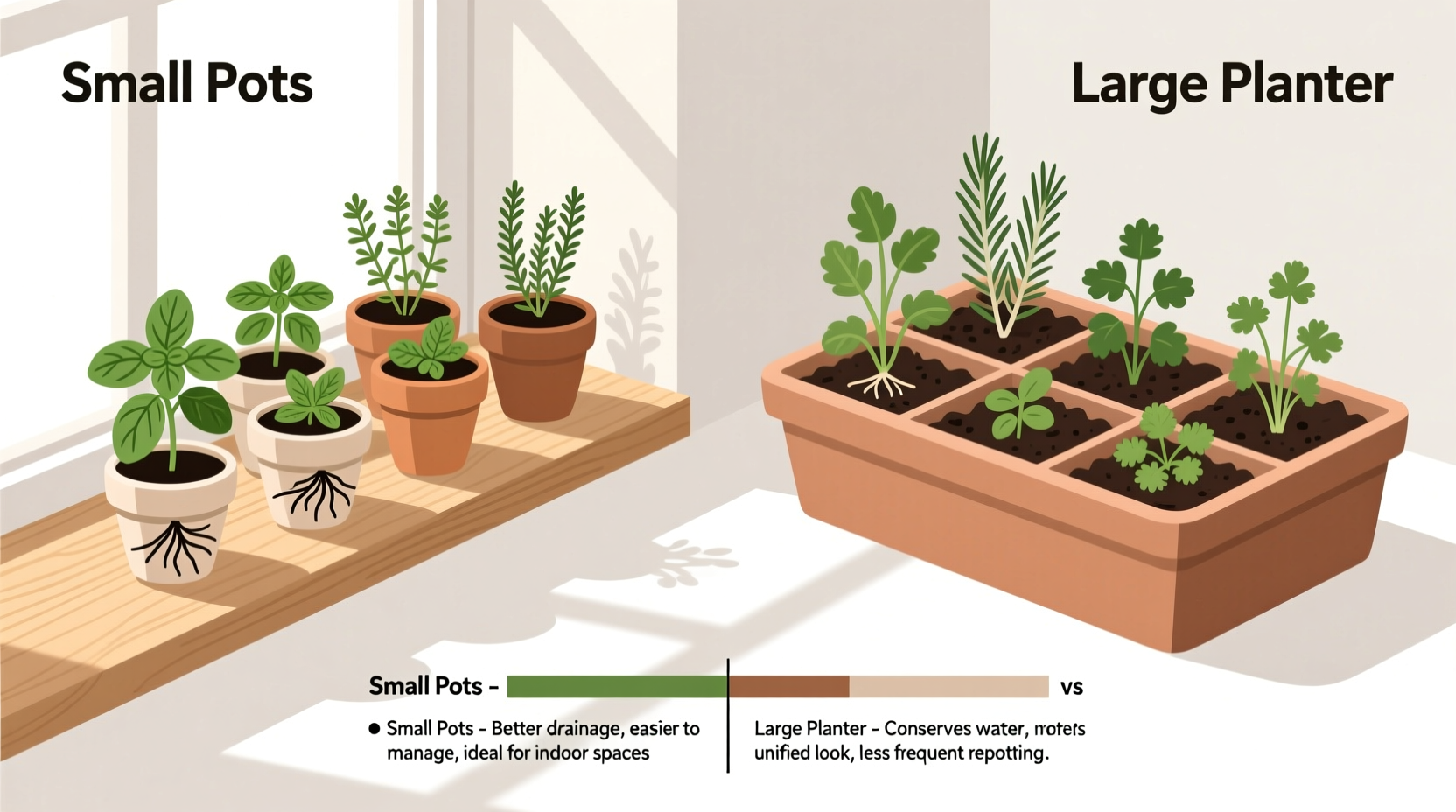
Not all herbs grow the same way. Their root systems, water needs, and nutrient demands vary significantly. Understanding these differences is essential when deciding between individual pots and shared planters.
- Basil, cilantro, and parsley are heavy feeders with moderate root spread. They prefer consistent moisture and rich soil but dislike sitting in water.
- Thyme, oregano, and rosemary are Mediterranean herbs with shallow roots and low water needs. They thrive in well-drained, sandy soil and suffer in overly moist conditions.
- Mint and lemon balm are vigorous spreaders with aggressive root systems. If not contained, they can dominate a shared container quickly.
- Chives and dill develop deeper taproots and benefit from vertical space, making depth a key factor in pot selection.
Because of this diversity, pairing herbs with conflicting needs in one large planter often leads to suboptimal results. One herb may flourish while another declines due to mismatched care requirements.
Tip: Group herbs by water and soil preferences—moisture lovers together, drought-tolerant types separately.Advantages of Multiple Small Pots
Using individual containers for each herb offers greater control over plant care and long-term garden management. Here’s why many experienced gardeners prefer this method:
Precision in Watering and Feeding
Herbs like rosemary need the soil to dry out completely between waterings, while basil requires consistently moist (but not soggy) soil. With separate pots, you can tailor your watering schedule to each plant’s needs, reducing stress and preventing root rot.
Easier Pest and Disease Management
If one plant develops powdery mildew or aphids, isolating it is simple when it’s in its own pot. In contrast, pests and fungal spores can easily spread through a shared planter, affecting all plants at once.
Prevention of Root Competition
In a large container, faster-growing herbs like mint or basil can outcompete slower ones for nutrients and space. Individual pots eliminate this imbalance, giving each herb room to establish without interference.
Flexibility in Placement
Some herbs need full sun (6+ hours), while others tolerate partial shade. With separate pots, you can move them around seasonally or daily to optimize light exposure. This is especially useful in urban gardens with variable sunlight.
“Container isolation allows gardeners to mimic natural habitats. Rosemary shouldn’t be watered like parsley—why grow them under the same conditions?” — Dr. Lena Patel, Urban Horticulturist, Brooklyn Botanic Garden
Benefits of a Single Large Planter
Despite the challenges, a unified planting approach has practical appeal, particularly for those with limited space or a desire for visual cohesion.
Space Efficiency
A single large planter maximizes yield per square foot. On a small patio or apartment balcony, consolidating herbs saves surface area and simplifies layout planning.
Aesthetic Uniformity
A thoughtfully arranged mixed herb garden in one container can be visually striking—ideal for decorative purposes near doorways or outdoor dining areas. Using matching pots creates symmetry and design continuity.
Reduced Maintenance Time
Watering one container instead of ten saves time. For casual growers or those managing multiple gardens, this efficiency can mean the difference between consistent care and neglect.
Natural Microclimate Creation
When compatible herbs are grouped together, they can create a beneficial microenvironment. For example, taller herbs like dill can provide light shade for lower-growing cilantro during hot afternoons, delaying bolting.
However, these benefits only hold true if the herbs planted together have similar cultural requirements. Mismatched combinations will undermine any advantage.
Comparison: Small Pots vs. Large Planters
| Factor | Multiple Small Pots | One Large Planter |
|---|---|---|
| Watering Control | High – customizable per plant | Low – uniform watering only |
| Nutrient Management | Easy to fertilize individually | Risk of over/under-feeding some herbs |
| Root Competition | None – each plant has dedicated space | High – aggressive roots dominate |
| Portability | High – easy to rearrange or bring indoors | Low – heavy and cumbersome |
| Disease Spread Risk | Low – isolated plants | High – pathogens travel through soil |
| Aesthetic Appeal | Modular, flexible look | Cohesive, garden-like appearance |
| Best For | serious growers, diverse herb types | beginners, space-limited areas |
Real-World Example: A Balcony Gardener’s Dilemma
Sophie, a gardener in Chicago, started her herb journey with a single 18-inch wide planter on her south-facing balcony. She planted basil, thyme, oregano, chives, and mint together, hoping for a lush, aromatic corner. Within six weeks, the mint had overtaken half the container, its roots choking out the chives. The basil thrived initially but began yellowing as Sophie overwatered trying to keep the thyme alive—thyme prefers dry soil, but the basil demanded moisture. After losing three plants, she repotted everything into individual 6-inch terracotta pots. Within a month, each herb showed improved vigor. She rotates their positions based on summer sun patterns and waters each according to its needs. “I thought I was saving space,” she said, “but I was actually sacrificing plant health.”
Step-by-Step Guide to Choosing the Right Setup
- Inventory Your Herbs: List the herbs you want to grow and research their water, sunlight, and soil needs.
- Group by Compatibility: Separate herbs into categories:
- Moisture-loving (basil, parsley, cilantro)
- Drought-tolerant (rosemary, thyme, oregano)
- Aggressive spreaders (mint, lemon balm)
- Assess Your Space and Lifestyle: Do you have room for multiple pots? How much time can you dedicate to individual care?
- Select Containers: Choose pots with drainage holes. Use 6–8 inch pots for most herbs; deeper for chives or dill.
- Decide Per Group:
- Plant moisture-loving herbs together in one larger planter if their needs align.
- Grow aggressive herbs like mint in solitary pots to prevent takeover.
- Keep drought-tolerant herbs in individual small pots or a shared sandy-mix container.
- Label and Monitor: Label each pot. Observe growth weekly and adjust placement or watering as needed.
Hybrid Approach: The Best of Both Worlds
You don’t have to choose strictly between individual pots and a single planter. A hybrid system offers flexibility and balance:
- Use a large planter for a compatible trio—such as parsley, chives, and cilantro—that share high moisture and nutrient needs.
- Keep rosemary, thyme, and oregano in small individual pots placed nearby but not sharing soil.
- Grow mint in a buried pot within a larger planter to contain roots while maintaining visual integration.
This method combines aesthetic unity with functional separation, ideal for both productivity and design.
Frequently Asked Questions
Can I grow all my herbs in one big pot if I water carefully?
Possibly, but it’s risky. Even with careful watering, root competition and differing nutrient uptake will eventually disadvantage some herbs. Only attempt this with herbs of similar origin and needs—like Mediterranean varieties (rosemary, thyme, oregano). Avoid mixing in basil or mint.
What size pot is best for a single herb?
Most culinary herbs thrive in 6–8 inch diameter pots with equal depth. Chives and dill benefit from deeper containers (10+ inches). Very small pots (under 5 inches) dry out too quickly and restrict root development.
Does pot material matter when using multiple containers?
Yes. Terracotta breathes well and helps prevent overwatering, ideal for rosemary or thyme. Plastic retains moisture longer, better for basil or parsley. Glazed ceramic offers middle-ground moisture control and enhances visual appeal.
Final Recommendation
For most home gardeners, especially those growing a variety of herbs, **multiple small pots are the superior choice**. They offer unmatched control over growing conditions, reduce disease risk, and allow for tailored care that matches each herb’s biology. While a single large planter may look appealing and save space, it often leads to compromised plant health due to conflicting needs and root competition.
That said, there’s room for nuance. A large planter can work well for a curated group of compatible herbs, particularly if you're short on space or prioritize aesthetics. The key is intentionality—know your plants, respect their differences, and design your container garden accordingly.
“The goal isn’t just to keep herbs alive, but to help them thrive. And thriving starts with the right container strategy.” — Carlos Mendez, Sustainable Home Garden Consultant
Take Action Today
Whether you're starting your first herb garden or reevaluating an existing setup, take a close look at your current containers. Are some herbs struggling while others dominate? Is watering becoming guesswork? Consider transitioning to individual pots for your most valuable or finicky herbs. Start with one or two repottings this week—your future harvests of fresh rosemary, vibrant basil, and fragrant thyme will thank you.
💬 Have you switched from a large planter to individual pots—or vice versa? Share your experience and lessons learned in the comments below!