The unmistakable aroma of a freshly cut pine tree is one of the most cherished sensory experiences of the holiday season. For many, it evokes memories of family gatherings, snowy evenings, and childhood excitement. But not everyone can bring a real tree into their home—space limitations, allergies, pet safety, or sustainability concerns often make artificial alternatives necessary. This raises an important question: can a scent diffuser using pine essential oil genuinely replicate that beloved forest-fresh fragrance?
The short answer is yes—under the right conditions, a high-quality pine essential oil diffuser can come remarkably close to mimicking the scent of a real evergreen. However, there are nuances in chemistry, perception, and application that determine just how convincing the imitation really is.
The Science Behind the Smell of a Real Tree
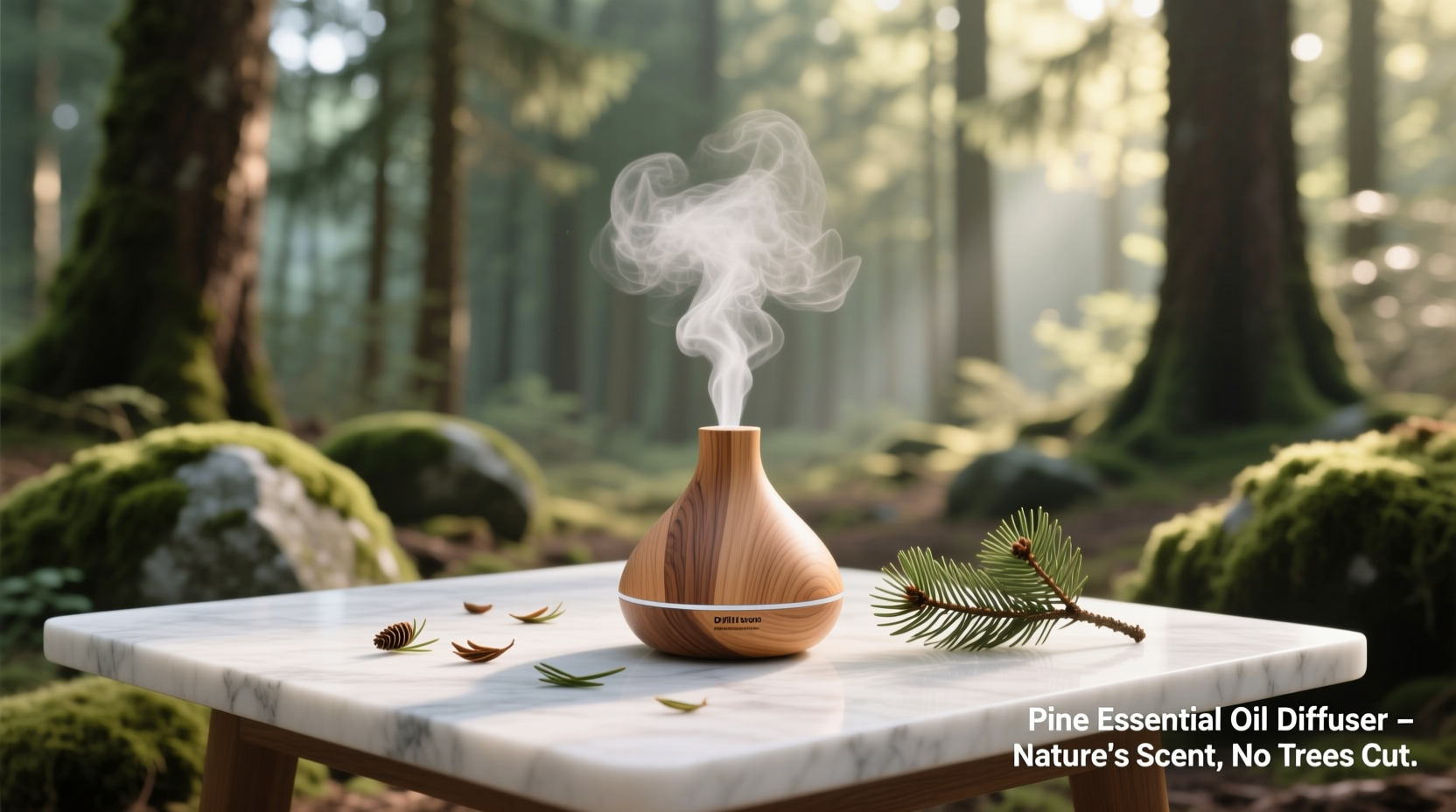
When you inhale the crisp, woody aroma of a live pine, fir, or spruce, you're smelling a complex blend of volatile organic compounds (VOCs) released from the tree’s needles and sap. The primary contributors to this scent include:
- Pinene – Responsible for the sharp, fresh “piney” note; exists in alpha and beta forms.
- Limonene – Adds a citrus-like brightness, commonly found in conifer resins.
- Camphene – Contributes a slightly medicinal, earthy depth.
- Myrcene – Offers subtle herbal and balsamic undertones.
These compounds are naturally emitted as the tree transpires and when its bark or needles are disturbed. The scent evolves over time—stronger in warm rooms, more subdued in cooler environments—and interacts dynamically with humidity and airflow.
“Natural tree fragrance isn’t static—it shifts throughout the day based on temperature and physical interaction. That dynamism is hard to replicate synthetically.” — Dr. Lena Hartwell, Environmental Aroma Researcher, University of Vermont
A real tree doesn’t just release one monolithic “pine” smell. It offers layers—a resinous base, a bright top note, and an underlying green freshness—that change subtly as you move through the space. Capturing this complexity is where many commercial fragrances fall short.
How Pine Essential Oil Compares to Natural Tree Aroma
Pine essential oil is typically steam-distilled from the needles, twigs, or cones of *Pinus sylvestris* (Scots pine) or other conifer species. High-grade oils preserve much of the original terpene profile, making them chemically similar to the VOCs released by living trees.
However, differences exist:
- Concentration: Essential oils are highly concentrated. While this makes them potent in diffusers, it can result in an overpowering or artificially intense aroma if not properly diluted.
- Lack of Freshness: Unlike a living tree, which continuously emits new volatiles, diffused oil disperses uniformly and lacks the spontaneous bursts of scent that occur when brushing against branches.
- Processing Effects: Distillation alters some compounds. For example, heat-sensitive terpenes may degrade, reducing the nuanced complexity of the original plant material.
Still, premium pine essential oil remains one of the most accurate olfactory stand-ins available. When used correctly, it activates the same limbic system responses associated with nostalgia, calm, and seasonal joy.
Tip: Choose 100% pure, undiluted pine essential oil from reputable suppliers. Avoid fragrance oils labeled as “pine-scented,” which often contain synthetic additives.Optimizing Your Diffuser for a More Authentic Experience
A diffuser alone won’t guarantee realism. How you use it determines whether the scent feels immersive or artificial. Consider these strategies to enhance authenticity:
1. Blend With Complementary Oils
Real forests don’t smell like isolated pine. Introduce subtle supporting notes to mimic environmental complexity:
- Fir Needle Oil – Closer to Fraser or Balsam fir trees commonly used as Christmas trees.
- Cedarwood – Adds warmth and depth, simulating woodsy surroundings.
- Orange or Grapefruit – A drop enhances limonene-like brightness, echoing natural citrus notes in conifers.
- Frankincense – Imparts a soft resinous quality, reminiscent of dried sap.
2. Control Output Intensity
Overpowering scents break immersion. Use intermittent diffusion settings—such as 30 seconds on, 5 minutes off—to simulate natural scent pulses rather than constant exposure.
3. Position Strategically
Place the diffuser near floor level, especially close to an artificial tree or living area. Heat rises, so lower placement allows the scent to drift upward gradually, mimicking how tree aromas disperse in a room.
4. Adjust for Humidity
Dry winter air intensifies perceived scent strength. In heated indoor environments, reduce oil volume by 20–30% compared to usage in humid climates.
5. Refresh Regularly
Change water and clean the diffuser every 3–4 days to prevent oil buildup, which can distort scent profiles over time.
Comparison: Real Tree vs. Pine Oil Diffuser
| Feature | Real Christmas Tree | Pine Essential Oil Diffuser |
|---|---|---|
| Scent Authenticity | High – dynamic, evolving aroma | Moderate to High – depends on oil quality and blending |
| Scent Longevity | 4–6 weeks (declines over time) | Indefinite (with consistent refills) |
| Allergen Risk | Moderate – pollen, mold, sap | Low – but essential oils can irritate sensitive individuals |
| Maintenance | Watering, needle cleanup, disposal | Refilling water/oil, cleaning unit |
| Eco Impact | Biodegradable but requires farming/transport | Reusable device; oil sourcing varies in sustainability |
| Cost (Annual) | $75–$150 (tree + stand + disposal) | $30–$60 (oil + electricity) |
| Safety | Fire risk if lights overheat; pets may chew needles | Essential oils toxic if ingested; keep away from pets |
Mini Case Study: Replicating Tradition in a Small Apartment
Sarah Kim, a graphic designer in Chicago, grew up with towering Douglas firs filling her family home each December. Now living in a compact studio apartment, she initially skipped trees altogether due to space and cat ownership. “I missed the smell more than anything,” she says. “It felt like the holidays weren’t real without it.”
After experimenting with candles and plug-in air fresheners—most of which smelled “like cleaning products”—she discovered a blend of blue spruce and pine essential oils in an ultrasonic diffuser. She mixed five drops of pine, two of spruce, and one of sweet orange, diffusing it on low cycles during evening hours.
The effect was immediate. “It wasn’t identical, but after a few days, my brain accepted it. My cat didn’t chew it, I didn’t have needles everywhere, and my partner—who has mild mold allergies—didn’t react. It became our new tradition.”
Sarah now uses the same blend every year, pairing it with soft lighting and music to deepen the sensory illusion. “It’s not the same as childhood,” she admits, “but it’s ours.”
Step-by-Step Guide: Creating a Realistic Pine Scent Environment
Follow this sequence to maximize authenticity when using a diffuser as a real-tree alternative:
- Select high-purity essential oils – Opt for pine, fir, or spruce labeled as 100% pure botanical extract with GC/MS test results available.
- Create a custom blend – Combine 6 drops pine, 3 drops fir, 1 drop cedarwood, and 1 drop orange in a glass mixing bottle. Shake gently before each use.
- Fill diffuser with fresh water – Use distilled water to prevent mineral buildup and ensure consistent mist output.
- Add 6–8 total drops of your blend – Start conservatively; you can increase later if needed.
- Set intermittent diffusion mode – Program 15–30 second bursts every 5 minutes to avoid olfactory fatigue.
- Position near base of artificial tree or living space – Allow scent to rise naturally into the room.
- Enhance with tactile cues – Play ambient forest sounds, use warm lighting, or display pinecones to strengthen sensory association.
- Refresh daily – Change water and re-add oils each morning for consistent performance.
Checklist: Is a Pine Oil Diffuser Right for You?
Answer these questions to determine if this alternative fits your lifestyle:
- ☐ Do you want the pine scent without the mess of needles or watering demands?
- ☐ Are you or anyone in your household sensitive to mold, pollen, or sap?
- ☐ Do you prefer reusable, long-term solutions over annual purchases?
- ☐ Are you comfortable handling essential oils safely (out of reach of children/pets)?
- ☐ Would you consider blending oils to fine-tune the fragrance?
- ☐ Do you live in a space where fire safety is a concern (e.g., small apartment, dorm)?
If you answered “yes” to most of these, a pine essential oil diffuser is likely a practical and effective alternative.
Frequently Asked Questions
Can pine essential oil cause headaches or respiratory issues?
Yes, in high concentrations or poorly ventilated spaces, pine oil vapors may trigger headaches, coughing, or irritation—especially in people with asthma or chemical sensitivities. Always start with fewer drops and increase gradually. Ensure adequate airflow and discontinue use if discomfort occurs.
Is pine essential oil safe around pets?
No, many essential oils—including pine—are toxic to cats and dogs if inhaled excessively or ingested. Birds are particularly vulnerable. If you have pets, use diffusers only in well-ventilated, pet-free rooms and never leave them running unattended. Consult your veterinarian before introducing any essential oils into a pet-inclusive home.
Does diffused pine oil have mood benefits like being in nature?
Preliminary research suggests that certain terpenes in pine oil, such as pinene, may support mental clarity and reduce stress markers. One 2019 study published in Environmental Health and Preventive Medicine found that inhaling phytoncides (natural compounds from trees) lowered cortisol levels and improved mood. While diffused oil isn’t identical to forest air, it may offer mild psychological benefits through scent-memory associations and subtle biochemical effects.
Conclusion: A Convincing Substitute—With Intention
A scent diffuser with pine essential oil isn’t a perfect replica of a real tree’s aroma. It lacks the spontaneity, variability, and full environmental context of standing in a forest or unwrapping a freshly delivered evergreen. But for those who cannot accommodate a live tree, it offers a powerful, customizable, and surprisingly authentic alternative.
The key lies in intentionality: choosing quality ingredients, crafting layered blends, and integrating scent into a broader sensory experience. When done thoughtfully, the difference becomes negligible—not because the smells are identical, but because the emotional resonance is successfully triggered.
For millions, the holiday spirit isn’t defined by botany, but by memory, warmth, and belonging. Whether that feeling comes from sap on your fingers or a carefully diffused mist, what matters is that it arrives at all.
💬 Have you tried using pine essential oil to mimic a real tree? Share your blend, tips, or experiences in the comments—your insight could help others create their perfect holiday atmosphere.