When it comes to affordable home storage solutions, IKEA’s Kallax and Target’s Threshold shelving units are two of the most popular choices in North America. Both offer modular designs, clean lines, and budget-friendly pricing—ideal for apartments, dorm rooms, or starter homes. But if you're aiming to create a space that feels elevated and intentionally designed, one key question arises: which one looks more expensive?
This isn’t just about price tags—it's about perceived value. A shelf can cost $70 at both stores, but one might blend seamlessly into a designer living room while the other reads as purely utilitarian. That subtle difference in aesthetic quality can impact the entire feel of your space. We’ll break down materials, construction, styling potential, and real-world use to determine which unit carries the visual weight of a high-end piece.
Design Philosophy: Minimalism vs Modern Warmth
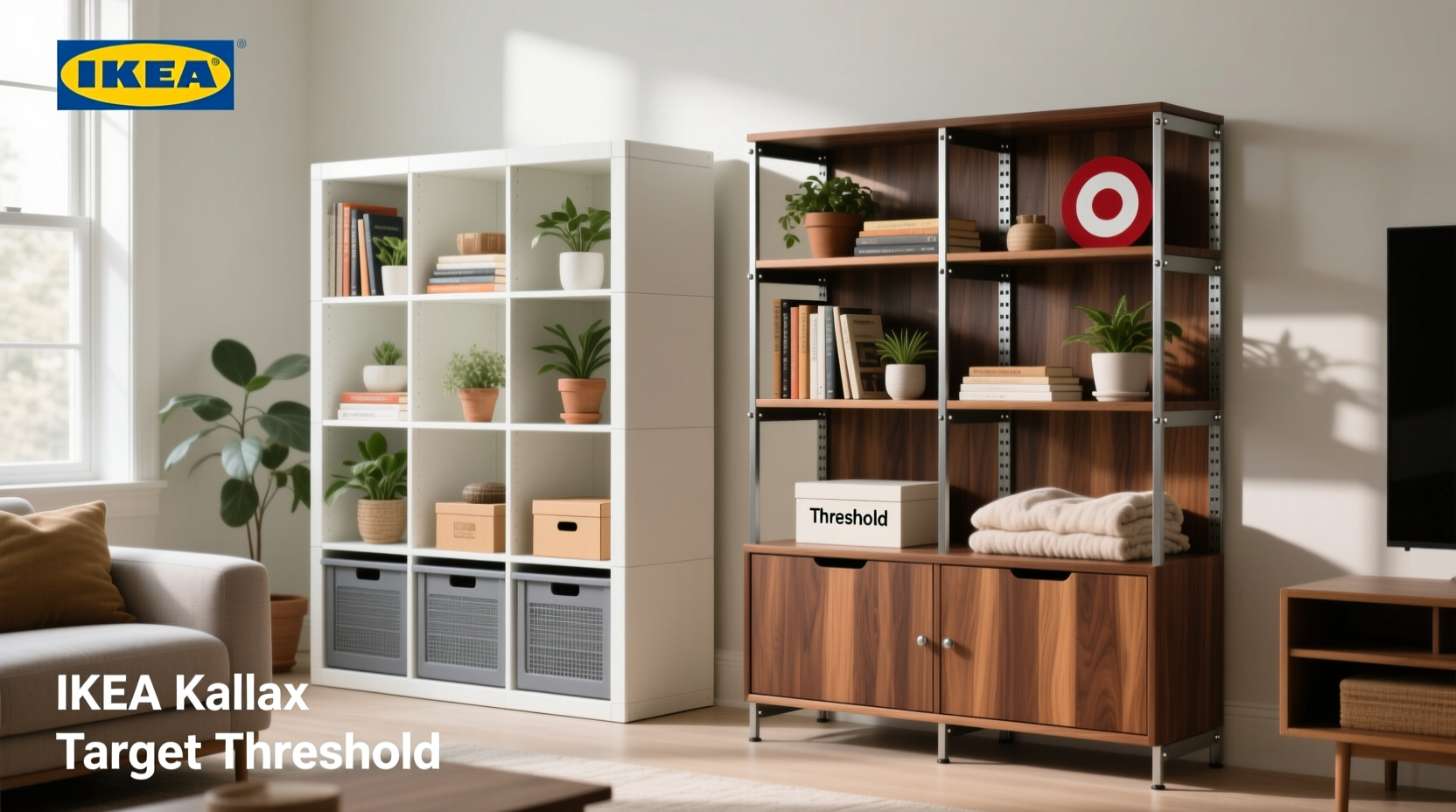
The IKEA Kallax series is rooted in Scandinavian minimalism. Its signature square cubby design has remained largely unchanged since its introduction (originally as the Expedit). The focus is on function, modularity, and neutral aesthetics. Available in black-brown, white, birch, and dark gray-stained options, the Kallax prioritizes versatility over character. It’s meant to disappear into the background—efficient, predictable, and scalable.
In contrast, Target’s Threshold line operates under a different design ethos: modern American lifestyle with curated sophistication. Threshold products are developed in-house with an emphasis on trend-aware simplicity and material authenticity. Their shelving units often feature warm wood tones, matte finishes, and cleaner edge detailing. While not always modular like the Kallax, they’re designed to look like intentional furniture pieces rather than storage systems.
“Perceived luxury in furniture often comes from proportion, finish quality, and how well a piece integrates into a room—not necessarily its actual cost.” — Dana Whitaker, Interior Stylist & Home Editor, *Dwell Magazine*
This distinction matters. The Kallax is engineered for mass production and global distribution; Threshold is tailored for U.S. consumer tastes with seasonal updates and tighter curation. As a result, Threshold shelves often incorporate design cues borrowed from mid-century modern and contemporary West Coast interiors—styles frequently associated with higher-end decor.
Material Quality and Build: What You Can See and Feel
On paper, both units are made from engineered wood—specifically particleboard with melamine veneer. This is standard for flat-pack furniture at this price point. However, the devil is in the details: thickness, grain realism, edge banding, and finish uniformity.
| Feature | IKEA Kallax | Target Threshold Shelves |
|---|---|---|
| Primary Material | Particleboard with melamine foil | Engineered wood with textured laminate |
| Shelf Thickness | Approx. 0.6 inches | Approx. 0.75–0.8 inches |
| Edge Treatment | Visible raw edges; squared-off corners | Slightly beveled or softened edges |
| Finish Realism | Flat, plastic-like sheen (especially in white) | Subtle wood grain texture; matte appearance |
| Assembly Hardware | Cam locks and dowels | Similar system, but often sturdier cam bolts |
| Weight Capacity per Cubby | 44 lbs (evenly distributed) | 50–60 lbs (varies by model) |
The Threshold units consistently score higher in tactile perception. Many models feature a slightly textured surface that mimics real wood grain, reducing the “plastic” look common in lower-cost laminates. The thicker shelves also resist sagging over time, especially when loaded with books or decorative items. Edge treatments are less industrial—some even have a micro-bevel—which helps diffuse light more naturally and avoids the harsh shadow lines seen on Kallax units.
Tip: Always reinforce shelf centers with L-brackets if storing heavy items long-term, regardless of brand.Styling Potential: How Each Shelf Elevates a Room
A storage unit doesn’t exist in a vacuum—it’s part of a larger interior narrative. The way a shelf interacts with lighting, color schemes, and surrounding decor determines whether it looks cheap or considered.
The Kallax, with its rigid grid pattern, demands careful styling. Empty cubbies highlight its utilitarian roots. When poorly styled—say, with mismatched bins and clutter—it becomes a visual anchor for chaos. But when curated thoughtfully—with matching baskets, books stacked horizontally and vertically, and intentional negative space—it can achieve a minimalist gallery effect. Designers often paint or wallpaper the back panels to add depth, transforming it into a custom-looking built-in.
Threshold shelves, meanwhile, require less intervention to look expensive. Their warmer finishes and softer proportions allow them to integrate naturally into living rooms, bedrooms, or entryways without appearing \"boxed in.\" Because many models come in walnut, oak, or cerused finishes, they echo the tones of real hardwood furniture. Even when fully loaded, they maintain a sense of cohesion due to their richer color palette and reduced reflectivity.
Consider this real-life example:
Mini Case Study: Apartment Styling in Austin, TX
Jessica R., a graphic designer renting a 700-square-foot loft, needed a room divider that doubled as display space. She compared a white Kallax and a Threshold Natural Oak 4-Cube organizer. The Kallax felt too stark against her terracotta walls and linen textiles. After styling attempts with woven trays and art books, it still read as \"temporary.\"
She switched to the Threshold unit. Its warm oak tone complemented her leather chair and handmade ceramics. Without any modifications, it looked like a permanent fixture. Neighbors assumed she’d hired a carpenter to build it in place. The same styling elements—books, plants, framed photos—worked better because the shelf itself provided a more organic backdrop.
Her takeaway: “The Threshold shelf didn’t need to be fixed up to look good. It already looked like something I’d spend $300 on.”
Customization and Long-Term Value
Both brands support customization, but in different ways.
Kallax benefits from a massive third-party ecosystem. From IKEA hackers online to companies like Lazy Susan Interiors, you can buy custom-cut inserts, fabric bins, lighting kits, and even legs to elevate the base unit. With enough effort—and potentially hundreds of dollars in upgrades—you can transform a $79 Kallax into a statement piece. But that requires time, skill, and investment beyond the original purchase.
Threshold, while less hackable, often includes premium touches out of the box. Some models come with adjustable shelves, metal glides, or integrated cord management. Others offer optional doors or backsplash panels sold separately. These accessories are designed to match seamlessly, preserving the cohesive look. You’re paying slightly more upfront, but saving time and labor on modifications.
- Kallax Pros: Highly modular, easy to reconfigure, strong DIY community
- Kallax Cons: Base model lacks warmth; requires styling effort to avoid looking institutional
- Threshold Pros: Better default aesthetics, warmer finishes, more residential feel
- Threshold Cons: Less standardized across collections; limited availability outside major markets
Which One Looks More Expensive? The Verdict
If you walk into a room and see a freestanding shelving unit, which one would make you assume it was custom-built or designer-sourced? Based on consistent user feedback, professional staging practices, and interior design trends, the answer leans clearly toward Target Threshold.
Why? Three reasons:
- Color and Finish: Threshold uses warmer, more natural tones that mimic real wood. Cool grays and stark whites (common in Kallax) can feel clinical without perfect lighting and decor balance.
- Proportions and Detailing: Slightly thicker shelves and softened edges give Threshold units a heft and refinement that Kallax lacks in its standard form.
- Brand Perception: Threshold is marketed as a \"lifestyle\" line, not just functional furniture. This influences how consumers interpret its value—even when prices are similar.
That said, the Kallax wins on flexibility and scalability. If you need a large storage wall, multiple stacked units, or a media console solution, Kallax offers unmatched consistency. And with the right upgrades—like adding hairpin legs, painting the frame, or inserting rattan panels—it can absolutely pass as high-end.
But for the average consumer seeking a single unit that looks expensive right out of the box, Threshold holds the advantage. It bridges the gap between affordability and aesthetic credibility more effectively.
Checklist: How to Make Any Budget Shelf Look Expensive
- Choose warm-toned finishes over cool, plasticky ones
- Style shelves with a mix of books (stacked and upright), objects in threes, and negative space
- Add soft lighting—LED strips or small lamps—to create ambiance
- Use matching baskets or boxes for hidden storage
- Anchor the unit to the wall for a built-in appearance
- Ensure all items are dusted and aligned; clutter kills perceived value
- Consider adding trim or crown molding above for architectural detail
Frequently Asked Questions
Can I mix Kallax and Threshold units in the same room?
Yes, but only if finishes are closely matched. For example, pairing a birch Kallax with a light oak Threshold shelf may work under warm lighting. Avoid combining stark white with warm wood tones unless intentionally contrasting styles.
Do Threshold shelves last longer than Kallax?
Not necessarily. Both use similar core materials, so longevity depends more on usage and environment. However, Threshold’s slightly thicker shelves and better edge sealing may resist chipping and moisture damage marginally better over time.
Is it worth upgrading a Kallax to look like a high-end piece?
It depends on your skills and goals. If you enjoy DIY projects and want a personalized result, yes. Adding legs, paint, and custom inserts can transform it. But if you want instant polish with minimal effort, investing in a Threshold or similar ready-to-display unit is more efficient.
Final Thoughts: Value Beyond Price
The question isn’t just which shelf costs more—it’s which one makes your space feel more intentional, refined, and lived-in with purpose. While the IKEA Kallax remains a legendary product for its utility and adaptability, the Target Threshold shelving line edges ahead when it comes to immediate visual appeal.
Looking expensive isn’t about deception; it’s about harmony. It’s how a piece sits in a room, reflects light, complements textures, and supports your lifestyle without drawing attention to its origins. In that context, Threshold shelves simply read as more residential, more finished, and more deliberately chosen.
That said, never underestimate the power of styling. A well-curated Kallax in the right setting can outshine a poorly arranged Threshold unit. Ultimately, the most expensive-looking shelf is the one that feels like it belongs.
🚀 Ready to upgrade your space? Try styling your current shelves with intentional groupings and warm lighting—you might be surprised how luxurious simplicity can look.








