Bar carts in compact homes, studio apartments, or even tight kitchen nooks face a unique challenge: they must serve as functional workstations, curated displays, and intentional design elements—all within 24–36 inches of linear space. A poorly organized cart becomes cluttered, inaccessible, and visually overwhelming; a well-organized one feels generous, intuitive, and effortlessly elegant—even when it holds only 12 bottles and five tools. This isn’t about minimalism for its own sake. It’s about precision curation, ergonomic logic, and layered aesthetics that make every square inch earn its keep.
1. Assess Your Space & Usage Patterns First
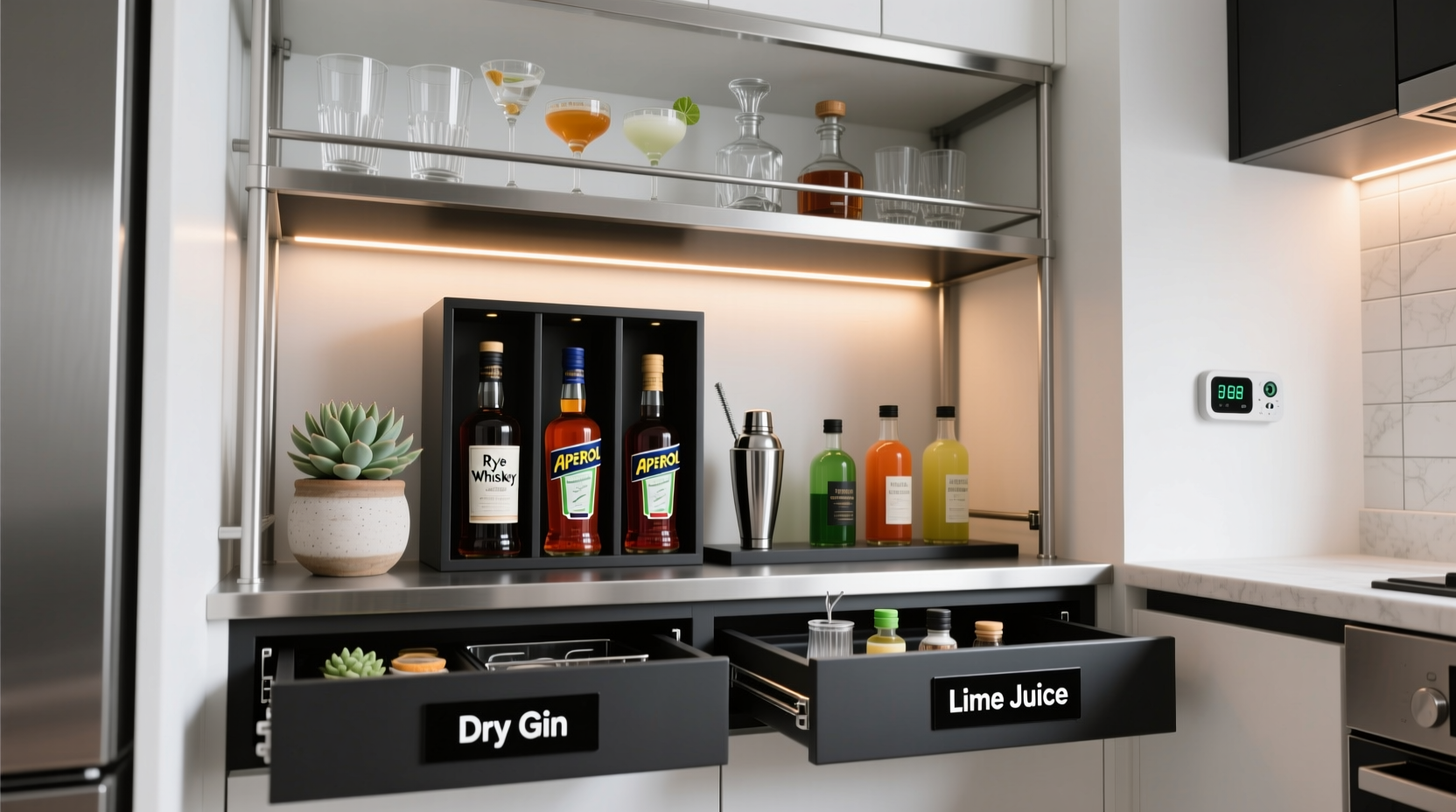
Before selecting bottles or arranging glassware, measure your cart’s exact footprint—not just length and width, but clearance above (for shelf stacking), below (for toe space and casters), and depth (critical for bottle stability). Then observe how you actually use your bar over 72 hours: When do you reach for spirits? Which tools get used daily versus seasonally? Do you prep cocktails solo or host groups? Track these patterns with pen and paper—or better yet, a simple spreadsheet—to identify true frequency tiers: daily, weekly, occasional, and rarely used.
This audit reveals what belongs on the cart—and what doesn’t. For example, a 20-oz shaker might be essential for daily espresso martinis but redundant if you mostly pour wine and beer. Likewise, a 750ml bottle of rare mezcal used once per quarter has no business occupying prime front-and-center real estate. Prioritization starts here—not with aesthetics, but with honest behavior mapping.
Tip: Keep a “30-second rule” journal for one week: note every time you hesitate, stretch, or search while using your cart. These micro-frustrations point directly to inefficient placement.2. The Vertical Zoning System: A Step-by-Step Layout Framework
Small-space bar carts thrive on vertical discipline—not random stacking. Apply this proven 4-tier zoning method, designed for both ergonomics and sightlines:
- Zone 1 (Eye Level: 48–60 inches from floor): High-frequency items—your three most-used spirits (e.g., gin, bourbon, dry vermouth), plus a stylish jigger and citrus peeler. All within arm’s reach, no bending or reaching.
- Zone 2 (Mid-Level: 36–48 inches): Secondary essentials—bitters, syrups, garnishes (lemon wheels, olives in small jars), and a compact mixing glass. Use tiered acrylic risers or shallow trays to prevent visual crowding.
- Zone 3 (Lower Shelf: 24–36 inches): Tools and prep items—shaker tins, strainers, bar spoons, citrus juicer, and a small cutting board. Store spoons and strainers upright in a weighted mug or repurposed ceramic pencil holder.
- Zone 4 (Base or Under-Cart: 0–24 inches): Low-use or bulky items—extra ice buckets, seasonal liqueurs, backup glassware, or a compact cocktail book. Reserve this zone for things you access less than once weekly.
This system respects human movement science: eye-level zones reduce neck strain and speed up decision-making; mid-level supports natural hand trajectory during mixing; lower zones accommodate heavier, less-frequently handled objects. Crucially, it also creates intentional negative space—breathing room between zones—that enhances perceived spaciousness.
3. Curate, Don’t Collect: The Bottled Logic Method
Most small carts fail not from poor layout—but from too many bottles. A standard 30-inch-wide cart comfortably holds 8–10 750ml bottles *without* crowding—if they’re arranged thoughtfully. Go beyond “what I own” and apply the Bottled Logic Method:
- Core Trio Rule: Select exactly three base spirits that cover 80% of your drink repertoire (e.g., London Dry Gin + Rye Whiskey + Blanco Tequila).
- Modifier Pairing: Choose two vermouths (dry + sweet) and two amari (e.g., Campari + Aperol) that complement your core trio—not duplicate them.
- One Seasonal Wildcard: Rotate one bottle quarterly (e.g., peach schnapps in summer, spiced rum in winter) to keep the cart feeling fresh without permanent clutter.
- Zero “Just in Case” Bottles: If you haven’t used it in 90 days, it goes into storage—not on the cart.
This yields a lean, versatile 8-bottle foundation. Add two bitters (aromatic + orange), one simple syrup, and one citrus-based mixer (e.g., grapefruit soda)—and you can build over 60 classic and modern cocktails.
| Category | Max Items (Small Cart) | Rationale |
|---|---|---|
| Base Spirits | 3 | Prevents visual noise; ensures each bottle gets regular rotation and use |
| Vermouths & Amari | 4 | Must be refrigerated after opening—limit to what fits in your fridge’s door shelf |
| Bitters | 2–3 | High-concentration flavor; more than three rarely improves versatility |
| Syrups & Mixers | 2 | Simple syrup + one seasonal mixer (e.g., ginger beer, tonic) |
| Garnishes (in jars) | 3 | Lemons, olives, cherries—or dehydrated citrus, rosemary, chili flakes |
4. Real-World Application: The Studio Apartment Bar Cart Makeover
Maria, a graphic designer living in a 450-square-foot downtown studio, had a vintage brass bar cart she loved—but hated using. “It looked great in photos,” she shared, “but by Thursday night, I’d be digging behind the shaker for my bitters while my gin was buried under three unopened cordials.” Her cart measured 28″W × 16″D × 34″H, with two fixed shelves and a lower open rack.
Working with a spatial consultant, Maria applied the vertical zoning system and Bottled Logic Method. She removed six bottles (including two flavored vodkas she hadn’t touched in eight months), consolidated bitters into a single 4-compartment magnetic tray mounted on the side rail, and added a 3″ acrylic riser to her mid-shelf to elevate her citrus peeler and small olive jar. She replaced bulky glassware with stackable coupe glasses and stored extra rocks glasses vertically in a slim, wall-mounted wine rack beside the cart—freeing 4″ of shelf depth.
The result? Her prep time dropped from 90 seconds to under 25. She reported fewer “I’ll just have wine tonight” compromises—and hosted her first cocktail party in over a year. “It wasn’t about buying new things,” she said. “It was about trusting that less, placed with intention, works harder.”
5. Visual Harmony Through Consistency & Contrast
Efficiency gains mean little if the cart feels chaotic to the eye. Visual appeal in tight spaces relies on two deliberate principles: consistency and contrast.
Consistency means limiting variables: choose one dominant material (e.g., all amber glass bottles, all matte black labels), one height range (standard 750ml or uniform miniatures), and one label orientation (all facing forward, never sideways). This creates rhythm and reduces cognitive load—your eyes scan faster, your hands move more confidently.
Contrast adds dimension and prevents monotony: pair matte bottles with glossy glassware, warm wood trays with cool metal tools, or tall slender bottles next to short stout ones. But contrast must be controlled—never random. For example, place your tallest bottle (e.g., a 1L rum) at the far left of Zone 1, then descend in height toward the right. Or group all clear spirits on the left half of a shelf and amber/brown spirits on the right—creating a subtle tonal gradient.
“Visual order isn’t about symmetry—it’s about predictable relationships. When every object has a logical neighbor and a clear hierarchy, even a 24-inch cart reads as calm, capable, and complete.” — Lena Cho, Spatial Design Director at HomeCraft Studios
6. Essential Small-Space Bar Cart Checklist
Use this before finalizing your layout. Tick each box only when verified in practice—not theory:
- ✅ All daily-use items are reachable without stepping back, bending, or stretching upward
- ✅ No bottle label is obscured by another bottle, tool, or tray edge
- ✅ At least 1.5 inches of breathing space remains between the tallest item and the shelf above
- ✅ Every tool has a dedicated, upright storage spot—not loose in a drawer or basket
- ✅ Garnish jars are sealed, labeled, and sized to fit neatly side-by-side (no overhang)
- ✅ Lighting (if added) illuminates Zone 1 and Zone 2—not the floor or ceiling
- ✅ Casters lock securely and don’t wobble when weight is shifted during shaking or stirring
7. FAQ: Small-Space Bar Cart Questions Answered
Can I use a bar cart in a rental apartment without drilling or permanent changes?
Absolutely—and it’s often ideal. Choose a cart with locking casters and a stable base (avoid wobbly, lightweight models). Use non-damaging solutions like adhesive-backed hooks for hanging bar spoons or magnetic strips mounted on the side rail for metal tools. Never attach anything to walls or cabinets unless permitted. Focus on self-contained organization—the cart should function fully as a freestanding unit.
How do I keep my cart looking polished when I entertain frequently?
Adopt the “5-Minute Reset”: After every use, return bottles to their designated spots, wipe spills immediately with a microfiber cloth, empty and rinse the shaker tin, and replace garnish lids. Keep a small tray on the lowest shelf for “in-process” items (e.g., a half-cut lemon, used napkins)—then clear it before guests arrive. Consistent micro-habits prevent weekend-overwhelm.
What’s the best way to store citrus without it drying out or rolling off the cart?
Use a shallow, lidded ceramic dish (3″–4″ diameter) lined with a damp paper towel. Place lemons, limes, or oranges inside, cover, and store on Zone 2. The humidity prevents shriveling; the lid stops rolling. Replace the towel every 48 hours. For long-term zest storage, freeze grated citrus peel in silicone ice cube trays—then transfer cubes to a labeled jar in your freezer, not the cart.
Conclusion
A small-space bar cart isn’t a compromise—it’s an invitation to refine your habits, clarify your preferences, and celebrate restraint as sophistication. When every bottle has purpose, every tool has home, and every inch serves both utility and beauty, the cart transcends function. It becomes a ritual anchor: the place where afternoon iced tea and Friday-night Manhattans feel equally considered, equally joyful. You don’t need more space. You need clearer criteria, stricter editing, and deeper attention to how things live together.
Start tonight—not with a shopping trip, but with a 15-minute edit. Remove three items you haven’t used in 60 days. Wipe down each shelf. Realign one row of bottles so labels face forward. Notice how much lighter the cart feels—not physically, but perceptually. That lightness is the first sign your space is working for you, not against you.
💬 Your turn: Share your small-space bar cart win—a clever hack, a favorite minimalist setup, or how you solved a specific clutter challenge. Real stories inspire real change. Comment below and help others craft smarter, calmer spaces.








