
In an era where indoor air pollution can be two to five times worse than outdoor levels, people are turning to nature for solutions. Houseplants have gained a reputation as natural air purifiers—silent green guardians that filter toxins and refresh our homes. But how much of this claim holds up under scientific scrutiny? While NASA’s 1989 Clean Air Study gave houseplants a major credibility boost, recent research suggests their real-world impact may be far more limited than popular media implies. The truth lies somewhere in between: yes, certain plants can remove pollutants from the air—but not nearly enough to replace mechanical ventilation or air purifiers in typical living spaces.
This article unpacks the science behind plant-based air purification, separates fact from myth, and offers practical guidance on whether—and how—houseplants can contribute meaningfully to healthier indoor environments.
The Origin of the Myth: NASA’s Clean Air Study
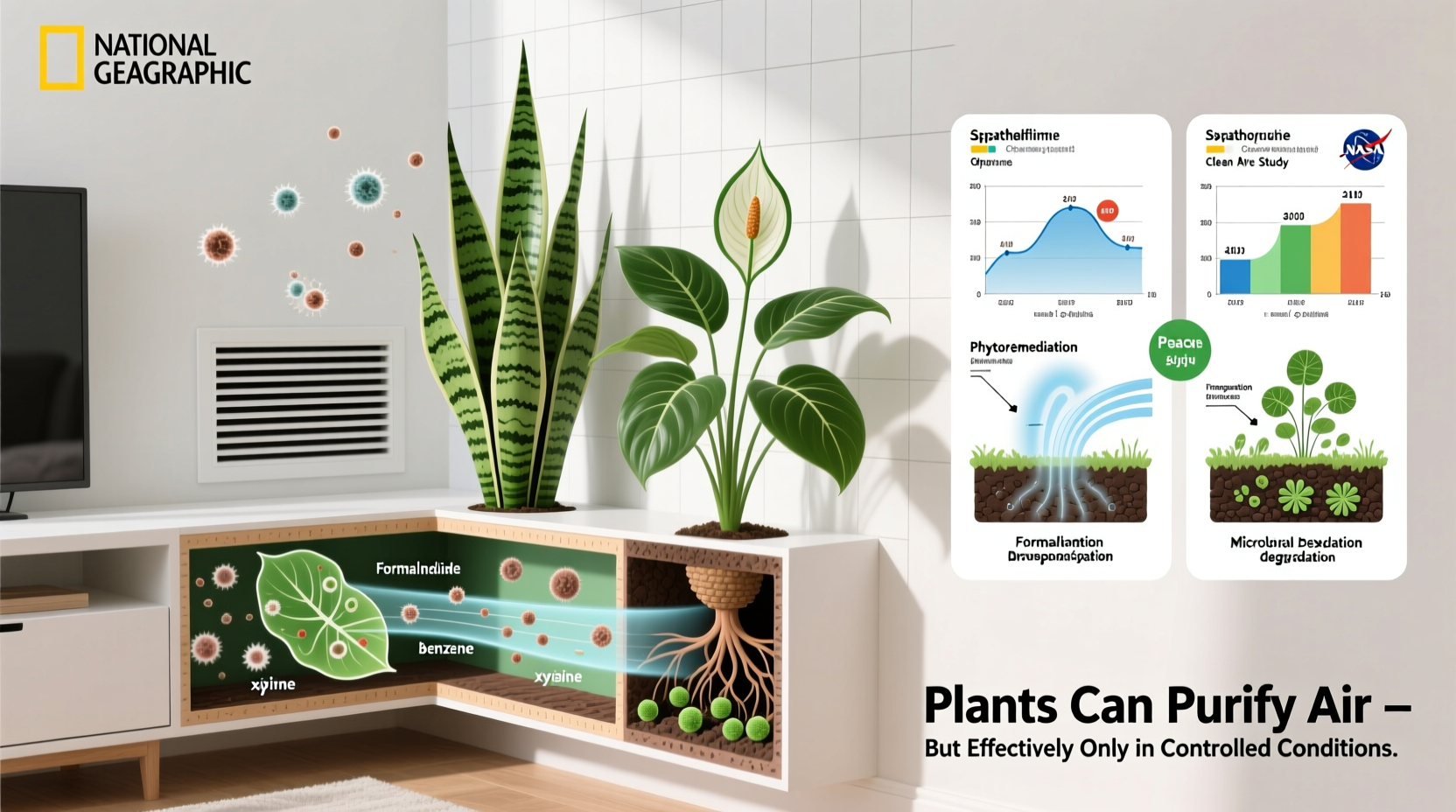
The idea that houseplants can purify indoor air largely stems from a 1989 study conducted by NASA. In a sealed chamber, researchers tested various common houseplants’ ability to remove volatile organic compounds (VOCs) like benzene, formaldehyde, and trichloroethylene. These chemicals are emitted by building materials, furniture, cleaning products, and even printers. The results were striking: some plants, including the peace lily, snake plant, and spider plant, showed significant capacity to absorb these toxins through their leaves and roots.
However, the conditions of the study were highly controlled. The chambers were small, airtight, and had no airflow—unlike real-world homes, which are dynamic, leaky environments with doors opening, HVAC systems running, and windows occasionally letting in fresh air. In such settings, the rate at which plants remove pollutants becomes negligible compared to natural air exchange.
“While plants do absorb VOCs, the scale required to make a measurable difference in a typical home would mean filling every square foot with dense foliage.” — Dr. Michael Winkler, Environmental Scientist, University of Colorado Boulder
How Do Plants Purify Air? Understanding the Mechanism
Plants improve air quality through three primary biological processes:
- Photosynthesis: During daylight, plants absorb carbon dioxide and release oxygen, slightly improving oxygen levels.
- Phytoremediation: Some plants take up airborne chemicals through their stomata (leaf pores) and transport them to roots, where microbes break them down.
- Microbial Activity in Soil: The rhizosphere—the zone around plant roots—is home to bacteria and fungi that metabolize pollutants like formaldehyde and xylene.
These mechanisms are real and biologically sound. However, their efficiency depends on several factors: plant species, potting medium, light availability, humidity, and pollutant concentration. More importantly, the rate at which these processes occur is extremely slow when scaled to room-sized environments.
A 2019 review published in the Journal of Exposure Science & Environmental Epidemiology analyzed over 190 studies and concluded that while plants reduce VOCs in laboratory chambers, their effect in actual buildings is “negligible” due to high air exchange rates. To match the air-cleaning power of a single air purifier, you’d need anywhere from 10 to 1,000 plants per square meter of floor space—clearly impractical.
Tip: Don’t rely on plants alone for air purification. Use them as a complementary measure alongside proper ventilation and HEPA filtration.Top Plants with Proven Air-Cleaning Abilities
Despite their limited scalability, some plants perform better than others in removing specific pollutants. Based on NASA’s findings and follow-up studies, here are the most effective species for phytoremediation:
- Chlorophytum comosum (Spider Plant): Removes formaldehyde and xylene; easy to grow and non-toxic to pets.
- Sansevieria trifasciata (Snake Plant): Absorbs benzene, formaldehyde, trichloroethylene, and carbon dioxide at night—ideal for bedrooms.
- Epipremnum aureum (Golden Pothos): Effective against formaldehyde; thrives in low light.
- Spathiphyllum spp. (Peace Lily): Removes ammonia, benzene, formaldehyde, and trichloroethylene; also increases humidity.
- Dracaena fragrans (Corn Plant): Filters out benzene, formaldehyde, and trichloroethylene but is toxic to cats and dogs.
While these plants show promise in controlled environments, their effectiveness indoors is constrained by airflow, room size, and maintenance. A healthy, well-lit plant will always outperform a stressed one, so care matters.
Do’s and Don’ts of Using Plants for Air Quality
| Do’s | Don’ts |
|---|---|
| Choose plants proven to absorb VOCs (e.g., snake plant, spider plant) | Overcrowd rooms with too many plants |
| Place plants near known emission sources (e.g., new furniture, printers) | Expect immediate or dramatic air quality improvements |
| Keep soil healthy with activated charcoal or biofilters to enhance microbial action | Ignore mold risks from overwatering |
| Group several plants together to create a microzone of cleaner air | Rely solely on plants in poorly ventilated or high-pollution areas |
| Clean leaves regularly to maximize gas absorption | Use chemical fertilizers excessively, which can off-gas VOCs |
Realistic Benefits Beyond Air Purification
If plants aren’t powerful enough to clean indoor air on their own, why keep them? Because their value extends far beyond VOC removal. Psychological and physiological benefits are well-documented:
- Stress Reduction: Studies show that interacting with plants lowers cortisol levels and reduces mental fatigue.
- Improved Focus: Office workers in green environments report better concentration and productivity.
- Humidity Regulation: Through transpiration, plants release moisture, helping maintain optimal indoor humidity (30–60%), which supports respiratory health.
- Biophilic Design: Incorporating nature into interiors enhances mood and overall well-being—a principle used in hospitals, schools, and workplaces.
In this context, houseplants serve as part of a holistic approach to healthier indoor living—not as standalone air filters, but as contributors to a restorative environment.
Mini Case Study: Greening a Home Office
Sarah, a freelance graphic designer in Portland, Oregon, converted her basement into a workspace. After installing new carpet and particleboard furniture, she noticed headaches and stuffiness—classic signs of off-gassing. She bought three snake plants and a peace lily based on online recommendations. Within weeks, her symptoms improved. But was it the plants?
Upon reflection, Sarah realized she had also started opening the basement window for 15 minutes each morning and purchased a small HEPA air purifier after reading about indoor pollutants. The combination likely made the difference. Still, she credits the plants with making the space feel more inviting. “I don’t know if they cleaned the air,” she says, “but I feel calmer just looking at them. I water them daily—it’s become part of my routine.”
This anecdote illustrates a common pattern: people attribute air quality improvements to plants, often overlooking concurrent behavioral changes. Yet the emotional benefit remains real and valuable.
Practical Steps to Maximize Indoor Air Quality
If your goal is genuinely cleaner indoor air, plants should be just one component of a broader strategy. Here’s a step-by-step guide to creating a healthier indoor environment:
- Measure Your Air: Use an affordable indoor air quality monitor to track levels of CO₂, VOCs, PM2.5, and humidity.
- Increase Ventilation: Open windows regularly, especially during and after cooking, cleaning, or painting.
- Use Exhaust Fans: Run bathroom and kitchen fans to expel moisture and pollutants.
- Install Air Purifiers: Choose units with HEPA filters for particles and activated carbon for gases.
- Reduce Pollutant Sources: Switch to low-VOC paints, natural cleaning products, and fragrance-free personal care items.
- Add Strategic Plants: Place 2–3 high-performing air-cleaning plants in frequently occupied rooms.
- Maintain Plants Properly: Dust leaves weekly, avoid overwatering, and repot annually to sustain metabolic activity.
Frequently Asked Questions
Can one houseplant make a noticeable difference in air quality?
No single plant will significantly alter indoor air composition in a standard room. The volume of air and constant influx of outdoor air dilute any purification effect. Multiple plants in optimal conditions may help slightly, but mechanical solutions are far more effective.
Are there risks to using plants for air purification?
Potentially. Overwatered plants can promote mold growth in soil, which releases spores into the air and worsens allergies. Additionally, some air-purifying plants (like dieffenbachia or dracaena) are toxic if ingested by pets or children. Always consider safety and maintenance needs.
Is the NASA study outdated or irrelevant?
Not irrelevant—but misinterpreted. The NASA study was designed for closed-loop life support systems in space stations, not suburban living rooms. It demonstrated biological feasibility, not practical scalability. Its conclusions are valid in context but shouldn't be extrapolated to everyday home use without critical evaluation.
Conclusion: Balancing Hype with Reality
The idea that houseplants can purify indoor air is neither entirely false nor particularly powerful in real-world conditions. They do remove trace amounts of pollutants, but not at a rate that meaningfully improves air quality in normally ventilated homes. Expecting them to replace air purifiers or ventilation is unrealistic.
Yet dismissing them altogether would be a mistake. Their true value lies in their psychological and aesthetic contributions—reducing stress, enhancing focus, and connecting us to nature in increasingly artificial environments. When integrated wisely into a comprehensive air quality plan, houseplants can play a supportive role.
So go ahead, bring in a snake plant or a spider plant. Just don’t expect it to detox your entire apartment. Instead, pair it with open windows, a good air purifier, and mindful choices about the products you bring indoors. That’s the real recipe for fresher, healthier air.
🚀 Ready to improve your indoor air? Start by testing your current air quality, then build a plan that combines ventilation, filtration, and a few well-chosen plants. Share your journey or ask questions in the comments below!








