Mint is the soul of a great mojito—not just a garnish, but the aromatic engine that lifts lime, cools rum, and transforms ice into something exhilarating. Yet most home bartenders rely on limp, pre-packaged sprigs from the supermarket: often wilted, faint in flavor, and picked days—or even weeks—before use. The solution isn’t more expensive herbs; it’s a thriving pot of mint on your windowsill. Growing mint indoors isn’t just possible—it’s reliable, rewarding, and surprisingly low-effort when you align with the plant’s natural rhythm. This guide distills years of indoor herb cultivation experience—including trials across urban apartments, north-facing kitchens, and winter-dim apartments—into actionable, season-proof strategies. You’ll learn how to keep mint vigorous through December as easily as July, avoid common pitfalls that turn lush plants into leggy ghosts, and harvest leaves that burst with cool, clean menthol instead of bitterness or blandness.
Why Indoor Mint Beats Store-Bought (Every Time)
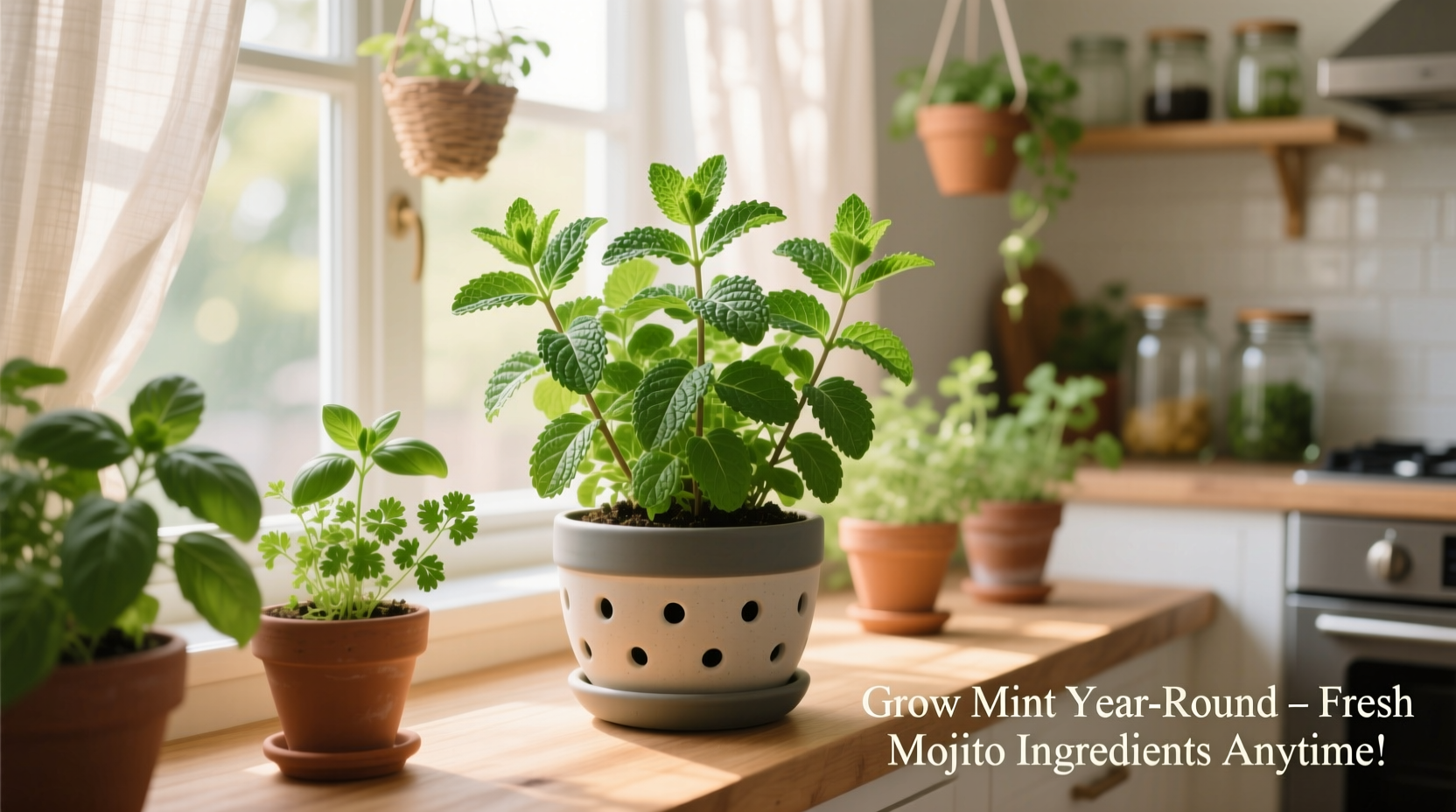
Supermarket mint suffers three critical flaws: post-harvest decline, genetic dilution, and environmental disconnect. Most commercial mint is harvested early, shipped cold, then held in refrigerated cases where respiration continues unchecked—depleting volatile oils responsible for aroma and cooling sensation. By the time it reaches your counter, up to 60% of its essential oil profile has degraded. Further, many grocery varieties are selected for shelf life and stem length—not flavor intensity—resulting in milder, sometimes woody-tasting leaves. Indoor-grown mint, by contrast, is harvested minutes before use, at peak oil concentration, and can be chosen for superior cultivars like ‘Mojito Mint’ (Mentha × piperita ‘Mojito’) or ‘Tashkent’, both bred specifically for cocktail clarity and high menthol-to-cineole ratios.
Indoor cultivation also gives you complete control over inputs: no pesticide residues, no wax coatings, no mystery fertilizers. And unlike outdoor mint—which spreads aggressively via rhizomes and can overwhelm garden beds—indoor mint stays contained, predictable, and responsive to your care. With consistent light and thoughtful pruning, a single 6-inch pot can yield 8–12 usable sprigs weekly, year after year.
Essential Setup: Light, Container & Soil That Actually Work
Mint thrives on consistency—not extremes. It doesn’t need tropical heat or desert sun, but it *does* demand reliable light, breathable roots, and steady moisture. Getting these fundamentals right eliminates 90% of common failures.
| Element | What Works | What Doesn’t |
|---|---|---|
| Light | 4–6 hours of direct sunlight (south or west window); or 12–14 hours under full-spectrum LED grow lights (25–35 watts, 12–18 inches above foliage) | North-facing windows without supplementation; incandescent bulbs; fluorescent tubes older than 12 months |
| Container | Unglazed terracotta or fabric grow pots (6–8 inch diameter, minimum 6-inch depth); drainage holes mandatory | Decorative cachepots without drainage; plastic containers smaller than 5 inches; self-watering pots (trap excess moisture) |
| Soil | Well-draining mix: 2 parts potting soil + 1 part perlite + 1 part compost (aged, not fresh manure) | Garden soil (compacts, harbors pests); pure peat moss (dries out too fast, acidic); “miracle-grow” blends with time-release fertilizer (causes leggy growth) |
Why terracotta? Its porosity allows excess moisture to evaporate through the walls, preventing root rot—a leading cause of indoor mint death. Plastic retains water too long, especially in cooler months when evaporation slows. And while mint tolerates some shade, insufficient light triggers etiolation: stems stretch thin and pale, leaves shrink and lose oil concentration, and flavor turns grassy rather than bright. If your mint leans toward the light source, it’s not reaching—it’s starving.
Tip: Rotate your pot 90° every 2 days to ensure even growth and prevent lopsided, weak stems.The Year-Round Pruning & Harvesting System
Pruning isn’t optional for indoor mint—it’s the primary driver of flavor, density, and longevity. Unlike outdoor mint that regrows from runners, potted mint relies entirely on crown regeneration. Each strategic cut signals the plant to branch, thicken, and produce new leaves rich in essential oils. Skip pruning, and you’ll get tall, sparse stalks with small, dull leaves and diminished aroma.
- First prune at planting: Trim back the top third of all stems immediately after transplanting. This encourages basal branching.
- Weekly maintenance: Every 7–10 days, pinch off the top two sets of leaves on each stem—just above a leaf node (the bump where leaves meet stem). Never remove more than 30% of total foliage at once.
- Seasonal reset (every 8–12 weeks): Cut all stems back to 2 inches above soil. Water deeply, apply diluted kelp emulsion (1:10), and place in brightest light available. New growth emerges within 5–7 days.
- Harvest timing: Pick leaves in late morning, after dew dries but before midday heat. Oils are most concentrated then—and less likely to volatilize during handling.
This system prevents flowering (which makes leaves bitter), maintains compact shape, and continuously stimulates oil production. Over-pruning stresses the plant; under-pruning invites woodiness. Consistency matters more than intensity.
Watering, Feeding & Pest Management Without Chemicals
Mint’s reputation for being “indestructible” is misleading. It’s resilient against neglect—but fatally sensitive to misapplied care. The biggest mistake? Treating it like a succulent or a fern. Mint wants consistently moist (not soggy) soil, moderate humidity (40–60%), and light, frequent feeding—not heavy doses.
Water only when the top ½ inch of soil feels dry to the touch. Stick your finger in—don’t rely on surface appearance. When watering, pour slowly until water runs freely from drainage holes, then empty the saucer within 15 minutes. Letting roots sit in standing water invites Pythium root rot, which shows first as yellowing lower leaves and a soft, brown crown.
Feed every 3 weeks from March through October with a balanced organic liquid fertilizer (e.g., fish emulsion or seaweed extract, diluted to half strength). Skip feeding November through February—mint’s growth naturally slows, and excess nitrogen causes weak, sappy growth vulnerable to aphids and spider mites.
“Indoor mint doesn’t fail from lack of attention—it fails from inconsistent attention. One week of drought followed by a flood mimics monsoon cycles it never evolved to handle.” — Dr. Lena Torres, Urban Horticulturist, Cornell Cooperative Extension
Pests appear most often when air circulation is poor or humidity spikes above 70%. Spider mites thrive in dry, dusty conditions; aphids favor soft, over-fertilized growth. Prevention beats treatment: wipe leaves biweekly with a damp cloth, keep nearby surfaces clean, and place a small fan nearby on low setting for 2 hours daily to improve airflow. If aphids appear, blast them off with a sharp spray of water—repeat every other day for one week. For persistent spider mites, use a miticidal soap spray (potassium salts of fatty acids), applied at dusk to avoid leaf burn.
Real-World Success: A Brooklyn Apartment Case Study
In winter 2023, Maya R., a bartender living in a 4th-floor walk-up in Brooklyn with only an east-facing kitchen window, struggled with mint that grew leggy and lost flavor by January. Her pot sat on a radiator cover, dried out between waterings, and received no supplemental light. After switching to a 7-inch unglazed terracotta pot, adding a $25 24-watt full-spectrum LED bar mounted on a shelf 14 inches above the plant, and adopting the weekly pruning system, her results transformed.
Within 3 weeks, new growth was darker green and more upright. By week 6, stems were thicker, leaves 25% larger, and the scent intensified—“like cracking open a fresh candy cane,” she said. She began harvesting 10–12 perfect sprigs weekly, using them not just for mojitos but infused simple syrups and iced teas. Crucially, she noticed no pest issues—even during NYC’s dry, heated winter—because the LED provided consistent photoperiod (14 hours on, 10 off), and the terracotta prevented root stress. Her secret? Setting a phone reminder for every Sunday evening: “Prune mint, check soil, rotate pot.” No guesswork. No seasonal drop-off.
FAQ: Solving Your Most Common Indoor Mint Questions
Can I grow mint from store-bought stems?
Yes—but with caveats. Choose stems with visible nodes (small bumps below leaves) and no signs of mold or slime at the cut end. Place in filtered water for 5–7 days until white roots reach 1 inch, then pot in soil immediately. Avoid stems sold in plastic-wrapped trays—they’re often treated with growth inhibitors and rarely root successfully.
Why does my mint taste bitter or weak?
Bitterness usually signals flowering or stress: check for tiny purple buds at stem tips (pinch them off) or signs of underwatering (crispy leaf edges) or overwatering (yellowing + mushy base). Weak flavor points to insufficient light (leaves pale, stems long) or over-fertilizing (excess nitrogen dilutes oils). Reset with a hard prune and move to brighter light for 10 days before resuming light feeding.
How do I keep mint alive while traveling for 10–14 days?
Before leaving, water deeply, move to the coolest, brightest spot available (avoid direct hot sun), and slip the pot into a clear plastic bag with 3–4 small ventilation holes. This creates a mini greenhouse effect, reducing transpiration by 60%. Return home, remove the bag, prune lightly, and resume normal care. Most healthy mint survives this protocol with minimal leaf loss.
Conclusion: Your First Mojito Starts Today
You don’t need a sunroom, a greenhouse, or decades of gardening experience to grow exceptional mint for mojitos. You need one pot, 15 minutes of weekly attention, and the willingness to treat mint not as background greenery—but as a living ingredient, as essential to your cocktail craft as fresh lime or quality rum. When you harvest a sprig you’ve nurtured—its leaves cool and crisp, its aroma sharp and clean—you’re not just making a drink. You’re closing the loop between plant and palate, season and sip, effort and reward. That first mojito made with your own mint tastes different: brighter, deeper, more alive. It’s the taste of intention, of quiet consistency, of turning a windowsill into a working herb garden.
Start small. Choose one pot. Set your first pruning reminder. Watch how quickly the plant responds—not in weeks, but in days. Then share what works for you. Did your mint thrive under LEDs? Did rotating the pot make a visible difference? Leave a comment with your setup, your challenges, and your breakthroughs. Because great mojitos aren’t made in isolation—they’re stirred together, one sprig, one tip, one shared insight at a time.
💬 Your mint journey begins now. Try one tip this week—and tell us what changed.








