Bar carts have evolved from utilitarian serving pieces into expressive extensions of personal identity—especially for fans who see anime not just as entertainment, but as emotional architecture. A well-designed anime-themed bar cart goes beyond stickers and figurines: it distills narrative essence, visual language, and thematic resonance into a functional, immersive experience. Whether you’re hosting a *My Hero Academia* watch party, celebrating the melancholy elegance of *Clannad*, or channeling the kinetic energy of *Jujutsu Kaisen*, your cart becomes a curated portal—not a novelty shelf. This guide walks through intentional design principles, material choices, beverage curation, spatial storytelling, and real-world execution—all grounded in how fans actually live with and celebrate these stories.
1. Choose Your Anime Anchor with Narrative Intention
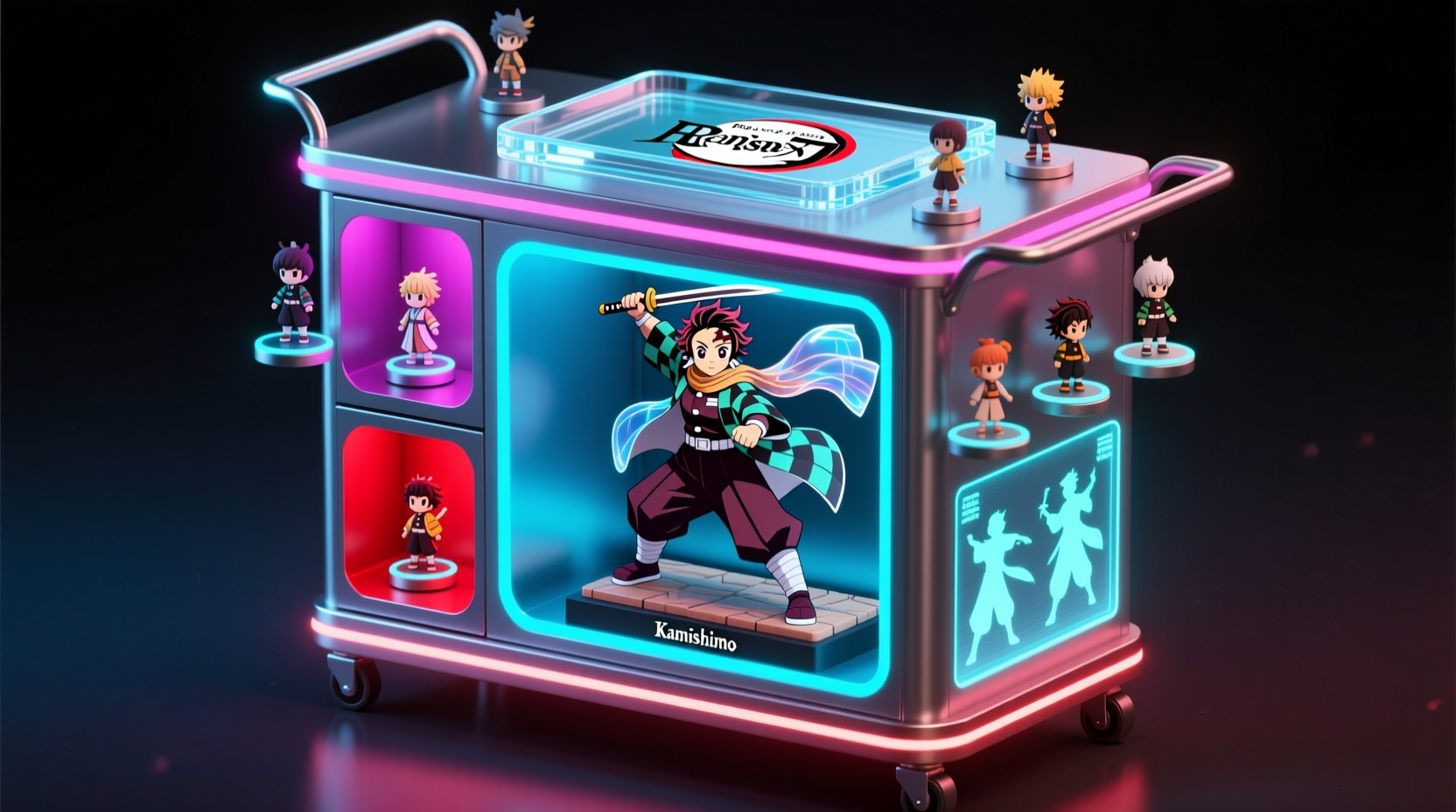
Selecting the right anime isn’t about popularity—it’s about alignment between the series’ core motifs and your space, lifestyle, and social rhythm. A high-energy shonen like *Demon Slayer* demands bold color blocking, dynamic placement, and spirited cocktails; a slow-burn drama like *March Comes in Like a Lion* calls for muted palettes, tactile textures, and contemplative low-ABV drinks. Avoid franchises with overly complex lore or fragmented aesthetics unless you plan to focus on a single season, arc, or character (e.g., *K-On!*’s summer festival arc rather than the entire series).
Begin with three questions:
- What emotion does this anime consistently evoke for me? (Nostalgia? Defiance? Serenity?)
- Which visual elements recur meaningfully—not just as background, but as symbolic shorthand? (e.g., cherry blossoms in *Your Name*, red strings in *Fruits Basket*, ink-wash gradients in *Mononoke*)
- How do I want guests to interact with the theme? As passive observers? As co-participants in a ritual? As storytellers themselves?
2. Build the Cart’s Structural Identity: Form, Material & Scale
Your base cart is the silent protagonist. Its physical presence must support, not compete with, the anime theme. Avoid generic “rustic wood” or “industrial metal” carts unless those materials appear authentically within the source—e.g., the warm walnut shelves in *Laid-Back Camp*’s mountain cabin, or the brushed steel countertops in *Ghost in the Shell*’s Section 9 briefing room.
Match material to motif:
| Anime Theme | Recommended Cart Material | Why It Works | Practical Consideration |
|---|---|---|---|
| *Studio Ghibli* (e.g., *Spirited Away*) | Light ash or whitewashed oak with hand-rubbed beeswax finish | Echoes natural wood grain seen in bathhouse interiors and rural settings; feels organic, aged, and gentle | Avoid lacquered finishes—they read as “new” and sterile, clashing with Ghibli’s lived-in warmth |
| *Cyberpunk* (e.g., *Akira*, *Psycho-Pass*) | Matte black powder-coated steel with integrated LED strip housing | Reflects urban infrastructure, surveillance aesthetics, and controlled light sources common in dystopian cityscapes | Ensure LEDs are dimmable and cool-white (5000K–6500K) to avoid “party lights” effect |
| *Historical Drama* (e.g., *Rurouni Kenshin*, *Hakuoki*) | Blackened iron frame with reclaimed tatami-textured laminate shelves | Evokes Edo-period craftsmanship and restrained elegance without cultural appropriation | Use non-slip silicone pads under bottles—tatami texture alone won’t prevent sliding |
Scale matters critically. A compact two-tier cart works for intimate themes (*Anohana*: quiet, personal remembrance); a wide, open three-tier model suits ensemble-driven worlds (*Haikyu!!*). Always measure your intended location—including clearance for drawer or shelf access—and subtract 3 inches from total height to allow for garnish stands or hanging origami.
3. Curate Liquids & Glassware as Character Embodiments
This is where fandom meets function. Spirits, mixers, and glassware should reflect personality traits—not just names. Don’t label a bottle “Lelouch” because he’s your favorite; instead, choose a smoky mezcal aged in charred oak barrels to mirror his layered deception and moral ambiguity. Select glassware that echoes silhouette, movement, or status: tall, fluted coupes for *Attack on Titan*’s Survey Corps (evoking verticality and precision), short, thick-bottomed rocks glasses for *One Punch Man*’s Saitama (unassuming strength), or delicate stemmed glasses with gold-rimmed etching for *The Tale of the Princess Kaguya* (ephemeral beauty).
- Spirit Selection: Prioritize regional authenticity when possible. Japanese whisky for *Tokyo Ghoul*, French vermouth for *Baccano!*’s Prohibition-era New York, Korean soju for *Sweet Home*’s Seoul setting.
- Mixer Integrity: Skip neon syrups. Use house-made yuzu cordial for *K-On!*, matcha-infused simple syrup for *Demon Slayer*, or roasted barley tea for *Shirobako*’s studio realism.
- Garnish Language: Garnishes aren’t decoration—they’re punctuation. A single shiso leaf for *Natsume’s Book of Friends* (healing, quiet growth); pickled ginger for *Jujutsu Kaisen* (sharp, protective, slightly dangerous); dried chrysanthemum for *Kiki’s Delivery Service* (resilience, seasonal change).
“Themed bars succeed when every element reinforces a single emotional truth—not when they check off references. A ‘Naruto’ cart shouldn’t shout ‘ramen’; it should embody perseverance through repetition—like serving the same perfect umeboshi-shochu highball, batch after batch, until the guest tastes resolve.” — Kenji Tanaka, Tokyo-based bar designer and anime archivist
4. Layer Meaningful Décor Without Clutter
Authenticity emerges in restraint. Place only objects that serve dual purposes: utility and symbolism. A *My Hero Academia* cart doesn’t need 12 hero action figures—it needs one custom-printed coaster set showing Quirk evolution timelines (usable, informative, narrative-rich), a matte-black bottle opener shaped like All Might’s emblem (functional, iconic), and a small ceramic dish holding wasabi peas labeled “Quirk Training Snacks” (playful, edible, on-brand).
Realistic case study: Maya R., Osaka-based graphic designer, built a *Violet Evergarden* cart over eight weeks. She began with Violet’s signature lavender palette, then sourced:
- A vintage brass letter scale (to weigh tea leaves—echoing Violet’s work as an Auto Memory Doll)
- Hand-calligraphed recipe cards in her own script (mirroring Violet’s evolving handwriting throughout the series)
- A single pressed violet in resin embedded into the cart’s lower shelf edge (subtle, permanent, botanical)
- No figurines, no posters, no anime-font labels—yet guests consistently identify the theme before she speaks.
The key insight? Emotional fidelity beats visual density. When décor requires explanation, it fails. When it invites recognition, it resonates.
5. Finalize with a Step-by-Step Launch Protocol
Building the cart is only half the process. Launching it thoughtfully ensures longevity and engagement. Follow this timeline:
- Week 1 – Research & Audit: Re-watch 2–3 pivotal episodes. Document color codes (use eyedropper tools on paused frames), recurring objects (e.g., the pocket watch in *Steins;Gate*, the umbrella in *Your Name*), and ambient sounds (rain, temple bells, city hum). Cross-reference with your existing bar inventory.
- Week 2 – Source & Modify: Order custom items (engraved glassware, printed coasters, branded stirrers). Repurpose existing items: dye linen napkins using natural indigo for *Gintama*, re-label soda siphons with era-appropriate typography for *Golden Kamuy*.
- Week 3 – Layout & Lighting Test: Arrange all items on the cart at noon and 8 p.m. Observe how shadows fall across labels and textures. Adjust LED placement or add a small gooseneck lamp if critical details vanish in low light.
- Week 4 – Dry Run & Ritual Design: Host one person. Serve one drink using only your themed components. Note friction points: Is the sake pourer too narrow? Does the *Demon Slayer* charcoal-filtered water pitcher sweat excessively? Refine.
- Launch Day: Introduce the cart with a single sentence that names the emotional core—not the anime title. Example: “This cart holds what *Mushishi* taught me: stillness has its own kind of power.” Then let the details speak.
FAQ
Can I blend multiple anime themes on one cart?
Only if their tonal and aesthetic languages converge meaningfully—e.g., *Cowboy Bebop* and *Samurai Champloo* share jazz, urban grit, and historical fusion. Avoid forced mashups (*Naruto* + *Neon Genesis Evangelion*) unless you’re intentionally exploring psychological contrast (e.g., “Willpower vs. Existential Dread”). Even then, designate zones: upper shelf = shinobi discipline, lower shelf = NERV-level introspection.
How do I handle licensed merchandise ethically?
Use officially licensed items sparingly and contextually—never as primary décor. A Bandai-produced *Demon Slayer* sake cup is acceptable; plastering the cart with unlicensed print-on-demand posters is not. Better: commission original artwork from indie artists inspired by the series (with credit), or create your own linocut prints referencing key motifs.
What if my favorite anime has minimal food/drink scenes?
Look deeper. *Serial Experiments Lain* features data streams—translate that into a digital cocktail menu on a tablet mounted beside the cart. *Hellsing* centers on blood and legacy—opt for deep-red pomegranate liqueur, black glassware, and a leather-bound ledger for guest signatures. Absence of culinary cues is an invitation to interpret metaphorically.
Conclusion
An anime-themed bar cart is never really about the anime. It’s about the version of yourself that the story helped shape—the resilience you borrowed from Levi, the curiosity you mirrored in Shoyo Hinata, the quiet courage you witnessed in Violet. Every bottle placed, every coaster aligned, every light adjusted is an act of translation: turning emotional resonance into tangible hospitality. You don’t need rare collectibles or a custom-built cart to begin. Start with one glass that reminds you of a character’s gaze, one spirit that echoes their journey, one object that carries their weight. Build slowly. Edit ruthlessly. Let the theme deepen with time—not as a costume, but as a compass.
💬 Your cart tells a story before the first pour. Share yours—what anime shaped your design, and what detail surprised you most? Drop your experience in the comments. Let’s build a library of authentic, heartfelt inspiration—together.