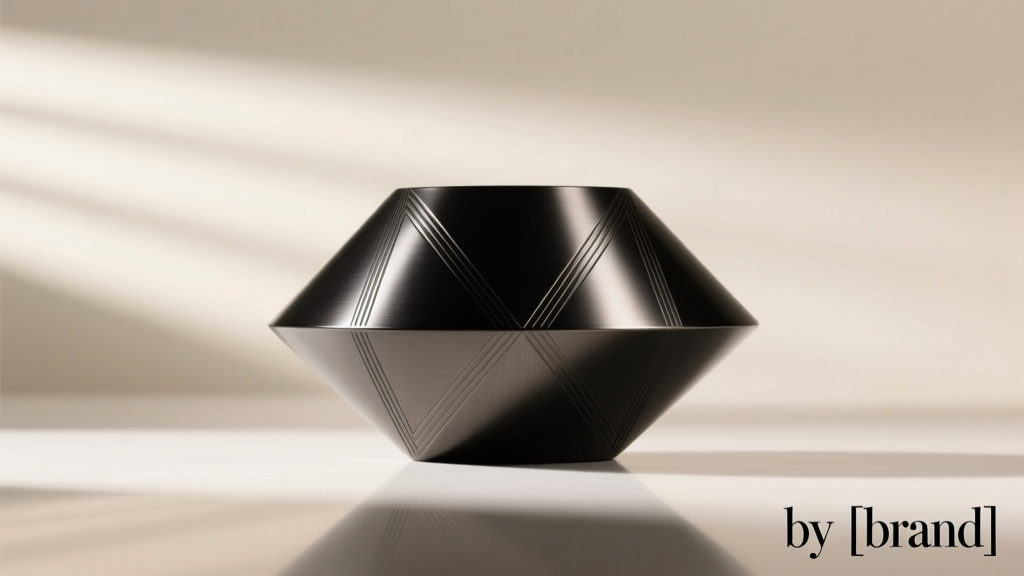
Large plants—think fiddle-leaf figs, olive trees, mature monstera deliciosas, or potted citrus—don’t just add presence; they anchor a space. But their impact depends entirely on the pot that holds them. A poorly chosen giant pot can undermine root health, compromise structural integrity, clash with interior design, or even become a safety hazard outdoors. Yet most shoppers default to size alone: “It fits the plant.” That’s where mistakes begin. The right giant pot is less about volume and more about symbiosis—between material science and horticulture, between visual weight and physical stability, between immediate appeal and decade-long performance. This guide distills field-tested insights from nursery managers, landscape architects, and indoor plant curators to help you choose not just *a* large pot—but the *best* one for your plant, your space, and your lifestyle.
Why Size Alone Is a Dangerous Starting Point
“Giant” is relative—and misleading. A 24-inch-diameter pot may hold 35 gallons of soil, but if it lacks proper drainage, its roots drown. A 30-inch-tall fiberglass planter may look imposing in a sunroom, yet crack within two winters if rated only for indoor use. Oversized pots also magnify small flaws: poor glaze quality leads to rapid staining; thin walls buckle under saturated soil weight; mismatched expansion coefficients cause concrete to spall in freeze-thaw cycles. Worse, many retailers label pots by *external* dimensions—not internal volume or root zone depth—leading buyers to assume capacity that doesn’t exist. A true giant pot must support mature root architecture: deep enough for vertical taproots (like bay or dwarf lemon), wide enough for lateral spread (e.g., rubber trees), and stable enough to resist toppling when wind or accidental contact shifts its center of gravity.
Tip: Always check the pot’s internal diameter and depth—not just the outer measurements. For trees and shrubs over 6 feet tall, prioritize depth: minimum 18 inches for root anchorage and thermal buffering.Material Breakdown: Performance, Not Just Aesthetics
No single material dominates all scenarios. Each excels under specific conditions—and fails dramatically outside them. Below is a comparison grounded in real-world longevity data from commercial nurseries and municipal horticultural programs (2019–2023).
| Material | Best For | Lifespan (Indoor) | Lifespan (Outdoor) | Critical Limitation |
|---|---|---|---|---|
| Fiberglass-reinforced polymer (FRP) | High-traffic interiors, rooftop gardens, coastal zones | 15+ years12–15 years (UV-stabilized grade only) | Non-UV-grade yellows and becomes brittle within 2 seasons | |
| Glazed ceramic (stoneware, >1200°C fired) | Living rooms, conservatories, shaded patios | 20+ years | 5–7 years (if unglazed base exposed to frost) | Frost-susceptible unless fully vitrified and foot-rimmed |
| Fiberstone (concrete + cellulose fiber) | Entryways, courtyards, semi-shaded decks | 10–12 years | 8–10 years (with proper sealing) | Unsealed surfaces absorb water → efflorescence & spalling |
| Recycled HDPE plastic | Nurseries, rental properties, high-moisture basements | 10–15 years | 7–10 years (color fade after 3–4 yrs UV exposure) | Lacks thermal mass → soil temps swing sharply, stressing roots |
| Cast aluminum (powder-coated) | Modern balconies, poolside, commercial lobbies | 20+ years | 15+ years (salt-resistant coating required near ocean) | Conductive—can overheat soil in direct summer sun without insulation layer |
Note the recurring theme: outdoor durability hinges less on strength than on *environmental response*. A $400 cast-aluminum pot lasts longer than a $250 ceramic one in Chicago winters—not because it’s “better,” but because aluminum expands/contracts at rates compatible with freeze-thaw stress, while ceramic microfractures silently beneath glaze.
Drainage & Root Health: The Non-Negotiable Engineering Requirement
For large plants, drainage isn’t about holes—it’s about hydraulic efficiency. A single 2-inch hole in a 30-gallon pot creates laminar flow resistance that traps perched water in the bottom third of the soil column. Over time, this anaerobic zone fosters root rot pathogens like Phytophthora and depletes oxygen critical for mycorrhizal fungi. Professional growers use three-tiered drainage systems:
- Primary perforations: Minimum three 1.5-inch diameter holes, spaced evenly around the pot’s base perimeter—not clustered centrally.
- Secondary reservoir: A 2–3 inch void beneath the root ball, filled with coarse perlite or lava rock, separated by a geotextile fabric liner.
- Tertiary wicking: A 1/4-inch channel cut into the inner wall, running vertically from reservoir to soil surface, allowing capillary moisture redistribution during dry spells.
This system prevents both drought stress and saturation—critical for slow-growing specimens like ponytail palms or cycads, whose roots cannot recover from repeated wet/dry cycling.
A Real-World Case Study: The Balcony Olive Tree Rescue
In Portland, OR, landscape designer Lena Torres received an emergency call from a client whose 8-year-old ‘Arbequina’ olive tree—planted in a 28-inch terra-cotta pot—had dropped 60% of its leaves over six weeks. Visual inspection revealed no pests or fungal spots. Soil moisture readings showed consistent 85% saturation at 12 inches depth, despite surface dryness. The pot? Beautiful, hand-thrown, but with only one 1-inch drainage hole and no saucer gap—water pooled against the base, wicking upward via capillary action. Lena replaced it with a 30-inch FRP pot featuring triple 1.75-inch drainage ports, a 2.5-inch gravel reservoir, and a raised pedestal base allowing airflow underneath. Within 11 days, new leaf buds emerged. The client kept the old pot as a decorative planter—empty—for trailing ivy. “The pot wasn’t wrong for aesthetics,” Torres notes. “It was catastrophically wrong for hydrology.”
Weight, Mobility, and Structural Safety
A filled 36-inch-diameter pot weighs between 250–400 lbs—depending on soil mix, moisture, and material. That changes everything: floor load capacity, balcony code compliance, and daily usability. Concrete fiberstone pots often exceed 300 lbs empty; moving one requires two people and furniture sliders. Aluminum and FRP average 65–95 lbs empty—making seasonal repositioning feasible. But weight isn’t just about lifting. It’s about physics: a top-heavy pot with narrow base diameter risks tipping. The industry safety standard is a base-to-height ratio of at least 1:1.2. For example, a 36-inch-tall pot needs a minimum 30-inch base width. Many “slim-profile” giants violate this—especially tapered ceramic designs marketed for tight corners.
“The most common cause of potted tree failure isn’t disease or drought—it’s mechanical instability. A pot that rocks in wind stresses the root collar, creating entry points for pathogens and disrupting vascular flow.” — Dr. Aris Thorne, Urban Arborist & Author of Container-Grown Trees: Science and Practice
Your 5-Step Selection Checklist
Before purchasing any giant pot, verify these five criteria. Skip one, and risk compromising plant health or safety.
- ✅ Drainage verification: Confirm at least three primary drainage holes (≥1.5” diameter), plus visible evidence of a reservoir layer or raised base design.
- ✅ Material certification: For outdoor use, require written documentation of UV stabilization (FRP), frost resistance (ceramic), or salt corrosion rating (aluminum).
- ✅ Weight-to-mobility match: If you’ll move the pot seasonally, ensure empty weight is ≤100 lbs—or confirm built-in casters/cradle compatibility.
- ✅ Base stability ratio: Measure base diameter ÷ height. Accept only ratios ≥0.83 (i.e., 1:1.2). Reject anything narrower.
- ✅ Root-zone depth: Internal depth must be ≥18 inches for trees/shrubs; ≥24 inches for fruiting specimens like dwarf citrus or figs.
Indoor vs. Outdoor Priorities: Where Your Focus Should Shift
Indoor giant pots demand different trade-offs than outdoor ones. Indoors, thermal mass matters less than humidity control and floor protection. Unsealed fiberstone absorbs ambient moisture, then slowly releases it—ideal for tropicals but disastrous for hardwood floors. Outdoors, UV degradation and freeze-thaw resilience dominate. Here’s how priorities diverge:
Tip: For indoor use, prioritize fully sealed materials (glazed ceramic, coated FRP, powder-coated aluminum) and always use a waterproof saucer with overflow drainage routed to a floor drain or exterior.Outdoors, avoid anything porous unless explicitly rated for your USDA hardiness zone’s freeze-thaw cycles. Also, skip dark-colored pots in full sun—they absorb infrared radiation, heating root zones 12–18°F above ambient air temperature. Light beige, sandstone, or white finishes keep soil temperatures within safe ranges for most species.
FAQ
Can I reuse a giant pot that previously held a diseased plant?
Yes—but only after thorough sterilization. Soak the pot for 30 minutes in a solution of 1 part household bleach to 9 parts water, then scrub all interior surfaces with a stiff brush. Rinse thoroughly and air-dry for 48 hours. Never reuse untreated clay or unglazed ceramic—pathogens embed in microscopic pores.
Do self-watering giant pots work for large plants?
Rarely. Most commercial self-watering systems are engineered for pots under 14 inches. Scaling them up creates uneven moisture distribution: the upper root zone dries while the lower stays saturated. For giants, use a wicking reservoir (as described earlier) combined with moisture-monitoring probes—not automated timers.
Is it okay to plant directly into decorative outer pots without nursery liners?
No. Always use a grower’s pot (nursery-grade plastic or fabric) inside the decorative outer pot. This allows precise watering control, root inspection, and seasonal repotting without disturbing the outer vessel. Decorative pots rarely have adequate drainage—and removing a root-bound plant from an unlined giant pot often destroys both plant and container.
Conclusion: Invest in the Vessel, Not Just the View
A giant plant pot is infrastructure—not decoration. It regulates temperature, governs water, anchors structure, and silently influences every physiological process in the plant it holds. Choosing wisely means looking past glossy marketing photos and asking harder questions: What does the manufacturer’s warranty cover? How does this material behave after three winters or five summers? Does its engineering support root biology—or merely hold soil? The best giant pots don’t shout for attention. They recede into the background while enabling extraordinary growth—deep roots, dense foliage, resilient branches. They’re chosen not for a single season, but for the lifetime of the plant. So measure twice, drain thrice, and select once. Your fiddle-leaf fig, your olive tree, your towering bird-of-paradise—they’re counting on it.
💬 Your turn: Share which giant pot material has worked best for your largest indoor or outdoor plant—and what surprised you most about its long-term performance. Real experience helps us all grow smarter.








