
Lower back pain affects millions of office workers, especially those who spend long hours seated. As remote work becomes more common, the demand for effective seating solutions has surged. Two popular options—ergonomic office chairs and kneeling chairs—are frequently recommended for reducing spinal strain. But which one truly offers superior support for chronic or recurring lower back pain? The answer depends on individual needs, posture habits, and how each chair influences spinal alignment.
While both designs aim to improve sitting ergonomics, they operate on fundamentally different principles. Understanding these differences is crucial for making an informed decision that supports long-term spinal health.
How Sitting Affects the Lower Back
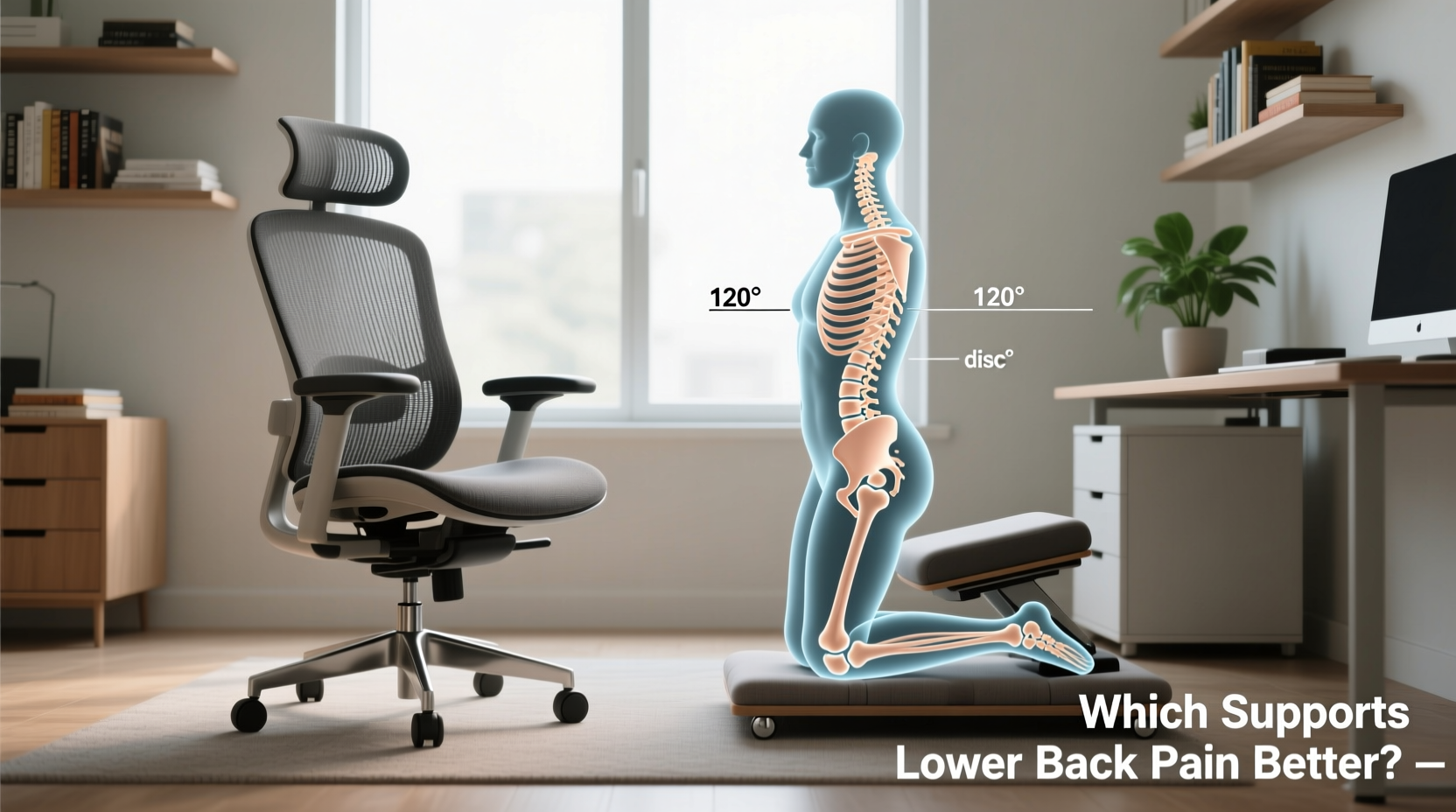
Prolonged sitting, particularly in poorly designed chairs, places significant stress on the lumbar spine. When seated, the natural inward curve of the lower back (lumbar lordosis) tends to flatten, especially if there's no proper support. This flattening increases pressure on intervertebral discs, tightens hip flexors, and weakens core stabilizing muscles—all contributing factors to lower back pain.
The key to mitigating this strain lies in maintaining a neutral spine position. A neutral spine preserves the natural curves of the cervical, thoracic, and lumbar regions, distributing weight evenly and minimizing disc compression. Both ergonomic chairs and kneeling chairs attempt to facilitate this alignment, but through divergent approaches.
“Maintaining lumbar support while seated is not just about comfort—it’s a critical factor in preventing degenerative disc changes over time.” — Dr. Alan Weiss, Physical Medicine & Rehabilitation Specialist
Ergonomic Office Chairs: Design and Support Features
Ergonomic office chairs are engineered to mimic the body’s natural posture while allowing dynamic movement. Unlike standard chairs, they include adjustable components tailored to individual anatomy:
- Lumbar support: Built-in or adjustable padding that fits into the lower back’s curve.
- Seat depth and height adjustment: Ensures feet rest flat on the floor with knees at 90 degrees.
- Armrests: Reduce shoulder tension by supporting forearm weight.
- Reclining mechanism: Allows slight backward tilt (100°–110°), reducing disc pressure.
- Synchro-tilt or knee-tilt mechanisms: Promote pelvic mobility while keeping feet grounded.
High-end models often feature mesh backs for breathability and dynamic lumbar systems that move with the user. These chairs support passive sitting—meaning users can remain comfortable without constant postural adjustments—making them ideal for full-day use.
Tip: Adjust your chair so the lumbar pad aligns precisely with the small of your back—not higher or lower—for optimal spinal support.Kneeling Chairs: Posture Mechanics and Benefits
Kneeling chairs shift the center of gravity forward by elevating the seat and inclining it slightly. Users sit with their weight distributed between the buttocks and shins, supported by padded knee rests. This configuration opens the hip angle to around 135 degrees, encouraging a more upright torso and reducing lumbar flexion.
By tilting the pelvis forward, kneeling chairs naturally promote a slight anterior pelvic tilt, which helps maintain the lumbar curve. This design reduces reliance on backrests and encourages active sitting—the engagement of core muscles to stabilize posture.
Proponents argue that kneeling chairs reduce disc pressure by up to 40% compared to conventional seating. However, they require greater muscular endurance and may not be suitable for extended periods without conditioning.
They’re particularly favored by individuals seeking to break sedentary habits or transition toward standing-desk alternatives. Still, their effectiveness varies widely based on user anatomy and tolerance for forward-leaning positions.
Who Benefits Most from Kneeling Chairs?
Kneeling chairs tend to work best for people with:
- Mild lower back pain caused by slouching or poor lumbar support
- Strong core and leg muscles capable of sustaining active sitting
- A need for short-to-moderate duration seating (e.g., 30–60 minutes per session)
However, individuals with knee issues, circulatory problems, or limited hip flexibility should approach with caution.
Comparative Analysis: Ergonomic Chair vs Kneeling Chair
| Feature | Ergonomic Office Chair | Kneeling Chair |
|---|---|---|
| Lumbar Support | Direct, adjustable support via built-in mechanisms | Indirect; relies on pelvic positioning to maintain curve |
| Postural Engagement | Passive (supported sitting) | Active (core and glute engagement required) |
| Duration Tolerance | 8+ hours with proper setup | Typically 30–90 minutes before discomfort sets in |
| Adjustability | High (seat height, depth, armrests, tilt tension) | Low to moderate (limited adjustments) |
| Ideal For | Full-time desk work, chronic lower back pain | Short sessions, posture training, transitional use |
| Drawbacks | Can encourage passive slumping if misadjusted | Potential knee pressure, reduced circulation, learning curve |
Real-World Example: Sarah’s Experience with Chronic Back Pain
Sarah, a 38-year-old graphic designer, suffered from persistent lower back pain after switching to remote work. Her initial solution was a $300 ergonomic chair with memory foam lumbar support. While helpful, she still experienced stiffness after six-hour stretches.
On her physiotherapist’s recommendation, she introduced a kneeling chair for two-hour blocks during creative tasks. She noticed immediate improvements in upper back alignment and reduced slouching. However, after 75 minutes, knee discomfort forced her to switch back.
Her solution? Alternating every 60–90 minutes between the ergonomic chair and kneeling chair. Over three months, her lower back pain decreased significantly, and her core strength improved. This hybrid approach allowed her to benefit from both passive support and active sitting.
Tip: Use a kneeling chair in short intervals to train posture, then return to an ergonomic chair for sustained support.Step-by-Step Guide to Choosing the Right Chair
- Assess your pain pattern: Is it dull and constant (likely due to poor support), or sharp and activity-related (possibly muscle strain)? Chronic, diffuse lower back pain typically responds better to structured lumbar support.
- Evaluate your daily routine: Do you sit for more than four continuous hours? If yes, prioritize adjustability and comfort—ergonomic chairs are better suited for long durations.
- Test your tolerance for active sitting: Try sitting on a firm cushion with hips elevated slightly above knees. Can you maintain this for 30 minutes without knee or balance issues? If not, a kneeling chair may not be sustainable.
- Consult a healthcare provider: Physical therapists or occupational health specialists can assess your posture and recommend chair types based on spinal imaging or movement analysis.
- Try before you buy: Visit showrooms or use home-trial programs. Spend at least 45 minutes in each chair type under real working conditions.
- Consider combining both: Use a kneeling chair for focused, shorter tasks (e.g., writing, calls), and an ergonomic chair for prolonged computer work.
Expert Recommendations and Clinical Insights
According to research published in *Applied Ergonomics*, dynamic sitting—where posture shifts subtly throughout the day—leads to less fatigue and lower spinal loading. Neither chair alone guarantees relief; rather, movement variability is key.
“The best chair is the one you don’t stay in too long. Whether it’s ergonomic or kneeling, regular posture changes and micro-breaks are essential.” — Dr. Lena Patel, Occupational Therapist and Spine Health Researcher
Clinical guidelines from the American College of Physicians emphasize non-pharmacological interventions for nonspecific low back pain, including ergonomic modifications. They specifically endorse adjustable seating with lumbar support as a first-line strategy.
In contrast, kneeling chairs are rarely prescribed outright but are sometimes recommended as adjunct tools for posture re-education—particularly for patients with forward head posture or kyphotic slumping.
Frequently Asked Questions
Can a kneeling chair fix my lower back pain permanently?
No single chair “fixes” back pain permanently. Kneeling chairs may help correct postural imbalances over time, but lasting improvement requires a combination of proper seating, core strengthening, and movement breaks. Relying solely on a chair without addressing lifestyle factors limits long-term success.
Are ergonomic chairs worth the high price?
For individuals spending more than four hours daily at a desk, investing $300–$600 in a quality ergonomic chair often pays off in reduced pain and increased productivity. Look for certifications like BIFMA or GREENGUARD, and prioritize adjustability over aesthetics. Cheaper models may lack durable lumbar mechanisms or proper weight distribution.
Is it safe to use a kneeling chair all day?
No. Prolonged use of a kneeling chair can lead to excessive pressure on the patella, reduced blood flow to the lower legs, and fatigue in the quadriceps. Most experts advise limiting continuous use to 60–90 minutes and alternating with other seating or standing positions.
Final Checklist Before You Decide
- ✅ Have I ruled out underlying medical conditions with a doctor?
- ✅ Can I trial both chair types before purchasing?
- ✅ Does the ergonomic chair offer adjustable lumbar support at the correct height?
- ✅ Does the kneeling chair allow me to sit with thighs angled at 60–70 degrees?
- ✅ Am I prepared to incorporate movement breaks regardless of chair choice?
- ✅ Will I combine sitting positions throughout the day for optimal spinal health?
Conclusion: Prioritize Support, Movement, and Personal Fit
When it comes to supporting lower back pain, ergonomic office chairs generally offer more consistent, long-term relief due to their comprehensive lumbar support and adaptability. They are designed for extended use and cater to a wide range of body types and work demands.
Kneeling chairs, while beneficial for promoting active sitting and improving posture awareness, serve best as supplementary tools rather than primary seating. Their limitations in comfort and duration make them less practical for full-time office use.
The most effective strategy isn’t choosing one chair over the other—it’s integrating both into a dynamic workspace. Pair a high-quality ergonomic chair with periodic use of a kneeling chair, standing breaks, and core-strengthening exercises. Movement remains the true antidote to sedentary pain.
🚀 Ready to transform your workspace? Start by adjusting your current chair for proper lumbar alignment—and consider testing a kneeling chair for short intervals. Share your experience or ask questions in the comments below to help others find lasting relief.








