
When you step out of a warm shower, few things feel better than wrapping yourself in a plush, soft towel. But is that luxurious thickness always better? Or can a lighter, thinner towel offer just as much — or even more — drying comfort? The debate between thick and thin bath towels often centers on one key metric: weight. Measured in grams per square meter (GSM), towel weight is frequently used as a proxy for quality. Yet, real-world performance depends on far more than numbers alone. From absorbency and drying speed to maintenance and longevity, the choice between thick and thin involves trade-offs that matter daily.
Understanding Towel Weight and GSM
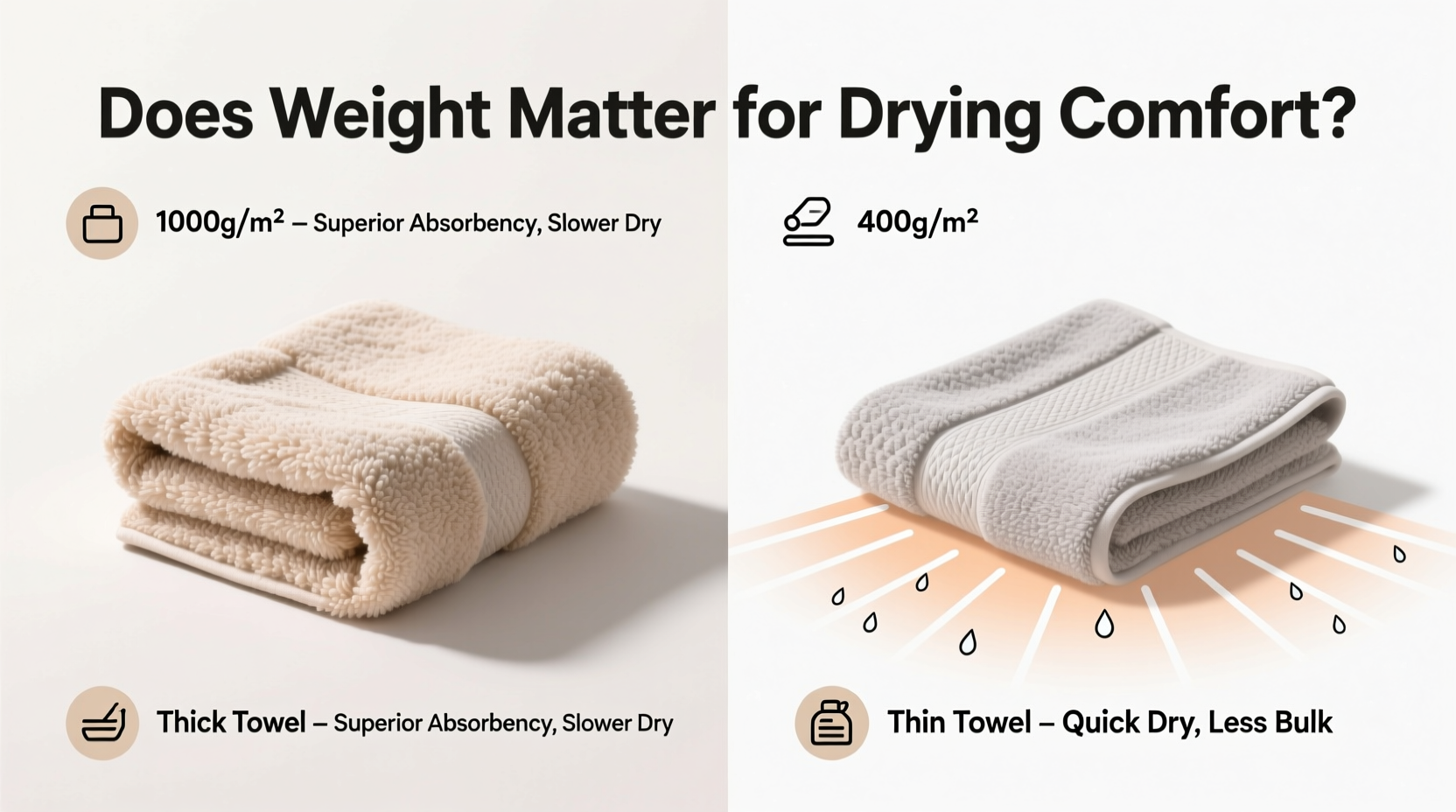
Towel weight is typically measured in GSM (grams per square meter). This number reflects the density of the fabric and helps categorize towels into light, medium, and heavy ranges:
| GSM Range | Category | Typical Use |
|---|---|---|
| 300–400 | Lightweight | Beach, travel, gym |
| 400–600 | Medium-weight | Daily home use |
| 600–900+ | Heavyweight | Luxury hotels, spa settings |
Higher GSM usually means more cotton, greater thickness, and a softer hand feel. However, this doesn’t automatically translate to better drying performance. A 700 GSM towel may feel sumptuous, but it could take twice as long to dry — both on your body and on the laundry line. Conversely, a 400 GSM towel might wick moisture quickly and dry fast, yet feel less indulgent at first touch.
Tip: Don’t judge a towel solely by its weight. Consider fiber quality, weave type, and care requirements for a complete picture of performance.Absorbency vs. Drying Time: The Core Trade-Off
The primary function of a bath towel is to absorb water efficiently. Thicker towels, with their higher pile and denser loops, tend to hold more moisture. This makes them ideal for users who want to feel fully enveloped after a shower. However, this capacity comes at a cost: heavier towels take longer to release that moisture during laundering and air-drying.
Thin towels, especially those made from tightly woven cotton or bamboo blends, often dry faster on the body. They don’t soak up as much water, but they can still be highly effective if the fibers are hydrophilic (water-attracting). Microfiber towels, for instance, are lightweight and extremely quick-drying, making them popular among travelers and athletes.
“Absorbency isn’t just about thickness — it’s about fiber integrity and loop structure. A well-constructed 450 GSM towel can outperform a poorly made 700 GSM one.” — Lena Ruiz, Textile Engineer and Home Goods Consultant
Moreover, repeated washing affects both types differently. Thick towels may lose fluffiness over time if not dried thoroughly, leading to mildew smells. Thin towels, while more durable in frequent wash cycles, can wear down faster if made from lower-grade materials.
Fiber Quality and Weave Matter More Than You Think
Weight alone doesn’t determine comfort. Two towels of identical GSM can perform very differently based on fiber source and construction. Long-staple cotton — such as Egyptian or Pima — produces stronger, softer yarns that resist pilling and retain absorbency. Shorter fibers, even when densely packed, may feel rough and degrade quicker.
Weave type also plays a crucial role:
- Terry Loop: The most common weave, offering high absorbency. Longer loops increase surface area for moisture capture but may snag easily.
- Waffle Weave: Lightweight and fast-drying, ideal for hot climates. Offers moderate absorbency with excellent breathability.
- Velour: Smooth finish with a luxurious feel, but less absorbent due to flattened loops.
- Flat Weave: Minimalist design, dries fastest, increasingly popular in eco-conscious households.
A thin towel made from organic combed cotton in a terry-loop weave may provide superior drying comfort compared to a thick, synthetic-blend towel prone to stiffness and slow evaporation.
Real-World Example: Two Households, Two Preferences
Consider two families with different lifestyles:
The Martinez family lives in a humid coastal region. They prioritize quick-drying textiles to prevent musty odors. They switched from 700 GSM cotton towels to 450 GSM bamboo-cotton blends with waffle weave. Despite initial skepticism about the thinner feel, they found these towels absorbed water efficiently and dried completely within hours — even in damp bathrooms. Their towels now last longer, require fewer washes, and feel fresher.
In contrast, the Thompsons live in a dry, cold climate. They value warmth and plushness after showers. They use 750 GSM Turkish cotton towels with long loops. While these take longer to dry on the rack, their bathroom has excellent ventilation and a heated towel bar. For them, the luxurious feel justifies the extra laundry effort.
This illustrates that context — environment, routine, and personal preference — shapes what “comfort” truly means.
How to Choose Based on Your Lifestyle
Selecting the right towel isn’t about chasing the highest GSM. It’s about matching performance to your daily habits. Follow this checklist to make an informed decision:
Checklist: Choosing Your Ideal Towel- Assess your climate: Humid? Opt for lighter, breathable weaves. Dry and cold? Heavier towels add comfort.
- Consider drying infrastructure: Do you have a dryer, or do towels hang for long periods? Heavy towels need strong airflow.
- Evaluate usage frequency: High-use households benefit from durable, quick-drying options.
- Check fiber content: Prioritize long-staple cotton, bamboo, or certified sustainable blends.
- Test the hand feel: A towel should feel soft without being slippery or overly dense.
- Review care instructions: Some thick towels shrink or harden if washed incorrectly.
FAQ: Common Questions About Towel Thickness
Do heavier towels absorb more water?
Generally, yes — thicker towels with higher GSM can hold more moisture due to increased fiber volume. However, absorption speed and efficiency depend on fiber type and loop structure. A lightweight microfiber towel may pull water off your skin faster than a heavy cotton one.
Are thin towels less durable?
Not necessarily. Durability depends on material quality and weave strength. A well-made 400 GSM towel from long-staple cotton can outlast a cheap, bulky towel prone to pilling and fiber breakdown.
Can I mix thick and thin towels at home?
Absolutely. Many people keep thick towels for primary bathing and thinner ones for guest use, workouts, or beach trips. Layering towel types by function maximizes convenience and longevity.
Step-by-Step Guide to Testing Towel Performance
To find your ideal balance of thickness and comfort, follow this simple evaluation process:
- Wet Test: Soak the towel in water, then lift it. Notice how heavy it feels — this simulates post-shower saturation.
- Dry Speed: Hang it under normal conditions. Check how long it takes to dry completely (thin: 2–4 hours; thick: 8+ hours).
- Skin Feel: Rub it against your forearm. Does it feel soft and grippy, or slippery and stiff?
- Water Release: Press a wet sponge onto the towel. Watch how quickly it pulls moisture away.
- Wash Trial: Launder it once. Does it soften or become rough? Does it shrink or bleed color?
Repeat with different weights and materials to identify what suits your routine best.
Conclusion: Comfort Is Personal — Let Function Guide You
Weight matters — but not in the way most assume. A high GSM towel promises luxury, but only if your lifestyle supports its upkeep. For many, a mid-weight, high-quality towel offers the optimal balance of absorbency, softness, and practicality. Others thrive with ultralight options that dry fast and resist odors. The truth is, drying comfort isn’t dictated by thickness alone. It’s shaped by fiber, weave, environment, and how you live.
💬 What’s your towel preference — thick, thin, or somewhere in between? Share your experience and help others discover what truly works in real life.








