Urine accidents on a mattress are more common than many admit—whether from children, pets, or health-related issues. Left untreated, the odor can linger for months, creating discomfort and embarrassment. More importantly, urine contains uric acid crystals that bond with porous materials like foam and fabric, making standard cleaning ineffective. The key isn’t just masking the smell but breaking down the source at a molecular level. This guide outlines scientifically sound, practical, and accessible strategies to eliminate urine odor permanently while preserving your mattress’s integrity.
Understanding Why Urine Odor Persists
Many people assume that spraying air freshener or wiping with soapy water will resolve the issue. However, urine penetrates deep into the mattress layers, especially in memory foam or inner springs. As it dries, bacteria feed on urea and release ammonia gas, which causes the sharp, pungent smell. Uric acid crystals remain even after the liquid evaporates, reactivating when exposed to humidity.
Cleaning must target both organic residue and microbial growth. Enzymatic cleaners, pH-balanced solutions, and proper drying techniques are essential. Avoid ammonia-based or vinegar-only approaches—they may temporarily reduce odor but fail to break down uric acid and can even set stains deeper.
“Enzymatic cleaners are the gold standard for biological odors because they digest the proteins and crystals at the root of the problem.” — Dr. Lena Peterson, Environmental Microbiologist
Step-by-Step Guide to Eliminate Urine Odor
Immediate action significantly increases success. Follow this timeline-based method for best results:
- Blot Excess Moisture (0–15 minutes): Use clean, absorbent towels to press firmly onto the affected area. Do not rub—this spreads the liquid further.
- Sprinkle Baking Soda (Optional, 15–30 min): Lightly cover the spot with baking soda to absorb surface moisture and initial odor.
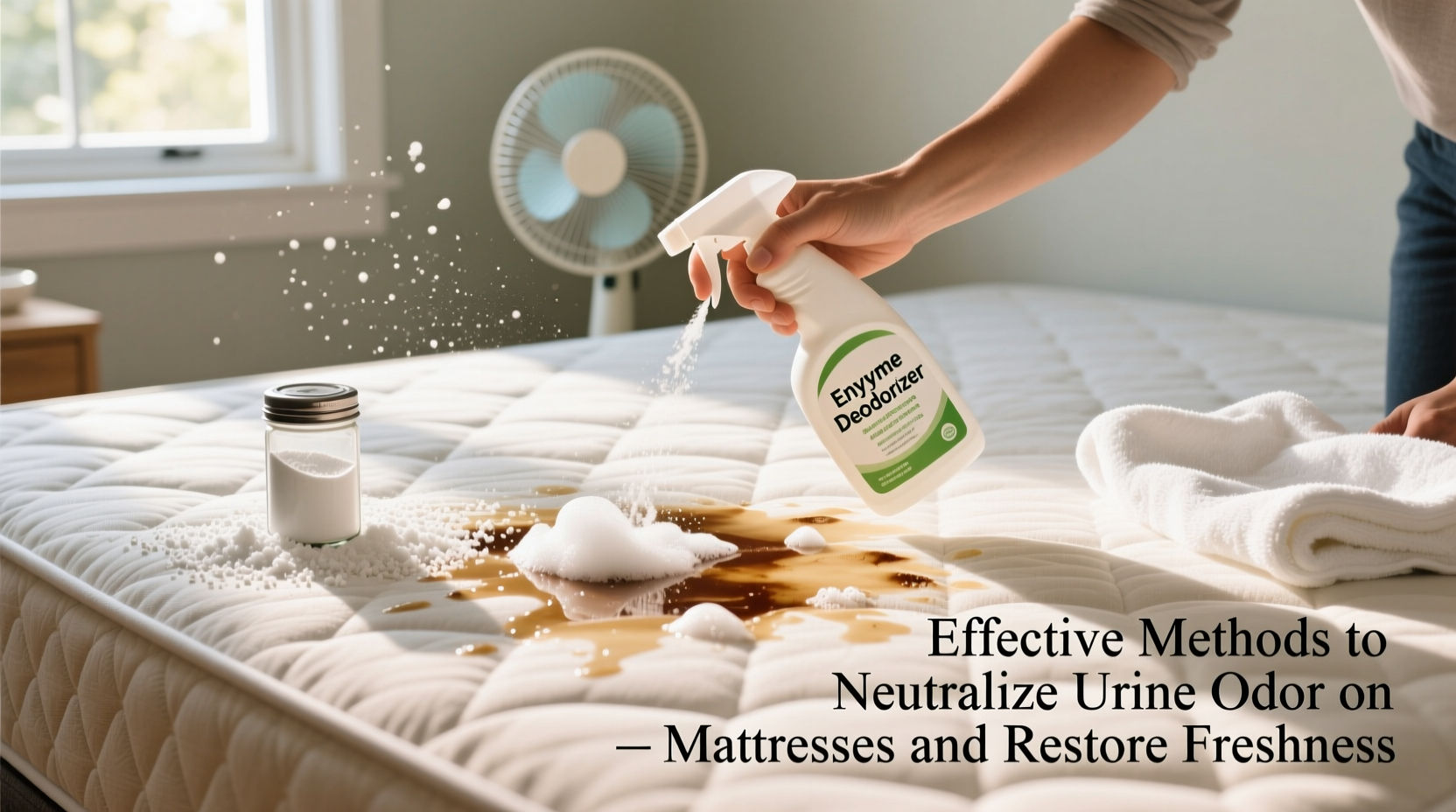
- Apply Enzymatic Cleaner (Day 1): Generously saturate the area with an enzymatic pet odor remover. These contain live bacteria that consume uric acid. Let sit for 8–12 hours.
- Vacuum and Reapply if Needed (Day 2): Vacuum up any residue. If odor persists, repeat application.
- Dry Thoroughly (Critical Step): Use fans or a dehumidifier to accelerate drying. A damp mattress breeds mold and reignites odor.
- Final Deodorizing Layer (After Dry): Sprinkle food-grade diatomaceous earth or activated charcoal powder, leave for 4–6 hours, then vacuum.
Do’s and Don’ts: What Works and What Doesn’t
| Do | Don't |
|---|---|
| Use enzymatic cleaners designed for biological stains | Use bleach or ammonia—these react with urine to produce toxic fumes |
| Blot, don’t scrub, to avoid spreading contamination | Soak the mattress excessively—too much liquid weakens adhesives and foam |
| Dry completely with airflow (fans, open windows) | Put the bedding back before the mattress is fully dry |
| Test cleaners on a hidden corner first | Use scented sprays as a long-term solution—they only mask odor |
| Use a waterproof mattress protector afterward | Expose the mattress to direct sunlight for long periods—UV can degrade foam |
Real-World Example: Resolving a Toddler Accident
A family in Portland discovered their two-year-old had wet the bed multiple times over a weekend before the issue was noticed. The mattress—a high-end hybrid model—developed a persistent ammonia-like smell despite repeated surface wipes with vinegar and dish soap. After consulting a pediatric nurse, they learned that repeated exposure had allowed crystals to embed deeply.
They followed the enzymatic treatment process: blotting, applying a pet-safe enzyme spray (Nature’s Miracle), and drying with box fans for 24 hours. They repeated the process once and finished with a light dusting of activated charcoal. Within 72 hours, the odor was undetectable. They now use a breathable, waterproof protector and report no recurrence after six months.
Alternative Remedies and Their Effectiveness
While commercial enzymatic products lead in efficacy, some natural alternatives can support the process when used correctly:
- Hydrogen Peroxide Solution (3%): Mix 8 oz peroxide, 3 tbsp baking soda, and 1 tsp dish soap. Apply sparingly—it can discolor fabrics. Only use in well-ventilated areas and never mix with vinegar.
- White Vinegar (Diluted): 50/50 vinegar-water mix can help neutralize pH but should be used *before* enzymatic treatment, not after. It does not dissolve uric acid.
- Activated Charcoal: Placed in a cloth bag near the mattress, it passively absorbs lingering volatile compounds during drying.
Homemade solutions lack the stabilized enzymes found in professional products and are less reliable for severe cases. Reserve them for minor incidents or as supplementary steps.
Tip: For older mattresses with chronic odor, consider replacing the topper layer—it's often cheaper than a full replacement and removes contaminated material.Prevention Checklist
Once the odor is gone, prevent recurrence with these proactive measures:
- Install a hypoallergenic, waterproof mattress protector (zippered encasement preferred).
- Wash protectors weekly in hot water (if manufacturer allows).
- Rotate the mattress every 3–6 months to prevent localized wear.
- Use washable, absorbent pads for toddlers or incontinent individuals.
- Inspect the mattress quarterly for early signs of staining or odor.
- Keep indoor humidity below 50% to discourage bacterial growth.
Frequently Asked Questions
Can I save a mattress after multiple urine incidents?
Yes, provided the core structure isn’t compromised. Multiple treatments may be needed, and deep cleaning with enzymatic formulas usually restores freshness. However, if the foam feels brittle or crumbles, replacement is safer.
How long does it take to remove urine smell completely?
With proper treatment, most odors disappear within 24–72 hours. Severe cases may require two to three applications over several days. Drying time is critical—rushing this step leads to failure.
Is it safe to sleep on the mattress during treatment?
No. Avoid sleeping on the mattress until it is completely dry and odor-free. Exposure to damp environments increases allergy and respiratory risks.
Conclusion: Restore Cleanliness and Confidence
Eliminating urine odor from a mattress isn’t about covering up smells—it’s about understanding biology, chemistry, and material care. With the right tools and patience, even stubborn odors can be removed without replacing the entire mattress. The process reinforces the importance of timely intervention, proper products, and thorough drying. Once resolved, preventive habits ensure long-term freshness and hygiene.
💬 Have you successfully tackled a tough mattress odor? Share your story or tips in the comments—your experience could help someone regain comfort and peace of mind.








