
As the holiday season approaches, many homeowners look for smarter ways to manage their Christmas light displays. One of the most popular solutions is using smart plugs to automate on/off schedules. But what if your Christmas lights aren’t modern LED strings with built-in Wi-Fi? What if they’re older incandescent strands passed down from a relative or bought years ago at a department store sale?
The good news: in most cases, yes — smart plugs do work with older Christmas light sets. However, compatibility depends on several key factors including wattage load, plug type, insulation condition, and circuit safety. Understanding these nuances ensures not only automation success but also protects your home from potential electrical hazards.
How Smart Plugs Work with Standard Electrical Devices
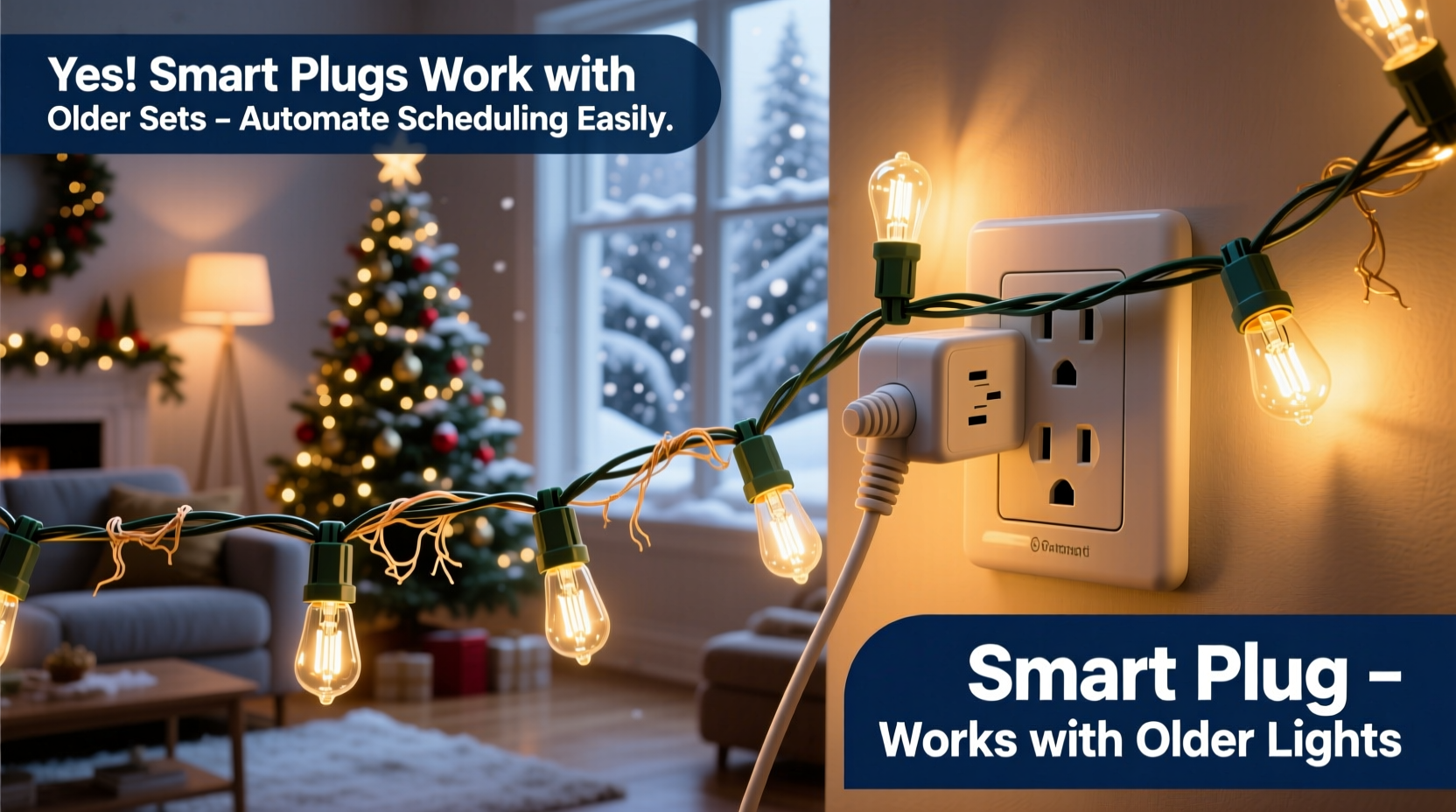
A smart plug is essentially a remotely controlled outlet adapter. You plug it into a standard wall socket, then plug your device — in this case, Christmas lights — into the smart plug. Once connected to your home Wi-Fi network, you can control power delivery through a smartphone app, voice assistant (like Alexa or Google Assistant), or via automated schedules.
Because smart plugs don’t communicate directly with the devices they power — they simply act as remote switches — they are agnostic to the age or technology of the appliance. Whether it’s a 1990s string of C7 incandescents or a brand-new RGBW LED curtain, the smart plug only sees voltage draw and on/off commands.
This makes them ideal candidates for retrofitting older decorations with modern convenience.
Tip: Always check the maximum load rating of your smart plug before connecting older light strings, which may draw more power than newer models.Key Factors That Determine Compatibility
While smart plugs can technically interface with any electrically powered light set, practical compatibility hinges on three main considerations: power consumption, physical connection, and safety integrity.
1. Wattage and Amperage Limits
Most smart plugs have a maximum load capacity between 15–1800 watts (for 120V systems). Older incandescent Christmas lights typically consume significantly more power than modern LEDs. For example:
| Light Type | Bulbs per String | Wattage per String | Compatible with Standard Smart Plug? |
|---|---|---|---|
| Incandescent Mini Lights (C7) | 50 | 175W | Yes |
| Incandescent C9 Bulbs | 25 | 250W | Yes |
| Larger Incandescent Display Set | Multiple Runs | Up to 1,200W | Yes (if under limit) |
| LED Mini Lights | 100 | 4.8W | Yes (well within range) |
| Vintage Screw-In Candelabra | Varies | Over 1,800W (multiple strands) | No – exceeds typical limits |
If you're chaining multiple older light strings together, the cumulative wattage can easily surpass safe thresholds. Always add up the total wattage of all connected lights and compare it to your smart plug’s specification.
“Many people don’t realize that vintage-style lights often use five to ten times more energy than modern equivalents. A single overloaded smart plug could become a fire hazard.” — David Langford, Electrical Safety Consultant, NFPA Contributor
2. Plug and Cord Condition
Older Christmas lights may have deteriorated insulation, cracked sockets, or corroded connectors. These issues increase resistance and heat buildup, especially when combined with continuous switching or prolonged use.
Before plugging any vintage strand into a smart device:
- Inspect each bulb socket for cracks or melting signs.
- Check the cord for brittleness, exposed wires, or kinks.
- Ensure the male plug fits snugly into outlets without wobbling.
- Test continuity with a multimeter if possible.
If the cord feels stiff or makes crackling sounds when bent, retire the set. No automation benefit outweighs the risk of short-circuiting.
3. Grounding and Outlet Type
Many smart plugs require grounded (three-prong) outlets for safe operation. If your older light set has a two-prong ungrounded plug, ensure the smart plug model you choose supports non-grounded connections. Some budget or travel-sized smart plugs are designed specifically for two-prong use.
Additionally, avoid using extension cords rated below the total load. Never daisy-chain multiple smart plugs unless each is independently connected to a properly rated wall outlet.
Step-by-Step Setup Guide for Automating Older Lights
Follow this process to safely integrate older Christmas lights with a smart plug system:
- Inventory Your Light Sets: List each string with its label information — voltage, wattage, number of bulbs, and length.
- Calculate Total Load: Add the wattages of all strings you plan to connect to one smart plug. Ensure the sum stays below 80% of the plug’s max rating (e.g., under 1,440W for an 1,800W-rated plug).
- Inspect Cords and Plugs: Discard or repair any damaged sets. Replace frayed ends or loose sockets.
- Select a Compatible Smart Plug: Choose one with sufficient load capacity, Wi-Fi connectivity, scheduling features, and preferably energy monitoring.
- Install the Smart Plug: Plug it into a grounded indoor or outdoor-rated GFCI outlet. Avoid using indoor-only plugs outdoors.
- Connect the Lights: Plug the light string into the smart plug. Do not exceed recommended chain lengths.
- Download the App: Install the manufacturer’s app (e.g., Kasa, Wemo, TP-Link, Amazon Smart Plug).
- Configure Scheduling: Set daily on/off times (e.g., 5:00 PM to 11:00 PM). Use sunrise/sunset tracking if available.
- Test Remotely: Turn the lights on via phone while away from home to confirm functionality.
- Monitor Temperature: After initial use, feel the smart plug and cord junction after 30 minutes. Warmth is normal; excessive heat indicates overload.
Real Example: Restoring a Family Heirloom Display
Mark T., a homeowner in Vermont, inherited a set of C9 red-and-green incandescent lights from his father, originally used in the 1980s. The lights were functional but required manual setup every year, often forgotten during busy holiday weeks.
He wanted to preserve the nostalgic glow while adding reliability. After inspecting the cords and confirming each string drew 250 watts (five strings = 1,250W total), he selected a heavy-duty smart plug rated for 1,800W. He installed it in an outdoor GFCI outlet protected by a weatherproof cover.
Using the Kasa app, he created a schedule synced to sunset time, ensuring the lights turned on automatically each evening. Over two seasons, the system worked flawlessly — even surviving a winter storm thanks to the surge protection built into the smart plug.
“It’s like having my dad’s tradition running itself,” Mark said. “The lights come on every night without fail, just like he used to do.”
Common Mistakes to Avoid
Even experienced users make errors when combining legacy electronics with smart home tech. Here are pitfalls to watch for:
- Ignoring cumulative wattage: Assuming “one plug, one string” logic doesn’t apply — multiple low-draw strings can still overload a circuit.
- Using indoor smart plugs outdoors: Moisture exposure can damage internal components and create shock risks.
- Scheduling too long: Running incandescent lights for 12+ hours nightly increases heat stress and shortens lifespan.
- Skipping firmware updates: Outdated smart plug firmware may lack security patches or scheduling improvements.
- Daisy-chaining smart plugs: This can confuse networks and trip breakers due to inrush current spikes.
Smart Plug Recommendations for Older Light Sets
Not all smart plugs are created equal. When dealing with higher-wattage vintage lights, consider these models known for durability and accurate load handling:
- Kasa Smart Plug HS110: Supports energy monitoring, 1800W capacity, works with Alexa/Google/HomeKit.
- WeMo Insight Switch: Tracks power usage, sets custom schedules, handles up to 1800W.
- TP-Link Tapo P110: Budget-friendly, reliable performance, compatible with Tapo app and major voice assistants.
- America Energy AE-SP01: Heavy-duty option rated for 15A/1800W, ideal for commercial-grade or vintage displays.
For outdoor use, ensure the smart plug has at least an IP44 weather-resistance rating or is placed inside a covered enclosure.
FAQ
Can I use a smart plug with blinking or twinkle-mode Christmas lights?
Yes. Since the smart plug controls only the main power, any built-in blinking patterns will continue to function normally when powered. Turning off the smart plug stops all activity, including flashing effects.
Will using a smart plug shorten the life of older bulbs?
Not inherently. However, frequent on/off cycling (more than twice daily) may reduce filament lifespan in incandescent bulbs. For older sets, stick to once-daily scheduling rather than multiple brief cycles.
What should I do if the smart plug gets hot?
Immediate action is required. Unplug everything and let the unit cool. Check total wattage and inspect both the light cord and wall outlet. Persistent overheating suggests either a faulty plug, incompatible load, or poor ventilation. Replace or upgrade as needed.
Checklist: Preparing Older Lights for Smart Automation
Use this checklist before deploying your holiday display:
- ✅ Verify total wattage of connected lights is under smart plug limit
- ✅ Inspect all cords, plugs, and sockets for damage
- ✅ Confirm smart plug is suitable for indoor/outdoor use
- ✅ Plug into a GFCI-protected outlet (especially outdoors)
- ✅ Install and test smartphone app controls
- ✅ Program consistent daily schedule based on sunset/sunrise
- ✅ Monitor temperature during first few uses
- ✅ Enable notifications for power outages or disconnections
Conclusion: Bridging Tradition and Technology
There’s deep emotional value in preserving family traditions — including the warm flicker of decades-old Christmas lights. With today’s smart plug technology, you don’t have to choose between nostalgia and convenience. By respecting electrical limits and performing basic safety checks, you can automate vintage light sets safely and reliably.
The result? A seamless holiday experience where cherished decorations turn on right on time, every evening, without lifting a finger. Whether you’re honoring a loved one’s memory or simply tired of forgetting to switch on the porch lights, integrating smart plugs with older Christmas sets is a simple upgrade with lasting impact.
💬 Have an old light set you’ve successfully automated? Share your story, tips, or questions in the comments — help others keep their holiday memories shining bright!