As holiday traditions evolve, many homeowners are swapping tangled strings of Christmas lights for sleek, high-impact projector displays. These systems project dazzling light patterns—snowflakes, reindeer, nativity scenes—onto homes, trees, and lawns with minimal setup. But a growing concern among users is whether these bright, colorful beams invite uninvited guests: insects and local wildlife. The short answer is yes—projector displays can attract some bugs and occasionally draw curious animals—but the risk is generally low and manageable. This article explores the science behind light attraction, identifies which species are most likely to respond, and offers practical strategies to minimize interference while preserving your display’s magic.
How Light Attracts Insects: The Science Behind the Glow
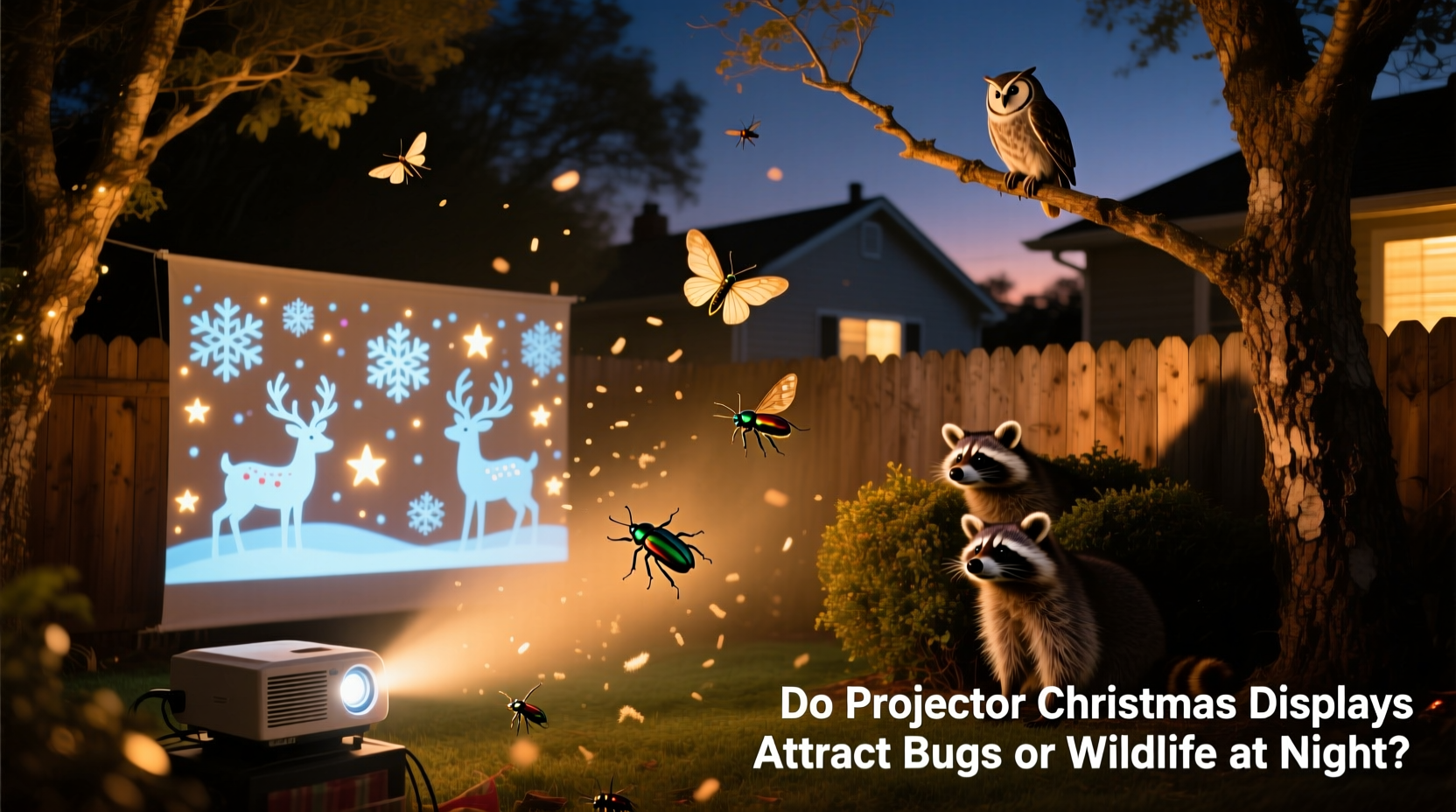
Insects, particularly nocturnal ones like moths, beetles, and flies, are naturally drawn to artificial light sources—a behavior known as positive phototaxis. Unlike humans, many insects navigate using natural light cues such as the moon and stars. Artificial lights disrupt this system, causing disorientation. Projectors emit intense beams that mimic celestial navigation points, leading bugs to circle the source endlessly.
The type of light plays a major role in insect attraction. Short-wavelength light—especially blue and ultraviolet (UV)—is most attractive to bugs. Most modern Christmas projectors use LED technology, which can emit varying levels of blue light depending on color settings. Warm white or red-toned projections tend to be less disruptive to insect behavior.
Tip: Use projectors with warmer color temperatures (below 3000K) to reduce insect attraction during holiday displays.It's also important to note that not all insects react the same way. Mosquitoes, for example, are more influenced by carbon dioxide and body heat than light alone. However, their presence may increase near projectors if the area also hosts people or pets. Meanwhile, moths and flying beetles are far more responsive to visible light emissions.
Wildlife Interaction: Do Animals Respond to Projector Displays?
While insects are the primary responders to light, certain animals may also investigate projector displays, though typically out of curiosity rather than attraction. Nocturnal mammals such as raccoons, opossums, and deer have been observed pausing near illuminated yards, possibly intrigued by the movement and contrast of projected animations.
Birds, especially owls and nighthawks, rarely react unless the projection mimics prey movement—such as fluttering shapes resembling small animals. There is no evidence that projectors lure wildlife into yards in significant numbers, but sudden movements or flickering effects could startle sensitive animals.
“Artificial lighting can subtly alter animal behavior, especially in urban-adjacent areas. While projectors aren’t bait, they do change the visual landscape, which some animals will explore.” — Dr. Lena Torres, Urban Wildlife Ecologist, University of Colorado Boulder
Importantly, projectors don’t provide food, shelter, or water—the key motivators for animal intrusion. Any wildlife presence is usually transient and incidental. Still, repeated nightly illumination might encourage bolder species to treat your yard as part of their routine path, especially in quiet neighborhoods.
Comparing Light Sources: Projectors vs. Traditional Lights
One way to assess the ecological impact of projector displays is to compare them with traditional string lights. Both emit light, but their scale, intensity, and spread differ significantly.
| Feature | Projector Displays | Traditional String Lights |
|---|---|---|
| Light Spread | Wide, focused beam covering large surfaces | Localized, point-source illumination |
| Bug Attraction Potential | Moderate (depends on color temperature) | High (especially with cool-white LEDs) |
| Energy Use | Low to moderate (single unit) | Higher (multiple strands) |
| Wildlife Visibility | High (large moving images) | Low to moderate |
| Setup Complexity | Simple (one device) | Complex (wiring, stakes, outlets) |
Interestingly, while projectors cover more area visually, they often use fewer lumens overall than dozens of connected light strands. This means less total light pollution—and potentially fewer insect landings—than extensive light setups. However, because projectors concentrate light into dynamic patterns, they may create more noticeable motion cues that catch both insect and animal attention.
Practical Strategies to Minimize Unwanted Visitors
You don’t need to sacrifice your holiday display to avoid bugs or wildlife. With thoughtful planning, you can enjoy vibrant projections while keeping ecological disruptions to a minimum. The following checklist outlines actionable steps:
✅ Bug and Wildlife Reduction Checklist
- Choose projectors with warm-color modes (red, amber, soft white)
- Avoid UV or \"cool daylight\" settings, especially between dusk and midnight
- Position the projector to avoid shining directly onto vegetation or standing water
- Limit runtime to peak viewing hours (e.g., 5 PM–10 PM)
- Keep outdoor food, pet bowls, and compost sealed and away from display zones
- Use motion sensors or timers to reduce unnecessary illumination
- Inspect the area weekly for signs of nesting or frequent animal tracks
Additionally, consider pairing your projector with non-visual holiday elements—like synchronized music or inflatable decor—to maintain visual interest without increasing light output.
Tip: Place a small fan near the projector base to create air movement—gentle breezes deter flying insects without affecting image quality.Real-World Example: A Suburban Display That Balanced Festivity and Ecology
In suburban Austin, Texas, homeowner Marcus Reed installed a dual-projector Christmas setup in 2022 to celebrate the holidays after recovering from surgery. He wanted something easy to install yet impressive for neighbors and passing traffic. His initial test run used full-spectrum animation loops, including snowstorms and twinkling stars. Within two nights, he noticed swarms of gnats and moth clusters near the beam paths, and his security camera captured a raccoon investigating the moving shadows on his garage wall.
After researching light ecology, Marcus adjusted his approach. He switched to amber-toned winter scenes, reduced daily runtime to six hours, and repositioned one projector to avoid shining into a nearby oak tree. He also added a timer and placed citronella candles (off-camera) around seating areas. Over the next three weeks, insect activity dropped by an estimated 70%, and wildlife visits ceased entirely. Neighbors still praised the display, and Marcus reported feeling more at ease knowing his holiday cheer wasn’t disrupting local fauna.
This case illustrates that minor modifications can yield significant improvements—without dimming the festive spirit.
Step-by-Step Guide: Optimizing Your Projector Display for Minimal Ecological Impact
Follow this timeline to set up a responsible, bug-conscious projector Christmas display:
- Week 1: Research & Selection
Select a projector with adjustable color temperature and timer functions. Prioritize models offering “warm mode” or “eco mode” settings. - Week 2: Site Assessment
Walk your property at dusk. Identify where beams will fall, noting proximity to trees, shrubs, water features, or animal pathways. Avoid projecting onto surfaces that retain heat or moisture, which can amplify insect activity. - Week 3: Test Run (Without Full Brightness)
Set up the projector and run it at 50% brightness using warm tones. Observe for 30 minutes. Note any immediate insect clustering or animal reactions via direct observation or camera. - Week 4: Refine Settings & Schedule
Adjust angle, focus, and color based on observations. Program the timer to turn off by 10 PM—late enough for enjoyment, early enough to reduce nocturnal disruption. - Ongoing: Weekly Monitoring
Check the area twice per week for new signs of pests or wildlife. Clean the projector lens monthly to maintain efficiency and prevent overheating, which can indirectly attract bugs.
This phased approach ensures a balance between spectacle and sustainability, helping you stay mindful of your local ecosystem throughout the season.
Frequently Asked Questions
Do LED projectors attract more bugs than incandescent lights?
Not necessarily. While older incandescent bulbs produce broad-spectrum light and heat (which attracts some insects), modern LED projectors often emit concentrated blue-rich light, which is highly attractive to bugs. However, LEDs with warmer color temperatures (below 3000K) can be less disruptive than both cool LEDs and incandescents. The key factor is color spectrum, not bulb type alone.
Can I use bug zappers alongside my projector display?
It’s not recommended. Bug zappers can kill beneficial insects and may actually increase pest presence by drawing more bugs into your yard. Instead, use preventive measures like warm-colored light, airflow, and eliminating standing water. If needed, place non-electric sticky traps away from the main display zone.
Will turning off the projector eliminate wildlife visits completely?
Turning off the projector reduces visual stimuli, which helps discourage curious animals. However, if your yard already provides food, water, or shelter, animals may still visit regardless of lighting. Combine light management with habitat modification—secure trash, remove fallen fruit, and avoid outdoor pet feeding—for best results.
Conclusion: Enjoy the Holidays Without Lighting Up Every Living Thing
Projector Christmas displays offer a modern, efficient way to spread holiday joy—but like any artificial light source, they can influence the behavior of insects and wildlife. The good news is that the effect is usually minor and easily mitigated. By choosing warmer light colors, limiting usage times, and being mindful of placement, you can maintain a stunning display while minimizing ecological disturbance.
Holiday lighting should bring wonder, not worry. With a few smart adjustments, your projector can dazzle neighbors and passersby without becoming a beacon for bugs or a curiosity magnet for raccoons. As seasonal traditions continue to innovate, let responsibility and respect for nature guide the way.
💬 Have a tip or story about your projector display and wildlife? Share your experience in the comments—your insight could help others celebrate smarter this season!








