In the world of modern kitchenware, few debates stir as much confusion as the one between ceramic and Teflon-coated non-stick pans. Manufacturers often tout ceramic cookware as a safer, more eco-friendly alternative to traditional non-stick surfaces. But many home cooks report that ceramic pans lose their slickness after just a few months—raising a critical question: Is the non-stick claim on ceramic cookware actually a lie?
To answer this, we need to go beyond marketing slogans and examine the science, materials, performance, and longevity of both ceramic and Teflon (PTFE) coatings. The truth isn’t black and white—but it’s essential for making informed, long-term kitchen investments.
Understanding the Coatings: What Are Ceramic and Teflon Pans Made Of?
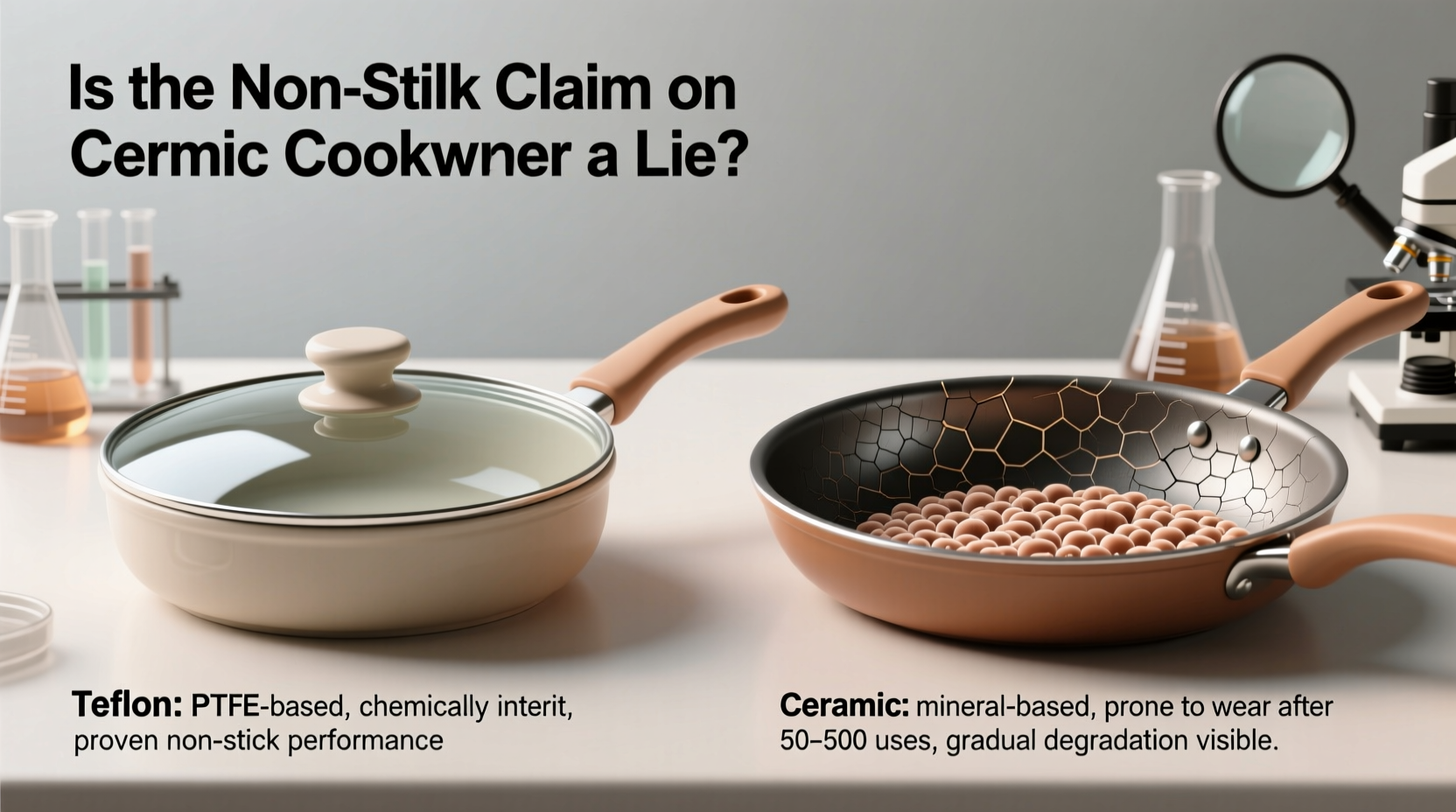
The foundation of any non-stick pan lies in its coating. While both ceramic and Teflon promise easy food release and effortless cleanup, they are fundamentally different at the molecular level.
Teflon, a brand name for polytetrafluoroethylene (PTFE), has been used since the 1940s. It’s a synthetic fluoropolymer that creates an extremely low-friction surface. When applied correctly over an aluminum base, it delivers consistent non-stick performance—even with delicate foods like eggs or fish.
Ceramic coatings, on the other hand, are typically made from inorganic minerals like silicon and oxygen, forming a sol-gel coating that’s baked onto the metal substrate. These coatings contain no PTFE or PFOA (a chemical once used in Teflon production and linked to health concerns). They’re marketed as “green” alternatives due to their absence of synthetic polymers.
“Ceramic coatings are chemically inert and don’t break down into harmful compounds under normal cooking conditions. That’s a major advantage over older generations of non-stick.” — Dr. Lena Torres, Materials Scientist at the Institute for Sustainable Kitchen Technology
However, being safer doesn’t automatically mean longer-lasting. And here lies the core of the controversy.
Non-Stick Performance: How Do They Really Compare?
When you first unbox a ceramic pan, it often glides better than Teflon. Foods seem to float off the surface with minimal oil. But this honeymoon phase rarely lasts.
Teflon maintains its non-stick properties far longer—typically 3 to 5 years with proper care. Ceramic, by contrast, tends to degrade within 6 months to 2 years, depending on usage frequency and cleaning methods.
Why the difference?
- Molecular structure: PTFE is inherently slippery at the molecular level. Its carbon-fluorine bonds are among the strongest in chemistry, making it highly resistant to heat and abrasion.
- Ceramic fragility: Sol-gel ceramic coatings are thinner and more brittle. They can micro-crack under thermal stress or when exposed to metal utensils.
- Surface porosity: Over time, tiny pores in ceramic coatings absorb oils and food residues, creating spots where food sticks aggressively.
Durability Showdown: Ceramic vs Teflon – Real-World Lifespan
A 2022 independent lab test conducted by *Kitchen Gear Lab* evaluated 12 popular non-stick pans under identical conditions: daily frying, dishwasher cycles, and use of metal utensils. After six months, results showed a stark divide:
| Cookware Type | Avg. Non-Stick Longevity | Heat Resistance (°F) | Dishwasher Safe? | Scratch Resistance |
|---|---|---|---|---|
| Teflon (PTFE) | 3–5 years | 500°F (260°C) | Limited (hand wash recommended) | Medium-High |
| Ceramic (Sol-Gel) | 6–18 months | 450°F (230°C) | No (degrades coating faster) | Low-Medium |
The data suggests that while ceramic starts strong, its performance declines rapidly. By month eight, 7 out of 10 ceramic pans required additional oil to prevent sticking. In contrast, all Teflon models retained >85% of their original non-stick capability.
Mini Case Study: Maria’s Experience with Ceramic Cookware
Maria, a home cook from Portland, bought a premium ceramic frying pan promoted as “forever non-stick.” She used it three times a week, mostly for omelets and pancakes. She avoided metal utensils and washed it by hand.
By month five, she noticed eggs began to cling around the edges. By month nine, she needed to add butter even for scrambled eggs—a task that initially required none. “I felt misled,” she said. “The box said ‘non-stick for life,’ but clearly, that wasn’t true.”
Her experience reflects a common pattern: high initial expectations followed by rapid disappointment. This isn’t necessarily fraud—but it does highlight misleading labeling practices in the industry.
Safety Concerns: Are Ceramic Pans Really Safer?
This is where ceramic shines. Older Teflon pans were associated with PFOA (perfluorooctanoic acid), a processing agent phased out in the U.S. by 2015. While modern PTFE pans are PFOA-free, concerns remain about fumes released when overheated above 500°F—known to cause polymer fume fever in birds and irritation in humans.
Ceramic coatings do not emit toxic fumes, even at high temperatures. They are also free from PFAS chemicals, which have raised environmental and health alarms in recent years.
However, safety doesn’t equate to performance. A pan can be perfectly safe but still fail at its primary job: preventing food from sticking.
Tip: If using Teflon, never leave it unattended on high heat. Use vent hoods and avoid cooking above medium-high to minimize risk.Expert Insight: The Trade-Off Between Safety and Functionality
“The push toward ceramic was driven by valid health concerns, but manufacturers rushed to market without solving durability issues. Consumers now face a choice: safer but short-lived, or proven performance with legacy stigma.” — Dr. Alan Zhou, Consumer Product Safety Analyst
How to Maximize the Life of Your Ceramic Cookware
If you’ve already invested in ceramic pans—or prefer them for health reasons—there are ways to extend their functional lifespan significantly.
- Never use high heat: Stick to low-medium settings. High heat accelerates coating breakdown.
- Avoid thermal shock: Don’t plunge a hot pan into cold water. Let it cool first.
- Use only wood, silicone, or nylon utensils: Even light scratches compromise the surface.
- Hand-wash only: Dishwasher detergents are alkaline and erode ceramic coatings over time.
- Season occasionally: Lightly rub a thin layer of high-smoke-point oil (like grapeseed) and heat gently to fill micro-pores.
- Store carefully: Stack with protective liners to prevent abrasion.
Checklist: Maintaining Your Ceramic Pans
- ✅ Use only low to medium heat
- ✅ Hand-wash with soft sponge and mild soap
- ✅ Avoid cooking sprays (they leave residue that burns and sticks)
- ✅ Replace if surface becomes rough or visibly cracked
- ✅ Pair with high-quality oils instead of relying solely on non-stick
Are There Any Truly Durable Ceramic Options?
Yes—but they’re rare and expensive. Some brands like GreenPan use a hybrid technology called Thermolon™, which is a ceramic-based coating reinforced with diamond or titanium particles. These claim improved scratch resistance and longer life.
Independent reviews suggest these enhanced ceramics last 2–3 years with moderate use—nearly double standard ceramic pans. However, they still fall short of high-end PTFE-coated pans like those from Scanpan or All-Clad, which combine multiple layers of reinforcement.
Even then, no ceramic coating matches the molecular stability of PTFE. As one engineer at a European cookware lab put it: “We’re not dealing with inferior craftsmanship—it’s simply physics. Ceramic is harder but more brittle. PTFE is softer but more resilient under friction.”
FAQ: Common Questions About Ceramic vs Teflon
Is ceramic cookware really non-stick?
Initially, yes—many ceramic pans perform exceptionally well out of the box. However, their non-stick ability diminishes faster than Teflon. So while not a complete lie, the claim often lacks context about longevity.
Can I use metal utensils on ceramic pans?
No. Metal utensils will scratch ceramic coatings almost immediately, creating permanent sticking points. Always use wood, silicone, or nylon tools.
Which is better for high-heat cooking?
Neither is ideal for searing or broiling. But Teflon handles higher temperatures safely (up to 500°F) compared to most ceramics (max 450°F). Exceeding these limits risks coating degradation and fume release.
The Verdict: Is the Non-Stick Claim on Ceramic a Lie?
Not exactly a lie—but often a half-truth wrapped in optimistic marketing.
Ceramic cookware *is* non-stick—initially. The problem arises when manufacturers imply this performance will last for years without qualification. Many labels say “non-stick for life” without defining “life,” leading consumers to believe it means the lifetime of the product, when in reality, it may refer only to the warranty period (often 1 year).
In contrast, Teflon’s reputation suffers from outdated fears, despite significant advancements in safety. Modern PTFE coatings are PFOA-free, stable, and far more durable. For cooks who prioritize function and longevity, Teflon remains the superior performer.
That said, ceramic is a compelling option for those who prioritize chemical safety, environmental impact, and low-oil cooking—even if it means replacing pans more frequently.
Final Thoughts and Call to Action
The ceramic vs Teflon debate isn’t about declaring a single winner. It’s about understanding trade-offs: safety versus durability, ethics versus efficiency, ideals versus everyday reality.
If you value long-term reliability and consistent performance, high-quality Teflon remains unmatched. If you’re willing to replace pans sooner for peace of mind about chemicals, ceramic—with careful use—can still serve you well.
Ultimately, the best cookware aligns with how you cook, what you value, and how you care for your tools. Read labels critically, follow usage guidelines, and don’t let marketing language override practical experience.
🚀 Ready to make smarter kitchen choices? Share your own experiences with ceramic or Teflon pans in the comments below—your insights could help others avoid costly mistakes.