Fabric Christmas stockings are more than just decorative items—they’re often cherished family heirlooms filled with memories. Whether handmade, embroidered, or passed down through generations, these festive pieces deserve careful attention when it comes time to clean them. While the idea of tossing a dusty stocking into the washing machine might seem convenient, doing so without proper precautions can lead to shrinkage, color bleeding, fraying, or damage to delicate trims like lace, ribbons, or pom-poms.
The good news is that most fabric Christmas stockings *can* be washed—but only if done correctly. With the right method, tools, and timing, you can refresh your stockings for another season without compromising their integrity. This guide walks you through every essential step, from assessing material type to safe drying techniques, ensuring your holiday traditions stay vibrant and long-lasting.
Assessing Your Stocking’s Material and Construction
Before any cleaning begins, take time to examine the stocking closely. Not all “fabric” is created equal, and understanding what your stocking is made of determines whether it can be washed—and how.
Common materials include:
- Cotton – Generally washable but may shrink if exposed to high heat.
- Felt (wool or synthetic) – Wool felt can felt further (shrink and mat) when agitated in water; synthetic felt holds up better but still risks fraying.
- Linen – Durable but prone to wrinkling and mildew if not dried properly.
- Polyester blends – Often more resilient to washing but may trap odors over time.
- Velvet or velveteen – Delicate pile can crush easily; spot cleaning is usually best.
In addition to fabric type, consider embellishments:
- Embroidery thread may bleed when wet.
- Metallic trims, sequins, or beads can loosen during agitation.
- Lace edges may unravel if rubbed or twisted.
- Glue-based appliqués might dissolve in water.
Step-by-Step Guide to Washing Fabric Christmas Stockings
Washing a Christmas stocking isn’t just about removing dirt—it’s about preserving sentimental value. Follow this detailed process to clean your stocking safely and effectively.
- Inspect for Damage
Check seams, hems, and decorations for loose threads, tears, or weak spots. Repair minor issues before washing to prevent worsening during cleaning. - Spot Test First
Dampen an inconspicuous area (like inside the cuff) with a mix of cool water and mild detergent. Blot gently with a white cloth. Wait 10 minutes. If no color transfer, staining, or texture change occurs, proceed. - Remove Loose Debris
Use a soft brush or lint roller to remove dust, pet hair, or cobwebs. For stubborn debris caught in textures (e.g., knit patterns), use a seam ripper carefully—not scissors—to avoid snags. - Pre-Treat Stains (If Needed)
For localized stains—such as candle wax drips, chocolate smudges, or juice spills—apply a small amount of oxygen-based cleaner (like OxiClean MaxForce gel) directly to the spot. Let sit for 5–10 minutes, then gently dab with a damp microfiber cloth. Avoid scrubbing. - Prepare Cleaning Solution
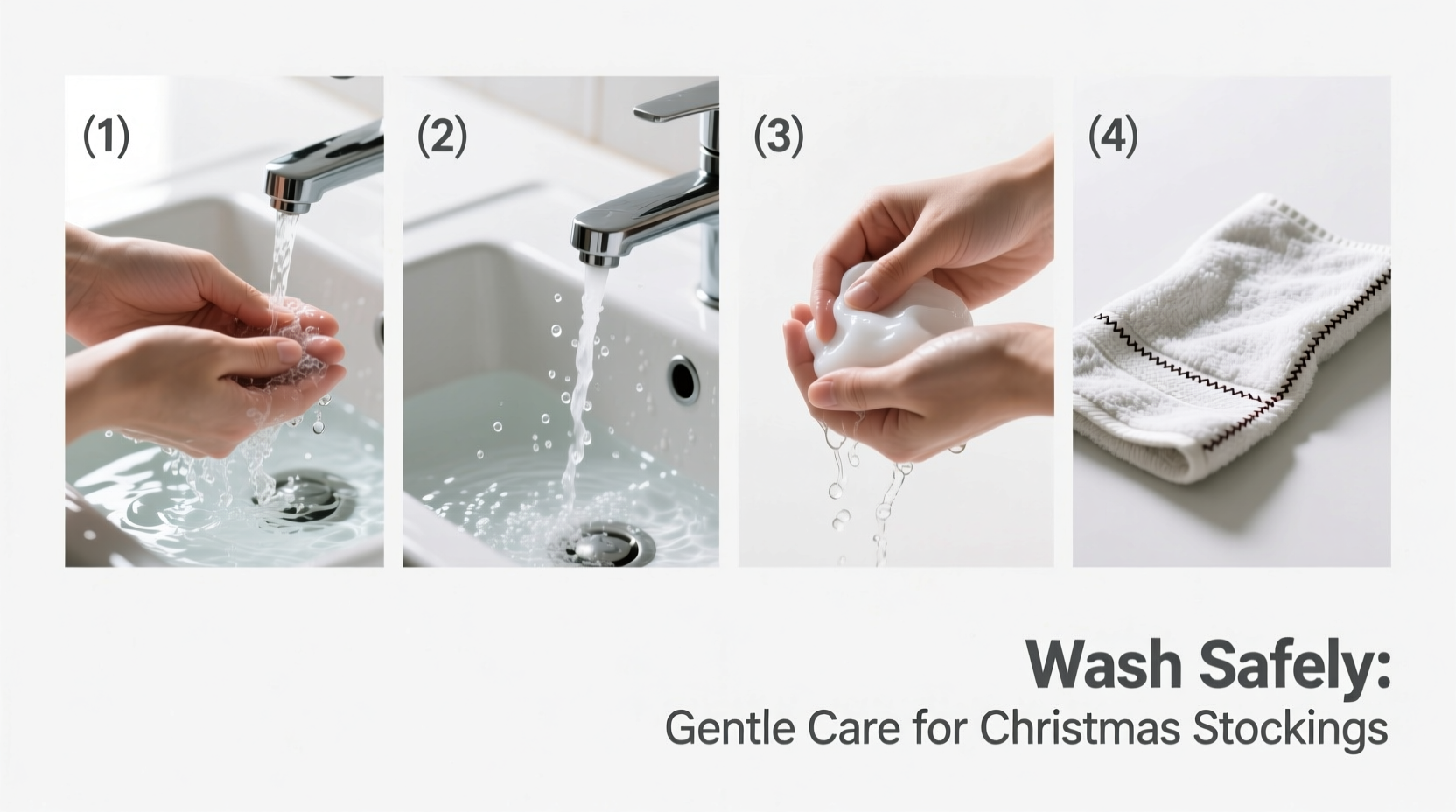
Fill a clean basin or sink with cool to lukewarm water (never hot). Add one tablespoon of gentle detergent—preferably one designed for delicates or wool (e.g., Woolite, Eucalan, or The Laundress Delicate Wash). Swirl to mix. - Submerge and Soak
Place the stocking in the solution, pressing it down gently to saturate fully. Do not twist, wring, or agitate. Let soak for 10–15 minutes, turning occasionally to ensure even cleaning. - Rinse Thoroughly
Drain the soapy water. Refill the basin with clean, cool water. Submerge the stocking and press out the soap gently. Repeat rinsing until the water runs clear—usually two to three times. - Remove Excess Water
Lay a clean towel flat on a dry surface. Place the soaked stocking on top, then roll the towel tightly around it like a burrito. Press or step lightly on the roll to draw moisture into the towel via capillary action. Never wring or hang a wet stocking vertically—it will stretch under its own weight. - Dry Flat and Reshape
Unroll the towel and transfer the stocking to a fresh, dry towel or mesh drying rack. Gently reshape the toe, heel, and cuff. Smooth out wrinkles and realign any folded cuffs or linings. Keep away from direct sunlight or heating vents. - Final Touches
Once completely dry (typically 24–48 hours depending on thickness), lightly steam the exterior using a garment steamer held at least six inches away. Do not press with an iron. Fluff any crushed trims with fingers or a soft toothbrush.
When Machine Washing Might Be Acceptable
Only consider machine washing if:
- The care label explicitly permits it.
- The stocking is made entirely of durable cotton or polyester.
- There are no embellishments beyond simple stitching.
If so, place the stocking inside a mesh laundry bag, select the **delicate cycle** with cold water, and use a low-spin setting. Skip the dryer—always air-dry.
Drying and Storage Best Practices
Improper drying is one of the leading causes of damaged holiday textiles. Heat warps fibers, gravity distorts shape, and humidity invites mildew.
| Do | Don’t |
|---|---|
| Dry flat on a clean towel or mesh rack | Hang by the loop to dry |
| Reshape while damp | Place near radiators or space heaters |
| Rotate position every 12 hours for even airflow | Fold or stack while still slightly moist |
| Store in breathable cotton bags | Keep in plastic bins or vacuum-sealed bags |
For long-term storage, stuff the stocking lightly with acid-free tissue paper to maintain form. Store upright in a drawer or box lined with unbleached muslin. Cedar blocks can deter moths but should never touch the fabric directly.
Expert Insight: Preserving Holiday Textiles Over Time
“Textiles used seasonally face unique challenges—they sit idle for months, accumulating dust and absorbing ambient moisture. Regular inspection and gentle cleaning every 2–3 years can prevent irreversible damage like fiber degradation or mold.” — Dr. Laura Simmons, Textile Conservator at the National Museum of American History
Dr. Simmons emphasizes that oxidation from light exposure and pollutants in indoor air gradually weaken natural fibers. Even without visible soiling, periodic cleaning removes acidic residues that accelerate aging.
Real Example: A Family Heirloom Saved by Proper Care
Martha K., a schoolteacher from Vermont, inherited a set of six hand-embroidered stockings from her grandmother. After decades of use, they had yellowed slightly and developed musty odor from attic storage. Instead of discarding them, she followed a slow hand-wash routine using Eucalan—a no-rinse wool wash known for pH balance.
She soaked each stocking individually for 12 minutes, blotted dry in towels, and laid them on a screened porch (out of direct sun) for two days. To address yellowing, she added a splash of hydrogen peroxide (3%) to the rinse water—only after confirming it wouldn't affect the red embroidery through testing.
The result? Fresh-smelling, brightened stockings that looked nearly new. Her children now hang them proudly each year, continuing a tradition spanning four generations.
Checklist: Safe Washing Routine for Fabric Christmas Stockings
- ☑ Inspect for loose trims or weak seams
- ☑ Check for care labels or manufacturer instructions
- ☑ Perform a spot test in hidden area
- ☑ Pre-treat visible stains gently
- ☑ Use cool water and mild detergent
- ☑ Hand-wash or use delicate machine cycle (if appropriate)
- ☑ Roll in towel to remove excess water—no wringing
- ☑ Dry flat, reshaped, away from heat/sunlight
- ☑ Store clean, dry, and unfolded in breathable container
Frequently Asked Questions
Can I use bleach on white fabric stockings?
No. Chlorine bleach weakens fibers and can cause yellowing over time, especially in cotton. For whitening, opt for oxygen-based cleaners diluted in water, and always test first. Sun-drying (after cleaning) can also naturally brighten whites—but only after the item is fully dry to avoid UV damage to damp fibers.
What if my stocking has a cardboard or plastic insert?
Some vintage or structured stockings contain stiffeners inside the back panel. These must be removed before washing. Feel along the inner lining—if rigid, carefully open a seam at the bottom edge, extract the insert, and resew loosely afterward. Wash the fabric portion only.
How often should I wash my Christmas stockings?
Every 2 to 3 years is sufficient unless visibly soiled or exposed to smoke, pets, or strong odors. Overwashing wears down fibers and fades colors. Regular dusting and airing out post-holiday season extend cleanliness between deep cleans.
Conclusion: Honor Tradition with Thoughtful Care
Your fabric Christmas stockings carry more than candy and small gifts—they hold stories, scents, and seasonal joy. Treating them with care ensures they remain part of your celebration for years to come. By following a deliberate, gentle cleaning process, you protect not just the fabric, but the legacy woven into each stitch.
Start now: pull them from storage, assess their condition, and decide whether they need a refresh. Even if you don’t wash them this week, simply inspecting and re-folding them properly sets the foundation for longevity. These small acts of maintenance become rituals of respect—for craftsmanship, for memory, and for the quiet magic of the holidays.
💬 Have a favorite stocking care tip or a story about a beloved holiday textile? Share your experience in the comments—your insight could help others preserve their own family treasures.








