When it comes to high-performance kitchen appliances, two names consistently dominate conversations: Breville and Ninja. From smart toasters to multi-cookers and blenders, both brands have built reputations for innovation and quality. But with overlapping product categories and similar price points, choosing between them isn’t always straightforward. Is Breville’s premium reputation justified? Or does Ninja offer smarter value for everyday cooks? This in-depth analysis compares design, performance, durability, and real-world usability to help you determine which brand truly earns its hype.
Design Philosophy and Build Quality
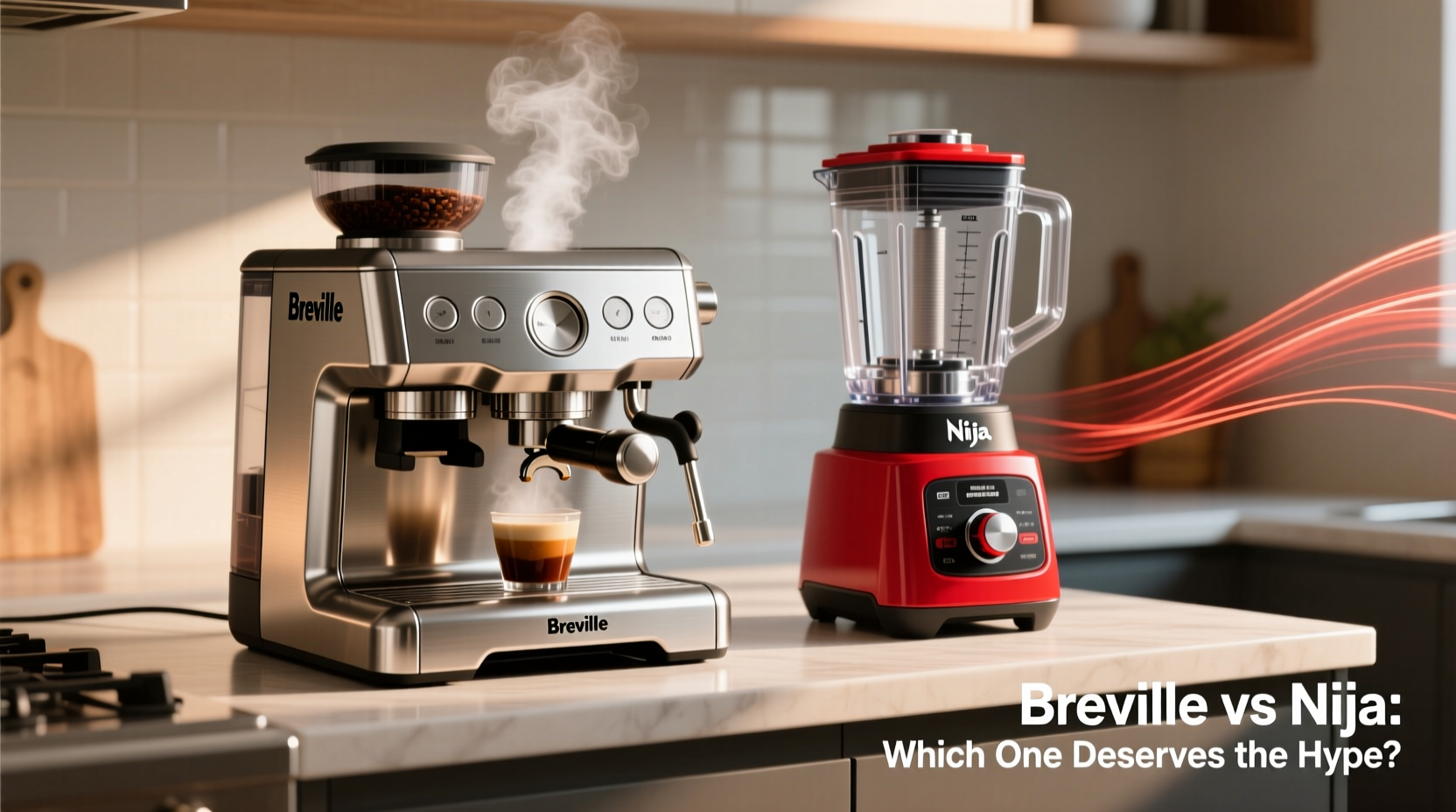
Breville has long positioned itself as a premium appliance brand, often referred to as the “Tesla of small kitchen appliances.” Its products feature brushed stainless steel finishes, intuitive digital interfaces, and thoughtful engineering details—like dual-walled insulation on kettles or precise temperature control in coffee makers. The emphasis is on precision, longevity, and aesthetics that blend into modern kitchens.
Ninja, by contrast, focuses on versatility and bold functionality. Known for multifunctional devices like the Foodi pressure cookers and blender systems with interchangeable jars, Ninja prioritizes utility over minimalist design. Controls are often more tactile than digital, and materials may include durable plastics alongside stainless accents. While not as sleek as Breville, Ninja appliances are engineered for heavy daily use and adaptability.
Tip: If countertop elegance matters, Breville typically wins. For families needing rugged, multipurpose tools, Ninja's practicality shines.Performance: Precision vs. Power
Breville excels in precision-driven tasks. Take the Breville Oracle Touch espresso machine—it automates grinding, tamping, and milk texturing with laboratory-level accuracy. Similarly, the Smart Oven Air Fryer Pro uses Element IQ technology to distribute heat strategically based on the selected function, resulting in evenly toasted bread or perfectly roasted vegetables without manual rotation.
Ninja leans into raw power and flexibility. The Ninja BL770 Mega Kitchen System blender hits 24,000 RPMs, pulverizing ice and fibrous greens with ease. Its Foodi multicookers combine pressure cooking, air frying, dehydrating, and slow cooking in one unit—ideal for home chefs who want to minimize appliance clutter.
In blind tests conducted by consumer labs, Breville consistently scores higher for consistency and temperature accuracy, especially in ovens and coffee equipment. Ninja leads in speed and capacity, particularly with blending and batch cooking.
“Breville is about refining the craft; Ninja is about expanding your options. One doesn’t replace the other—they serve different needs.” — Carlos Mendez, Appliance Engineer and Culinary Tech Consultant
Product Comparison: Key Categories Side-by-Side
| Category | Breville Standout Model | Ninja Standout Model | Key Difference |
|---|---|---|---|
| Toaster Ovens | Smart Oven Air Fryer Pro | Ninja Foodi 10-in-1 | Breville offers superior browning and sensor cooking; Ninja adds dehydration and larger capacity. |
| Blenders | Breville Super Q | Ninja BL770 | Breville delivers smoother textures and quieter operation; Ninja provides faster processing and lower cost. |
| Coffee Makers | Breville Barista Express | Ninja Hot & Cold Coffee Maker | Breville enables hands-on espresso crafting; Ninja offers programmable versatility for drip, cold brew, and specialty drinks. |
| Air Fryers | Breville Smart Air Fryer | Ninja AF161 | Breville includes preset intelligence and compact footprint; Ninja features larger baskets and dual-zone models. |
Real-World Use Case: The Busy Household Dilemma
The Thompson family of five lives in suburban Chicago. Both parents work full-time, and their three kids have after-school activities most evenings. They needed an appliance that could handle quick weeknight meals without constant supervision. After testing both brands, they chose the Ninja Foodi 10-in-1 Pressure Cooker & Air Fryer.
Why? They could pressure-cook chili from frozen ingredients in 25 minutes, then switch to air fry mode to crisp chicken tenders—using the same pot. On weekends, they used the dehydrate function for homemade fruit leathers. While they admired the Breville Combi Wave’s elegance and even heating, its single-function focus didn’t justify the counter space or $349 price tag.
This scenario highlights a broader trend: Ninja thrives in homes where time efficiency and multitasking are paramount. Breville, meanwhile, appeals to those who treat cooking as a ritual—individuals willing to invest time and money for incremental gains in flavor and texture.
Durability and Long-Term Value
Breville builds appliances with commercial-grade components. Many models come with 1–2 year warranties and use motors, heating elements, and housings designed to last 7+ years under regular use. However, repairs can be costly, and some parts are proprietary.
Ninja appliances often carry comparable warranties but use more modular designs. Replacement blades, lids, and accessories are widely available and affordable. In reliability surveys, Ninja blenders and multicookers show slightly higher failure rates after 3–4 years, but repairability offsets this for many users.
- Breville strengths: Precision engineering, consistent output, premium materials
- Ninja strengths: Repair-friendly design, broad functionality, aggressive pricing
Checklist: Choosing the Right Brand for Your Kitchen
- Evaluate how much you cook daily—do you need multiple functions or just one perfected task?
- Measure available counter and storage space—Breville tends to be more compact; Ninja units can be bulkier.
- Assess your skill level—are you learning to make espresso (Breville) or need set-and-forget meals (Ninja)?
- Compare long-term costs, including energy use, replacement parts, and warranty coverage.
- Read verified owner reviews focusing on issues after 12+ months of use.
Expert Insight: What Industry Insiders Say
“Breville invests heavily in R&D to refine existing technologies. Ninja disrupts by combining them. Neither approach is better—just different audience targets.” — Lena Patel, Senior Editor at *Kitchen Tech Review*
This distinction is crucial. Breville’s slow-motion innovation yields appliances that improve subtly but significantly over predecessors. Ninja takes leaps—integrating air frying into slow cookers, adding cyclonic blending chambers—sometimes at the expense of refinement.
Frequently Asked Questions
Is Breville worth the higher price tag?
For enthusiasts who value precision, consistency, and build quality—yes. If you're serious about coffee, baking, or sous-vide-style results, Breville’s advanced controls and thermal stability deliver measurable improvements. Casual users may not notice the difference enough to justify the 20–50% price premium.
Can Ninja appliances replace multiple single-function devices?
Yes, that’s their primary advantage. A single Ninja Foodi can replace a pressure cooker, slow cooker, air fryer, steamer, and dehydrator. While none of these functions match dedicated units perfectly, they perform well enough for most households. Just don’t expect restaurant-grade searing or perfect crema from combo machines.
Which brand has better customer service?
Breville offers more personalized support, including live chat with technical specialists and in-house repair coordination. Ninja relies more on third-party service centers, though response times have improved since 2022. Both brands provide online troubleshooting resources and video guides.
Final Verdict: Who Should Choose Which Brand?
The answer depends on your kitchen priorities. If you savor the process of cooking—the grind of fresh beans, the exact toast level on sourdough, the delicate bloom of a slow-roasted tomato—Breville enhances that experience. It rewards attention to detail with superior results.
If your goal is efficiency—getting nutritious meals on the table fast, minimizing cleanup, and maximizing flexibility—Ninja delivers unmatched practicality. Its all-in-one systems reduce clutter and decision fatigue, making healthy eating more accessible during hectic weeks.
Ultimately, neither brand is universally “better.” Breville earns its hype among connoisseurs. Ninja justifies its popularity through accessibility and adaptability. Some discerning households even own both: a Breville espresso machine for weekend lattes and a Ninja blender for weekday smoothie prep.
🚀 Ready to upgrade your kitchen? Start by identifying your top three cooking pain points—then match them to the brand that solves them best. Share your experience below and help others cut through the marketing noise.








