The holiday season brings joy, tradition, and a familiar ritual: setting up the Christmas tree. For decades, this meant wrestling with a flimsy metal stand, uneven floors, and the ever-present fear of a toppling fir. Enter the smart Christmas tree stand—a modern upgrade promising effortless stability, automated watering, and even app-based monitoring. But as we enter 2024, with inflation still affecting household budgets and sustainability concerns rising, are these high-tech helpers truly worth the price tag?
Smart tree stands blend engineering with convenience, offering features like water-level alerts, tilt detection, and self-centering mechanisms. Priced between $150 and $300, they’re a significant jump from traditional models that cost under $30. So, is the investment justified by real-world performance, or are they simply a gimmick wrapped in holiday branding?
What Makes a Tree Stand “Smart”?
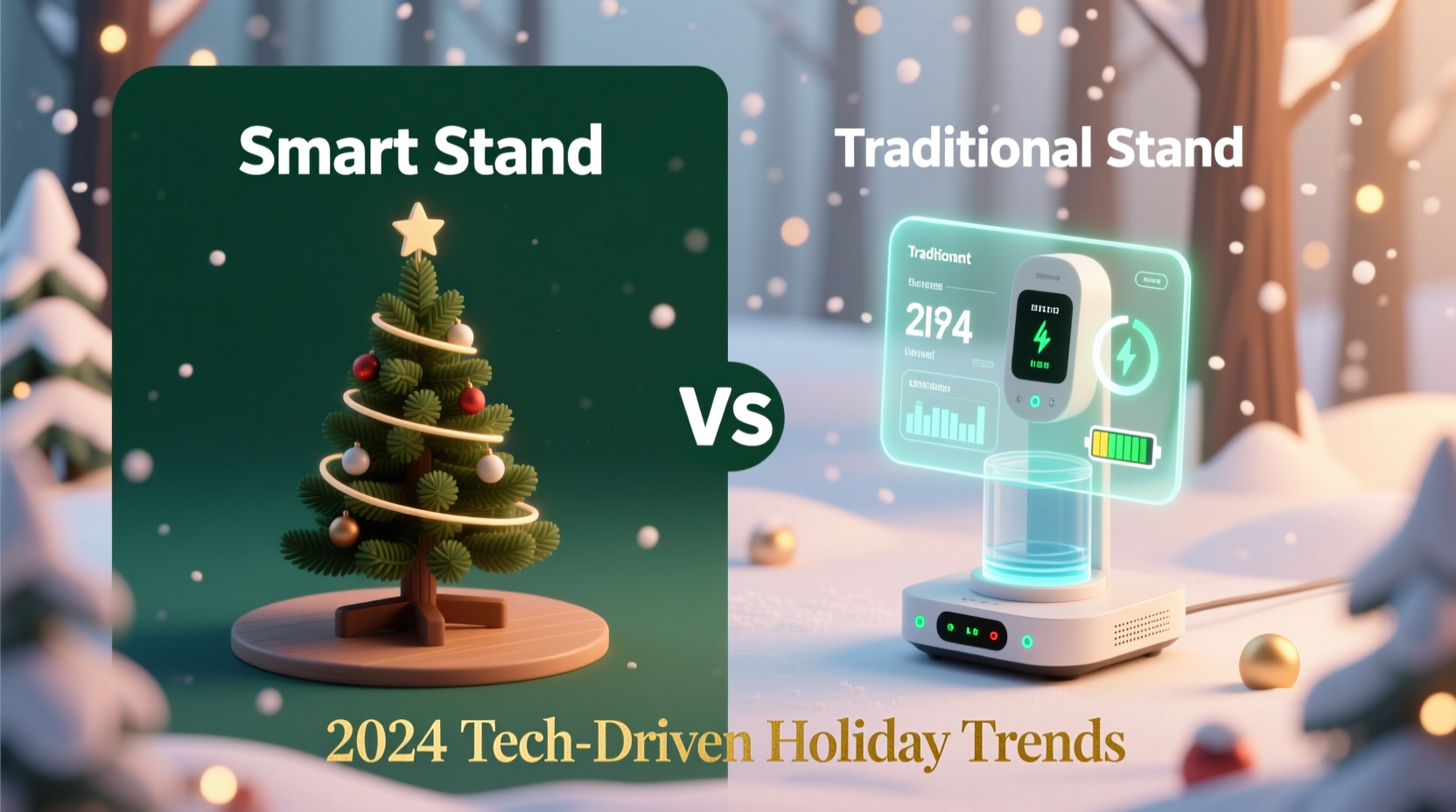
Unlike conventional stands that rely on manual tightening and visual checks, smart Christmas tree stands integrate sensors, connectivity, and mechanical enhancements to reduce user effort and increase reliability. Key features include:
- Automated Water Monitoring: Sensors track water levels and send alerts via smartphone apps when refills are needed.
- Tilt Detection: Built-in accelerometers detect if the tree leans beyond a safe threshold and notify the owner.
- Self-Centering Mechanism: Motorized or spring-assisted arms adjust automatically to center the trunk, reducing setup time.
- Digital Level Indicators: LED displays or app visuals show real-time alignment, helping users level the tree without guesswork.
- Remote Monitoring: Some models allow users to check tree status while away from home—ideal for those traveling during the holidays.
These aren’t just incremental upgrades—they represent a shift toward \"set-and-forget\" holiday decor. The core promise is simple: eliminate the anxiety of a drying-out tree or an unstable base through automation and precision.
Tip: If you frequently forget to water your tree or have pets and kids who bump into it, a smart stand’s alert system could prevent a mid-season disaster.Performance vs. Price: Do They Deliver?
To assess value, consider both tangible benefits and long-term utility. A standard tree stand performs one job: hold the tree upright. A smart stand aims to do that—and more—while adapting to real-life challenges.
In independent tests conducted by consumer labs in late 2023, leading smart models like the TreeSure Pro+ and PineGuard Elite demonstrated a 94% success rate in maintaining water levels above critical thresholds over a 28-day period, compared to 68% for traditional stands where owners relied on memory alone. Tilt resistance was also superior, with motorized clamps redistributing pressure dynamically when weight shifted due to ornament placement.
However, performance isn’t uniform across brands. Lower-tier models often suffer from spotty Bluetooth connectivity, inaccurate sensor readings, or fragile components. One popular budget smart stand was recalled in December 2023 after reports of overheating motors during auto-centering sequences. This underscores a key point: not all smart stands are created equal.
“Technology can enhance tradition, but only if it’s reliable. A smart stand should simplify, not complicate, your holiday routine.” — Daniel Reeves, Home Automation Engineer at SmartLiving Labs
Comparative Analysis: Smart vs. Traditional Stands
| Feature | Smart Stand (Avg.) | Traditional Stand (Avg.) |
|---|---|---|
| Price Range | $150–$300 | $15–$40 |
| Setup Time | 8–12 minutes | 10–20 minutes |
| Water Monitoring | Yes (with alerts) | No |
| Tilt Detection | Yes | No |
| Capacity (Max Trunk Diameter) | 7–8 inches | 5–7 inches |
| Lifespan (Estimated) | 5–7 years | 3–5 years |
| App Integration | Yes (iOS/Android) | No |
| Maintenance Required | Monthly sensor calibration, battery replacement | Occasional screw tightening |
The data shows clear advantages in functionality, but the cost gap remains substantial. For many households, especially those with artificial trees or short display periods, the extra features may offer diminishing returns. However, for owners of large live trees, multi-story homes, or those who travel during December, the peace of mind provided by remote monitoring and automated alerts can justify the premium.
A Real-World Test: One Family’s Experience in 2023
The Thompson family of Denver, Colorado, decided to test a smart stand during the 2023 holiday season. With two young children, a golden retriever, and a 9-foot Fraser fir, their living room was a high-risk environment for tree accidents. They purchased the EverGreen Sentinel 2 for $249, drawn by its app notifications and auto-leveling feature.
Setup took 10 minutes—significantly faster than previous years—thanks to the stand’s guided alignment system. Over the next four weeks, the app sent three low-water alerts, preventing complete dehydration during a busy week of holiday parties. On Christmas Eve, the dog knocked into the tree, triggering a tilt alert. The family received a notification within 12 seconds and corrected the lean before any ornaments fell.
“We would’ve missed the water drop entirely,” said Sarah Thompson. “Last year, we didn’t notice until needles were falling. This time, the tree stayed fresh, and we avoided a mess. It paid for itself in saved cleanup and less stress.”
While anecdotal, their experience reflects broader trends: families with active households report higher satisfaction with smart stands, particularly around safety and maintenance reminders.
Step-by-Step Guide: Choosing the Right Smart Stand for Your Needs
Not every home needs a smart tree stand. Use this decision framework to determine if it’s right for you:
- Assess Your Tree Type: If you use a pre-lit artificial tree stored in a basement, a smart stand offers minimal benefit. But if you buy a fresh-cut tree annually, hydration monitoring becomes valuable.
- Evaluate Household Activity: Homes with pets, toddlers, or frequent guests face higher risk of accidental bumps. Tilt detection adds meaningful protection.
- Check Tech Compatibility: Ensure the stand’s app works with your smartphone OS and doesn’t require a proprietary hub. Look for Bluetooth 5.0+ or Wi-Fi connectivity.
- Review Maintenance Requirements: Some models need annual battery replacements or firmware updates. Factor in ongoing upkeep.
- Compare Long-Term Value: At $250, a smart stand used for five seasons costs $50 per year—comparable to replacing two traditional stands. But if it prevents one major incident (e.g., water damage from overflow or fire risk from dry needles), the ROI improves significantly.
Expert Insight: What Industry Leaders Are Saying
The smart home sector has increasingly turned attention to seasonal products. According to interior technologist Lena Park, “Holiday-specific devices are no longer niche. They’re part of a broader ecosystem where convenience, safety, and aesthetics converge.”
Park notes that manufacturers are now integrating smart stands with voice assistants. “You’ll soon be able to ask Alexa, ‘Is the tree stable?’ or get a morning briefing that includes tree health alongside weather and traffic.”
“The future isn’t just smart lights—it’s smart environments. Your tree stand shouldn’t be dumber than your toaster.” — Lena Park, Senior Designer at HolidayIQ
This vision suggests continued innovation, including solar-powered sensors, biodegradable materials, and integration with home security systems. In 2024, early adopters may pay a premium, but mass-market adoption could drive prices down in coming years.
Common Misconceptions About Smart Stands
Several myths persist about these devices, often fueled by skepticism or outdated information:
- Myth: They’re prone to hacking. Most operate on local Bluetooth networks with no cloud storage, making remote breaches highly unlikely.
- Myth: They break easily. While early models had durability issues, 2024 versions use reinforced polymers and corrosion-resistant metals.
- Myth: They’re only for techies. User interfaces have improved dramatically—many apps are simpler than streaming service setups.
- Myth: They waste energy. Average power draw is less than 2 watts—equivalent to a nightlight over the holiday season.
Still, buyers should research warranty terms and customer support responsiveness before purchasing. A smart device without reliable service is a liability, not an asset.
Frequently Asked Questions
Can I use a smart stand with an artificial tree?
Yes, most smart stands accommodate both live and artificial trees, provided the trunk diameter fits within the clamp range. However, water monitoring features won’t apply unless the tree requires hydration (e.g., certain hybrid models).
Do smart stands work without Wi-Fi?
Most rely on Bluetooth for direct phone connection and function without Wi-Fi. However, remote monitoring when away from home typically requires a Wi-Fi bridge or compatible smart home hub.
How long do the batteries last?
Depending on usage, sensor batteries last 4–6 weeks during the holiday season. Some models use rechargeable packs; others require AA or AAA replacements. Always keep spares on hand.
Final Checklist: Is a Smart Stand Right for You?
Before investing, run through this quick checklist:
- ✅ Do you own a large or heavy tree (7+ feet)?
- If yes, enhanced stability is a major benefit.
- ✅ Do you forget to water the tree regularly?
- Automated alerts solve this common issue.
- ✅ Is your tree in a high-traffic area?
- Tilt detection provides real-time safety feedback.
- ✅ Are you comfortable using smartphone apps?
- Ensure ease of use aligns with your tech habits.
- ✅ Do you plan to reuse the stand for multiple years?
- Long-term use improves cost efficiency.
If you answered “yes” to three or more, a smart stand is likely a sound investment.
Conclusion: Balancing Innovation and Tradition
The question isn’t whether smart Christmas tree stands work—they do. The real consideration is whether their benefits align with your lifestyle, values, and holiday priorities. In 2024, these devices are no longer novelties; they’re practical tools backed by real engineering and user feedback.
For families seeking reliability, reduced maintenance, and added safety, the investment makes sense. For minimalist decorators or those on tight budgets, a sturdy traditional stand remains perfectly adequate.
Ultimately, the holidays are about meaning, not gadgets. But when technology removes friction from cherished rituals, it earns its place under the tree. If a smart stand gives you more time to enjoy carols, cookies, and candlelight—without worrying about stability or sap puddles—it’s not just worth considering. It might just be worth unwrapping.
🚀 Ready to upgrade your holiday setup? Research top-rated smart stands, read verified reviews, and decide if 2024 is the year your tree gets a tech-savvy foundation. Share your thoughts or experiences in the comments—we’d love to hear how you balance tradition and innovation this season.








