In recent years, holiday decor has shifted toward subtlety, functionality, and intentional design. As homeowners embrace minimalism—not just as an aesthetic but as a lifestyle—the traditional evergreen tree, with its towering presence and elaborate ornamentation, is being reevaluated. Enter the fiber optic Christmas tree: once dismissed as a kitschy relic of the 1990s, now quietly resurfacing in urban lofts, Scandinavian-inspired living rooms, and eco-conscious homes. With their sleek silhouettes, energy-efficient lighting, and understated glow, fiber optic trees are finding new relevance in the minimalist movement. But is this resurgence more than just nostalgia? And can a synthetic tree truly align with the principles of thoughtful, clutter-free design?
The Minimalist Mindset and Holiday Decor
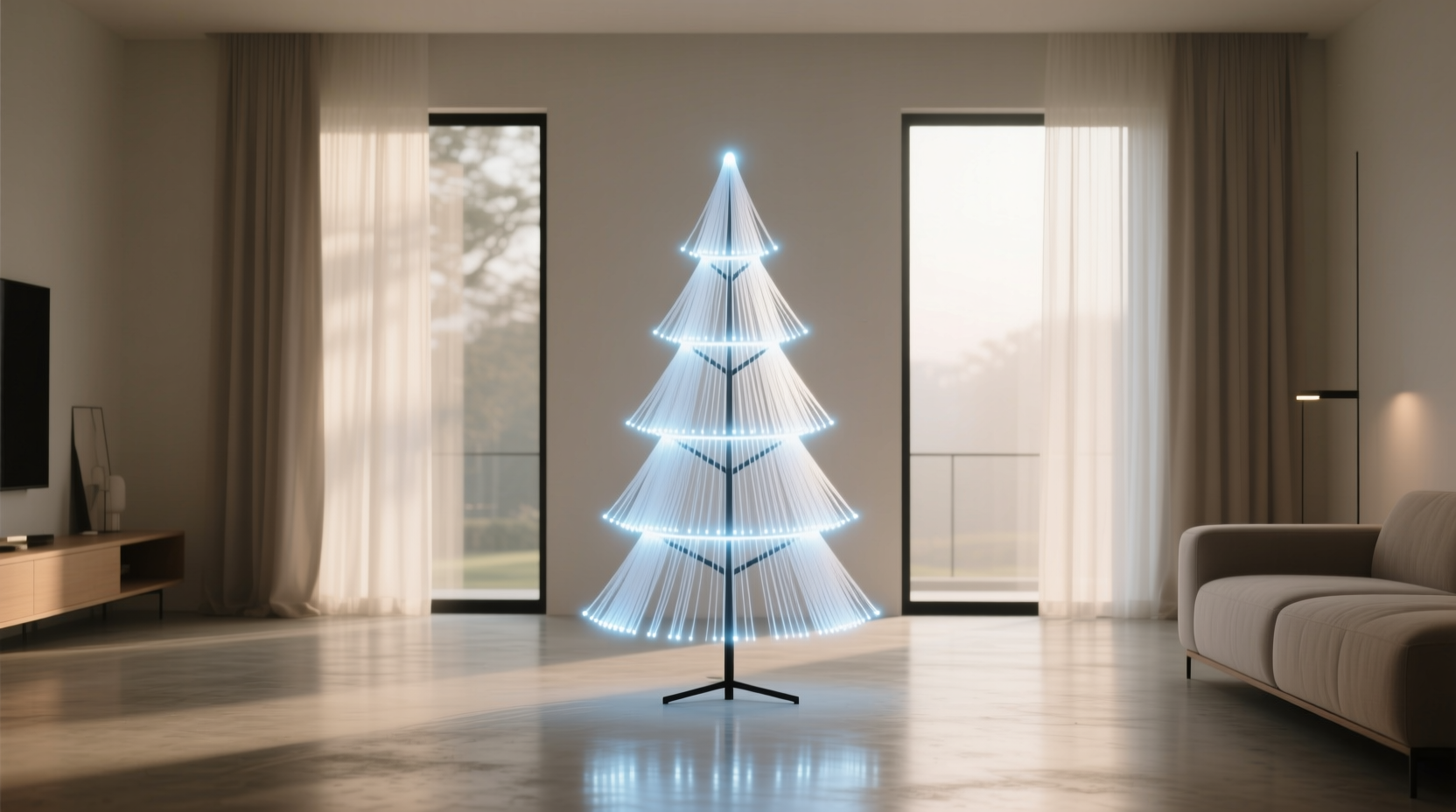
Minimalism in interior design emphasizes space, simplicity, and intentionality. It’s not about deprivation, but rather about choosing what adds value. During the holidays, when decor often multiplies exponentially, this philosophy becomes especially relevant. Many people are now opting for fewer, higher-quality decorations that serve both form and function.
Fiber optic trees, typically ranging from 3 to 6 feet in height, occupy minimal floor space. Their slim profiles make them ideal for apartments, studio spaces, or homes where a full-sized tree would overwhelm the room. Unlike real trees requiring water trays, stands, and post-holiday disposal, fiber optic models are lightweight, require no maintenance during use, and store easily in compact bags.
More importantly, they emit a soft, diffused light—no harsh LEDs or tangled strings of bulbs. This ambient glow complements minimalist palettes dominated by white, gray, black, and natural wood tones. The effect is serene, almost meditative, transforming the tree into a sculptural accent rather than a festive centerpiece.
Tip: Position your fiber optic tree near a mirrored surface or glass table to amplify its glow without adding visual clutter.Why Fiber Optic Trees Fit Modern Aesthetics
Fiber optic technology works by transmitting light through thin, flexible strands of plastic or glass. In Christmas trees, these strands are embedded in the branches, creating a shimmering effect that mimics starlight. Unlike conventional pre-lit trees that use visible bulb strings, fiber optic models distribute light evenly and subtly, eliminating the “overlit” look common in mass-market artificial trees.
This even dispersion of light aligns perfectly with the minimalist preference for harmony and balance. Designers like Clara Nguyen, known for her work in sustainable urban interiors, note a growing interest in “quiet luxury” holiday elements. “Clients are asking for pieces that feel elevated but not excessive,” she says. “A fiber optic tree doesn’t shout ‘Christmas’—it whispers it.”
Additionally, many newer models come in monochromatic finishes—white, silver, or frosted clear—avoiding the bright green hues of traditional trees. Some even feature color-changing bases that cycle through cool tones (blue, lavender, soft white), enhancing their versatility across seasons. A single tree can serve as a winter solstice accent, a New Year’s centerpiece, or even a year-round ambient lamp with neutral settings.
“The best minimalist decor doesn’t compete with the space—it completes it. Fiber optic trees, when chosen thoughtfully, do exactly that.” — Clara Nguyen, Interior Designer & Founder of Stillroom Studio
Comparison: Fiber Optic vs. Traditional Artificial Trees
| Feature | Fiber Optic Tree | Traditional Pre-Lit Tree |
|---|---|---|
| Light Quality | Soft, diffused, even glow | Visible bulbs; potential glare |
| Footprint | Slim, narrow profile | Wider base, bulkier |
| Maintenance | No bulb replacements; wipe clean | Bulb checks, strand repairs |
| Storage | Compact, often folds flat | Large box, fragile branches |
| Energy Use | Low-wattage LED base (~5–10W) | Higher consumption (~40–100W) |
| Aesthetic Flexibility | Works in modern, futuristic, calm spaces | Best suited for traditional themes |
A Real-World Example: The Brooklyn Loft Revival
Consider the case of Marcus and Lena Reed, a couple living in a converted industrial loft in Williamsburg, Brooklyn. Their 750-square-foot space features exposed brick, polished concrete floors, and a carefully curated selection of mid-century furniture. For years, they skipped a Christmas tree altogether, feeling that a traditional one clashed with their aesthetic.
Last season, they discovered a 4.5-foot frosted-white fiber optic tree with a matte silver base. “We were skeptical at first,” Lena admits. “But when we turned it on, it felt like moonlight had fallen into the corner of our living room. We added three hand-blown glass orbs in smoky gray—nothing else. It was enough.”
Their experience reflects a broader trend: consumers seeking meaningful, low-impact celebrations. The tree required no assembly beyond unfolding, used less electricity than a nightlight, and stored in a duffel bag under the bed. By January, it was packed away in under two minutes—no pine needles, no tangled cords.
Tip: Limit ornaments to 3–5 minimalist pieces—geometric shapes, natural materials, or monochrome glass—to preserve the tree’s clean lines.Step-by-Step: Styling a Fiber Optic Tree for Minimalist Spaces
Integrating a fiber optic tree into a minimalist home requires attention to proportion, tone, and context. Follow this sequence to ensure cohesion:
- Choose the Right Size: Select a tree no taller than 75% of your ceiling height. For standard 8-foot ceilings, a 5- to 6-foot model is ideal.
- Pick a Neutral Finish: Opt for white, silver, or clear fiber strands. Avoid colored tips or glitter-coated branches.
- Select a Discreet Base: Look for a low-profile, matte-finish base in black, charcoal, or brushed metal.
- Use Ambient Lighting Only: Rely solely on the built-in fiber optics. Do not add external string lights.
- Add Minimal Ornaments: If desired, hang 1–5 ornaments made of glass, ceramic, or wood. Keep colors within your existing palette.
- Pair with Complementary Textures: Place near a linen sofa, wool rug, or stone side table to enhance tactile contrast.
- Position Strategically: Place in a corner, beside a tall window, or in a hallway to avoid dominating the room.
Checklist: Is a Fiber Optic Tree Right for Your Home?
- ✅ You live in a small or multifunctional space
- ✅ You prefer a calm, uncluttered holiday aesthetic
- ✅ You want a low-maintenance, reusable decoration
- ✅ You prioritize energy efficiency and sustainability
- ✅ You dislike the mess and upkeep of real trees
- ✅ You appreciate modern or futuristic design elements
- ✅ You celebrate quietly or host intimate gatherings
FAQ: Common Questions About Fiber Optic Christmas Trees
Are fiber optic trees safe to leave on overnight?
Yes. Most modern fiber optic trees use LED-powered bases that generate minimal heat. They are generally safe to leave on for extended periods, though it’s wise to turn them off when leaving the house or sleeping, especially if unattended for long durations.
Can I recycle a fiber optic tree at the end of its life?
Recycling is challenging due to mixed materials (plastic fibers, metal base, electronic components). While not typically accepted in curbside recycling, some e-waste facilities may process the base unit. The best approach is longevity—choose a high-quality model designed to last 10+ years.
Do fiber optic trees look cheap or outdated?
Older models from the 1990s and early 2000s often had a plasticky appearance. However, contemporary designs use improved materials, better light diffusion, and refined silhouettes. When styled intentionally, today’s fiber optic trees appear sleek and modern, not dated.
Conclusion: A Quiet Return, Not a Loud Comeback
Fiber optic Christmas trees aren’t storming back into popularity with flashy marketing or viral TikTok trends. Instead, they’re returning quietly—chosen by designers, urban dwellers, and mindful decorators who value serenity over spectacle. Their appeal lies not in nostalgia, but in alignment with evolving values: space efficiency, environmental awareness, and aesthetic restraint.
As minimalist living continues to influence how we use our homes—even during the holidays—fiber optic trees offer a compelling alternative. They don’t replace tradition; they redefine it. For those seeking a celebration that feels personal, peaceful, and perfectly in tune with their space, the answer may not be a tree covered in tinsel, but one glowing softly in the corner, asking only to be seen, not seen everywhere.
💬 Have you tried a fiber optic tree in your minimalist home? Share your setup, styling tips, or lessons learned—we’d love to hear how you blend holiday warmth with modern simplicity.