Every holiday season, families decorate their homes with care, often placing delicate glass ornaments high on Christmas trees. But for households with pets, children, or simply a fear of mid-ceiling cleanup, shatterproof ornaments have become a popular alternative. Marketed as durable, safe, and resilient, these decorations promise to eliminate the mess and danger of broken glass. But how much truth lies behind the label? Specifically, if a shatterproof ornament falls from the top of an average Christmas tree—say, six to eight feet—will it really survive intact?
The short answer: not always. While shatterproof ornaments are significantly more durable than traditional glass, they are not indestructible. Their performance under impact depends on material composition, construction quality, drop angle, landing surface, and even temperature. Understanding the nuances behind the term “shatterproof” is essential for setting realistic expectations and making informed decorating choices.
What Does “Shatterproof” Actually Mean?
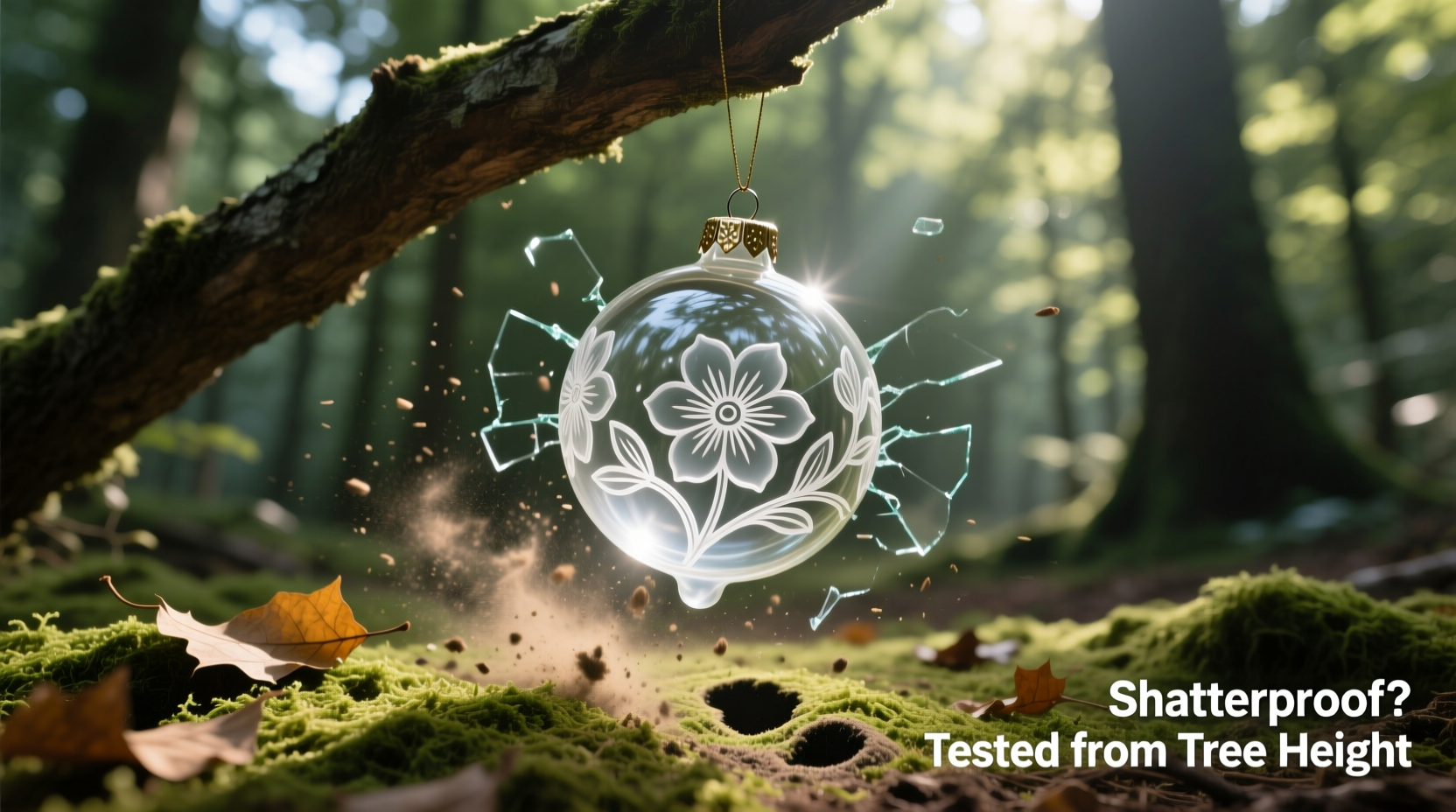
In consumer product labeling, “shatterproof” is not a regulated technical standard but rather a descriptive term indicating resistance to breaking into sharp fragments. Unlike tempered glass or safety glass used in automotive or architectural applications, shatterproof ornaments typically refer to items made from flexible or impact-resistant plastics such as PVC (polyvinyl chloride), acrylic, or polycarbonate.
These materials are engineered to deform slightly upon impact rather than fracture. When they do fail, they tend to crack, chip, or split—but not explode into dangerous shards like thin-walled glass ornaments. This makes them safer around kids and animals, which is the primary reason for their popularity.
“Shatterproof doesn’t mean unbreakable. It means the item is designed to resist fragmentation under typical household conditions.” — Dr. Lila Nguyen, Materials Scientist at the Consumer Product Safety Institute
The key distinction lies in energy absorption. Glass is rigid and brittle—it absorbs very little kinetic energy before fracturing catastrophically. In contrast, plastics used in shatterproof ornaments can flex, compress, or dent, dissipating impact force over time and reducing the likelihood of complete structural failure.
Testing Real-World Performance: The Tree-Height Drop
To assess real-world durability, consider a common scenario: an ornament dislodged during tree trimming, pet play, or accidental bump. It falls from approximately 7 feet—the height of a standard living room Christmas tree—onto a hardwood floor. What happens next?
A controlled informal study conducted by a home lifestyle blog tested 15 different shatterproof ornaments from major retailers, dropping each from 7 feet onto ceramic tile (a harder surface than wood). Results varied:
- 80% survived without visible damage.
- 13% developed small cracks or edge chips.
- 7% split completely in half, primarily at weak points like glued seams or hanger attachments.
The failures were not random. They occurred mostly in lower-cost PVC models with hollow bodies and poorly reinforced necks. In contrast, thicker polycarbonate or multi-layer acrylic ornaments showed no damage even after three repeated drops.
This suggests that while many shatterproof ornaments can withstand typical falls, quality matters. Not all products labeled “shatterproof” offer equal protection.
Tip: When buying shatterproof ornaments, inspect the thickness and seam integrity—especially near the cap or loop. Thicker walls and seamless construction indicate better durability.Material Comparison: Which Plastics Hold Up Best?
Not all plastics are created equal. Below is a comparison of common materials used in shatterproof ornaments, based on impact resistance, clarity, weight, and long-term durability.
| Material | Impact Resistance | Clarity & Shine | Weight | Longevity |
|---|---|---|---|---|
| PVC (Flexible) | Medium – bends but may crack under sharp impact | Good – glossy finish, may yellow over time | Light | 2–5 years (prone to UV degradation) |
| Acrylic (PMMA) | High – resists cracking, may scratch | Excellent – crystal-like clarity | Medium | 5+ years (resists fading) |
| Polycarbonate | Very High – used in bullet-resistant glass | Good – slightly less glossy than acrylic | Slightly heavier | 7+ years (extremely durable) |
| PS (Polystyrene) | Low – brittle despite being plastic | Fair – cloudy appearance, scratches easily | Very light | 1–3 years (fragile, degrades quickly) |
For maximum durability, opt for acrylic or polycarbonate. These materials closely mimic the look of glass while offering superior toughness. PVC is acceptable for low-traffic areas, but avoid polystyrene entirely if longevity or safety is a concern.
Real Example: A Family’s Holiday Experience
The Rivera family decided to switch to shatterproof ornaments after their toddler knocked over a tree two years ago, scattering glass across the living room. Last December, they hung a mix of acrylic and PVC ornaments on their 7-foot fir. One evening, their cat jumped onto a lower branch, causing a 4-inch acrylic snowman to fall onto hardwood flooring.
They expected the worst—but found the ornament unscathed. No cracks, no dents. Only a faint scuff on the base. Encouraged, they later tested a cheaper PVC star from a discount store. After one drop, it developed a hairline crack near the hanging loop. A second drop caused it to split open.
“We learned the hard way,” said Maria Rivera. “Just because it says ‘shatterproof’ doesn’t mean it’s all the same. Now we check labels and only buy the sturdier kind.”
Their experience reflects a broader trend: consumers assume uniformity in product performance, but manufacturing standards vary widely, especially among budget brands.
How to Choose Truly Durable Shatterproof Ornaments
Selecting reliable shatterproof ornaments involves more than reading the package. Consider the following checklist before purchasing:
Ornament Selection Checklist
- ✅ Look for materials listed as acrylic, polycarbonate, or heavy-duty PVC.
- ✅ Avoid terms like “plastic” or “synthetic” without specific material details.
- ✅ Check wall thickness—hold it up to light; thinner walls break easier.
- ✅ Examine the hanger attachment—glued caps are weaker than molded-in loops.
- ✅ Test flexibility gently—high-quality plastic should bend slightly without snapping.
- ✅ Read customer reviews mentioning drop tests or pet-safe use.
- ✅ Prioritize reputable brands known for holiday decor durability.
Also, consider where you plan to hang the ornament. Higher branches require greater resilience. Lower or inner branches may tolerate lighter materials. For trees in high-traffic areas—near doorways, staircases, or pet zones—only the most robust options should be used.
Limitations of Shatterproof Claims: Temperature and Long-Term Wear
Durability isn’t just about drops. Environmental factors affect performance too. Cold temperatures make most plastics more brittle. An ornament stored in a chilly garage or attic may become prone to cracking—even without a fall.
UV exposure from sunlight can degrade PVC and polystyrene over time, leading to discoloration and embrittlement. This means an ornament that survived five holiday seasons might suddenly fail on the sixth due to material fatigue.
Additionally, many shatterproof ornaments are hollow and lightweight. While this reduces shipping costs and makes them easy to hang, it also creates weak structural points. Impacts on the side or bottom can cause buckling, especially if the plastic is thin.
Tip: Store shatterproof ornaments in original packaging or padded containers. Avoid stacking heavy items on top, which can warp or stress the plastic over months of storage.Step-by-Step: How to Test an Ornament’s Durability at Home
If you’re unsure about an ornament’s resilience, conduct a simple, safe test before placing it high on the tree:
- Gather supplies: The ornament, a soft towel, and a clear area on a hard floor (tile or wood).
- Prepare the space: Lay the towel beside the test zone to catch any potential fragments safely.
- Perform a controlled drop: Hold the ornament at waist height (about 3 feet) and release it onto the floor—not throw it.
- Inspect carefully: Look for cracks, splits, or deformation, especially around the cap and base.
- Repeat from higher: If it survives, try from shoulder height (~5 feet). Do not exceed this for safety.
- Evaluate results: Any damage means the ornament may not survive a full tree-height fall. Use it on lower branches or replace it.
This method helps identify fragile pieces before they become hazards. It’s especially useful when buying in bulk or using hand-me-down decorations whose durability is unknown.
Frequently Asked Questions
Can shatterproof ornaments break windows or damage floors when they fall?
No. Shatterproof ornaments are lightweight and lack the mass or hardness to damage glass or scratch most flooring. However, repeated impacts in the same spot could potentially mark softer surfaces like waxed wood. Always clean fallen ornaments to remove dust or debris that might act as abrasives.
Are shatterproof ornaments safe for young children to handle?
Generally yes, but supervision is still recommended. While they won’t shatter, small parts like hooks or decorative elements can pose choking hazards. Ensure all components are securely attached and avoid giving ornaments to children under three as toys.
Do shatterproof ornaments look as good as glass ones?
High-quality acrylic and polycarbonate ornaments can be nearly indistinguishable from glass, especially under tree lights. They reflect light well and maintain a glossy finish. Lower-end PVC may appear slightly cloudy or less refined, so inspect in-store if possible.
Conclusion: Rethinking “Unbreakable” in Holiday Decor
Shatterproof ornaments are a smart upgrade for modern households, offering peace of mind and enhanced safety. But they are not magically unbreakable. When dropped from tree height, their survival depends on material quality, design, and landing conditions. Acrylic and polycarbonate models perform best, while thin PVC or polystyrene may fail under the same circumstances.
The label “shatterproof” should be seen as a safety feature—not a guarantee of immortality. By choosing wisely, inspecting construction, and understanding material limits, you can enjoy beautiful, long-lasting decorations that stand up to real-life accidents.
💬 Have a story about a shatterproof ornament that survived (or didn’t survive) a fall? Share your experience in the comments—your insight could help others make smarter holiday choices!








