For many dog owners, especially those with large, energetic breeds, keeping their pets securely contained is a top priority. Traditional fencing can be expensive or impractical, leading many to consider electric fences as an alternative. But are electric fences truly safe for large dogs? The answer isn’t a simple yes or no—it depends on proper installation, consistent training, the dog’s temperament, and ongoing supervision. This article explores the safety, benefits, risks, and best practices associated with using electric fences to contain large dogs.
How Electric Fences Work
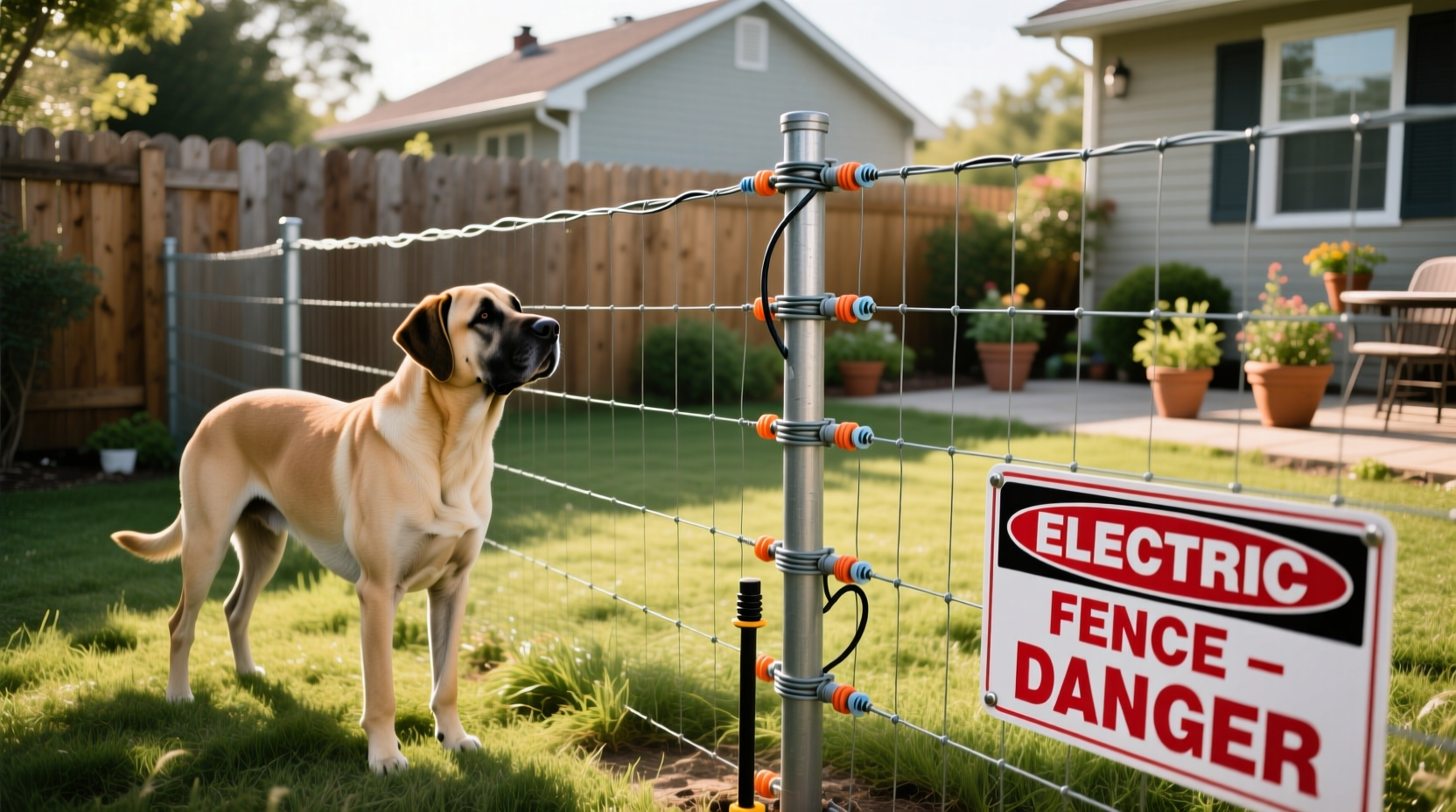
Electric fences, also known as invisible or underground fences, operate using a buried wire that emits a radio signal picked up by a receiver collar worn by the dog. When the dog approaches the boundary, the collar first emits a warning tone. If the dog continues forward, it receives a mild static correction—a brief electric pulse designed to startle rather than injure. The goal is not punishment but deterrence through conditioning.
Unlike physical fences, electric systems don't prevent other animals or people from entering the yard. They only control the movement of the dog wearing the compatible collar. This makes them useful for preventing escapes but ineffective as a full perimeter security solution.
Tip: Always test the collar’s signal range and correction level in a controlled setting before allowing your dog full access to the yard.Safety Considerations for Large Dogs
Large dogs—such as German Shepherds, Rottweilers, Huskies, or Labradors—often possess high energy, strong prey drives, and powerful builds. These traits can make containment challenging. While electric fences can be effective, they must be used responsibly to avoid psychological or physical harm.
The correction delivered by most modern systems is comparable to a static shock from touching a doorknob—unpleasant but not harmful when used correctly. However, misuse or improper training can lead to fear, anxiety, or even aggression. Some dogs may become overly stressed at the mere sound of the warning beep, while others may ignore the correction altogether if not properly conditioned.
“Electric fences can be safe for large dogs when paired with structured training and monitored use. The key is ensuring the dog understands the boundary, not just reacts to pain.” — Dr. Karen Benson, Veterinary Behaviorist
Physical Safety vs. Psychological Impact
From a physiological standpoint, reputable electric fence systems are designed to meet safety standards and do not cause lasting physical injury. However, the psychological impact varies widely among individual dogs. Some adapt quickly; others develop noise phobias, reluctance to go outside, or heightened anxiety.
Dogs with pre-existing behavioral issues—such as separation anxiety, fearfulness, or reactivity—are generally poor candidates for electric fencing. The unpredictable nature of the correction (especially if the system malfunctions) can exacerbate stress.
Effectiveness Based on Dog Temperament
No containment system works universally. The success of an electric fence depends heavily on the dog’s personality, breed tendencies, and prior training. Below is a comparison of dog types and their likely response to electric fencing.
| Dog Type | Likely Response | Recommendation |
|---|---|---|
| Highly obedient, responsive to training | Good adaptation with minimal corrections | Suitable with proper training |
| Strong-willed, independent (e.g., Siberian Husky) | May test boundaries repeatedly; risk of ignoring correction | Not recommended without backup containment |
| Fearful or anxious | Potential for increased stress, avoidance behaviors | Avoid electric fencing |
| Prey-driven (chases squirrels, bikes) | May override correction during chase | Risky; physical barrier preferred |
| Puppies under 6 months | Too young to understand conditioning | Do not use |
Step-by-Step Guide to Safe Implementation
If you decide an electric fence is appropriate for your large dog, follow this structured process to ensure humane and effective use:
- Assess Suitability: Evaluate your dog’s temperament, age, and behavior history. Consult a trainer or veterinarian if unsure.
- Choose a Quality System: Invest in a well-reviewed brand with adjustable correction levels, reliable battery life, and clear boundary signals.
- Install Correctly: Bury the wire at the recommended depth and mark the boundary zone temporarily with flags to aid training.
- Begin Collar Conditioning: Let your dog wear the collar (without activation) for short periods to get used to the weight and feel.
- Introduce Boundaries Gradually: Walk your dog near the boundary on a leash, allowing them to hear the warning tone. Reward retreats with treats and praise.
- Allow Controlled Testing: After several days, let your dog explore off-leash while supervising closely. Intervene if they show signs of distress.
- Maintain Consistency: Reinforce the boundary rules daily for at least 2–3 weeks. Continue occasional supervised checks afterward.
- Monitor Long-Term Use: Watch for changes in behavior, such as reluctance to go outside or excessive barking at the boundary line.
Real-World Example: Max the German Shepherd
Mark adopted Max, a 2-year-old German Shepherd, from a rural shelter. Max had a habit of jumping traditional fences to chase deer. Unable to afford a six-foot privacy fence, Mark researched alternatives and chose an electric system after consulting a dog trainer.
He spent two weeks training Max using the manufacturer’s protocol, pairing the warning beep with treats when Max backed away. Within three weeks, Max learned the boundary without ever receiving a correction. Over the next year, he never attempted to cross the line—even when a rabbit darted past.
However, Mark kept Max on a leash during walks outside the yard and continued obedience training. He also performed monthly system checks to ensure the collar and wire were functioning. For Mark and Max, the electric fence worked—not because of the shock, but because of consistency, patience, and supplemental training.
Common Risks and How to Avoid Them
While electric fences can be effective, they come with inherent risks, especially when misused. Awareness and prevention are critical.
- Negative Association with Yard: Some dogs begin to fear the entire yard due to stress around the boundary. Prevent this by making the interior space highly positive with play, feeding, and relaxation.
- Collar Sores or Skin Irritation: If the collar is too tight or left on continuously, it can cause pressure sores. Remove the collar after 12 hours of use and inspect the skin regularly.
- System Failure: Wires can break, batteries die, or receivers malfunction. Test the system weekly and have a backup plan (like a leash) during failures.
- Escape Despite Correction: In high-drive situations—like spotting a cat or another dog—some dogs will endure the shock to escape. Physical barriers are more reliable in these cases.
- No Protection from External Threats: Unlike solid fences, electric systems don’t keep out wildlife, stray dogs, or intruders. This leaves large dogs vulnerable to confrontations.
Do’s and Don’ts of Electric Fence Use
| Do’s | Don’ts |
|---|---|
| Use only with proper training and supervision | Never rely solely on the fence for containment |
| Choose adjustable, low-correction settings | Don’t use on fearful, aggressive, or very young dogs |
| Remove the collar when indoors or unsupervised | Don’t leave the collar on 24/7 |
| Combine with positive reinforcement training | Don’t skip the training phase |
| Test system integrity monthly | Don’t assume the system is always working |
FAQ
Can electric fences hurt large dogs?
No, when used correctly, electric fences deliver a corrective stimulus that is startling but not physically harmful. The sensation is similar to a static shock. However, improper use—such as incorrect settings or prolonged exposure—can lead to discomfort or psychological stress.
Are wireless electric fences as effective as wired ones?
Wired systems are generally more reliable and offer precise boundary control. Wireless models create a circular field and can be affected by walls, terrain, or interference. For large dogs needing clear, consistent boundaries, wired systems are typically preferred.
What age should a dog be before using an electric fence?
Most experts recommend waiting until a dog is at least 6 months old. At this age, they have better focus, impulse control, and ability to learn associative tasks. Puppies younger than this lack the cognitive maturity for effective training.
Final Recommendations and Alternatives
Electric fences can be a safe and effective tool for containing large dogs—but only when used as part of a broader management strategy. They are not a standalone solution and should never replace human supervision, training, or secure physical barriers in high-risk environments.
For dogs with strong flight or prey drives, a combination of a physical fence and electric reinforcement may offer the best results. Alternatively, remote training collars (used ethically) can help reinforce recall over large areas without relying on fixed boundaries.
If you live in an area with wildlife, frequent foot traffic, or aggressive dogs nearby, prioritize solid fencing. Your dog’s safety—and peace of mind—is worth the investment.
“The safest fence is the one the dog respects, not fears. Whether physical or electronic, containment must be paired with trust and understanding.” — Sarah Lin, Certified Professional Dog Trainer
Conclusion
Electric fences are not inherently unsafe for large dogs, but their safety hinges on responsible use. Proper training, careful selection, and ongoing monitoring determine whether the system protects or harms. For many families, they offer a practical compromise—but they demand commitment, not convenience.
If you're considering an electric fence, take the time to evaluate your dog’s needs, invest in quality equipment, and follow a structured training plan. When done right, it can be a valuable tool. When rushed or misapplied, it can damage your dog’s confidence and well-being.
🚀 Ready to make an informed decision? Assess your dog’s behavior today, consult a professional trainer, and choose containment that prioritizes both safety and trust.