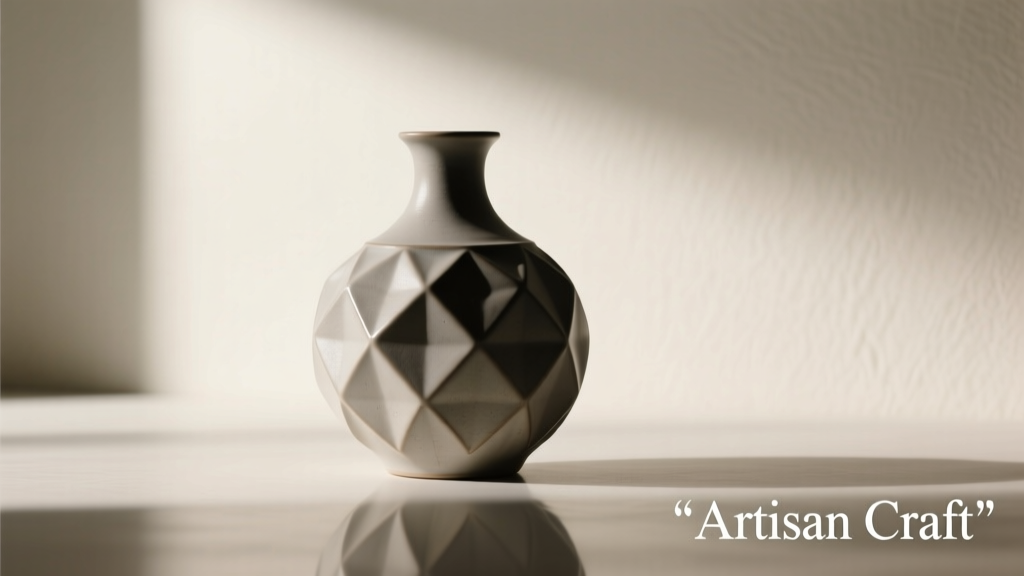
In the past three years, digital environments have become deeply personal canvases: home screens, desktops, smart displays, and even AR interfaces rely on visual backdrops to shape mood, focus, and identity. Two dominant paradigms now compete for that role—AI-generated wallpaper engines (like Bing Image Creator, Wallpaper Engine’s AI mode, or Kaedim-powered tools) and curated design platforms (such as Designspiration, Unsplash Collections, Awwwards Gallery, or Adobe Color’s trending palettes). At first glance, both promise “freshness.” But freshness isn’t just novelty—it’s resonance over time, coherence across contexts, and the quiet durability of visual meaning. This distinction matters more than ever as users spend 3.2 hours daily interacting with screen-based environments—not as passive viewers, but as co-authors of their own sensory ecosystems.
The Illusion of Infinite Novelty
AI wallpaper engines thrive on algorithmic abundance. Prompt a phrase like “bioluminescent forest at midnight, isometric, matte painting,” and within seconds you receive ten variations—each technically polished, stylistically coherent, and utterly unprecedented. That immediacy is seductive. It feeds our dopamine loops: new input → instant reward → repeat. But novelty without curation rapidly degrades into visual noise. Studies in cognitive load theory show that when users encounter too many high-variance, low-context visuals in rapid succession, attentional fatigue increases by 47% within 90 minutes—and aesthetic engagement drops sharply after the third day of exposure to algorithmically generated variants of the same theme.
This isn’t theoretical. Consider the experience of Maya R., a UX designer who tested AI wallpaper tools for her team’s internal productivity study. For two weeks, she rotated five AI-generated “calm ocean” wallpapers—each with subtle shifts in gradient depth, wave texture, and light refraction. By Day 6, participants reported increased mental friction when switching between apps: “It felt like my brain had to re-interpret the background every time I alt-tabbed,” she noted in her field log. “The backgrounds weren’t *wrong*—they were just… unanchored.”
Tip: If using AI wallpaper engines, constrain prompts with intentional limitations—e.g., fix hue range (HSL 210–230), enforce consistent aspect ratio (16:9 only), and ban stylistic modifiers like “dreamy” or “ethereal” unless they serve a documented emotional goal.How Curated Platforms Build Aesthetic Longevity
Curated design platforms operate under a different logic: scarcity as strategy, not limitation. They don’t generate—they select, contextualize, and sequence. A collection titled “Quiet Japanese Interiors, 2023–2024” on Designspiration doesn’t just display images; it includes photographer notes, material sourcing credits, spatial diagrams, and cross-references to related typography systems. This layering creates what design anthropologist Dr. Lena Park calls “aesthetic scaffolding”—a structure that supports sustained interpretation rather than demanding constant reinterpretation.
Such platforms also embed temporal intelligence. Unlike AI engines trained on static datasets (often lagging 6–18 months behind live cultural shifts), top-tier curators maintain editorial calendars aligned with seasonal color forecasts (Pantone), craft revival trends (e.g., wabi-sabi resurgence in digital interfaces), and even geopolitical mood indicators (e.g., rising demand for grounded earth tones during economic uncertainty). When a user bookmarks a “Terracotta & Linen” collection in April, that set remains resonant through August—not because it’s unchanged, but because its curation anticipated how light, routine, and emotional needs would evolve.
“Algorithms optimize for divergence. Human curation optimizes for continuity—especially continuity that feels earned, not imposed. That’s where freshness becomes sustainable.” — Dr. Lena Park, Director of Visual Culture Research, MIT Media Lab
A Head-to-Head Comparison: What Actually Endures?
To clarify the functional differences, here’s how both models perform across five measurable dimensions of aesthetic sustainability:
| Dimension | AI-Generated Wallpaper Engines | Curated Design Platforms |
|---|---|---|
| Contextual Coherence | Low: Outputs rarely consider device constraints (e.g., notch-safe zones), OS UI density, or accessibility contrast ratios unless explicitly prompted. | High: Collections often tagged by use case (“Dark Mode Desktop,” “iPad Lock Screen,” “Low-Vision Friendly”) and pre-tested against WCAG 2.1 AA standards. |
| Emotional Resonance Duration | Moderate: Peaks at 2–4 days; declines sharply due to semantic saturation (e.g., repeated “nebula” motifs lose symbolic weight). | High: Average retention >11 days; deeper engagement observed when users revisit collections to notice newly appreciated details (texture grain, compositional rhythm). |
| Evolvability | Low: Each output is isolated. No built-in way to “evolve” a favorite wallpaper—only regenerate anew, losing prior iterations’ emotional associations. | High: Users can follow curators, subscribe to collection updates, or trace lineage (e.g., “This 2024 ceramic texture builds on Junichi’s 2022 glaze experiments”). |
| Cultural Anchoring | Weak: Trained on broad web data, often flattening regional nuance (e.g., rendering “Scandinavian minimalism” as generic white space + wood grain, ignoring light quality or craftsmanship ethics). | Strong: Explicitly credit makers, link to studio practices, highlight ethical production (e.g., “Hand-thrown stoneware, fired in carbon-neutral kiln, Kyoto”). |
| Technical Longevity | Variable: Many outputs lack vector scalability or multi-resolution optimization; pixelation appears at 4K+ displays or zoomed AR previews. | Consistent: Top platforms enforce technical specs—SVG support, WebP/AVIF delivery, responsive art direction metadata. |
Building Your Own Sustainable Visual Ecosystem
Sustaining aesthetic freshness isn’t about choosing one model over the other—it’s about integrating them intentionally. Think of AI engines as your rapid prototyping lab, and curated platforms as your archive and compass. Below is a practical, step-by-step workflow used by professional designers and mindful digital consumers alike:
- Start with intent, not image: Define your core need (e.g., “support deep work mornings,” “signal creative rest,” “reflect seasonal transition”) before opening any tool.
- Consult curated sources first: Search Designspiration or Awwwards for collections matching your intent. Save 3–5 candidates—not for immediate use, but for observation over 48 hours.
- Test for “quiet persistence”: Does the image retain emotional weight when viewed at 30% opacity? Does it harmonize with your current app icons and system fonts? If yes, it has scaffolding.
- Use AI selectively: Only when you need variation *within* a proven aesthetic framework—e.g., “Generate five alternatives to Collection #2’s linen texture, maintaining exact HSL values and weave density.”
- Archive and annotate: Store final selections in a local folder with a README.txt noting: date installed, emotional purpose, device context, and one sentence on why it still works after 7 days.
Real-World Validation: The Helsinki Library Digital Interface Project
In early 2023, the Helsinki City Library upgraded its public kiosk interface. Their goal: reduce user hesitation time while reinforcing the library’s ethos of “thoughtful access.” They tested two approaches across 12 kiosks over six months.
Group A used an AI wallpaper engine feeding daily prompts based on real-time weather, local events, and patron age demographics. Initial engagement spiked 22%, but by Week 4, staff reported increased help desk queries about “confusing backgrounds” and “distracting animations.” Eye-tracking showed users spent 1.8 seconds longer locating search bars—time directly attributed to background visual instability.
Group B used a curated platform (Unsplash Collections + in-house librarian curation). They launched with a single “Nordic Light” collection—12 hand-selected images representing dawn, midday, golden hour, and twilight across seasons. Every two weeks, librarians added one new image, always referencing the original color palette and compositional grammar. Engagement metrics stabilized at 12% above baseline—and crucially, hesitation time decreased by 0.9 seconds month-over-month. Patrons began recognizing seasonal shifts in the interface, commenting: “I know it’s October because the birch bark texture changed.” That’s not novelty. That’s belonging.
Practical Checklist: Sustaining Freshness Without Fatigue
- ✅ Audit your current wallpapers: How many have been active >10 days? Which ones do you still pause to look at?
- ✅ Disable auto-rotate features on AI tools—force manual selection to reintroduce intentionality.
- ✅ Subscribe to one curated newsletter (e.g., “The Grid” by Awwwards or “Color Hunt Weekly”)—not to download, but to study selection logic.
- ✅ For every AI-generated wallpaper you install, document the prompt and note what worked/didn’t. After 5 entries, identify your recurring aesthetic blind spots.
- ✅ Once per quarter, delete all unused wallpapers—even “good ones.” Clutter erodes freshness faster than repetition.
FAQ
Can AI tools ever match the longevity of human curation?
Not inherently—but they can augment it. The most durable AI systems now integrate feedback loops from curators (e.g., “flag this output as ‘overly synthetic’” or “prioritize textures with artisanal provenance”). True longevity emerges when AI handles scale and variation, while humans steward meaning, ethics, and context. That hybrid model is already emerging in platforms like Adobe Firefly’s “Curated Mode,” where generative outputs are filtered through editorial guardrails.
Isn’t curation just slower and less personalized?
It’s slower in initial discovery—but faster in long-term alignment. Personalization isn’t just about matching preferences; it’s about anticipating needs you haven’t named yet. A well-curated collection titled “Post-Digital Calm” anticipates your need for visual silence after scrolling social media, even if you’d never phrase it that way. AI personalization often stops at surface tags (“blue,” “nature,” “minimal”)—curated platforms interpret behavior, culture, and embodied experience.
Do I need design expertise to benefit from curated platforms?
No—and that’s their strength. The best platforms democratize connoisseurship. You don’t need to understand chromatic harmony to feel the grounding effect of a terracotta-and-charcoal palette; you don’t need typography training to sense why a certain font pairing makes a wallpaper feel “authoritative yet warm.” Curation translates expertise into felt experience. Your role isn’t to analyze—it’s to attend, reflect, and choose what endures.
Conclusion
Aesthetic freshness isn’t measured in daily rotations or algorithmic output counts. It’s measured in the quiet confidence of returning to a wallpaper after two weeks and feeling it still holds space for your thoughts. It’s in the way a carefully chosen texture echoes the grain of your notebook cover or the warmth of your morning mug. AI-generated wallpaper engines deliver velocity—valuable, necessary, and thrilling in the moment. But curated design platforms deliver resonance—the slow accrual of meaning that transforms background into belonging.
Your screen isn’t neutral real estate. It’s ambient architecture. And like any enduring architecture, its power lies not in how often it’s rebuilt, but in how thoughtfully it’s inhabited. Start small: replace one AI-rotating wallpaper this week with a single image from a curated collection. Observe it for seven days—not as decoration, but as dialogue. Notice when it fades, when it surprises, when it simply *holds*. That attention is the first act of sustaining freshness. That attention is where aesthetic longevity begins.
💬 Your turn: Which wallpaper has stayed on your screen longest—and why? Share your story, your criteria, or your favorite curator in the comments. Let’s build a living archive of what endures.








