Every year, millions of tourists flock to tropical coastlines, drawn by coral reefs teeming with marine biodiversity. While they come to admire nature’s beauty, their presence—especially the use of conventional sunscreen—may be contributing to its decline. The term “reef safe sunscreen” has gained traction in recent years, appearing on labels from Bali to Belize. But what does it actually mean? Is reef-safe sunscreen truly better for ocean life than regular sunscreen? And can a simple switch in your beach bag make a measurable difference?
The answer isn’t just marketing hype. Scientific research shows that certain chemical filters in traditional sunscreens are toxic to coral reefs, fish, and other marine organisms. However, not all products labeled “reef safe” deliver on their promise. Understanding the difference requires looking beyond the label to ingredients, regulations, and real-world impact.
The Hidden Cost of Sun Protection
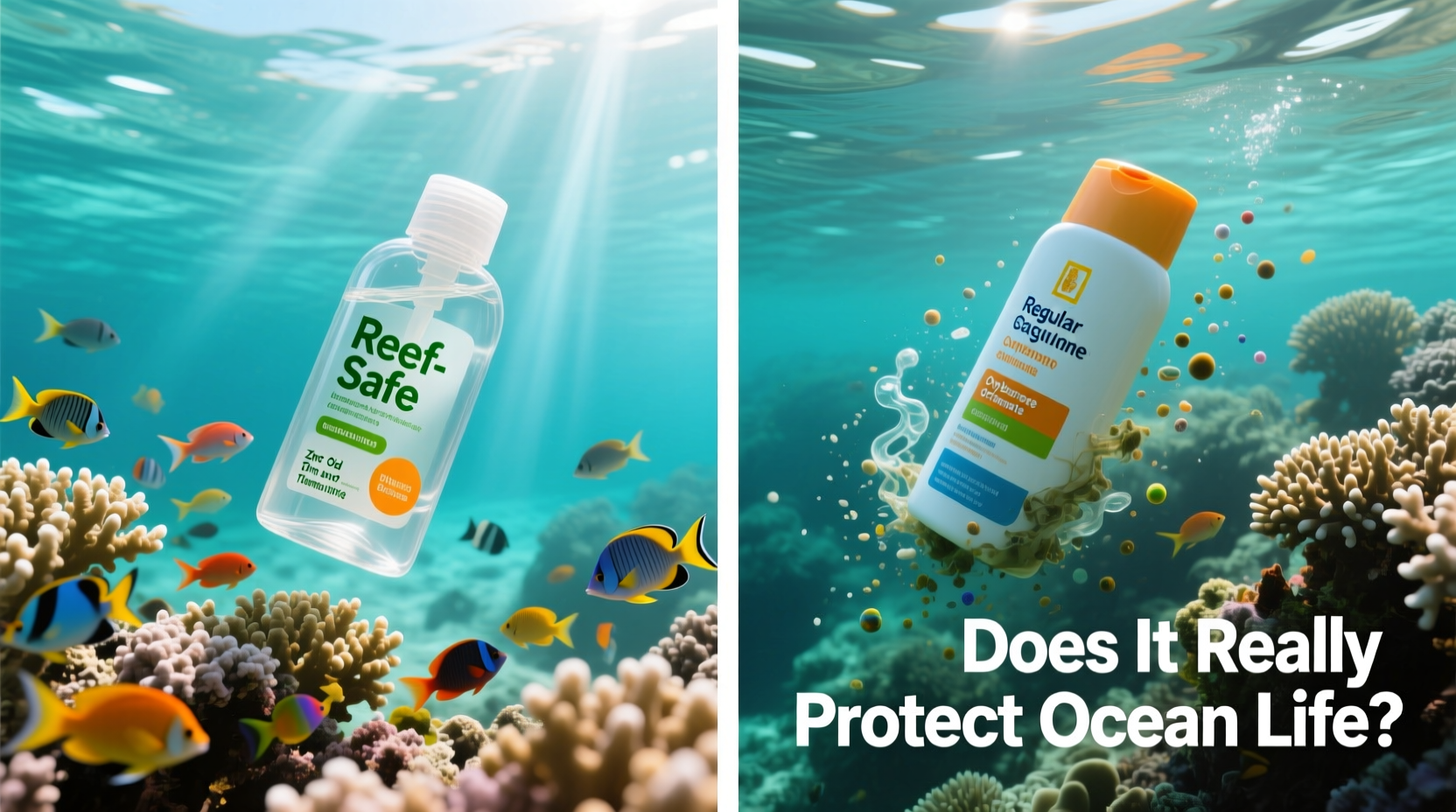
Coral reefs cover less than 1% of the ocean floor but support nearly 25% of all marine species. They are vital ecosystems, providing food, coastal protection, and economic value through tourism and fisheries. Yet reefs worldwide are under severe threat—from climate change and ocean acidification to pollution and physical damage.
One lesser-known but significant contributor is sunscreen runoff. Studies estimate that between 6,000 and 14,000 tons of sunscreen wash off swimmers annually, entering coral reef environments through wastewater, direct immersion, and stormwater runoff. Even small concentrations of certain chemicals can trigger cascading effects.
In Hawaii, researchers found oxybenzone—a common UV filter—in reef waters at levels exceeding 200 parts per trillion, enough to cause coral bleaching, DNA damage, and developmental deformities in young coral. Similar findings have been reported in the U.S. Virgin Islands, Thailand, and the Mediterranean.
“Chemicals like oxybenzone act as endocrine disruptors in marine life, altering reproductive systems and increasing mortality in larvae.” — Dr. Craig Downs, Executive Director, Haereticus Environmental Laboratory
What Makes a Sunscreen “Reef Safe”?
There is no universal legal definition of “reef safe,” which allows brands to use the term loosely. However, scientifically backed criteria exist. A truly reef-friendly sunscreen avoids specific harmful ingredients and relies on mineral-based UV blockers instead.
The most problematic chemicals commonly found in regular sunscreens include:
- Oxybenzone (Benzophenone-3): Causes coral bleaching and genetic damage.
- Octinoxate: Disrupts coral reproduction and promotes viral infections.
- Octocrylene: Accumulates in marine life and degrades into harmful byproducts.
- Homosalate, 4-MBC, and Parabens: Hormone disruptors affecting fish and plankton.
In contrast, reef-safe sunscreens typically use non-nano forms of zinc oxide or titanium dioxide. These minerals sit on top of the skin rather than absorbing into it, forming a physical barrier that reflects UV rays. Because they don’t dissolve easily in water and aren’t biologically active, they pose significantly lower risk to marine ecosystems.
Tip: Look for \"non-nano\" zinc oxide or titanium dioxide on the ingredient list—particles larger than 100 nanometers are less likely to be ingested by coral polyps.Reef-Safe vs Regular: A Comparative Breakdown
| Feature | Reef-Safe Sunscreen | Regular Sunscreen |
|---|---|---|
| Active Ingredients | Non-nano zinc oxide, titanium dioxide | Oxybenzone, octinoxate, octocrylene |
| Mechanism | Physical (reflects UV) | Chemical (absorbs UV) |
| Water Resistance | Moderate to high (varies by formulation) | Often higher due to synthetic polymers |
| Marine Toxicity | Low (when non-nano and biodegradable) | High (linked to coral death, fish infertility) |
| Skin Sensitivity | Generally lower irritation risk | Higher risk of allergic reactions |
| Environmental Regulation | Banned in Hawaii, Palau, U.S. Virgin Islands | Allowed in most regions |
This comparison highlights a key trade-off: while chemical sunscreens often offer a lighter feel and easier application, they come with ecological costs. Mineral-based alternatives may leave a slight white cast and require more thorough rubbing in, but they provide peace of mind for environmentally conscious users.
Real-World Impact: A Case Study from Palau
In 2020, Palau became one of the first nations to ban sunscreens containing 10 specific harmful chemicals, including oxybenzone and octinoxate. Dubbed the “Reef Safe Certification,” the policy required all sunscreens sold in the country to meet strict environmental standards.
Local dive operators reported immediate changes. Within two years, tour guides noticed clearer waters and fewer signs of coral stress during peak tourist season. Scientists conducting surveys near popular snorkeling sites recorded a 30% decrease in detectable oxybenzone levels compared to pre-ban measurements.
More importantly, juvenile coral settlement rates improved—an early sign of reef recovery. While broader factors like temperature and overfishing still affect resilience, eliminating a known chemical stressor gave corals a better chance to adapt.
Palau’s success demonstrates that regulatory action combined with consumer awareness can yield tangible results. As one marine biologist noted, “We can’t control global warming from our shores, but we can control what we put into the water.”
How to Choose a Truly Reef-Safe Sunscreen
With no standardized labeling system, consumers must become informed detectives. Here’s a step-by-step guide to selecting a sunscreen that genuinely protects both your skin and the sea.
- Read the Active Ingredients: Avoid any product listing oxybenzone, octinoxate, octocrylene, homosalate, or avobenzone. Stick to non-nano zinc oxide or titanium dioxide.
- Check for “Non-Nano” Labeling: Nanoparticles (smaller than 100nm) can penetrate coral tissues and enter the food chain. Non-nano particles are safer.
- Avoid Fragrances and Microplastics: Even mineral sunscreens can contain hidden pollutants. Look for fragrance-free options and check for polyethylene or microbeads.
- Verify Biodegradability Claims: Some brands claim “biodegradable” without certification. Look for third-party verifications like “Protect Land + Sea” by Haereticus Environmental Lab.
- Consider Packaging: Opt for recyclable or plastic-free containers. Aluminum tubes or paperboard packaging reduce secondary pollution.
- Research the Brand: Support companies transparent about sourcing, testing, and environmental commitments. Avoid greenwashing—vague terms like “eco-friendly” without proof.
“The best reef-safe sunscreen is one that’s effective, ethical, and evidence-based—not just well-marketed.” — Dr. Jennifer Adler, Marine Conservation Scientist
Common Misconceptions About Reef-Safe Sunscreen
Despite growing awareness, several myths persist:
- Myth: All mineral sunscreens are reef-safe.
Reality: Some contain nano-particles or harmful inactive ingredients like phenoxyethanol, which is toxic to algae. - Myth: If it’s labeled “reef safe,” it’s automatically safe.
Reality: The term is unregulated. Independent verification is essential. - Myth: Only divers and swimmers contribute to the problem.
Reality: Sunscreen washes off in showers and enters waterways through sewage systems—even if you never swim. - Myth: Reef-safe means less effective.
Reality: Modern formulations with non-nano zinc oxide offer SPF 30–50+ protection with broad-spectrum coverage.
Practical Checklist for Ocean-Conscious Sun Protection
Checklist: Choosing and Using Reef-Safe Sunscreen- ☐ Check active ingredients: only non-nano zinc oxide or titanium dioxide
- ☐ Confirm absence of oxybenzone, octinoxate, and octocrylene
- ☐ Look for “Protect Land + Sea” or similar certification
- ☐ Choose fragrance-free and paraben-free formulas
- ☐ Apply 15–30 minutes before swimming to reduce runoff
- ☐ Use rash guards, hats, and shade to minimize sunscreen needs
- ☐ Dispose of empty containers responsibly
Frequently Asked Questions
Does reef-safe sunscreen protect against UV rays as well as regular sunscreen?
Yes. Non-nano zinc oxide provides excellent broad-spectrum protection against both UVA and UVB radiation. When applied correctly—about 1/4 teaspoon for the face and reapplication every two hours—it offers SPF equivalent to most chemical sunscreens. Some users find it slightly thicker, but newer formulations are improving texture and spreadability.
Can I use reef-safe sunscreen if I have sensitive skin?
Often, yes. Mineral sunscreens are generally less irritating because they don’t penetrate the skin or generate free radicals when exposed to sunlight. Zinc oxide is even used in diaper rash creams for its soothing properties. However, always patch-test new products, especially if you’re sensitive to plant oils or essential oils that may be included in natural formulations.
Are spray sunscreens ever reef-safe?
Rarely. Most sunscreen sprays use alcohol or propellants that increase runoff and inhalation risk. Additionally, nanoparticle concerns are higher in sprays due to particle size and dispersion. If you must use a spray, opt for pump sprays (not aerosols), apply it to hands first, and rub it in thoroughly to reduce airborne and aquatic release.
Conclusion: Small Choices, Big Impact
The debate over reef-safe versus regular sunscreen isn’t just about personal health—it’s about planetary responsibility. While individual actions alone won’t reverse coral decline, collective shifts in consumer behavior can influence markets, policies, and conservation outcomes.
Choosing a reef-safe sunscreen is one of the simplest, most direct ways to reduce your underwater footprint. It signals demand for sustainable innovation and supports regions actively protecting their marine heritage. Beyond sunscreen, integrating sun-protective clothing and timing outdoor activities outside peak UV hours further reduces reliance on topical barriers.
The ocean doesn’t need perfection—just progress. By making informed choices today, you help ensure that future generations can experience vibrant reefs, not just read about them in textbooks.
💬 Ready to make the switch? Share this article with a friend planning a beach vacation, or leave a comment with your favorite reef-safe brand. Together, we can turn awareness into action.








