
When it comes to achieving clearer, brighter, and more youthful skin, consumers are faced with a growing number of choices. On one side, organic skincare has gained popularity for its clean ingredient profiles and ethical sourcing. On the other, drugstore brands offer affordability, accessibility, and often dermatologist-backed formulations. But when you're standing in front of a mirror hoping for visible improvements—whether it's fading dark spots, reducing acne, or smoothing fine lines—one question stands out: which category actually works faster?
The answer isn’t as simple as “natural is better” or “science wins every time.” Speed of results depends on formulation quality, active ingredients, concentration levels, and how well a product aligns with your skin type and concerns. This article breaks down the performance of organic versus drugstore skincare, backed by ingredient science, expert insights, and real-use scenarios, to help you decide where to invest your time—and money—for quicker, measurable changes.
Understanding the Core Differences
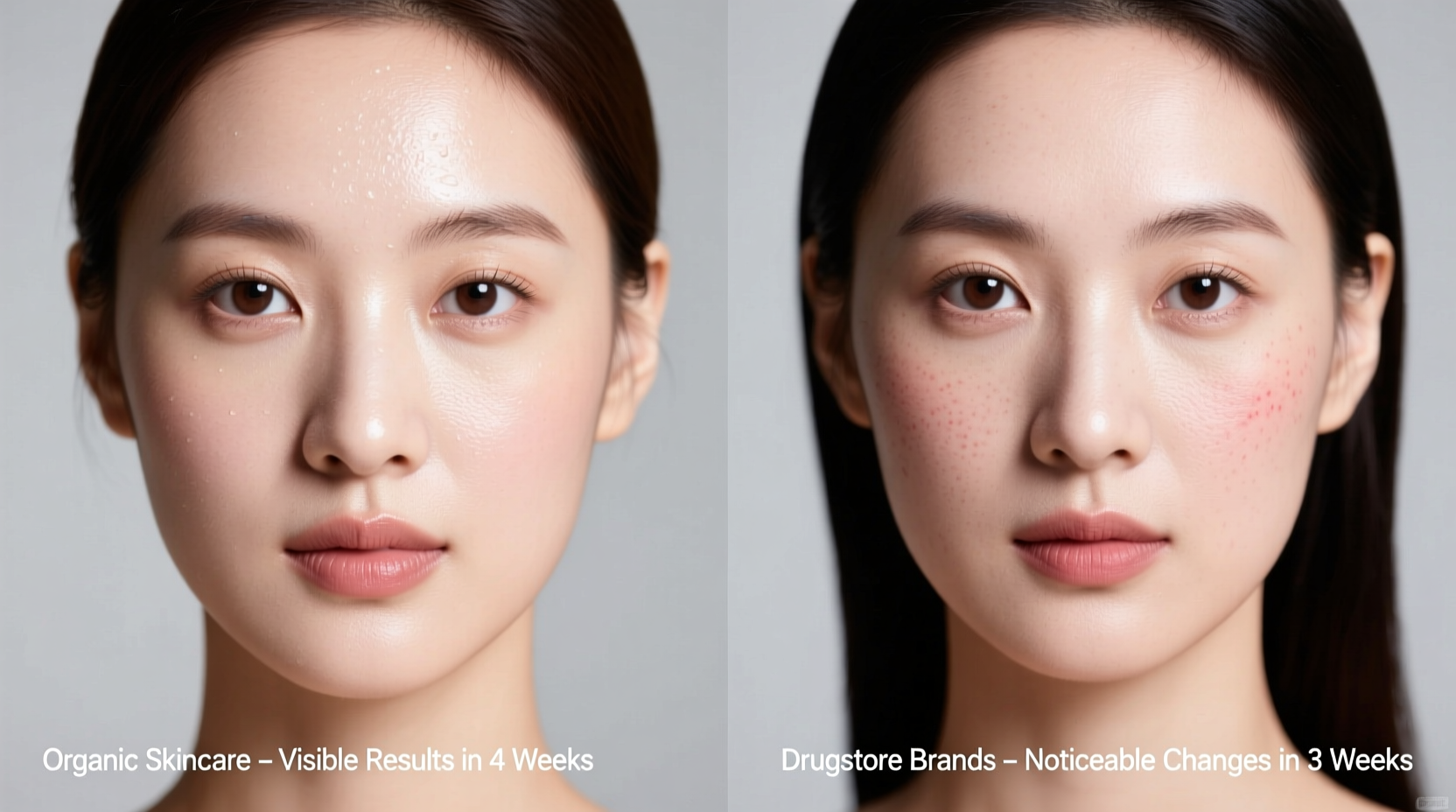
Before comparing speed, it’s essential to understand what separates organic skincare from conventional drugstore offerings.
- Organic Skincare: Typically formulated with plant-based, non-toxic, and sustainably sourced ingredients. Certified organic products avoid synthetic fragrances, parabens, sulfates, and petrochemicals. Brands like Dr. Hauschka, Juice Beauty, and Pai emphasize holistic wellness and environmental responsibility.
- Drugstore Brands: Mass-market labels such as CeraVe, Neutrogena, The Ordinary, and Olay focus on clinically tested ingredients at accessible price points. These often contain proven actives like retinoids, niacinamide, salicylic acid, and hyaluronic acid in standardized concentrations.
While both categories can deliver results, their approach differs. Organic brands prioritize long-term skin health and barrier support, while many drugstore formulas target specific concerns with higher concentrations of fast-acting synthetics.
“Speed in skincare often correlates with potency and penetration—not necessarily purity. Some natural ingredients are effective but slow; some synthetics work quickly but may compromise the skin barrier if overused.” — Dr. Lena Torres, Board-Certified Dermatologist
Comparing Active Ingredients and Efficacy Timelines
The presence and concentration of active ingredients largely determine how fast a product produces visible change. Below is a comparison of common actives found in each category and their typical timeline for noticeable results.
| Ingredient | Type | Common In | Visible Results Timeline | Key Benefits |
|---|---|---|---|---|
| Niacinamide (5–10%) | Synthetic | Drugstore (The Ordinary, Paula’s Choice) | 2–4 weeks | Reduces redness, minimizes pores, brightens tone |
| Retinol (0.3–1%) | Synthetic | Drugstore (RoC, Neutrogena) | 6–8 weeks | Smooths texture, fades fine lines, increases cell turnover |
| Salicylic Acid (0.5–2%) | Synthetic | Drugstore (Clean & Clear, CeraVe) | 1–2 weeks | Unclogs pores, reduces blackheads and acne |
| Vitamin C (L-ascorbic acid, 10–20%) | Semi-natural/Synthetic | Both (Serum Society – organic; Timeless – drugstore) | 4–6 weeks | Brightens skin, fades hyperpigmentation |
| Rosehip Oil (rich in linoleic acid & vitamin A) | Natural/Organic | Organic (Pai, Trilogy) | 6–12 weeks | Hydrates, supports barrier repair, mild anti-aging |
| Green Tea Extract | Natural/Organic | Organic (Herbivore, Youth to the People) | 4–8 weeks | Antioxidant protection, soothes inflammation |
The data shows a trend: drugstore products with high-concentration, lab-stable actives tend to produce visible improvements faster. For example, a 2% salicylic acid cleanser can reduce acne within days, whereas an organic tea tree toner might take two to three weeks for similar clarity due to lower concentration and lack of penetration enhancers.
Tip: If rapid results are your priority, look for drugstore products with clearly labeled percentages of proven actives like niacinamide, retinol, or AHAs/BHAs.Real-World Performance: Case Study
Maria, a 32-year-old office worker with combination skin and post-acne marks, wanted to improve her skin tone in under two months before a destination wedding. She tested two regimens side-by-side on different halves of her face for six weeks.
Left Side (Organic Routine):
- Cleanser: Pai Camellia & Rose Gentle Hydrating Cleanser
- Toner: Herbivore Botanicals Jasmine Green Tea Toner
- Serum: Mad Hippie Vitamin C Serum (ferulic acid + vitamin C ester)
- Moisturizer: Josh Rosebrook Nutrient Day Cream
Right Side (Drugstore Routine):
- Cleanser: CeraVe Renewing SA Cleanser (0.5% salicylic acid)
- Toner: The Ordinary Niacinamide 10% + Zinc 1%
- Serum: Timeless 20% Vitamin C + E + Ferulic Acid
- Moisturizer: Olay Regenerist Micro-Sculpting Cream
Results After 6 Weeks:
- Left Side: Improved hydration, reduced redness, slightly brighter tone. Acne marks faded about 20–30%. Skin felt healthier but changes were subtle.
- Right Side: Noticeably smoother texture, 50–60% reduction in post-acne marks, fewer breakouts. Brightening effect was visibly stronger under natural light.
Maria reported that while she loved how gentle the organic products felt, the drugstore side delivered faster, more dramatic results. She attributed this to the higher concentration of stable vitamin C and the exfoliating power of salicylic acid.
“I didn’t expect such a difference between two sides of my face. The drugstore routine made me look more ‘put together’ without makeup. I still use organic products on sensitive days, but for quick fixes, I now reach for science-backed options.” — Maria R., skincare tester
Factors That Influence Speed of Results
Not all organic or drugstore products perform uniformly. Several factors affect how quickly you’ll see changes:
1. Ingredient Stability and Delivery
Natural ingredients like vitamin C (in L-ascorbic form) degrade quickly when exposed to light and air. Many organic serums use gentler, less potent derivatives (like magnesium ascorbyl phosphate), which are slower-acting. In contrast, drugstore brands often use stabilized formulas with antioxidants and opaque packaging to preserve efficacy.
2. Penetration Technology
Drugstore products frequently include penetration enhancers (like ethanol or liposomes) that help active ingredients reach deeper skin layers. Organic formulations avoid these for purity reasons, relying instead on carrier oils that may not deliver actives as efficiently.
3. Concentration and pH Levels
A glycolic acid peel at 7% and pH 3.5 (common in drugstore exfoliants) will exfoliate faster than a naturally derived fruit enzyme mask with 3% enzymes at a higher pH. Lower pH increases acid effectiveness but may irritate sensitive skin.
4. Consistency of Use
Some organic products require longer commitment due to milder action. Users may discontinue use prematurely if they don’t see early results, undermining potential long-term benefits.
Tip: Always patch-test new products and introduce one at a time. Even fast-acting ingredients can cause irritation if layered improperly.Step-by-Step Guide: Choosing for Faster Visible Results
If your goal is clear, measurable improvement in the shortest time, follow this decision framework:
- Identify Your Primary Concern: Is it acne, aging, dullness, or sensitivity? Match it to proven actives (e.g., salicylic acid for acne, retinoids for aging).
- Check Ingredient Labels: Look for exact percentages. Products listing “fragrance” or “plant extract” without specifics are less reliable for targeted results.
- Prioritize Proven Actives: Choose formulas with clinical backing—niacinamide, retinol, AHAs/BHAs, peptides—regardless of brand origin.
- Consider Your Skin Barrier: If you have sensitive or compromised skin, start with lower concentrations and build tolerance. Fast doesn’t mean reckless.
- Monitor Progress Weekly: Take consistent selfies in natural light. Most visible changes appear between 4–8 weeks with daily use.
When Organic Might Be Faster (Yes, Really)
While drugstore brands dominate in speed for most concerns, organic skincare can deliver quicker results in specific cases:
- For Sensitive or Reactive Skin: Harsh synthetics can trigger inflammation, delaying progress. Organic, fragrance-free, and barrier-supporting formulas (with ceramides, squalane, oat extract) often calm irritation faster than conventional products that strip the skin.
- After Over-Exfoliation: If your skin is red, tight, or peeling from strong acids or retinoids, switching to organic moisturizers rich in fatty acids and antioxidants can accelerate recovery.
- Allergic Reactions or Contact Dermatitis: Eliminating synthetic irritants via organic products can resolve flare-ups more quickly than continuing with conventional routines.
In these cases, “visible results” mean reduced redness, restored moisture, and calmer skin—achievable in as little as 3–7 days with proper organic care.
Frequently Asked Questions
Can organic skincare ever work as fast as drugstore products?
Occasionally, yes—but only if the formulation includes high-potency, stable naturals (e.g., bakuchiol as a retinol alternative, stabilized vitamin C). However, these are exceptions. Most organic products focus on gradual, sustainable improvement rather than rapid transformation.
Are drugstore brands safe for long-term use?
Most reputable drugstore brands undergo rigorous safety testing. Ingredients like niacinamide, hyaluronic acid, and ceramides are well-tolerated long-term. However, overuse of strong actives (e.g., high-dose retinoids or acids) without proper moisturizing can compromise the skin barrier. Balance is key.
Do I have to choose one or the other?
No. Many dermatologists recommend a hybrid approach: using drugstore actives for targeted treatment and organic moisturizers or cleansers for barrier support. This combines speed with skin health.
Final Verdict: Who Wins the Speed Race?
For most people seeking faster visible results—especially for acne, hyperpigmentation, or anti-aging—drugstore brands have the edge. Their formulations are engineered for performance, with transparent labeling, clinical research, and optimized delivery systems that get actives where they need to go.
Organic skincare excels in long-term skin resilience, suitability for sensitive types, and environmental ethics. But its gentler nature means slower progress for those wanting quick fixes.
The smartest strategy isn’t choosing one over the other—it’s leveraging both. Use fast-acting drugstore products for short-term goals, then transition to organic maintenance routines to sustain results without irritation.
Action Plan Checklist
- ✅ Assess your skin concern
- Determine whether you need speed (acne, dullness) or soothing (sensitivity, redness).
- ✅ Research actives that match your goal
- Use trusted sources like PubMed or dermatology journals to verify efficacy.
- ✅ Compare ingredient lists
- Look for exact percentages and avoid vague terms like “proprietary blend.”
- ✅ Start with one potent product
- Add a single active (e.g., The Ordinary Niacinamide) and monitor for 4 weeks.
- ✅ Support with gentle basics
- Pair strong actives with fragrance-free, hydrating cleansers and moisturizers—organic or not.
- ✅ Track progress
- Take weekly photos and note changes in texture, clarity, and comfort.
“The fastest results come from smart combinations—not brand loyalty. Use science when you need speed, and nature when you need balance.” — Dr. Lena Torres
Conclusion
When it comes to visible results, drugstore skincare generally outperforms organic alternatives in speed, thanks to concentrated, clinically proven ingredients and advanced delivery systems. However, organic products play a crucial role in maintaining skin health, especially for sensitive types or during recovery phases.
The real winner isn’t a brand category—it’s informed choice. By understanding your skin’s needs, respecting its limits, and selecting products based on formulation rather than marketing, you can achieve faster, safer, and longer-lasting results.
💬 Have you tried both organic and drugstore skincare? Share your experience below—what worked fastest for you? Let’s build a community guide based on real results.








