
For decades, the debate over whether to air dry or blow dry hair has centered on appearance—frizz, volume, shine. But beneath the surface, a more critical issue emerges: what impact do these drying methods have on the long-term health of your scalp? As awareness grows around holistic haircare, experts are shifting focus from aesthetics to the biological environment of the scalp. The truth is, how you dry your hair isn’t just a matter of convenience—it can influence moisture balance, follicle integrity, and even contribute to conditions like seborrheic dermatitis or hair thinning over time.
This article examines both methods through the lens of dermatology, trichology, and real-world habits. We’ll break down the science behind heat exposure, prolonged dampness, and microbial activity on the scalp, helping you make an informed decision that supports not just beautiful hair—but a healthy foundation for it.
The Science of Hair Drying and Scalp Physiology
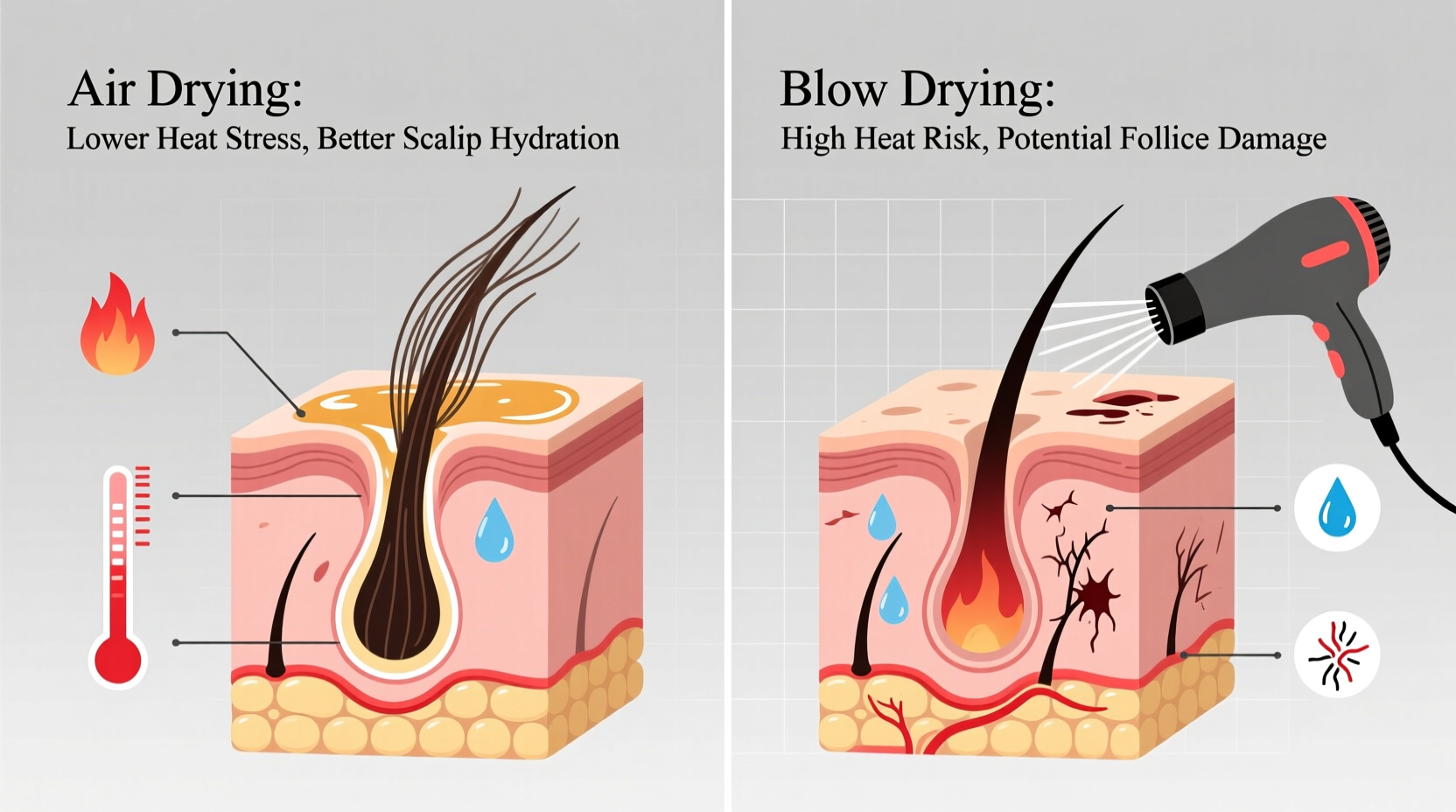
The scalp is a living ecosystem. It hosts millions of microorganisms, produces natural oils (sebum), and houses approximately 100,000 hair follicles. Each follicle cycles through growth, rest, and shedding phases, all influenced by environmental stressors, hygiene practices, and physical manipulation—including how we dry our hair.
Air drying relies on evaporation, where ambient air absorbs moisture from wet hair and scalp. This process is gradual and passive. Blow drying, in contrast, accelerates evaporation using concentrated heat and airflow. While faster, this method introduces thermal energy directly to the hair shaft and, indirectly, to the scalp.
Dermatologists emphasize that prolonged scalp dampness creates a breeding ground for fungi like *Malassezia*, which feeds on sebum and is linked to dandruff and inflammation. However, excessive heat from blow dryers can damage keratin proteins in hair, reduce elasticity, and irritate sensitive skin. So while one method risks microbial overgrowth, the other risks thermal injury—both potentially compromising scalp health over time.
“Moisture management is key. A damp scalp left for hours can trigger inflammation, but repeated high-heat exposure weakens the follicular environment.” — Dr. Lena Torres, Board-Certified Dermatologist and Trichology Specialist
Pros and Cons: Air Drying vs. Blow Drying
To understand the long-term implications, let’s compare both techniques across several health-focused criteria.
| Factor | Air Drying | Blow Drying |
|---|---|---|
| Scalp Moisture Duration | High – Can remain damp for 2–6 hours depending on hair thickness | Low – Typically dry within 5–20 minutes |
| Heat Exposure | None | High – Temperatures often exceed 140°F (60°C) |
| Follicle Stress | Moderate – Prolonged dampness may encourage fungal growth | Moderate to High – Heat can inflame follicles and disrupt oil production |
| Hair Shaft Integrity | Preserved – No thermal damage | Risk of damage – Cuticle lifting, protein loss with frequent use |
| Time Efficiency | Low – Requires patience and planning | High – Convenient for busy routines |
| Microbial Risk | Increased – Damp environment favors yeast proliferation | Reduced – Dry conditions inhibit microbial growth |
The data shows no clear winner. Instead, the optimal choice depends on individual factors: hair type, scalp sensitivity, lifestyle, and existing conditions like psoriasis or eczema.
Tip: If you have fine, straight hair that dries quickly, air drying may be ideal. For thick, curly, or coily hair that stays damp for hours, consider partial blow drying on cool settings to minimize prolonged moisture.When Air Drying Becomes a Problem
Air drying is often praised as the “gentler” option, but extended scalp dampness poses underrated risks. When water lingers on the scalp, it softens the outer layer of skin (stratum corneum), weakening its protective barrier. This makes it easier for irritants and microbes to penetrate.
In clinical practice, dermatologists report increased cases of scalp acne, fungal folliculitis, and seborrheic dermatitis among patients who consistently sleep with damp hair or spend hours with wet hair after morning showers. The combination of warmth, moisture, and sebum creates an ideal culture medium for *Malassezia* and bacteria like *Staphylococcus aureus*.
One study published in the *International Journal of Trichology* found that individuals who kept their scalp wet for over four hours daily were 2.3 times more likely to develop chronic dandruff compared to those who dried their hair within an hour.
Real-Life Scenario: The Office Worker’s Scalp Issue
Sophie, a 32-year-old graphic designer, noticed persistent flaking and itching despite using anti-dandruff shampoos. She washed her hair every morning and let it air dry while commuting and working. Her hair, thick and wavy, took nearly five hours to dry completely. After consultation, her dermatologist identified the root cause: prolonged dampness was fueling fungal overgrowth. By switching to low-heat blow drying focused on the roots, Sophie resolved her symptoms within three weeks without changing her shampoo.
This case illustrates that “natural” doesn’t always mean “healthier.” Context matters.
How to Blow Dry Without Damaging Scalp Health
Blow drying isn’t inherently harmful—especially when done correctly. The key lies in technique, temperature control, and frequency.
High heat alters the structure of keratin, the protein that makes up hair. Repeated exposure leads to cuticle erosion, making hair porous, brittle, and prone to breakage. More subtly, heat applied too close to the scalp can cause micro-inflammation, disrupting the follicle cycle and potentially accelerating hair thinning in predisposed individuals.
However, modern tools and techniques mitigate these risks. Ionic dryers reduce static and drying time. Ceramic and tourmaline heaters distribute heat more evenly. And using the correct attachments—like diffusers for curls or concentrators for roots—can target airflow without scorching the scalp.
- Use medium or cool heat settings – Avoid maximum heat, especially near the scalp.
- Maintain distance – Hold the dryer at least 6 inches from your head.
- Keep it moving – Never linger in one spot for more than a few seconds.
- Pre-dry with a microfiber towel – Reduces wetness before heat application.
- Apply a heat protectant – Look for lightweight serums with silicones or plant-based polymers.
“Think of your blow dryer like an oven—use it occasionally and wisely. Daily high-heat styling is like baking your scalp every day. It adds up.” — Dr. Rajiv Mehta, Trichologist at the Center for Hair & Skin Sciences
Best Practices for Long-Term Scalp Wellness
Ultimately, neither air drying nor blow drying is universally superior. What matters most is consistency, moderation, and personalization. Here’s a checklist to help you protect scalp health regardless of your preferred method:
- Never go to bed with wet hair—this increases fungal risk and friction-related breakage.
- If air drying, gently blot excess water with a microfiber towel and avoid tight hairstyles that trap moisture.
- If blow drying, use the cool shot feature to seal the cuticle and reduce frizz.
- Wash pillowcases weekly in hot water to prevent microbial buildup.
- Limit heat styling to 3–4 times per week if possible.
- Monitor your scalp for signs of irritation: redness, persistent itching, or unusual flaking.
- Consider alternating methods—air dry on weekends, blow dry during busy weekdays.
Step-by-Step: Healthy Hair Drying Routine
- After washing: Squeeze out excess water gently. Avoid rubbing with a regular towel.
- Blot with a microfiber towel or cotton T-shirt: Absorbs water without causing friction.
- Apply leave-in conditioner or heat protectant: Focus on mid-lengths to ends; avoid heavy products on the scalp.
- Choose your drying method:
- Air drying: Sit in a well-ventilated area. Use a wide-tooth comb to encourage airflow.
- Blow drying: Start with medium heat on the roots, then switch to cool for the lengths.
- Finish with a cool blast: Seals the hair cuticle and reduces porosity.
- Wait until fully dry before styling or covering: Hats and hoods trap moisture and increase irritation risk.
Frequently Asked Questions
Can air drying cause hair loss?
No, air drying itself does not cause hair loss. However, keeping the scalp damp for extended periods may contribute to inflammation or fungal infections, which in turn can disrupt the hair growth cycle and lead to temporary shedding. Proper drying practices minimize this risk.
Is it safe to blow dry every day?
Daily blow drying can be safe if done with proper technique—using heat protectants, lower temperatures, and maintaining distance. However, consistent high-heat exposure may weaken hair over time. Limiting frequency and incorporating air drying days helps maintain balance.
Does cold air from a blow dryer help the scalp?
Yes. The cool setting on a blow dryer helps close the hair cuticle, improving shine and reducing frizz. It also provides a drying effect without thermal damage, making it ideal for finishing styles or drying sensitive scalps.
Conclusion: Balance Over Dogma
The question isn’t whether air drying is categorically better than blow drying—it’s about choosing the right method for your body, lifestyle, and hair needs. Long-term scalp health thrives on balance, not extremes. Whether you embrace the slow ritual of air drying or rely on the efficiency of a blow dryer, the goal remains the same: a clean, dry, and resilient scalp environment.
Listen to your body. If you notice increased flaking after air drying, consider shortening drying time. If your scalp feels tight or irritated after blow drying, lower the heat. Small adjustments compound into lasting benefits.
🚀 Take control of your scalp health today. Experiment with hybrid drying methods, invest in quality tools, and share your experience. Your future hair will thank you.








